
Using liquid chlorine in your hot tub might seem like a simple way to keep the water clean. But if you want clear, safe, and comfortable water, there’s much more to know. Many hot tub owners use chlorine because it’s effective and easy to find.
However, liquid chlorine acts differently in hot tubs compared to pools, and using it correctly is essential. This article will guide you through everything you need to know about liquid chlorine in hot tubs—how it works, how to use it, safety tips, and common mistakes.
By the end, you’ll have the knowledge to keep your hot tub water sparkling, safe, and enjoyable.
What Is Liquid Chlorine?
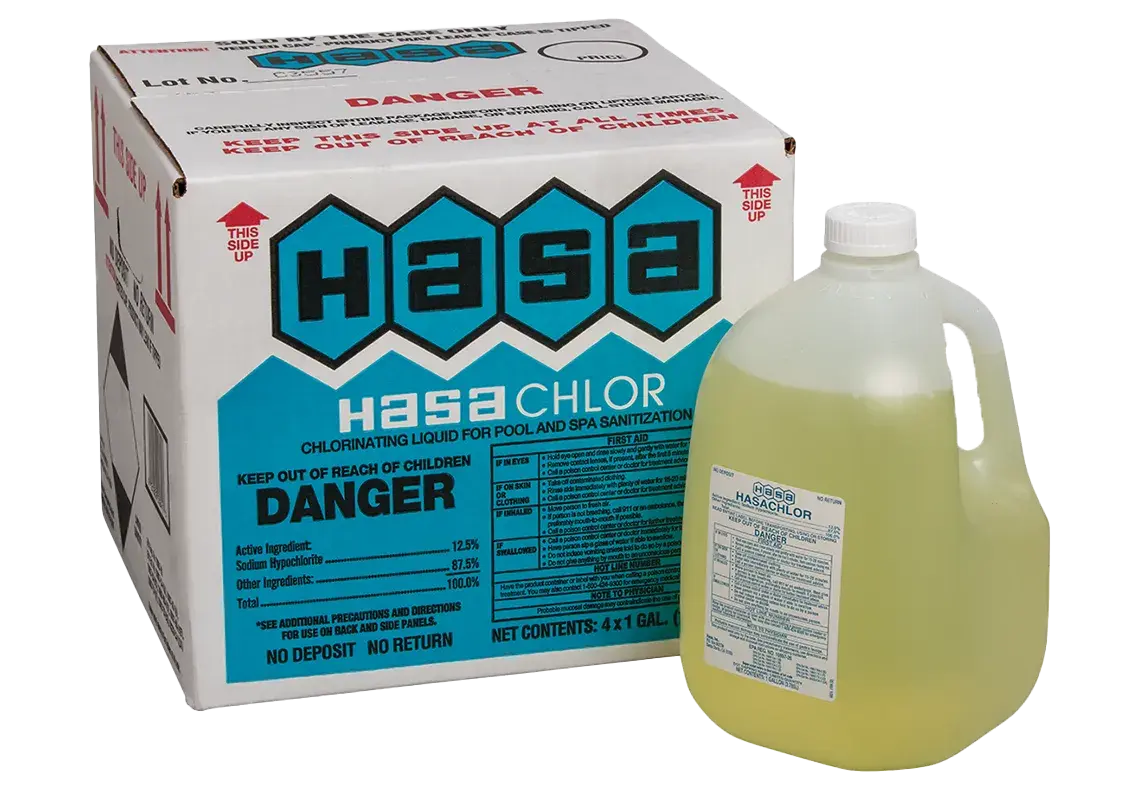
Liquid chlorine, often called sodium hypochlorite, is a clear, yellowish solution widely used for water disinfection. It contains about 10-12% available chlorine, making it stronger than regular household bleach, which usually has 5-6%.
In hot tubs, liquid chlorine serves as a sanitizer, killing bacteria, viruses, and algae. It breaks down contaminants and keeps the water safe for soaking. Unlike granular chlorine or chlorine tablets, liquid chlorine dissolves instantly, so it starts working fast.
But not all chlorines are the same. For instance, calcium hypochlorite comes in powder or tablet form and adds calcium to your water, while liquid chlorine does not. This makes liquid chlorine a good choice if your water already has high calcium levels.
How Liquid Chlorine Works In Hot Tubs
When you pour liquid chlorine into your hot tub, the sodium hypochlorite reacts with the water to form hypochlorous acid. This acid is the active sanitizer that destroys harmful microorganisms.
Hot tubs operate at higher temperatures than pools—usually around 100–104°F (38–40°C). Heat speeds up the breakdown of chlorine, meaning you’ll need to add it more often than in a pool. Also, hot water creates more evaporation and off-gassing, causing chlorine to leave the water faster.
Key Points:
- Fast acting: Liquid chlorine works quickly since it dissolves instantly.
- No residue: Unlike powders, it leaves no undissolved particles.
- Does not add calcium: Helps prevent scaling in hard water areas.
However, liquid chlorine also raises the pH of your water. High pH can make chlorine less effective, so you’ll need to monitor and adjust your water chemistry regularly.
Comparing Liquid Chlorine To Other Sanitizers
Choosing a sanitizer for your hot tub is an important decision. Here’s how liquid chlorine compares to other popular options:
| Sanitizer | Form | Chlorine Content | Effect on Water Balance | Pros | Cons |
|---|---|---|---|---|---|
| Liquid Chlorine | Liquid | 10–12% | Raises pH | Fast acting, no residue | Unstable in heat, needs frequent dosing |
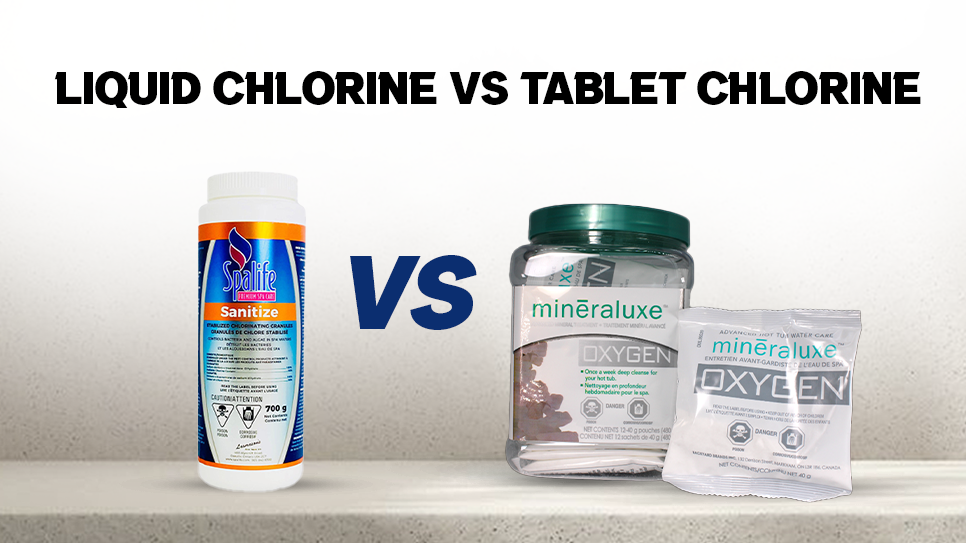
| Chlorine Granules | Powder | 50–60% | Raises pH, adds calcium/cyanuric acid | Easy to store, longer shelf life | Can cloud water if not dissolved well |
| Chlorine Tablets | Tablet | 90% | Lowers pH, adds stabilizer | Slow release, convenient | Can over-stabilize water, not for all tubs |
| Bromine | Tablet/Granule | Varies | Slightly increases pH | Stable in heat, less odor | More expensive, slower to dissolve |
Liquid chlorine acts fast and leaves no residue but needs regular attention, especially in a hot tub environment.
When To Use Liquid Chlorine In A Hot Tub
Liquid chlorine is useful in several situations:
- Regular Sanitation: To maintain the right sanitizer level during normal use.
- Shocking: When your water looks cloudy, smells bad, or after heavy use, a higher dose of chlorine—called “shocking”—kills bacteria and removes organic waste.
- Start-Up: When you first fill your hot tub or after a water change, liquid chlorine can quickly sanitize the system.
- After Rain or Parties: Extra contaminants enter the water, so an extra dose helps keep it clean.
However, if you have a “saltwater” hot tub, check your manual—some systems are not designed for liquid chlorine.
How To Add Liquid Chlorine To Your Hot Tub
Using liquid chlorine is straightforward, but you need to be precise. Here’s how to do it safely and effectively:
- Test Your Water First
- Use test strips or a test kit to check your current chlorine and pH levels.
- Ideal free chlorine level: 3–5 ppm (parts per million).
- Ideal pH: 7.2–7.8.
- Calculate the Right Dose
- Typical dose: 1.5–3 ounces (45–90 ml) of liquid chlorine per 500 gallons (1,900 liters) to raise chlorine by 3–5 ppm.
- Always start with a lower amount—you can add more if needed.
- Turn On the Jets
- Run your hot tub jets to circulate the water. This helps distribute chlorine evenly.
- Add the Liquid Chlorine
- Slowly pour the chlorine into the water, aiming for different spots.
- Let It Circulate
- Run the jets for at least 15–20 minutes before testing again.
- Retest the Water
- Check chlorine and pH levels after 20–30 minutes.
- Adjust as needed.
- Wait Before Using
- Do not enter the hot tub until free chlorine drops below 5 ppm.
Example Dosing Calculation
If you have a 400-gallon hot tub and want to increase chlorine by 5 ppm:
- Dose needed = (400/500) × 3 ounces = 2.4 ounces (about 70 ml)
Always double-check your manufacturer’s recommendations.
Safety Precautions When Handling Liquid Chlorine
Liquid chlorine is a strong chemical. Handling it safely is critical:
- Wear gloves and eye protection.
- Store in a cool, dry place away from sunlight and heat.
- Never mix liquid chlorine with other chemicals, especially acids.
- Use only plastic measuring cups (metal can react with chlorine).
- Rinse spills immediately with water.
- Keep away from children and pets.
Remember, chlorine fumes can be strong—always add it in a well-ventilated area.
Maintaining Water Balance With Liquid Chlorine
Liquid chlorine changes your hot tub’s water chemistry, especially pH. If pH rises above 7.8, chlorine loses effectiveness and can cause scaling (white buildup on surfaces).
To keep your water in balance:
- Test pH and Alkalinity Weekly
- PH: 7.2–7.8
- Total Alkalinity: 80–120 ppm
- Lower pH if Needed
- Use pH decreaser (sodium bisulfate or muriatic acid) if pH is too high.
- Check Calcium Hardness
- 150–250 ppm is ideal. If too low, add calcium increaser.
- Monitor Chlorine Demand
- If chlorine drops quickly, contaminants may be high—consider shocking the tub.
- Change Water Regularly
- Every 3–4 months, drain and refill to prevent buildup of dissolved solids.
Maintaining water balance is not just about chlorine—it’s about the whole chemistry working together.
Pros And Cons Of Liquid Chlorine In Hot Tubs
Every sanitizer has benefits and drawbacks. Here’s what to consider with liquid chlorine:
Pros
- Fast acting: Sanitizes water quickly.
- No residue: Dissolves instantly, so no gritty feel.
- No calcium added: Good for hard water areas.
- Easy to dose: Simple to measure and pour.
Cons
- Unstable at high temps: Breaks down faster in hot water, so needs frequent additions.
- Raises pH: Can lead to water balance problems if not monitored.
- Short shelf life: Loses strength over time, especially if stored in heat or sunlight.
- Odor: Chlorine smell can be strong if overdosed or water is imbalanced.
- Bleaching risk: Can bleach swimsuits and hot tub covers if splashed or overdosed.
Understanding these helps you decide if liquid chlorine fits your hot tub routine.
Credit: hasa.com
Common Mistakes With Liquid Chlorine
Even experienced hot tub owners make mistakes. Here are some to watch out for:
- Adding Too Much at Once
- Overdosing can cause strong smells, skin irritation, and even damage hot tub parts.
- Not Testing Water Regularly
- Guessing leads to poor water quality or wasted chemicals.
- Ignoring pH Levels
- High pH makes chlorine less effective.
- Mixing with Other Chemicals
- Never add chlorine at the same time as shock or other sanitizers—dangerous reactions can occur.
- Pouring Directly onto Surfaces
- Always add to moving water, not on seats or shell, to prevent bleaching.
- Storing in Heat or Sunlight
- Light and heat break down chlorine, making it weaker.
- Using Old Product
- Liquid chlorine loses strength after a few months—always check the date.
Avoiding these mistakes keeps your hot tub safe and enjoyable.
Liquid Chlorine Vs. Bromine In Hot Tubs
Bromine is another popular sanitizer for hot tubs. How does it compare to liquid chlorine?
| Feature | Liquid Chlorine | Bromine |
|---|---|---|
| Stability in Heat | Poor | Good |
| Odor | Stronger “chlorine” smell | Milder, “chemical” smell |
| Cost | Lower | Higher |
| Effect on Skin/Eyes | Can irritate at high levels | Softer, less irritation |
| Frequency of Addition | More frequent | Less frequent |
| pH Impact | Raises pH | Less impact |
Key insight: Bromine lasts longer in hot water, so it’s less work for busy owners. But liquid chlorine is cheaper and easier to find. Your choice depends on your needs and budget.
Tips For Using Liquid Chlorine Effectively
- Store Properly
- Keep in a cool, dark, ventilated place. Heat and sunlight destroy chlorine quickly.
- Measure Carefully
- Use a dedicated plastic cup or syringe. Don’t guess.
- Add Small Amounts Often
- Frequent small doses are better than one large dose.
- Always Test Before and After
- Water chemistry changes fast in hot tubs. Testing is the only way to know.
- Shock Regularly
- Use a higher dose once a week or after heavy use to break down waste.
- Balance pH
- Check pH every time you add chlorine.
- Run Jets After Adding
- Circulation mixes chemicals evenly.
- Use Fresh Product
- Old chlorine is less effective—buy only what you’ll use in a few months.
- Rinse Measuring Tools
- Rinse your measuring cup after each use to prevent accidental mixing.
- Keep a Log
- Write down doses, test results, and water changes. Patterns help you manage better.
Liquid Chlorine For Shocking Hot Tubs
“Shocking” means adding a large dose of sanitizer to destroy organic waste, bacteria, and chloramines (combined chlorine that causes smell and irritation).
How To Shock With Liquid Chlorine
- Check Manufacturer Guidance
- Some hot tubs recommend non-chlorine shock.
- Calculate Shock Dose
- Usually 5–10 times the normal dose (about 5–10 ounces per 500 gallons).
- Add at Night
- Sunlight breaks down chlorine—night is best for shocking.
- Run Jets, Cover Off
- Circulate for at least 30 minutes with the cover off to let gases escape.
- Test Before Re-Entry
- Don’t use the hot tub until free chlorine drops below 5 ppm.
Shocking once a week or after heavy use keeps water clean and fresh.
Liquid Chlorine And Water Temperature
High temperatures in hot tubs affect chlorine in several ways:
- Faster breakdown: Chlorine evaporates and breaks down quicker in hot water.
- Higher demand: Bacteria and contaminants multiply faster in heat, using up chlorine.
- More off-gassing: Gases escape faster, so you lose chlorine to the air.
To compensate, check and adjust chlorine more often, especially after long soaks or parties.
Environmental Impact Of Liquid Chlorine
Many hot tub owners ask about the environmental effects of chlorine. Here’s what to know:
- Breaks down quickly: In sunlight and heat, chlorine turns into salt and water.
- Disposal: Never drain chlorinated water into streams, ponds, or gardens. Let chlorine drop to zero before draining.
- Use minimal effective dose: Avoid overdosing to reduce chemical runoff.
Proper use protects your health and the environment.
Credit: www.canadahottubparts.ca
Cost Of Using Liquid Chlorine
Liquid chlorine is generally less expensive than other sanitizers. A gallon (about 3.8 liters) costs $5–$8 in the U.S., and a typical 400-gallon hot tub uses about 1–2 gallons per month, depending on use and weather.
Annual cost estimate:
- $60–$150 per year for most hot tubs
However, if you add too much or let water get out of balance, you’ll spend more on corrections. Careful use keeps costs low.
Liquid Chlorine And Hot Tub Equipment
Chlorine is powerful. Used correctly, it’s safe for most modern hot tubs. But too much can cause:
- Corrosion: Metal jets and heaters can corrode if chlorine is too high or pH is very low.
- Fading: Covers, headrests, and swimsuits may fade if splashed or overdosed.
- Gasket wear: Rubber and plastic parts can wear out faster.
To protect your investment:
- Keep chlorine in the 3–5 ppm range.
- Rinse off after soaking.
- Clean and condition the cover regularly.
Liquid Chlorine Shelf Life And Storage
Liquid chlorine loses strength quickly—about 1–2% per month even in cool storage. In hot weather, it can lose half its power in a few months.
- Buy small amounts: Only what you’ll use in 2–3 months.
- Store in original container: Never pour into other bottles.
- Label clearly: Especially if you have different chemicals.
Old chlorine won’t sanitize your hot tub properly, so always check the date.
Signs Your Hot Tub Needs More Liquid Chlorine
Sometimes, water tests aren’t enough. Watch for these signs:
- Cloudy water
- Strong “chlorine” odor
- Slippery or slimy surfaces
- Foam or bubbles
- Itchy skin or red eyes
If you notice any of these, test and adjust your chlorine immediately.
Liquid Chlorine In Portable Hot Tubs And Inflatable Spas
Liquid chlorine can be used in most portable and inflatable hot tubs, but check the manufacturer’s recommendations. These tubs often have smaller water volumes and less powerful filtration, so overdosing is easy.
- Use smaller doses and test more often.
- Circulate water thoroughly after adding.
- Replace water more frequently.
Non-obvious Insights For Beginners
- Chlorine Demand Changes Over Time
- As your water ages, it collects “chlorine demand” substances—organic materials and waste. Your hot tub might need more chlorine than the first week, even if you use it the same way. Regular shocking and water changes reset the balance.
- “Chlorine Smell” Means Not Enough, Not Too Much
- Many people think a strong smell means too much chlorine. Usually, it’s the opposite: Chloramines form when there’s not enough free chlorine. Shocking the water removes these and gets rid of the smell.
- Wait After Adding Chlorine
- It’s tempting to hop in right after adding chemicals, but patience matters. Letting chlorine mix and settle protects your skin and eyes.
- Circulation Is Critical
- Even the best sanitizer doesn’t work if water isn’t moving. Always run jets after adding chlorine.
- Don’t Mix Sanitizers
- Switching between chlorine and bromine without draining can cause cloudy water and chemical reactions. Pick one and stick with it until your next water change.

Credit: us.amazon.com
Frequently Asked Questions
What Is The Ideal Chlorine Level For A Hot Tub?
The best chlorine level for a hot tub is between 3–5 ppm (parts per million). This keeps the water safe and comfortable. Test your water 2–3 times a week to make sure the level stays in this range.
Can I Use Household Bleach As A Substitute For Liquid Chlorine?
Household bleach can be used in an emergency, but it’s weaker (about 5–6% chlorine) and may contain unwanted additives. Always use pool-grade liquid chlorine (sodium hypochlorite) for best results. If you must use bleach, adjust the dose to match the lower strength.
How Often Should I Add Liquid Chlorine To My Hot Tub?
Add liquid chlorine every 2–3 days for regular use, or more often if the hot tub is used heavily. Always test the water before and after adding to avoid over- or under-dosing.
Is Liquid Chlorine Safe For All Types Of Hot Tubs?
Most acrylic and plastic hot tubs are compatible with liquid chlorine. However, always check your manufacturer’s recommendations. Some older tubs or special materials may require different sanitizers.
What Should I Do If I Add Too Much Liquid Chlorine?
If you add too much, leave the hot tub uncovered and run the jets to help chlorine dissipate. Wait until the level drops below 5 ppm before using the tub. If needed, dilute with fresh water.
If you want to explore more about hot tub water treatment, see this helpful guide on the Hot Tub Wikipedia page.
Keeping your hot tub clean and safe with liquid chlorine takes attention and care, but the rewards are clear, healthy water and a more enjoyable soak every time. With the right habits, you can confidently manage your hot tub and make it a relaxing retreat for years to come.