
Boiling water is one of the simplest kitchen tasks, yet with new appliances like the Instant Pot, even this basic step can raise questions. Many people wonder if it’s safe or possible to boil water in an Instant Pot without the lid. While Instant Pots are known for their pressure cooking, they offer much more flexibility. If you need to boil water for tea, blanching vegetables, or sterilizing utensils, and you can’t or don’t want to use the lid, your Instant Pot can still help.
In this guide, you’ll learn exactly how to boil water in your Instant Pot without the lid. You’ll discover the safety rules, the best settings, how long it takes, and why you might want to do it this way. I’ll also share practical tips most beginners miss, common mistakes, and advanced uses.
By the end, you’ll have total confidence using your Instant Pot for open-lid boiling—no guesswork, no wasted time.
Why Boil Water In An Instant Pot Without The Lid?
People usually use the Instant Pot with the lid locked for pressure cooking. But there are good reasons to boil water with the lid off:
- Control: You can see the water and stop the process at the right moment.
- Safety: For some recipes, pressure is not needed or can even be risky.
- Convenience: It’s easier to add or remove ingredients without opening a locked lid.
- Versatility: Great for blanching, sterilizing, or reducing sauces.
Some users also don’t have the lid available, or it’s being washed. Knowing how to use your Instant Pot like a regular pot adds flexibility to your kitchen routine.
How The Instant Pot Heats Water
An Instant Pot uses a heating element in the base. When you select a cooking mode, the element heats the inner pot. With the lid off, steam escapes, so the pot never builds pressure. Instead, it works like an electric saucepan.
Unlike a stovetop, the heat source is electric, and the temperature control is digital. This means the pot can hold water at a stable boil for a long time without supervision. It’s especially useful if you don’t have a stove or want to free up burners.
Settings For Boiling Water Without The Lid
You can use several Instant Pot settings to boil water with the lid off:
- Sauté Mode: Heats quickly and gets water to a rolling boil, similar to using a frying pan.
- Keep Warm Mode: Holds water hot, but won’t boil it.
- Slow Cook Mode: Heats gently, but usually doesn’t reach boiling.
- Manual/Pressure Cook (without the lid): Heats, but some models won’t start without the lid.
For most purposes, Sauté Mode is best. It heats fastest and is designed for open-lid cooking.
Comparison Of Key Settings
Below is a comparison of the main modes for boiling water in an Instant Pot with the lid off:
| Mode | Heats to Boil? | Lid Needed? | Best For |
|---|---|---|---|
| Sauté | Yes | No | Boiling, Searing, Reducing |
| Keep Warm | No | No | Warming only |
| Slow Cook | No (usually) | No | Simmering, Gentle cooking |
| Pressure Cook | Not recommended without lid | Yes | Pressure cooking |
Step-by-step Guide: How To Boil Water In An Instant Pot Without The Lid
Let’s walk through the steps. These instructions work for all Instant Pot models.
1. Prepare Your Instant Pot
- Place the inner stainless steel pot into the base.
- Make sure the pot and base are dry on the outside to prevent electrical issues.
- Plug in your Instant Pot.
2. Add Water
- Pour the amount of water you need into the inner pot.
- For boiling, add at least 1 cup (250 ml). The pot heats better with enough water to cover the bottom.
- Do not fill above the Max Fill line.
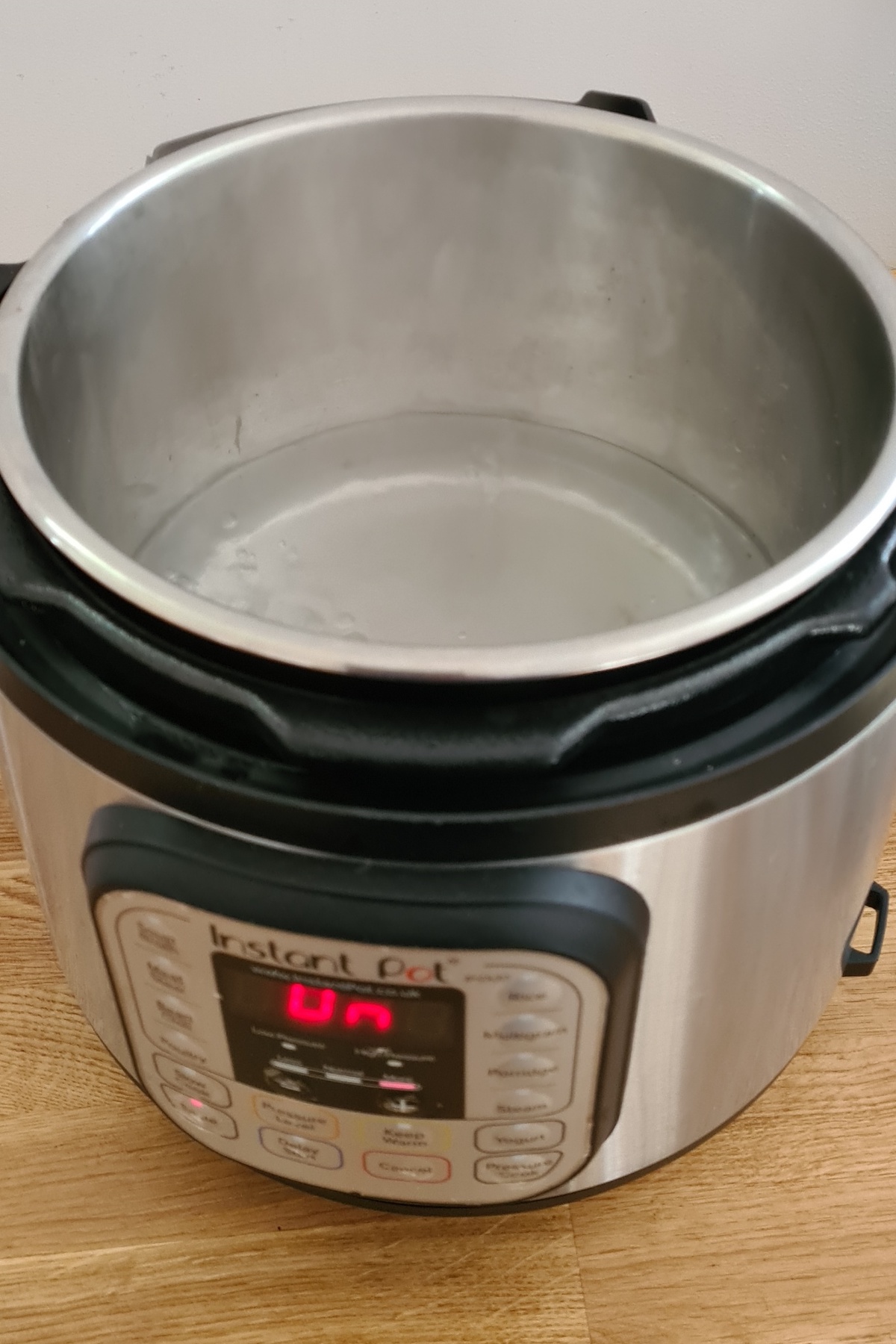
3. Select Sauté Mode
- Press the Sauté button on your Instant Pot.
- On some models, you can adjust the heat level (e.g., Less, Normal, More). For boiling, select Normal or More for higher heat.
- The display will show “On.”
4. Wait For The Water To Boil
- Watch the water. In 3–8 minutes (depending on quantity and model), bubbles will form.
- Full rolling boil is visible when large bubbles constantly break the surface.
- The pot makes a faint humming sound as it heats.
5. Use As Needed
- Add ingredients for blanching, sterilize utensils, or simply pour out the water as needed.
- If you want to keep water at a boil, leave on Sauté.
- If you want to hold hot but not boiling water, switch to Keep Warm mode.
6. Turn Off And Unplug
- When finished, press Cancel to turn off the Instant Pot.
- Unplug for extra safety.
- Use oven mitts or tongs to handle the hot inner pot.
How Long Does It Take To Boil Water?
Boiling time depends on:
- Amount of water (the more water, the longer it takes)
- Starting temperature (cold water takes longer)
- Model wattage (most Instant Pots are 700–1000 watts)
Here’s an average time chart for boiling water on Sauté mode:
| Water Amount | Room Temp (21°C/70°F) | Cold (5°C/41°F) |
|---|---|---|
| 1 cup (250 ml) | 3-4 min | 4-5 min |
| 2 cups (500 ml) | 4-6 min | 6-8 min |
| 4 cups (1 liter) | 7-9 min | 9-12 min |
| 6 cups (1.5 liters) | 10-13 min | 12-15 min |
If you need to boil a lot of water, the Instant Pot is slower than a regular kettle or stovetop. But it’s still convenient if you don’t have another option.
Safety Considerations
Boiling water in an Instant Pot without the lid is generally safe, but there are important rules:
- Never fill above the Max Fill line. Boiling water can splash and overflow.
- Steam is hot. Keep hands and face away from the pot.
- Do not leave unattended. The pot can boil dry if water evaporates.
- Use the inner pot only. Never pour water directly into the heating base.
- Don’t use Pressure Cook mode without the lid. This mode is designed for closed cooking only.
One non-obvious tip: if you use the pot for long periods on Sauté, the base can get very hot. Place your Instant Pot on a heat-safe surface.
Practical Uses For Boiling Water In An Instant Pot Without The Lid
There are many reasons you might want to boil water with the lid off:
- Making tea or coffee: Heat water quickly for hot drinks.
- Sterilizing baby bottles or utensils: Drop items in boiling water for a few minutes.
- Blanching vegetables: Prepare veggies for salads or freezing.
- Boiling eggs: Add eggs directly, watch and remove when done.
- Cooking pasta or noodles: Stir and check doneness without pressure.
- Soaking beans or grains: Start with boiling water to speed up soaking.
Some advanced users reduce sauces or syrups in their Instant Pot with the lid off, using Sauté mode. This allows water to evaporate and flavors to concentrate.
Key Differences From Using A Stove Or Kettle
While boiling water in an Instant Pot is simple, it’s not exactly like using a stovetop pot or kettle.
- Slower heating: The electric coil heats slower than gas or induction.
- Stable temperature: The digital thermostat prevents overheating.
- No whistling: There’s no sound alert when boiling is reached, so you must watch.
- Easy to hold temperature: Switching to Keep Warm keeps water hot without boiling over.
Below is a quick comparison:
| Appliance | Speed | Temperature Control | Alert When Boiling |
|---|---|---|---|
| Instant Pot (Sauté) | Medium | Digital, Stable | No |
| Stovetop Pot | Fast (gas), Medium (electric) | Manual, less precise | No |
| Kettle | Very Fast | Automatic off | Yes (click or whistle) |
:max_bytes(150000):strip_icc()/sea-pressure-cookers-primary-nsimpson-59-6a0c8fce33fc41cf9cc55710bca76c4a.jpeg)
Credit: www.seriouseats.com
Common Mistakes And How To Avoid Them
Many Instant Pot beginners make simple errors when boiling water without the lid. Here are some to watch for:
- Forgetting to use the inner pot. Only the stainless steel or ceramic inner pot is safe for water. Never pour water into the main base.
- Overfilling. More water makes boiling slower and risks overflow.
- Leaving the pot unattended. Without the lid, water can evaporate and the pot may boil dry, damaging it.
- Not selecting the right mode. Sauté is the only mode that reliably boils water with the lid off.
- Touching the hot pot. The sides and handles can become very hot.
One less-known tip: after long boiling, the base may have condensation underneath. Allow the pot to cool before moving.
Advanced Tips For Better Results
If you want to get the most from your Instant Pot for boiling water, try these advanced ideas:
- Pre-heat the inner pot. Add a small amount of hot tap water, swirl, and dump it before adding your water to boil. This shortens the time to boil.
- Cover with a splatter guard. If you want to keep heat in but don’t want pressure, use a mesh splatter screen. This also keeps bugs or dust out.
- Use the Delay Start feature. On some models, you can set Sauté to start later, so water is hot when you need it.
- Boil with spices or herbs. Add ginger, cinnamon, or herbs to make quick infusions.
- Check for “HOT” warning. If the pot displays “HOT,” it means it’s reached max temperature. This is normal on Sauté.
Some users even use the Instant Pot for sous-vide style cooking with the lid off, holding water at a precise temperature.
Cleaning Up After Boiling Water
Boiling just water leaves little mess, but a few cleaning tips can keep your Instant Pot in top shape:
- Rinse the inner pot with clean water after each use to remove mineral deposits.
- If you notice white spots, use a little vinegar to dissolve them.
- Dry the pot thoroughly before returning to the base.
- Wipe any condensation off the outside and the heating base.
- If you spill water into the base, unplug and let air dry for 24 hours before using again.
When Not To Boil Water Without The Lid
While open-lid boiling works for many tasks, there are times when it’s not the best choice:
- Pressure cooking: If you want to cook beans, rice, or tough meats, always use the lid and Pressure Cook mode.
- Large volumes: For more than 6 cups (1.5 liters), a stovetop or kettle is faster and more efficient.
- Sterilizing for medical use: If you need full sterilization (e.g., medical tools), Instant Pot boiling may not be hot enough—autoclaves use higher pressure.
- Unattended boiling: If you need to leave, it’s safer to use a kettle with auto-off.
One non-obvious risk: if your kitchen is humid, open-lid boiling can add a lot of steam to the air. Use a vent or open a window.
Alternatives To Boiling Water In An Instant Pot
If you don’t have an Instant Pot or want faster results, here are alternatives:
- Electric kettle: Boils water fastest, but can’t cook food.
- Stovetop pot: Classic, flexible, easy to watch.
- Microwave: Fast for small amounts, but less even.
- Coffee maker: Good for heating water if nothing else is available.
But the Instant Pot remains handy for people in dorms, RVs, or places with limited kitchen gear.
Real-world Examples
Let’s look at some practical cases where open-lid boiling in an Instant Pot shines:
- In a hotel room: Travelers use the Instant Pot to make noodles or tea without a stove.
- During a power outage: If you have a generator but no gas, an Instant Pot heats water for washing or drinking.
- Sterilizing jars: Canners use the pot to dip glass jars in boiling water before filling.
- Making oatmeal: Quick-cook oats can be stirred into boiling water and cooked with the lid off for better texture.
These flexible uses make the Instant Pot more than just a pressure cooker.

Credit: www.walmart.com
Frequently Asked Questions
What Happens If I Try To Use Pressure Cook Mode Without The Lid?
The Pressure Cook mode will usually not start unless the lid is locked. Even if it does, pressure can’t build, so water will just heat until the safety sensor stops the cycle. This can waste energy and may trigger an error code.
Always use Pressure Cook mode with the lid closed and locked.
Can I Use The Glass Lid Or A Plate When Boiling Water?
Yes, you can use the Instant Pot glass lid or even a large plate to cover the pot while boiling water on Sauté mode. This helps retain heat and reach boiling faster, but never seal the pot (no pressure should build). Use only lids designed for high temperatures.
Is Boiling Water In An Instant Pot More Energy Efficient Than A Kettle?
For small amounts (1–2 cups), a kettle is usually faster and uses less energy. For larger batches, the Instant Pot may be about the same or slightly less efficient. Instant Pots are better at holding a steady temperature after boiling, while kettles just shut off. For energy data, see this Wikipedia page.
Credit: recipesfromapantry.com
Can I Boil Milk Or Soup Without The Lid?
Yes, but be careful. Milk tends to foam and spill over when boiling, so stir often and use a lower Sauté setting. For soups, open-lid boiling is good for reducing and thickening, but watch to avoid splashing. Always stay close and stir frequently.
Is It Safe To Leave The Instant Pot Boiling Unattended?
No, it’s not safe to leave any open pot of boiling water unattended, including the Instant Pot. Water can boil away, damaging the pot and creating a fire risk. Always stay nearby and turn off the pot when finished.
Boiling water in your Instant Pot without the lid is simple, flexible, and safe when you follow the right steps. Whether you need hot water for tea, want to blanch vegetables, or sterilize kitchen tools, your Instant Pot is up to the task.
With these tips, you can use your appliance with more confidence and creativity—no more worrying about whether you need the lid or not.