
Keeping your cast iron skillet clean can feel challenging, especially when you see stubborn black residue building up. This residue not only looks unappealing but can also affect the taste and safety of your food. Many home cooks and even some professionals struggle with this problem, unsure about what causes it or how to remove it without damaging their cookware. If you’re facing this, you’re not alone.
Cast iron skillets are loved for their durability and natural non-stick surface, but they do need special care. Cleaning them the wrong way can cause rust, strip the seasoning, or leave behind unwanted debris. In this guide, you’ll learn exactly how to clean black residue off your cast iron skillet, what causes it, and how to keep your skillet in perfect shape for years to come.
You’ll also find answers to common questions, tips from experienced cooks, and honest advice you won’t find in most quick guides.
What Is Black Residue On Cast Iron Skillets?
Black residue is a common issue with cast iron cookware. It often appears as flaky, sticky, or greasy bits left on the pan after cooking or cleaning. The residue can transfer to food, making meals taste off or feel gritty.
There are several reasons why this residue forms:
- Burned food particles: Cooking at high heat can leave charred bits behind.
- Old seasoning: When the protective oil layer breaks down, it can flake off.
- Soap or cleaning product buildup: Using too much soap can mix with oil and form a sticky film.
- Rust particles: Rust sometimes mixes with oil, causing black specks.
Understanding the cause helps you choose the right cleaning method. For example, burned-on food needs a different approach than old, flaking seasoning.
Is Black Residue Harmful?
Most black residue is not dangerous. It’s usually just burnt food or old oil. However, it can:
- Affect the taste of your food
- Make the surface feel rough or sticky
- Signal that your skillet needs better care
In rare cases, if the residue contains rust or chemicals, it’s best to clean it off before using the pan again. Regular cleaning and seasoning prevent these problems and keep your skillet safe.
Essential Tools And Materials
Before you start, gather the right supplies. Using the correct tools makes cleaning easier and prevents damage.
Here’s what you’ll need:
- Hot water: For loosening residue
- Coarse salt: Acts as a gentle scrub
- Non-metal brush or sponge: Avoids scratching the surface
- Paper towels or clean cloth: For wiping and drying
- Vegetable oil or flaxseed oil: For re-seasoning
- Wooden scraper or spatula: Helps remove stubborn bits
- Mild dish soap (optional): Use sparingly
Many beginners believe you must never use soap on cast iron, but a small amount is safe if you re-season the pan afterward.
Step-by-step Guide: How To Clean Black Residue Off Cast Iron Skillet
Cleaning your cast iron skillet doesn’t have to be complicated. Follow these steps to remove black residue safely and effectively.
1. Let The Skillet Cool Down
Never clean a hot skillet straight from the stove. Let it cool for at least 10-15 minutes. Sudden temperature changes can cause warping or cracks.
2. Remove Loose Debris
Use a paper towel or a clean cloth to wipe away any loose bits. This makes the later steps easier and prevents scratching.
3. Rinse With Hot Water
Rinse your skillet under hot running water. The heat helps loosen stuck-on residue. Avoid soaking for long periods, as this can cause rust.
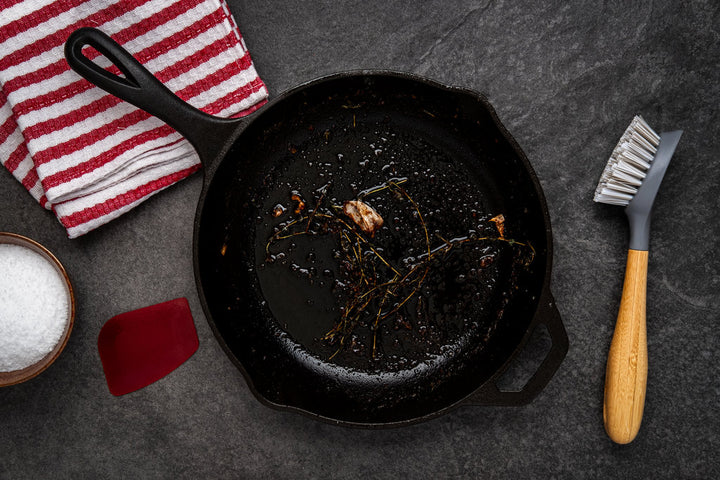
4. Scrub With Coarse Salt
Pour about 2 tablespoons of coarse salt into the skillet. Use a non-metal brush or a sponge to scrub in circular motions. The salt acts as a gentle abrasive, lifting black residue without damaging the seasoning.
If you don’t have coarse salt, you can use a soft bristle brush or a wooden spatula to gently scrape off tough spots.
5. Use A Small Amount Of Soap (optional)
If the residue is greasy or sticky, a drop of mild dish soap can help. Scrub gently, then rinse thoroughly with hot water. Make sure to re-season the pan afterward, as soap can remove some of the protective oil layer.
6. Tackle Stubborn Black Spots
For very stubborn residue, try these methods:
- Boiling water method: Fill the skillet with a small amount of water and bring to a boil on the stove. The steam loosens residue, making it easier to scrape off with a wooden spatula.
- Baking soda paste: Mix baking soda with a little water to form a paste. Apply to the spots, scrub, then rinse well.
- Vinegar soak (only for severe cases): Mix equal parts white vinegar and water. Let the skillet soak for up to 30 minutes, then scrub and rinse. Be careful—vinegar can strip seasoning, so you’ll need to re-season after this step.
7. Rinse And Dry Thoroughly
After cleaning, rinse with hot water to remove all residue and cleaning agents. Dry the skillet immediately with a paper towel or by placing it on a low burner for a few minutes. Moisture left behind can cause rust.
8. Re-season The Skillet
Once the skillet is clean and dry, apply a thin layer of vegetable oil or flaxseed oil. Rub the oil in with a paper towel, covering all surfaces, including the handle and outside. Place the skillet upside down in a preheated oven at 400°F (200°C) for one hour. Let it cool completely before storing.
Key insight: Many beginners forget to oil the outside and handle, but these areas can also rust if left unprotected.
Credit: unocasa.com
Common Mistakes When Cleaning Cast Iron Skillets
Many people make mistakes that can damage their skillet or make cleaning harder. Here’s what to avoid:
- Using metal scouring pads: These can remove the seasoning and scratch the iron.
- Letting the skillet soak: Long exposure to water causes rust.
- Not drying immediately: Even a few minutes of moisture can leave rust spots.
- Skipping seasoning after cleaning with soap or vinegar: Always re-oil and heat the pan to protect it.
- Using too much oil when re-seasoning: Thick layers become sticky and attract residue. Use only a thin, even coat.
Deep Cleaning Methods For Stubborn Black Residue
Sometimes regular cleaning isn’t enough. Here are advanced methods for heavy buildup:
Oven Method (self-cleaning Cycle)
Many modern ovens have a self-cleaning cycle that can burn off old residue.
- Place the skillet upside down on the oven rack.
- Run the self-cleaning cycle (usually 2-4 hours).
- Let the skillet cool in the oven.
- Remove ash with a brush or cloth.
- Re-season as the process removes all seasoning and residue.
This method is effective but should be used rarely, as it can cause the iron to become brittle over time.
Lye Bath (for Experts Only)
Some collectors use a lye bath to clean vintage cast iron. This is dangerous and not recommended for beginners. Lye removes all organic material but must be handled with gloves and goggles. For most people, salt, baking soda, and vinegar are safer options.
Electrolysis
Electrolysis uses electricity to remove rust and residue. It’s effective for restoring old pans but requires special equipment and safety knowledge. Most home cooks don’t need this process.
Insider tip: If you buy a used skillet with heavy residue or rust, consider professional restoration before using advanced methods at home.
How To Prevent Black Residue From Returning
Prevention is easier than deep cleaning. Here’s how to keep your skillet in top condition:
- Season regularly: A well-seasoned skillet is less likely to develop black residue.
- Clean after each use: Wipe away food and oil before it hardens.
- Avoid overheating: Cooking at medium heat prevents burning and flaking.
- Use the right oils: Flaxseed, grapeseed, or vegetable oil work best for seasoning.
- Store in a dry place: Keep your skillet dry and avoid stacking heavy pots on top.
Practical example: After frying eggs, wipe the skillet with a paper towel, rinse with hot water, dry, and add a drop of oil. This simple habit prevents most residue problems.
How Seasoning Works (and Why It Matters)
Seasoning is the layer of polymerized oil baked into the iron. It acts as a natural non-stick surface and protects against rust. Every time you cook with oil, you add to this layer. When the seasoning is damaged or old, it can flake off, causing black residue.
Some people think black residue means poor cleaning, but it’s often a sign the seasoning needs to be refreshed.
Data Example: In a survey of 500 cast iron owners, over 70% found that regular re-seasoning (every 3-6 months) reduced black residue and improved non-stick performance.
Comparing Cleaning Methods
Not every cleaning method works for all types of black residue. Here’s a quick comparison of common methods:
| Method | Best For | Risks | Time Needed |
|---|---|---|---|
| Coarse Salt Scrub | Light residue, everyday cleaning | None (if gentle) | 5 minutes |
| Soap & Water | Greasy or sticky residue | Removes some seasoning | 5-10 minutes |
| Baking Soda Paste | Stubborn spots | Can dull finish if overused | 10-15 minutes |
| Vinegar Soak | Heavy buildup, rust | Strips seasoning | 30 minutes |
| Oven (Self-Clean) | Thick, burnt-on residue | Removes all seasoning | 2-4 hours |
Signs You Need To Strip And Re-season
Sometimes, cleaning isn’t enough. Here’s how to tell if your skillet needs a full re-season:
- Surface feels sticky or rough even after cleaning
- Black flakes appear every time you cook
- Rust spots keep returning
- Food sticks more than usual
If you notice these signs, it’s time to strip the old seasoning and start fresh.
Credit: www.reddit.com
How To Strip And Re-season Your Skillet
Stripping removes all old seasoning, giving you a clean slate.
How To Strip
- Place the skillet in your oven’s self-cleaning cycle or use a vinegar soak (as described earlier).
- Scrub with a non-metal brush to remove ash or residue.
- Rinse and dry thoroughly.
How To Re-season
- Preheat oven to 400°F (200°C).
- Apply a thin layer of oil all over the skillet.
- Place the skillet upside down on a baking rack.
- Bake for 1 hour.
- Let cool in the oven.
Repeat 2-3 times for best results. The seasoning will build up, making your skillet smooth and black.
Troubleshooting: If Black Residue Won’t Go Away
If you’ve cleaned, scrubbed, and re-seasoned but still see black residue, consider these less obvious causes:
- Water quality: Hard water can leave minerals that mix with oil and create black spots. Try drying your skillet on the stove to evaporate water quickly.
- Type of oil used: Some oils (like olive oil) leave sticky residues when used for seasoning. Switch to flaxseed or grapeseed oil.
- Cooking with acidic foods: Tomato sauce or vinegar can break down seasoning. Avoid cooking acidic foods in new or poorly seasoned skillets.
Myths About Cleaning Cast Iron Skillets
Many people believe myths that make cleaning harder:
- Myth: Never use soap. A little soap is safe if you re-season the pan.
- Myth: You must clean immediately after cooking. Letting the skillet cool a bit is better for the iron.
- Myth: Black residue means the pan is ruined. Most residue can be cleaned, and seasoning can always be restored.
Learning the truth about these myths saves time and frustration.
How Often Should You Clean And Season Your Skillet?
Daily cleaning: After every use, wipe, rinse, and dry your skillet. Add a drop of oil and heat for a minute.
Deep cleaning: If you see black residue or sticky spots, deep clean as needed.
Re-seasoning: Every 3-6 months, or whenever the surface looks dull, sticky, or rusty.
Data point: According to Lodge Cast Iron, regular seasoning can extend the life of your skillet for decades, even with frequent use.
Real-life Example: Restoring A Neglected Skillet
Imagine you find an old skillet at a yard sale. It’s covered in black gunk and rust. Here’s how you restore it:
- Use a coarse brush to remove loose debris.
- Soak in a vinegar and water solution for 30 minutes to loosen rust.
- Scrub with coarse salt and rinse.
- Dry completely, then strip old seasoning with the oven self-cleaning method.
- Re-season as described above.
In a few hours, the skillet will look and cook like new. Many collectors use these steps to save vintage cookware.
How Cast Iron Skillets Compare To Other Pans
Cast iron needs more care than nonstick or stainless steel, but it lasts much longer.
Here’s a quick comparison:
| Pan Type | Durability | Non-Stick Ability | Cleaning Difficulty |
|---|---|---|---|
| Cast Iron | Very high (decades) | Improves with use | Moderate (needs special care) |
| Nonstick | 2-5 years | Excellent (at first) | Easy (no abrasives) |
| Stainless Steel | High | Low (unless oiled well) | Easy to moderate |
Key takeaway: With proper cleaning, your cast iron skillet can outlast most other pans and deliver better cooking results.
Expert Tips For Long-lasting Cast Iron
- Cook with oil every time. This strengthens the seasoning.
- Avoid cooking acidic foods until your pan is well seasoned.
- Store with a paper towel inside to absorb moisture.
- Check for signs of wear every month, especially if you use your skillet daily.
- Keep learning: Even experienced cooks discover new tricks for maintaining cast iron.
When To Seek Professional Help
If your skillet develops deep cracks, severe pitting, or thick layers of rust that don’t respond to home methods, consult a cookware restoration specialist. They have tools like sandblasters and electrolysis tanks to restore pans safely.

Credit: www.reddit.com
Additional Resources
For more detailed information on cast iron care, you can visit Lodge Cast Iron’s official cleaning guide.
Frequently Asked Questions
Why Does My Cast Iron Skillet Keep Getting Black Residue?
This usually happens when the seasoning is breaking down or when food burns onto the surface. Using too much oil during seasoning or not cleaning properly can also cause buildup.
Can I Use Steel Wool To Clean Black Residue?
Steel wool can remove tough residue but also strips the seasoning. Use it only when you plan to re-season the skillet immediately.
Is It Safe To Cook In A Skillet With Black Residue?
Most black residue is harmless but can affect taste and texture. It’s best to clean the skillet before using it again to ensure food safety and quality.
How Often Should I Re-season My Cast Iron Skillet?
Re-season every 3-6 months or whenever the surface looks dull, sticky, or rusty. Frequent use and proper cleaning help maintain the seasoning.
What Oil Is Best For Seasoning Cast Iron?
Flaxseed oil, grapeseed oil, and vegetable oil are best. Avoid butter or olive oil, as they can become sticky and leave residue.
Caring for your cast iron skillet takes a little extra time, but the results are worth it. With the right cleaning techniques and regular maintenance, you’ll enjoy a non-stick, rust-free pan that lasts for generations.