
Decorating a shelf in the kitchen is about more than just filling space. It’s a way to show your personality, improve how your kitchen works, and make the room feel more welcoming. Many people struggle with kitchen shelves, often stacking items randomly or hiding everything behind closed doors.
But with the right approach, any shelf can become a highlight of your kitchen—a place that’s both beautiful and practical.
Some might think shelf decorating is only for big kitchens or people with a lot of time. In reality, even a small shelf or a quick refresh can change the whole feel of your kitchen. You don’t need to be an interior designer to make your kitchen shelf look great.
All you need is a bit of guidance and a willingness to try new ideas.
This article will show you step by step how to decorate a shelf in the kitchen. You’ll learn how to pick the best items, arrange them for balance, and mix style with everyday needs. You’ll also find tips that go beyond the basics—ideas that most beginners miss.
By the end, you’ll have the confidence and knowledge to create a kitchen shelf you’re proud of.
Why Kitchen Shelf Decoration Matters
A well-decorated kitchen shelf does more than just look nice. It can make your kitchen feel bigger, more organized, and more enjoyable to spend time in. When you take time to decorate, you’re also making it easier to find what you need while cooking or cleaning.
Visual appeal is important, but so is functionality. The best kitchen shelves find a balance between these. For example, placing often-used spices or utensils within easy reach saves time, while adding a few decorative touches brings warmth to the space.
Another reason to care about shelf decoration is that it reflects your taste. Guests notice your kitchen’s details. A thoughtful arrangement shows that you care about your home and how people feel in it. In fact, according to the National Kitchen & Bath Association, 78% of homeowners say that kitchen aesthetics are a top priority when remodeling.
Planning Your Kitchen Shelf Decor
Before you start placing items, take a moment to plan. Good planning saves you from clutter, mismatched items, and wasted time.
Assess Your Space
Look at your kitchen shelf and ask a few questions:
- How much space do you have? (Length, depth, and height)
- Is the shelf open or behind glass?
- Does it sit above the countertop, near the stove, or by a window?
Example: If your shelf is above the stove, avoid items that can be damaged by heat or steam.
Choose A Theme Or Style
Having a clear style helps you make decisions faster. Some popular kitchen shelf styles include:
- Modern minimalist (clean lines, few items, neutral colors)
- Rustic farmhouse (wood, baskets, vintage pieces)
- Colorful eclectic (mix of colors and patterns)
- Classic white (simple, fresh, timeless)
Pick a style that matches your kitchen and personality. If you’re not sure, look at photos online or in magazines for inspiration.
Decide Function Vs. Decoration
Think about how you use your kitchen. Do you want the shelf to be mostly practical (holding spices, cups, plates), or mostly decorative (plants, art, cookbooks)? Most shelves work best with a mix of both.
Pro tip: Start with function—add what you need to reach easily. Then fill in with decorative pieces.
Picking The Right Items For Your Shelf
Not every item belongs on a kitchen shelf. Choose things that are both attractive and useful.
Everyday Essentials
These are items you use often, so keeping them on the shelf saves time.
- Spices (in matching jars for a neat look)
- Coffee mugs
- Small bowls or plates
- Cooking oils in pretty bottles
- Frequently used utensils
Decorative Objects
These add personality and style.
- Potted plants (herbs like basil or mint look good and can be used in cooking)
- Candles
- Framed photos or small artwork
- Pretty jars or vases
- Collectible items
Combining Function And Beauty
Some things do both jobs:
- Cookbooks with colorful covers
- Attractive storage baskets or boxes
- Ceramic or glass containers for dry goods
What To Avoid
Don’t place heavy or rarely used items on high shelves—they’re hard to reach and can be dangerous. Avoid cluttering the shelf with too many small objects, which can make it look messy.
Arranging Items For Balance And Visual Interest
How you arrange your items is as important as what you choose. A well-arranged shelf feels calm and organized, not busy or random.
Create Groups
Instead of spreading items out evenly, group them in sets of 2–5. Odd numbers (3 or 5) often look more natural.
Vary Height And Shape
Mix tall and short items, round and square shapes. This keeps the eye moving and adds interest.
Use Layers
Place some items in front of others. For example, lean a small art print against the wall, then set a jar or plant in front. This gives depth to your shelf.
Leave Empty Space
Don’t fill every inch. Empty space (also called “negative space”) lets each item stand out and keeps the shelf from feeling crowded.
Add Color Wisely
Too many colors can look busy, but a few pops of color add life. Try to repeat a color in more than one spot for harmony.
Example Arrangement
Here’s an example for a 3-foot kitchen shelf:
- Left: Small stack of white plates, a glass jar of pasta, a green potted basil plant
- Center: Two cookbooks standing up, a candle in front
- Right: Set of three matching spice jars, a mug, and a ceramic bowl
Using Storage To Keep Things Tidy
Decorating a shelf is not just about looks. It’s also about staying organized. The right storage solutions make a big difference.
Jars And Containers
Clear jars are perfect for storing rice, beans, or pasta. They let you see what’s inside and look neat when lined up together.
Baskets And Bins
Woven baskets or small bins hide clutter and add texture. Use them for snacks, tea bags, or small kitchen tools.
Hooks And Rails
If your shelf is open at the bottom, consider adding hooks for mugs or measuring spoons. This creates more space and keeps things handy.
Labels
Label containers for quick identification. Use a label maker or simple handwritten tags for a personal touch.
Adding Greenery And Natural Elements
Plants bring a fresh feeling to any kitchen. They add color, clean the air, and make the space more alive.
Best Plants For Kitchen Shelves
- Herbs (basil, mint, thyme): Useful for cooking and easy to grow indoors
- Succulents: Need little water, perfect for sunny spots
- Pothos or spider plants: Good for low-light shelves
Using Flowers
A small vase of fresh or dried flowers adds beauty without taking much space.
Wood, Stone, And Other Materials
Mix in items made from wood, stone, or clay to add warmth and texture.

Credit: graceinmyspace.com
Lighting: Making Your Shelf Shine
Good lighting can make your kitchen shelf look even better. Sometimes, kitchen shelves are in darker corners, so a little light helps highlight your decor.
Under-shelf Lights
Stick-on LED lights are simple to install and show off your items. Look for battery-powered or plug-in strips.
Accent Lighting
A small lamp or string of fairy lights can add a cozy touch, especially in the evening.
Natural Light
If your shelf is near a window, use it! Place plants or glass items where the light will catch them.
Mixing Old And New
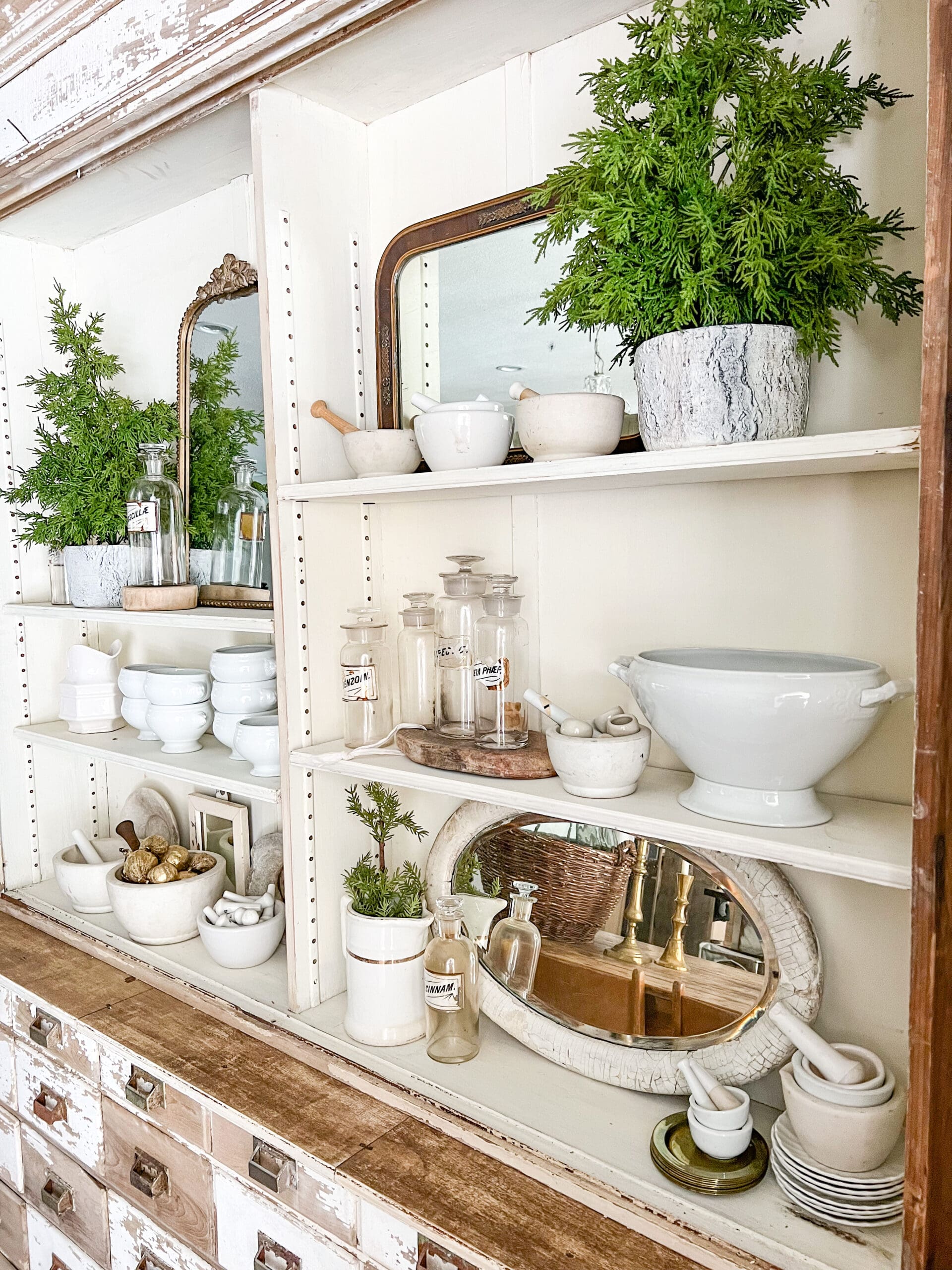
Combining old and new objects gives your shelf more character. Vintage finds (like an old teapot or a classic cookbook) mix well with modern pieces.
Tip: Don’t be afraid to show items with a bit of wear—these can be conversation starters.
Displaying Collections
If you collect something (spoons, mugs, salt shakers), your kitchen shelf is a great place to show them off.
- Display in groups, not all at once, to avoid clutter.
- Change out your display every few months to keep things interesting.
Keeping Your Shelf Clean
Kitchen shelves can get dusty or greasy, especially near the stove. Make cleaning part of your routine.
- Wipe shelves weekly with a damp cloth.
- Wash jars and containers as needed.
- Remove everything and do a deep clean every few months.
Credit: robynsfrenchnest.com
Common Mistakes To Avoid
Decorating a kitchen shelf is easy to get wrong if you don’t pay attention. Here are mistakes to watch out for:
- Overcrowding: Too many items make the shelf look messy.
- Ignoring function: If you can’t reach what you need, the shelf isn’t working.
- Mismatched styles: Stick to a theme for a more put-together look.
- Forgetting about cleaning: Don’t use delicate items that are hard to wash.
- No color balance: Use a few colors, and repeat them for harmony.
Real-life Examples And Case Studies
Let’s look at how different people decorated their kitchen shelves and what they learned.
Small Apartment Kitchen
Maria lives in a studio apartment with a tiny kitchen. She chose open shelves because there was no room for cabinets. She used matching white jars for dry goods, two cookbooks, and a small plant. By sticking to just three colors (white, green, and wood), her shelves look tidy, not crowded.
Family Home With Kids
The Patel family wanted both style and safety. They put kids’ cups and bowls on the lowest shelf. Above, they kept adult mugs, a basket for snacks, and a ceramic vase. They used hooks for easy-to-reach utensils. This made mornings faster and safer for everyone.
Modern Luxury Kitchen
James added under-shelf lighting to show off his glassware collection. He mixed stainless steel items with a few vintage cookbooks for contrast. The result: a shelf that’s both modern and personal.
How To Refresh Your Shelf For Each Season
Changing your shelf decor with the seasons keeps your kitchen feeling new.
- Spring: Add fresh flowers, pastel bowls, and bright towels.
- Summer: Use citrus fruits in a bowl, or display summer herbs.
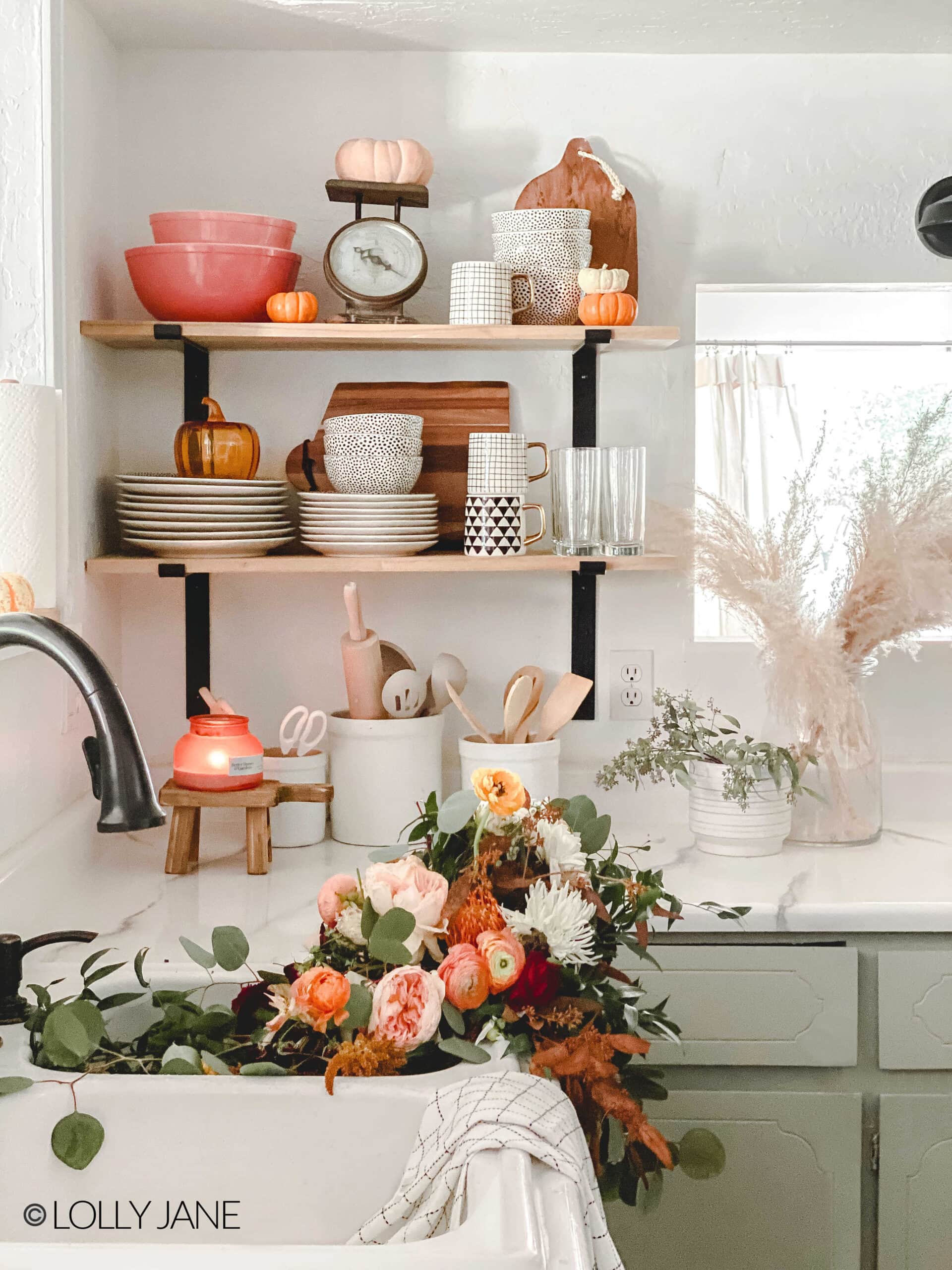
- Fall: Add pumpkins, orange mugs, or a jar of autumn leaves.
- Winter: Try pinecones, candles, or red-and-green accents.
Switching just a few items is enough to give your shelf a new look.
Comparing Shelf Materials And Styles
Choosing the right shelf material and style is key. Here’s a quick comparison to help you decide:
| Material | Pros | Cons | Best For |
|---|---|---|---|
| Wood | Warm, natural, strong | Can stain, needs care | Rustic, farmhouse, classic |
| Glass | Modern, light, easy to clean | Shows dust, can break | Minimalist, modern |
| Metal | Strong, sleek, industrial look | Can scratch, may rust | Industrial, modern |
Insight: Many people pick wood for warmth, but glass shelves can make a small kitchen feel more open.
Credit: lollyjane.com
How To Choose The Right Shelf Size
Picking the wrong shelf size is a common mistake. Too big, and it dominates the kitchen; too small, and it’s not useful.
| Kitchen Size | Recommended Shelf Length | Recommended Depth | Notes |
|---|---|---|---|
| Small (80-120 sq ft) | 24–36 inches | 8–10 inches | Best for essentials only |
| Medium (120-180 sq ft) | 36–48 inches | 10–12 inches | Can mix decor and storage |
| Large (180+ sq ft) | 48+ inches | 12–14 inches | Room for collections |
Tip: Measure your space before buying shelves, and leave at least 15 inches between the shelf and the countertop below for easy access.
Budget-friendly Shelf Decoration Ideas
You don’t need to spend a lot to make your kitchen shelf look stylish.
- Use glass jars from old food (like pasta sauce) for storage.
- Paint a few old mugs or bowls to match your color scheme.
- Print out recipes or food photos and put them in simple frames.
- Swap items with friends or family for a fresh look.
- Visit thrift shops for unique finds.
Two Non-obvious Insights For Beginners
- Layering behind and in front: Most beginners line up everything in a straight row. Instead, try putting a framed recipe or small cutting board against the wall, then set a plant or jar in front. This “layering” adds depth and looks more professional.
- Repeat shapes and materials: Your shelf will look better if you repeat similar shapes (like several round jars) or materials (all glass or all wood). This creates harmony, which is more important than matching colors exactly.
The Role Of Texture And Pattern
Don’t forget about texture. Mixing smooth (glass), rough (basket), and shiny (metal) items makes the shelf more interesting. You can also add a patterned bowl or towel for variety.
Safety Tips For Kitchen Shelf Decorating
Safety is just as important as style, especially if you have children or pets.
- Don’t put heavy items on high shelves.
- Avoid glass near the edge if children are around.
- Secure shelves properly to the wall, using strong brackets.
- Check for heat or moisture near the stove or sink—choose items that can handle it.
How To Use Technology In Kitchen Shelf Design
Modern kitchens sometimes include tech on open shelves.
- Place a smart speaker for music or recipes.
- Keep a tablet or e-reader handy (use a stand to keep it safe from spills).
- Use a small charging station for phones.
Make sure wires are tidy and devices are out of splash zones.
When To Change Or Update Your Shelf Decor
Update your shelf when:
- You feel bored with the current look.
- You buy new kitchenware you want to show.
- The seasons change.
- You need more storage for daily use.
Even a small change—a new plant or mug—can refresh your whole kitchen.
Maximizing Small Shelves
Even if you only have a tiny shelf, you can still make it stylish and useful.
- Use vertical space: Stack bowls or plates.
- Pick multi-purpose items (a jar that holds utensils and looks good).
- Hang hooks under the shelf for extra storage.
Professional Tips From Designers
Some expert advice can take your shelf from good to great:
- Step back and look at your shelf from across the room. Does anything stand out too much?
- Take a photo. Sometimes, seeing your shelf in a picture helps you spot problems.
- Start with fewer items, and add slowly. It’s easier to add than to remove.
- Use odd numbers when grouping items—this looks more natural.
For more ideas, you can check out the advice from Apartment Therapy, a well-known home decor site.
Frequently Asked Questions
How Do I Keep My Kitchen Shelf From Getting Cluttered?
Start with only the items you use often and love. Group things in baskets or jars, and leave some empty space. Check your shelf every month—remove anything you haven’t used or that doesn’t fit your style.
What Kind Of Plants Are Best For A Kitchen Shelf?
Herbs like basil, mint, and parsley are top choices because they’re useful for cooking and easy to care for. Succulents and pothos also work well, as they need little care and adapt to most kitchens.
How Do I Choose A Color Scheme For My Kitchen Shelf?
Pick 2–3 main colors that match your kitchen or that you like. Repeat these colors in different items (jars, mugs, plants). For a calm look, use mostly neutral colors with one bright accent.
Can I Mix Metals And Woods On My Kitchen Shelf?
Yes! Mixing materials like wood, metal, and glass adds interest. Try to repeat each material at least twice on the shelf, so nothing looks out of place.
How Often Should I Clean Or Change My Kitchen Shelf Decor?
Wipe your shelf every week to keep dust and grease away. Change decor items every few months, or when seasons change, for a fresh look.
A well-decorated kitchen shelf is more than just a place to store things. It’s a way to express yourself, stay organized, and make your kitchen a space you love. Whether your kitchen is big or small, with a few smart choices and personal touches, your shelf can become a highlight of your home.
Start simple, adjust as you go, and enjoy the process—because the best kitchen shelves are the ones that make you smile every day.