
Cleaning your Ninja Foodi air fryer lid can feel confusing, especially if you worry about damaging the appliance or missing hidden dirt. But a clean lid is important for food taste, safety, and your machine’s life. Grease, food splatters, and crumbs often gather around the lid, leading to smoke, odor, or uneven cooking.
If you’ve ever noticed a strange smell or found your air fryer isn’t working quite right, a dirty lid could be the reason.
I’ve cleaned many Ninja Foodi appliances, and I know that following the right steps makes all the difference. This guide will show you exactly how to clean your Ninja Foodi air fryer lid, why it matters, and how to keep it spotless with less effort.
Whether you’re a first-time user or a home cook who uses their Foodi daily, these tips will help you avoid mistakes and keep your kitchen healthy.
Why Cleaning The Ninja Foodi Air Fryer Lid Matters
The Ninja Foodi air fryer lid has a unique design. It’s not just a plastic cover—it contains the heating element, fan, and mesh guard. When you cook, oil and food particles rise with the hot air and collect inside the lid. Over time, this buildup can cause several problems:
- Smoke and bad odors: Old grease burns each time you cook, making your food smell or taste strange.
- Reduced performance: Airflow can get blocked, so your food doesn’t cook evenly.
- Fire risk: Layers of grease near the heating element can actually catch fire.
- Bacteria growth: Damp food residue is a perfect home for germs.
Foodi lids are not dishwasher safe or waterproof, so you can’t just soak them. Cleaning the lid the right way protects both your food and your appliance.
Understanding The Ninja Foodi Air Fryer Lid
Before you start, it’s helpful to know what makes the air fryer lid special.
The lid is attached to the main body of the Ninja Foodi. You cannot remove it. Inside, you’ll find:
- Heating element: This gets extremely hot and cooks your food.
- Fan: Circulates air for even cooking.
- Splatter shield: A metal mesh that blocks grease and crumbs from hitting the heating element.
Some Ninja Foodi models have a splatter shield you can remove, while others do not. Always check your model’s manual before cleaning.
Non-obvious insight: The heating element is very sensitive—scratching or soaking it can ruin your Foodi. That’s why safe cleaning is so important.
What You Need: Cleaning Tools And Supplies
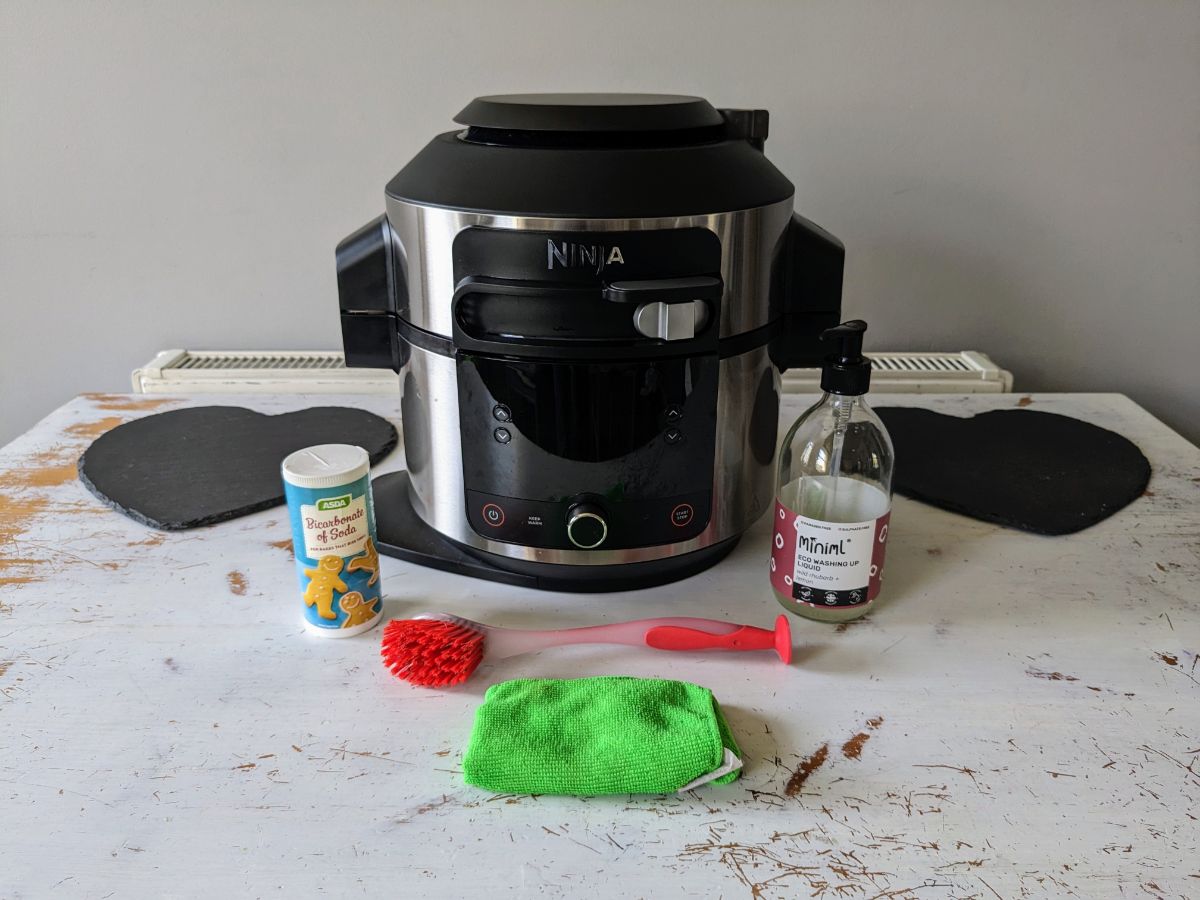
Having the right tools makes cleaning faster and safer. Gather these items before you start:
- Soft sponge or cloth: Avoid anything rough that might scratch the lid.
- Small brush or old toothbrush: Helps reach into the mesh and corners.
- Mild dish soap: Strong cleaners can damage the lid.
- White vinegar (optional): Great for cutting grease and killing germs.
- Warm water: Never use boiling water, which can damage parts.
- Paper towels or microfiber cloth: For drying.
- Wooden or silicone spatula: Useful for scraping off stuck bits gently.
- Cotton swabs: Good for tight spaces around the fan and mesh.
Do not use metal scouring pads, bleach, or oven cleaner. These can ruin your appliance.
Step-by-step: How To Clean Your Ninja Foodi Air Fryer Lid
Let’s break down the process so you never miss a spot. Patience and gentle cleaning are key.
1. Safety First: Unplug And Cool Down
Always unplug your Ninja Foodi and let it cool down completely before cleaning. The heating element and inside parts stay hot for a long time after cooking. Touching them too soon can cause burns.
2. Remove Loose Debris
Open the lid and gently shake out any loose crumbs or food bits. You can also use a dry brush or a paper towel to wipe away visible particles. Don’t use water yet.
3. Clean The Splatter Shield
Most grease and dirt collect here. If your model has a removable shield, follow these steps:
- Check your manual to see if the splatter shield comes out. Usually, you press a release tab or slide it gently.
- Once removed, soak the shield in warm, soapy water for 10–15 minutes.
- Scrub with a soft brush or sponge to remove grease.
- Rinse well and dry completely before putting it back.
If the shield doesn’t come out, use a damp, soapy sponge to wipe both sides. A brush or cotton swab can help reach stuck spots.
Practical tip: Hold a towel under the lid while cleaning to catch drips.
4. Clean The Heating Element And Fan
This part must stay dry. Never spray water directly or soak it.
- Dampen a cloth or sponge with soapy water (not dripping wet).
- Carefully wipe the heating element and the area around it.
- For stubborn grease, dip a cotton swab in vinegar and gently rub the spot.
- Let everything air dry before closing the lid.
Non-obvious insight: The fan blades collect fine oil mist. Use a dry brush or toothbrush to sweep them gently—never use wet cloths here.
5. Wipe The Lid Exterior
Don’t forget the outside. Greasy fingerprints or splatters can collect here too.
- Use a damp cloth with a little dish soap to wipe down the outer lid surface.
- Dry with a soft towel.
6. Reassemble And Test
If you removed the splatter shield, make sure it’s completely dry before putting it back. Plug in the Foodi and run it empty for a minute—this helps dry any leftover moisture.
Credit: www.mommyhatescooking.com
Deep Cleaning: How And When To Do It
A quick wipe is fine after every use, but regular deep cleaning keeps your Ninja Foodi running like new.
Signs You Need A Deep Clean
- Visible grease or yellow stains on the lid or shield
- Smoke or strange smells during use
- Sticky residue that won’t wipe off
- Food debris stuck in the mesh
Deep Cleaning Steps
- Unplug and cool down the Foodi.
- Remove the splatter shield if possible.
- Soak the shield for 15–20 minutes in a mix of one part vinegar and three parts hot water. This dissolves stubborn grease.
- Scrub gently with a brush or sponge. Pay attention to mesh holes and corners.
- Rinse and dry fully.
- Clean the heating element and fan with a barely damp cloth or cotton swab. Never let water drip inside.
- Wipe the rest of the lid and the exterior.
Do a deep clean once a month, or more often if you use your Foodi daily.
Cleaning Frequency: How Often Should You Clean The Lid?
Many users ask, “Do I need to clean the lid every time? ” The answer depends on how often and what you cook.
- After every use: Wipe the exterior and any visible grease or crumbs.
- Weekly: Clean the splatter shield and inside surface.
- Monthly: Deep clean the shield, fan, and heating element.
Heavier foods (like bacon or wings) leave more residue, so clean more often after greasy meals.
Cleaning Frequency Comparison
Here’s a quick reference for cleaning timing:
| Cooking Frequency | Cleaning Task | Recommended Interval |
|---|---|---|
| Daily Use | Wipe lid and shield | After each use |
| Weekly Use | Wash splatter shield | Every 1-2 weeks |
| Heavy Greasy Foods | Deep clean lid and shield | After each heavy meal |
| Light Use | Deep clean | Monthly |
Common Mistakes To Avoid When Cleaning
Even careful users make mistakes that can damage the Foodi or leave grease behind. Here’s what to avoid:
- Using too much water: Never pour or spray water inside the lid. The heating element isn’t waterproof.
- Scrubbing with metal pads: These scratch the shield and heating element, making them rust or break.
- Not drying parts fully: Moisture inside the lid can cause electric shock or mold.
- Ignoring stuck residue: Old grease hardens over time, making future cleaning harder.
- Forgetting the fan: The fan pulls air through the lid, so even small blockages matter.
Pro tip: If you ever smell burning plastic or see smoke after cleaning, unplug the Foodi and check for leftover water or soap.
Special Situations: Sticky Grease, Burnt-on Residue, And Odor
Sometimes, you’ll find stubborn problems that a normal clean won’t fix.
Sticky Grease
Sticky grease is common after cooking fatty foods. For tough spots:
- Mix baking soda with water to make a paste.
- Apply to the sticky area, let sit for 10 minutes.
- Scrub gently with a toothbrush, then wipe clean.
Burnt-on Residue
If food has burned onto the mesh or lid, do not scrape with metal.
- Soak a cloth in hot water and lay it on the spot for 15 minutes.
- Use a wooden spatula to lift the residue.
- Repeat as needed—patience is safer than force.
Lingering Odors
Even after cleaning, smells can stick. To remove them:
- Place a small bowl of baking soda inside the Foodi (not touching any wires) and close the lid overnight.
- Air out the lid by leaving it open for a few hours.
Cleaning Different Ninja Foodi Models
Not all Ninja Foodi lids are the same. Some have removable shields, others do not. Some are larger or have more mesh.
Model Comparison
Here’s a look at how cleaning changes by model:
| Model | Removable Splatter Shield | Cleaning Difficulty |
|---|---|---|
| Ninja Foodi Deluxe XL | Yes | Easy |
| Ninja Foodi Original | No | Medium |
| Ninja Foodi Smart XL | Yes | Easy |
| Ninja Foodi Dual Zone | No (basket style) | Easy |
Tip: Always check your manual for model-specific advice. For manuals, visit the official Ninja Kitchen Support.
How To Maintain A Clean Lid: Prevention Tips
The easiest clean is the one you don’t have to do. Try these habits:
- Wipe after each use: Even a quick swipe with a damp cloth prevents buildup.
- Don’t overload the basket: Too much food splatters more grease.
- Use parchment liners or food-safe foil: These catch drips and crumbs.
- Let the lid cool open: Moisture evaporates, stopping mold.
- Check before each use: A quick look keeps you from cooking with a dirty lid.
Pro insight: Setting a calendar reminder for monthly deep cleaning keeps your Foodi in top shape.
Troubleshooting: What If The Lid Still Looks Dirty?
If you’ve followed all steps but the lid isn’t clean, don’t panic. Here are solutions:
- Cloudy or stained mesh: This is often permanent from high heat. As long as it’s not greasy, it’s safe.
- Persistent smells: Try wiping with vinegar, then baking soda, and air drying.
- Grease in hard-to-reach spots: Use a cotton swab or pipe cleaner. Never poke with sharp objects.
- Rust spots: Rare, but use a little baking soda paste to gently rub them away.
If you see melted parts, broken mesh, or anything unusual, stop using the Foodi and contact Ninja support.
How To Tell If The Lid Is Clean Enough
Sometimes it’s hard to know if you’ve done enough. Here’s what to check:
- No visible grease or food bits
- No sticky spots when you touch the mesh
- No smoke or burning smell on next use
- Air flows freely through the mesh
If all these are true, you’ve done a great job.
Credit: www.orchestradipugliaebasilicata.it
Myths About Cleaning The Ninja Foodi Air Fryer Lid
There’s a lot of wrong advice online. Let’s clear up some common myths:
- Myth: “You can put the whole lid in the dishwasher.”
*Fact: The lid has electrical parts. Never soak or dishwasher it.*
- Myth: “Strong oven cleaners work best.”
*Fact: These damage the finish and can create toxic fumes.*
- Myth: “It’s okay to cook with a dirty lid.”
*Fact: This leads to smoke, fire risk, and poor food taste.*
- Myth: “If the mesh looks dark, it’s ruined.”
*Fact: Slight discoloration is normal after use.*
How A Clean Lid Improves Food And Appliance Life
A clean lid doesn’t just look better—it makes your Foodi safer and your food tastier.
- Better air flow: Even circulation cooks food evenly and crispier.
- No weird smells: Old grease or food bits won’t ruin flavors.
- Longer appliance life: Grease buildup heats up parts and can cause breakdowns.
- Safer kitchen: Less risk of smoke, fires, or electrical problems.
Stat: According to appliance repair experts, regular cleaning reduces air fryer breakdowns by up to 40%.
Comparing Cleaning The Lid Vs. Other Air Fryer Parts
You might wonder why the lid needs special care compared to baskets or pans. Here’s a quick breakdown:
| Part | Can Soak? | Scrubbing Allowed? | Dishwasher Safe? | Cleaning Difficulty |
|---|---|---|---|---|
| Air Fryer Basket | Yes | Yes | Usually | Easy |
| Crisper Plate | Yes | Yes | Yes | Easy |
| Inner Pot | Yes | Yes | Yes | Easy |
| Air Fryer Lid | No | Gently | No | Medium |
Key takeaway: The lid is the most sensitive part, so always treat it with extra care.
Frequently Asked Questions
How Do I Clean Baked-on Grease From The Ninja Foodi Air Fryer Lid?
Use a paste of baking soda and water on the greasy spot. Let it sit for 10–15 minutes, then gently scrub with a toothbrush or soft brush. Wipe clean with a damp cloth and dry thoroughly. Avoid metal scrapers or strong chemicals.
Can I Remove The Ninja Foodi Air Fryer Lid For Cleaning?
No, the air fryer lid is fixed to the Ninja Foodi base and cannot be fully removed. Only the splatter shield (in some models) is removable. Never try to force the lid off, as this can break the appliance.
Is The Ninja Foodi Air Fryer Lid Dishwasher Safe?
No, the lid is not dishwasher safe. The electrical and heating parts inside cannot get wet. Only removable parts like the splatter shield (if your model has one) can go in the dishwasher—but check your manual to be sure.
My Ninja Foodi Lid Smells After Cleaning. What Should I Do?
Try wiping the lid with vinegar and letting it air dry open. Place a small bowl of baking soda inside overnight to absorb smells. If odors stay, check for hidden grease and repeat the cleaning steps.
How Often Should I Deep Clean The Ninja Foodi Air Fryer Lid?
For most users, a monthly deep clean is enough. If you cook a lot of greasy foods or notice smoke, clean more often. Regular light cleaning after each use reduces the need for frequent deep cleans.
Cleaning your Ninja Foodi air fryer lid doesn’t have to be stressful or complicated. With the right tools, simple steps, and regular care, you’ll keep your Foodi running safely and your food tasting great. A clean lid means better results and fewer headaches in the kitchen—so don’t wait until problems start.
Make cleaning part of your cooking routine, and you’ll enjoy your Ninja Foodi for years to come.

Credit: www.youtube.com