
Cleaning the stove is a task many people delay. Grease, food spills, and burnt-on stains can make your kitchen look messy and even cause bad smells. But you do not need harsh chemicals to make your stove shine. Baking soda is a simple, safe, and cheap cleaning product that works wonders on many types of stove messes. Whether you cook daily or only sometimes, learning to clean with baking soda can save you time, money, and effort. This guide shows you step by step how to clean your stove with baking soda, plus tips for different stove types, common mistakes to avoid, and advice for keeping your kitchen clean longer.
Why Baking Soda Is A Powerful Cleaner
Many people wonder why baking soda works so well for cleaning. The answer is in its chemistry. Baking soda, also called sodium bicarbonate, is a mild alkali. This means it can break down dirt and grease easily, but it is not strong enough to damage most surfaces. Baking soda also acts as a gentle scrubber, so you can remove tough spots without scratching your stove. Another benefit: baking soda removes odors, so your kitchen smells fresh after cleaning.
You might also be surprised to learn that baking soda is safe for you, your family, and your pets. Unlike strong cleaners, it does not leave behind harmful fumes or residues. Many professional cleaners use baking soda for these reasons, and it has been a trusted cleaning ingredient for decades.
Understanding Your Stove Type
Before you start cleaning, it helps to know what kind of stove you have. Each stove type has unique parts and materials. Knowing these details helps you clean safely and effectively with baking soda.
Gas Stoves
Gas stoves have burners and removable grates. Food and grease often collect around the burners and under the grates. Some gas stoves have sealed burners, while others do not. Be careful with the small gas holes; do not let baking soda get stuck inside.
Electric Coil Stoves
Electric coil stoves use metal coils to heat pots and pans. These coils can be lifted out, but should not be soaked in water for a long time. Under the coils, there are drip pans that catch food spills.
Glass-top And Ceramic Stoves
Glass and ceramic stoves have smooth, flat surfaces. They look modern and are easy to wipe, but they scratch easily. Use a soft cloth and do not scrub too hard with baking soda.
Induction Stoves
Induction stoves are like glass-top stoves but use magnets to heat your cookware. The surface is smooth and easy to clean, but still needs gentle care to avoid scratches.
What You Need To Clean Your Stove With Baking Soda
Gathering the right supplies before you start makes cleaning faster and less stressful. Here is a basic list:
- Baking soda (about half a cup for a medium clean)
- Warm water
- A soft sponge or microfiber cloth
- A spray bottle (for water or vinegar)
- An old toothbrush or small brush (for corners and tight spots)
- Paper towels or dry cloths
- Dish soap (optional, for extra greasy spots)
- White vinegar (optional, for stubborn stains)
- Rubber gloves (if you have sensitive skin)
Most of these items are already in your kitchen. Baking soda is cheap and found in almost any grocery store.
Step-by-step Guide: Cleaning The Stove With Baking Soda
Cleaning your stove with baking soda is easy, but doing it the right way makes a big difference. Follow these steps for the best results.
1. Prepare The Stove
First, make sure your stove is off and completely cool. If you just cooked, wait at least 30 minutes. Remove any pots, pans, or utensils from the stove.
Take off removable parts like grates, burner covers, or drip pans. Set them aside for cleaning.
2. Brush Off Loose Debris
With a dry cloth or paper towel, gently wipe away crumbs, loose food, and dust. This step helps baking soda focus on the tough stains, not just crumbs.
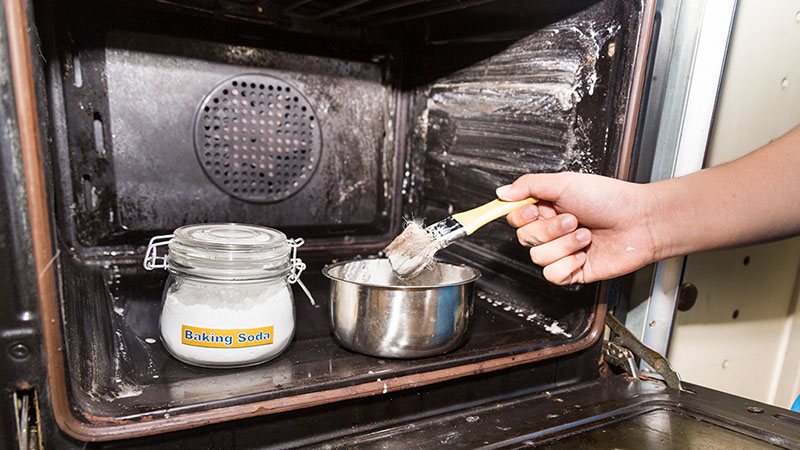
3. Make A Baking Soda Paste
In a small bowl, mix baking soda with a little water. The paste should be thick, like toothpaste. Usually, three parts baking soda to one part water works well. For example, mix 3 tablespoons of baking soda with 1 tablespoon of water.
4. Apply The Paste
Using a sponge, cloth, or your fingers, spread the baking soda paste over dirty spots on your stove. Focus on greasy or stained areas. For tough spots, apply a thicker layer.
If you are cleaning grates or burner covers, coat them with the paste too.
5. Let It Sit
Give the baking soda time to work. Leave it on the stove and parts for at least 15–20 minutes. For very tough stains, leave it for an hour. The paste softens burned-on food and grease, making them easier to wipe away later.
6. Scrub Gently
With a damp sponge or brush, scrub the stove gently. Baking soda’s texture helps lift dirt. For corners and small gaps, use an old toothbrush.
Be careful not to use too much force, especially on glass or ceramic stoves. If stains do not come off right away, repeat the process instead of scrubbing harder.
7. Rinse And Wipe
Use a clean, damp cloth to wipe away the baking soda paste. You may need to rinse the cloth several times to remove all residue. Dry the surface with a paper towel or dry cloth.
8. Clean Removable Parts
Soak grates, burner covers, or drip pans in warm, soapy water for 15–20 minutes. Scrub with a brush, then rinse and dry. If stains remain, repeat the baking soda paste method.
9. Tackle Stubborn Stains
If stains are still there, spray a little white vinegar over the baking soda paste. The fizzing action helps lift tough grime. Let it bubble for a few minutes, then wipe clean.
10. Polish And Finish
For glass or ceramic tops, buff the surface with a dry microfiber cloth for a shiny finish. Put all parts back in place. Your stove should now look and smell fresh.
Special Tips For Different Stove Types
Not all stoves are the same. Here’s how to adjust your cleaning for different surfaces.
Gas Stoves
- Use a toothpick or small brush to clear burner holes if they get clogged.
- Avoid soaking gas burners in water; dry them completely before using again.
- For stainless steel, always scrub in the direction of the metal’s grain to avoid scratches.
Electric Coil Stoves
- Never put electric coils in water. Wipe them with a damp cloth instead.
- Drip pans can usually be soaked and scrubbed with baking soda.
Glass And Ceramic Stoves
- Do not use rough sponges or too much baking soda; they can scratch the surface.
- For shiny results, wipe away streaks with a dry microfiber cloth.
Induction Stoves
- Avoid letting water or baking soda paste drip into the edges.
- Always dry the surface well after cleaning to prevent water spots.
Comparing Baking Soda With Other Cleaning Methods
Some people use commercial stove cleaners or home remedies like lemon, vinegar, or ammonia. How does baking soda compare?
| Method | Effectiveness | Safety | Cost | Odor |
|---|---|---|---|---|
| Baking Soda | High (for most stains) | Very safe | Low | None |
| Commercial Cleaners | Very high | Can be harsh | Medium/High | Strong/chemical |
| Lemon/Vinegar | Moderate | Safe | Low | Fresh/acidic |
| Ammonia | Very high | Hazardous | Low | Very strong |
Baking soda is a top choice for people who want safe, affordable, and odorless cleaning.
Advanced Cleaning: Tackling Burnt-on And Greasy Stains
Some stains are more stubborn than others. Here’s how to use baking soda for the toughest jobs.
Burnt-on Food
If food is burnt onto your stove, sprinkle baking soda directly on the spot. Put a damp cloth on top and let it sit for 15–20 minutes. The moisture helps lift the burnt food. Then, scrub gently and wipe clean.
Thick Grease Buildup
Mix baking soda with a little dish soap for extra cleaning power. Spread it over greasy areas, let sit, and scrub with a brush. Rinse and dry as usual.
Rust Spots
On some metal stove parts, you might see rust. Baking soda can help here too. Make a thick paste, apply to the rust spot, and leave for 30 minutes. Scrub with a brush, rinse, and dry.
Removing Odors
If your stove smells bad, baking soda can absorb the odor. After cleaning, leave an open box of baking soda near the stove overnight. It will help freshen the air.
Common Mistakes To Avoid
Cleaning with baking soda is easy, but some mistakes can cause problems or make your stove less clean.
- Using too much water. Water can get into electrical parts or gas lines. Use just enough to make a paste or wipe.
- Scrubbing too hard. This can scratch glass, ceramic, or shiny metal surfaces.
- Not rinsing well. Baking soda can leave a white powder if not wiped off completely.
- Forgetting removable parts. Grates, burner covers, and drip pans collect lots of grease. Always clean them too.
- Mixing with strong chemicals. Do not mix baking soda with bleach or ammonia—it is not safe.
Credit: www.movinghelp.com
How Often Should You Clean Your Stove?
How often you clean depends on how much you cook and the types of food you make. Here is a quick guide:
| Cooking Frequency | Recommended Cleaning | Reason |
|---|---|---|
| Daily cooking | Wipe after every use; deep clean weekly | Prevents buildup, keeps kitchen fresh |
| 3-4 times a week | Wipe after use; deep clean every 2 weeks | Avoids tough stains |
| Occasional use | Wipe after use; deep clean monthly | Stays easy to clean |
More frequent cleaning means less time spent on tough scrubbing.
Extra Tips For A Sparkling Stove
Try Steam
If stains are very stubborn, boil a pot of water on the stove for a few minutes. The steam softens grease and food, making it easier for baking soda to work. Wipe with a cloth after.
Use Vinegar And Baking Soda Together
For really tough jobs, sprinkle baking soda over stains, then spray with vinegar. The bubbling action helps lift dirt. Wipe away after the fizzing stops.
Clean Knobs And Controls
Knobs and control panels collect dirt too. Remove knobs (if possible) and clean with a baking soda paste. Rinse and dry before putting them back.
Dry Thoroughly
After cleaning, always dry the stove and parts completely. This prevents rust and water spots.
Maintain Regularly
Set a reminder to clean your stove regularly. Quick cleaning is much easier than waiting for big messes to build up.
What Beginners Often Miss
Many first-time cleaners skip small parts like burner caps, edges, or control knobs. These areas collect hidden grease and dirt that can cause bad smells and even attract bugs. Always clean these spots for a truly fresh stove.
Another common mistake is not letting baking soda sit long enough. Rushing the process means stains do not soften and cleaning takes longer. Be patient—let the baking soda do its job.
Safety Reminders
Baking soda is safe for almost all stove types, but keep these safety points in mind:
- Always unplug electric stoves before cleaning.
- Do not let water or paste get inside stove controls or wires.
- Wear gloves if you have sensitive skin.
- Test baking soda on a small area if you have a new stove or are unsure about the material.

Credit: www.bursabogazicivipegitim.com
How To Keep Your Stove Clean Longer
After you clean your stove, some habits can keep it cleaner for weeks.
- Wipe up spills right away. Fresh spills are much easier to clean than dried ones.
- Use splatter guards when frying food.
- Cover pots to avoid boiling over.
- Deep clean regularly (weekly or monthly, depending on use).
- Keep a box of baking soda handy for quick touch-ups.
Environmental Benefits Of Using Baking Soda
Many cleaning products have chemicals that can harm the environment. Baking soda is eco-friendly. It breaks down naturally and does not pollute water or air. Using baking soda means less plastic waste from bottles and less risk for pets or children. Small changes like this can make your home greener.
Cost Comparison: Baking Soda Vs. Store-bought Cleaners
Here’s a quick look at how much you can save by using baking soda instead of commercial cleaners:
| Cleaning Product | Average Cost (per use) | Number of Uses per Box/Bottle | Total Cost (per year, weekly cleaning) |
|---|---|---|---|
| Baking Soda | $0.10 | 52 | $5.20 |
| Commercial Cleaner | $0.70 | 12 | $30.00 |
A small box of baking soda can last months and costs only a few dollars. Store-bought cleaners can cost six times more each year.
What To Do If Stains Will Not Come Out
If you have tried baking soda and vinegar, but stains remain, do not panic. Some older stoves have stains that are burned in deeply. Here’s what you can do:
- Repeat the baking soda treatment several times.
- Try using a plastic scraper (not metal) to gently lift stubborn stains.
- For glass tops, use a special glass stove scraper.
- If stains still do not come out, check your stove’s user manual. Some surfaces have special care instructions.
- As a last option, you can use a commercial cleaner designed for your stove type, but always rinse well afterward.
When To Call A Professional
Most stove cleaning jobs can be handled at home, but sometimes it is safer to call a professional:
- If you smell gas or see a gas leak, stop cleaning and call for help.
- If stains are inside the stove or under sealed parts, do not take the stove apart yourself.
- For repairs or deep cleaning in commercial kitchens, hire a pro.
Trusted Resources For More Information
If you want to learn more about safe cleaning methods, the U.S. Environmental Protection Agency offers helpful advice on non-toxic cleaning. See their guide at EPA Safer Choice.
Credit: www.reddit.com
Frequently Asked Questions
What Surfaces Can I Clean With Baking Soda?
Baking soda is safe for most stove surfaces, including stainless steel, glass, ceramic, and enamel. Always test on a small area if you are unsure or if your stove is brand new.
Can Baking Soda Scratch My Stove?
Baking soda is a gentle abrasive, but it can scratch glass or ceramic if used with a rough sponge or too much force. Always use a soft cloth and light pressure, especially on shiny surfaces.
Is It Safe To Mix Baking Soda And Vinegar?
Yes, it is safe to mix baking soda and vinegar for cleaning. The fizzing helps lift tough stains. However, do not mix baking soda with bleach or strong chemicals.
How Often Should I Deep Clean My Stove?
If you cook daily, deep clean your stove with baking soda once a week. For less frequent cooking, every two weeks or monthly is enough. Wipe up spills after each use to make deep cleaning easier.
Will Baking Soda Remove Strong Odors From My Stove?
Yes, baking soda absorbs and removes odors. After cleaning, you can also leave an open box of baking soda near the stove overnight to freshen the air.
Cleaning your stove with baking soda is simple, safe, and highly effective. With the right steps and a little patience, you can keep your kitchen looking great and your cooking healthy. Try these methods and enjoy a cleaner, fresher home every day.