
Dehydrating zucchini in your oven is a practical way to enjoy this versatile vegetable year-round. Whether you have a garden full of zucchini or simply want to prevent waste, learning how to dry zucchini slices can save money, reduce food spoilage, and add flavor to your meals.
Oven dehydration might sound complicated, but with the right steps and a bit of patience, anyone can do it at home. Let’s explore every detail you need to know for making perfect dehydrated zucchini—crispy chips, chewy slices for soups, or powder for seasoning—all with your regular kitchen oven.
Why Dehydrate Zucchini?
Zucchini is known for its short shelf life. Fresh zucchini can turn soft or moldy in just a few days. Dehydrating is one of the oldest and most reliable ways to preserve food. It removes most of the water, stopping bacteria and mold from growing.
Some benefits include:
- Long shelf life: Properly dried zucchini can last up to a year or longer in a cool, dry place.
- Space saving: Dehydrated slices shrink a lot, so you can store a lot in a small jar.
- Convenience: Add dehydrated zucchini directly to soups, stews, or casseroles—no chopping needed.
- Healthy snack: You can make flavorful, crunchy zucchini chips as a healthy alternative to potato chips.
Many people don’t realize that dried zucchini holds most of its nutrition, especially fiber and minerals. It’s also easier to digest for some people.
Choosing The Right Zucchini
Not all zucchinis are the same when it comes to dehydration. The best results come from selecting the right vegetable.
- Freshness matters: Use zucchini that is firm, with shiny skin, and no soft spots or wrinkles.
- Size: Medium-sized zucchinis (about 6-8 inches long) are ideal. Larger ones often have too many seeds and watery flesh, which can slow down drying.
- Variety: Green zucchini is most common, but yellow or golden zucchini can also be dehydrated with the same method. Their flavor and texture are nearly identical when dried.
Pro tip: If you accidentally use overgrown zucchinis, cut away the seedy core and dry only the firm, outer flesh. This gives better texture and flavor.
Credit: growagoodlife.com
Preparing Zucchini For Dehydration
Preparation is the key to even drying and good flavor. Here’s how to get your zucchini ready for the oven:
Washing And Trimming
- Wash each zucchini under cold running water to remove dirt or pesticides.
- Trim off both ends with a sharp knife.
Slicing
How you slice your zucchini changes the final texture. For most uses, thin, even slices are best.
- For chips: Slice into ⅛ inch (3 mm) rounds.
- For soups or casseroles: Slice into ¼ inch (6 mm) rounds or half-moons.
- For powder: Slice thinly; you’ll blend the dried pieces later.
A mandoline slicer gives the most consistent slices, but a sharp knife works too.
Optional: Blanching
Blanching is dipping the zucchini in boiling water for a short time, then cooling in ice water. This step:
- Helps keep the green color bright
- Can make the texture more chewy instead of brittle
To blanch:
- Boil a large pot of water.
- Drop in the zucchini slices for 1 minute.
- Remove quickly and place in a bowl of ice water for 1 minute.
- Drain and pat dry with a clean towel.
Non-obvious insight: Blanching is optional for zucchini, but it does give better color and a longer shelf life. Many beginners skip it, but it’s worth the small effort if you want professional results.
Seasoning Options
You can dry zucchini plain, but adding flavor before dehydrating creates delicious snacks.
Popular seasonings:
- Olive oil and sea salt
- Garlic powder
- Paprika or chili powder
- Parmesan cheese (for oven use only—not for long storage, as cheese can go bad)
Toss the slices lightly with your chosen seasoning before laying them on trays. Don’t use too much oil, as it can slow drying.
Pro tip: For a sweet variation, sprinkle with cinnamon and a touch of sugar before drying.
Setting Up Your Oven For Dehydration
Most home ovens can be used to dehydrate, but you need to set them up carefully. Unlike a food dehydrator, ovens are designed for baking, so they use higher heat and less air flow.
Temperature
- Set your oven to the lowest temperature possible, usually 120°F to 170°F (50°C to 75°C).
- If your oven does not go below 170°F, prop the door open 1-2 inches with a wooden spoon to let moisture escape and lower the temperature.
Air Circulation
Good air movement is essential for even dehydration. If your oven has a convection setting, use it. The fan helps remove moisture.
Non-obvious insight: Placing a small fan near the oven can help circulate air if you do not have a convection oven. Just be sure it is safe and does not blow directly into the oven’s heat.
Choosing Trays
- Use baking sheets lined with parchment paper or silicone mats. This prevents sticking.
- For best results, place slices directly on oven-safe wire racks set over the trays. This allows air to reach both sides and speeds up drying.
Spacing
Arrange zucchini slices in a single layer with no overlapping. Crowded slices can steam instead of dry, leading to chewy or uneven results.
How Long Does It Take To Dehydrate Zucchini In The Oven?
Dehydrating zucchini in the oven takes time but does not require constant attention. The drying time depends on several factors:
- Slice thickness: Thinner slices dry faster.
- Oven temperature: Higher temps mean shorter drying times but higher risk of overcooking.
- Humidity: High kitchen humidity slows drying.
General timing:
- Thin slices (⅛ inch): 2 to 4 hours
- Thicker slices (¼ inch): 4 to 8 hours
Check every hour after the first two hours. Rotate trays if your oven has hot spots.
Here’s a comparison of drying times based on slice thickness and oven temperature:
| Slice Thickness | Oven Temp | Estimated Drying Time |
|---|---|---|
| ⅛ inch (3 mm) | 135°F (57°C) | 2–3 hours |
| ⅛ inch (3 mm) | 170°F (77°C) | 2–4 hours |
| ¼ inch (6 mm) | 135°F (57°C) | 4–6 hours |
| ¼ inch (6 mm) | 170°F (77°C) | 6–8 hours |
Tip: Ovens are less precise than dehydrators, so always check earlier than you think.
Credit: traditionalcookingschool.com
Step-by-step Guide: Dehydrating Zucchini In The Oven
Now that you know the basics, here is the full process broken down into clear steps:
- Wash and dry your zucchini. Trim ends off.
- Slice zucchini evenly (⅛ or ¼ inch).
- Optional: Blanch slices for 1 minute, cool in ice water, and pat dry.
- Season if desired. Toss slices in a bowl with your favorite spices or oil.
- Arrange slices in a single layer on lined baking sheets or wire racks.
- Preheat oven to the lowest setting (120–170°F / 50–75°C).
- Insert trays into the oven. If your oven runs hot, prop the door open slightly.
- Dry for 2–8 hours, checking every hour. Rotate trays for even drying.
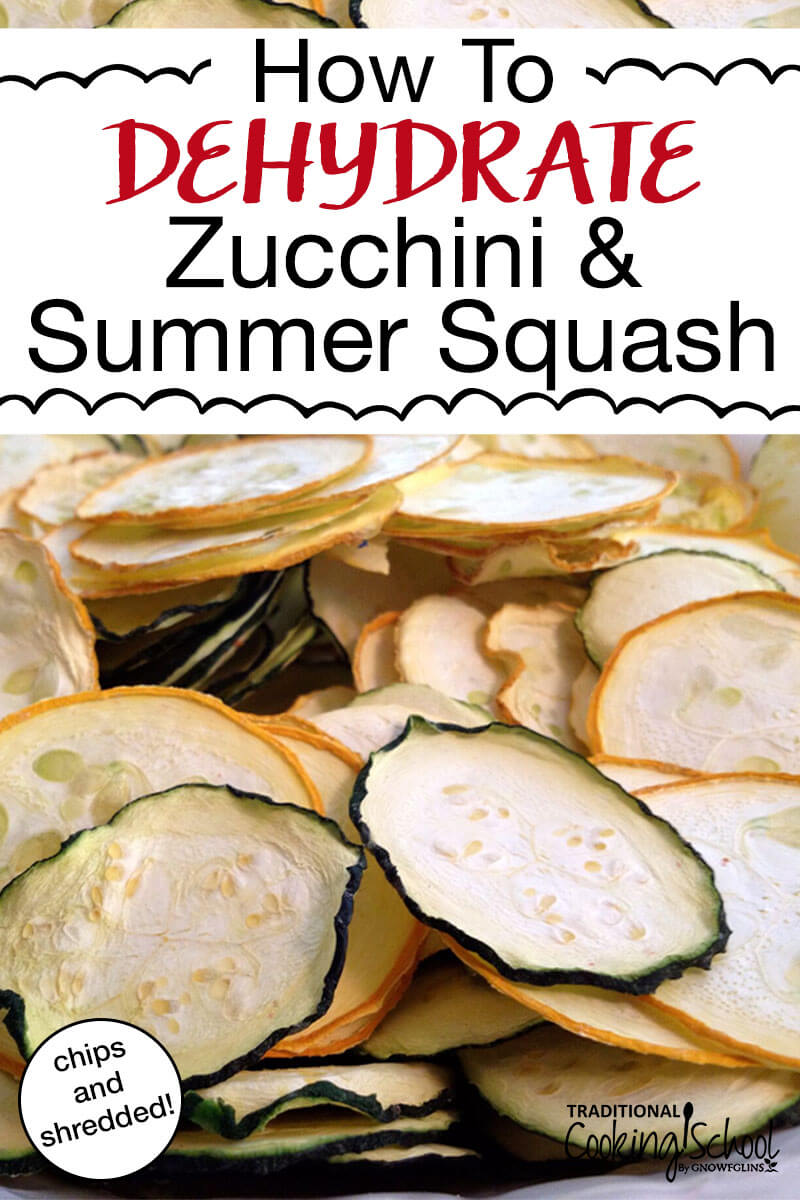
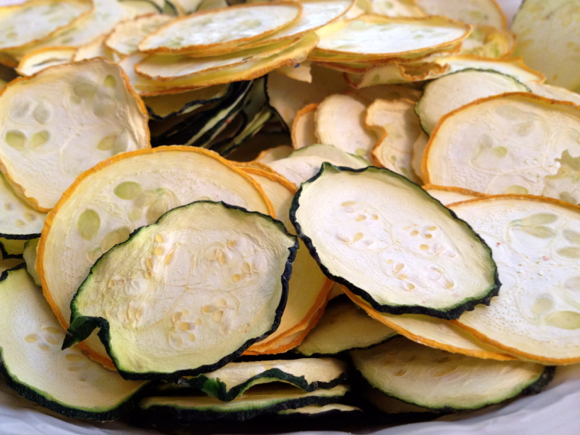
- Test for doneness: Slices should be crisp and snap easily or feel dry and leathery, not sticky or soft.
- Cool completely before storing. Warm slices might seem dry but can turn soggy if not fully cooled.
Note: If you want to powder your dried zucchini, blend fully cooled slices in a food processor until fine. Store in an airtight container.
How To Store Dehydrated Zucchini
Proper storage is essential to keep your dried zucchini from spoiling.
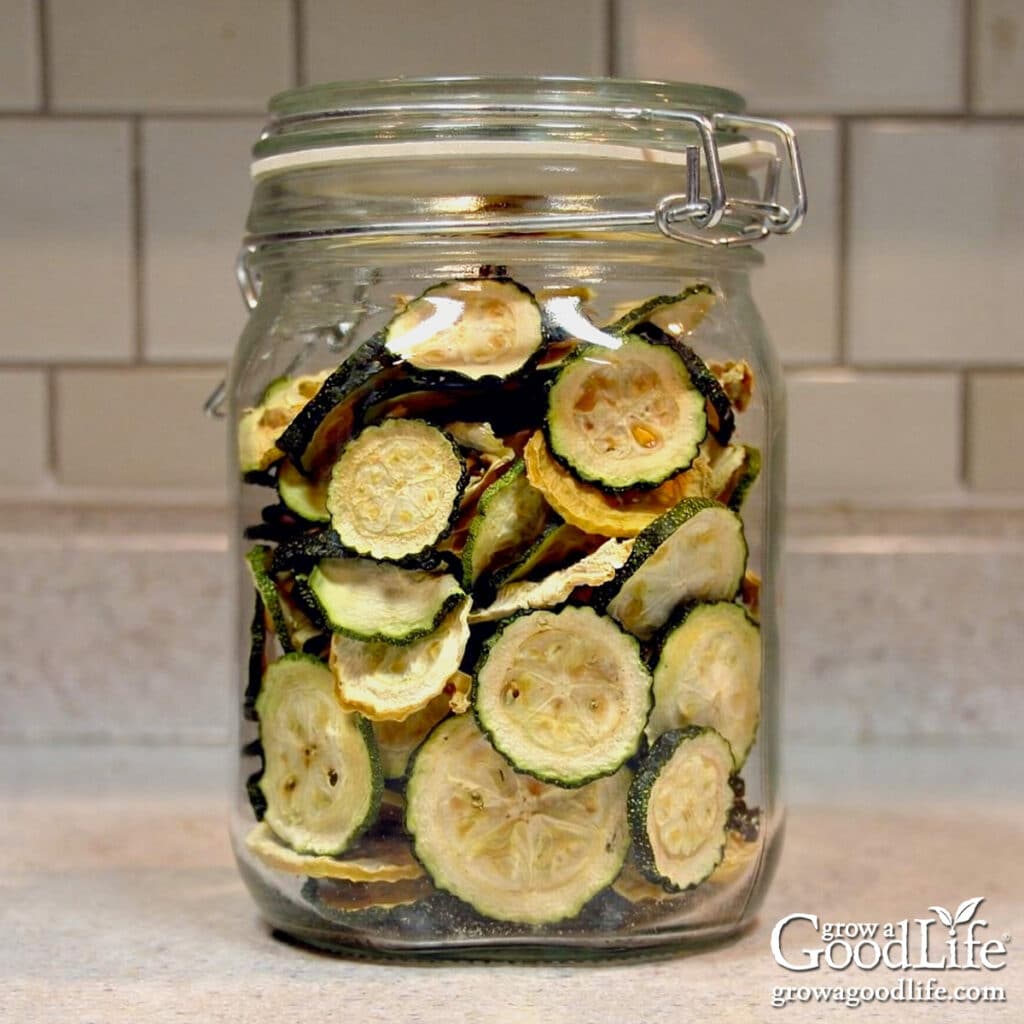
- Airtight containers: Use glass jars or vacuum-sealed bags.
- Cool, dark place: Store away from sunlight and moisture.
- Label: Write the date and type of zucchini on the container.
Here’s a comparison of different storage methods:
| Storage Method | Expected Shelf Life | Best For |
|---|---|---|
| Glass jar with tight lid | 6–12 months | Everyday use |
| Vacuum-sealed bag | 1–2 years | Long-term storage |
| Plastic bag | 3–6 months | Short-term use |
Tip: If you see any signs of moisture or mold, discard the batch. Moisture is a sign that dehydration was not complete or storage was not airtight.
Creative Ways To Use Dehydrated Zucchini
Many people think dried zucchini is just for soups, but it’s far more flexible. Here are some tasty ideas:
- Zucchini chips: Enjoy as a snack, plain or with dip.
- Rehydrate for recipes: Add to soups, stews, or casseroles. Simply toss in dry slices—they’ll soak up broth and flavor.
- Powder for seasoning: Grind dried slices into a powder. Sprinkle on eggs, pasta, or mix into flour for savory bread.
- Trail mix: Mix with nuts, seeds, and other dried veggies for a healthy hiking snack.
- Pizza topping: Rehydrate and add to homemade or frozen pizza before baking.
- Emergency food: Dehydrated zucchini is lightweight and nutritious—great for camping or your emergency pantry.
Non-obvious insight: You can also use zucchini powder as a hidden veggie boost in smoothies, sauces, or even baked goods for picky eaters.
Common Mistakes To Avoid
Even with simple steps, some mistakes can lead to poor results. Watch for these common issues:
- Slicing too thick or uneven: Thick slices won’t dry evenly. Use a mandoline if possible.
- Overlapping slices: This causes steam and uneven drying. Always use a single layer.
- Not checking often enough: Oven heat varies. Check every hour, rotate trays, and remove finished slices promptly.
- Storing before cooling: Warm slices can trap moisture, leading to mold.
- Using too much oil or cheese: Fat slows drying and can turn rancid in storage. Use light seasoning if you plan to store long-term.
- Skipping labeling: Date and label containers so you know when to use them.
Nutritional Benefits Of Dehydrated Zucchini
Dehydrated zucchini keeps most of its original nutrients. It is low in calories and high in fiber, making it an excellent diet food. Here’s a look at how it compares with fresh zucchini:
| Per 100g | Fresh Zucchini | Dehydrated Zucchini |
|---|---|---|
| Calories | 17 kcal | ~60 kcal |
| Fiber | 1.0 g | 3.5 g |
| Vitamin C | 17.9 mg | ~15 mg |
| Potassium | 261 mg | ~800 mg |
Note: Values for dehydrated zucchini are estimates, as nutrients get concentrated during drying.
Unlike canned or pickled zucchini, dehydrating does not add sodium or sugar, keeping it a healthy snack.
Troubleshooting: What To Do If Something Goes Wrong
Even with careful steps, sometimes things don’t go as planned. Here’s how to fix common problems:
Zucchini Is Too Soft After Drying
- Dry longer: Return to the oven for another hour.
- Check oven temperature: Use an oven thermometer. Some ovens are hotter or cooler than the dial shows.
- Improve air flow: Prop the oven door open or use racks instead of baking sheets.
Zucchini Is Burnt Or Brown
- Lower the temperature: If slices are browning, your oven is too hot.
- Thicker slices: Try slightly thicker slices next time.
Mold In Storage
- Dry more thoroughly: Slices must be crisp or leathery with no cool, damp spots.
- Cool fully before storing: Warm slices can sweat in jars, causing mold.
Slices Stuck To Tray
- Use parchment paper or silicone mats: Never dry directly on bare metal.
- Flip slices halfway: This also helps with even drying.
Zucchini Tastes Bland
- Try seasoning before drying: Light olive oil, sea salt, and your favorite spices can make a big difference.
- Use fresher zucchini: Old, watery zucchini loses flavor when dried.
Comparing Oven Dehydration To Other Methods
You might wonder if an oven is the best way to dehydrate zucchini. Here’s how it compares to other common methods:
Oven Vs. Dehydrator
- Oven: Nearly every kitchen has one. Good for small batches. Uses more energy and requires more attention.
- Dehydrator: Designed for drying. Better air flow, lower energy use, can dry large batches.
Oven Vs. Sun-drying
- Sun-drying: Uses no electricity. Risk of insects, dust, and uneven drying in humid climates.
- Oven: More reliable and hygienic, especially in humid or urban areas.
Non-obvious insight: If you dehydrate a lot of vegetables every year, consider investing in a food dehydrator for better efficiency and results. But for most home cooks, the oven works well for occasional batches.
Safety Tips
When dehydrating food at home, safety matters. Here’s how to keep your dried zucchini safe to eat:
- Dry thoroughly: Any moisture can cause mold or bacteria.
- Store in small batches: If one jar spoils, you don’t lose the whole batch.
- Check regularly: Smell and inspect jars monthly. If you see mold or smell off-odors, throw away the contents.
- Label: Always date your jars, so you use older food first.
Fact: The USDA recommends drying vegetables at 130°F to 140°F (54°C to 60°C) for best results. For more on safe dehydration, visit the National Center for Home Food Preservation.
Credit: traditionalcookingschool.com
Frequently Asked Questions
How Do I Know When Zucchini Is Fully Dehydrated?
Zucchini is ready when slices are completely dry and crisp or leathery (depending on thickness and desired result). They should snap easily or feel dry to the touch, with no soft or sticky spots.
Can I Dehydrate Zucchini With Other Vegetables At The Same Time?
Yes, you can dehydrate zucchini with other vegetables, but choose ones that require similar drying times and temperatures, such as carrots or squash. Avoid pairing with high-water veggies like tomatoes, which take longer.
How Do I Rehydrate Dried Zucchini?
To rehydrate, soak dried zucchini slices in hot water for 10–20 minutes. For soups and stews, just add them directly; they will soften as they cook.
Can I Use Aluminum Foil Instead Of Parchment Paper?
It’s better to use parchment paper or silicone mats. Aluminum foil can cause sticking and may react with acidic seasonings. If you must use foil, lightly oil it first.
Is It Safe To Store Dehydrated Zucchini At Room Temperature?
Yes, if the zucchini is fully dried and stored in airtight containers in a cool, dark place. Always check for signs of spoilage before use.
—
Dehydrating zucchini in your oven is a simple, budget-friendly skill that pays off all year. With a bit of preparation and patience, you’ll have tasty, nutritious zucchini ready for snacks, cooking, or emergencies. Try different seasonings and uses to find your favorites.
Your homemade dried zucchini will likely taste better and cost less than store-bought, and you’ll have the satisfaction of making it yourself.