
Most people want their dishes to come out of the dishwasher spotlessly clean and dry, without streaks or cloudy marks. But even with a powerful machine like a Whirlpool dishwasher, you may still find water spots or dull glasses after a normal wash. The answer is often simple: using rinse aid. If you’re not sure how to add rinse aid to your Whirlpool dishwasher, you’re not alone. Many people, especially those new to dishwashers or living in areas with hard water, miss this easy step that makes a big difference.
Adding rinse aid is quick and easy, but doing it correctly ensures your dishwasher delivers the best results every time. In this article, you’ll learn exactly what rinse aid does, how to add it to your Whirlpool dishwasher (with clear steps and visuals), and how to avoid common mistakes.
You’ll also get answers to the most frequent questions, plus tips that even experienced users sometimes miss. Whether you’re new to dishwashers or want to get the most out of your machine, this complete guide will help you enjoy sparkling clean dishes with less effort.
What Is Rinse Aid And Why Does It Matter?
Rinse aid might sound like just another cleaning product, but it’s actually a key part of the dishwashing process—especially if you want spot-free, shiny results. Rinse aid is a special liquid designed to reduce the surface tension of water during the final rinse cycle in your dishwasher. This simple change helps water slide off your dishes, rather than forming droplets that leave spots or streaks.
How Rinse Aid Works
When water forms droplets on your dishes, it can dry and leave behind minerals or detergent. This is common in places with hard water (water with a lot of minerals). Rinse aid spreads the water into a thin layer that runs off your dishes quickly, so there’s less chance for marks or streaks to form. It also helps dishes dry faster, which is important for plastic items that often stay wet after a normal cycle.
Why It’s Especially Important In Whirlpool Dishwashers
Whirlpool dishwashers are well-designed machines, but their energy-saving cycles use less water and lower heat. That means water can sometimes stay on dishes without a rinse aid. Using rinse aid helps these efficient cycles do a better job, making sure your dishes come out dry and spotless.
Non-obvious Insight 1
Many people believe rinse aid is only for glassware, but it actually helps with plastic, ceramics, and even stainless steel. It also reduces the risk of white film or cloudiness, which can build up over time.
Non-obvious Insight 2
If you use eco or quick wash cycles, rinse aid becomes even more important. These cycles use less heat, so water doesn’t evaporate as quickly. Rinse aid makes sure your dishes dry well, even in these gentle modes.
Types Of Rinse Aid: Choosing The Right One For Your Whirlpool
With so many options on the shelf, it’s easy to get overwhelmed. But not all rinse aids are created equal. Here’s what you need to know before choosing:
Liquid Vs. Solid
Most Whirlpool dishwashers use liquid rinse aid. It’s easy to pour, spreads evenly, and is widely available. Some older models or other brands may use solid or tablet forms, but these are less common and not recommended unless your manual specifically says so.
Fragrance-free Or Scented
Some rinse aids have added scents (like lemon or fresh). If you’re sensitive to smells or use your dishwasher for baby items, a fragrance-free option is safer.
Eco-friendly Choices
There are biodegradable or plant-based rinse aids for those who want to avoid chemicals. These can work well, but always check if they are labeled for use in dishwashers.
Comparing Top Rinse Aid Brands
Here’s a quick look at common rinse aid brands you’ll find in stores and how they differ:
| Brand | Type | Features | Price Range |
|---|---|---|---|
| Finish Jet-Dry | Liquid | Popular, effective, various scents | $$ |
| Cascade Platinum | Liquid | Quick-dry, streak prevention | $$$ |
| Ecover | Liquid | Eco-friendly, biodegradable | $$ |
| Seventh Generation | Liquid | Plant-based, fragrance-free option | $$ |
What Really Matters
- Compatibility: Always check your Whirlpool dishwasher manual for recommended types.
- Hard water: If you have hard water, choose a formula designed for it.
- Allergies: Go for fragrance-free if you’re sensitive.
Common Buyer Mistake
Don’t use homemade substitutes like vinegar. While some people recommend this, vinegar can damage the rubber seals in your dishwasher over time. Always choose a product labeled as dishwasher rinse aid.
Where To Find The Rinse Aid Dispenser In Your Whirlpool Dishwasher
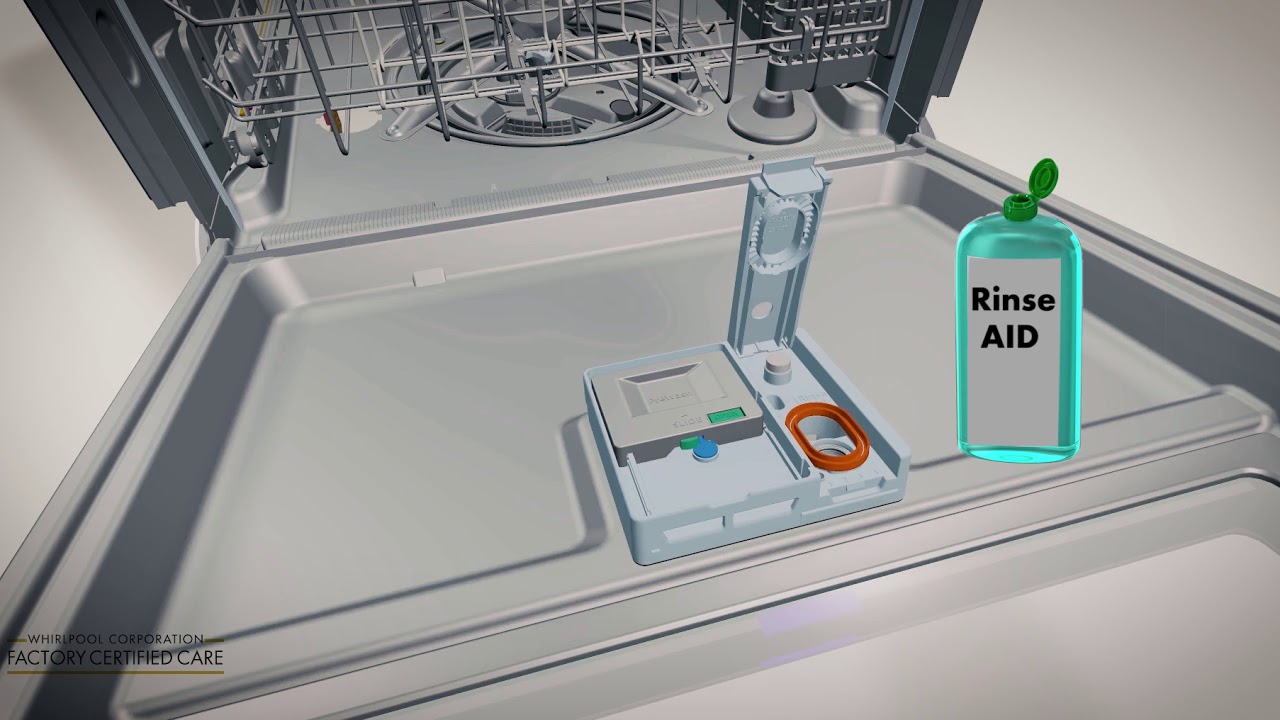
Before you add anything, you need to know where the rinse aid dispenser is. On Whirlpool dishwashers, the dispenser is usually built into the inside of the dishwasher door, right next to the detergent compartment.
How To Identify The Dispenser
- Shape: The rinse aid compartment is usually a round or oval cap, often blue or clear.
- Label: It will be marked with a droplet icon or the word “Rinse Aid.”
- Location: When you open the dishwasher door, look on the inside panel, near the detergent cup.
Example Visual Guide
Imagine opening your dishwasher door. On the inside of the door, you see two compartments:
- The larger one is for detergent, usually a rectangular cup.
- The smaller, round one nearby is your rinse aid dispenser.
If you’re not sure, your user manual will have a diagram (many Whirlpool manuals are available online).
Pro Tip
Don’t confuse the rinse aid compartment with the salt compartment—Whirlpool dishwashers in North America usually don’t have a salt compartment, but some European models do.
Step-by-step: How To Add Rinse Aid To Your Whirlpool Dishwasher
Adding rinse aid takes just a few minutes, but following each step ensures you don’t spill or overfill. Here’s how to do it right:
1. Gather What You Need
- Your bottle of rinse aid
- A clean, dry cloth (for wiping spills)
- Your Whirlpool dishwasher (empty or loaded)
2. Open The Dishwasher Door
Open the door fully so you have clear access to the inside.
3. Locate The Rinse Aid Dispenser
Find the round or oval compartment, usually next to the detergent dispenser, on the inside of the door.
4. Open The Dispenser Cap
Turn the cap counterclockwise (usually left) to open. Some models have a flip-up cap—just lift it gently.
5. Add Rinse Aid
Pour rinse aid slowly into the opening. Most dispensers have a clear “MAX” fill line—do not overfill. If you spill, wipe it up to avoid suds inside the dishwasher.
6. Close The Cap Securely
Replace the cap and turn it clockwise (right) until it clicks or feels tight. This prevents leaks during the wash cycle.
7. Clean Any Spills
If you spilled rinse aid on the door or gasket, wipe it off with a dry cloth.
8. Run Your Dishwasher As Usual
The machine will automatically release the right amount of rinse aid for each load.
Step-by-step Overview Table
Here’s a quick reference for the process:
| Step | Action | Why It Matters |
|---|---|---|
| 1 | Open dishwasher door | Gives you access to the dispenser |
| 2 | Locate dispenser | Finds the correct compartment |
| 3 | Open cap | Lets you add rinse aid |
| 4 | Pour rinse aid to MAX line | Prevents overfilling and leaks |
| 5 | Close cap securely | Stops leaks and ensures proper function |
| 6 | Wipe spills | Prevents excess suds |
| 7 | Run dishwasher | Enjoy spotless, dry dishes |
Practical Example
Let’s say you use your Whirlpool dishwasher every night. You notice your glasses have spots. You buy a bottle of Finish Jet-Dry, open your dishwasher, find the small round compartment next to the detergent, open the cap, pour the liquid in until it reaches the MAX line, close it, and wipe up a small spill.
On your next wash, your glasses come out much clearer.
How Much Rinse Aid To Add And How Often
You don’t need to add rinse aid every time you run the dishwasher. The dispenser is designed to hold enough for several loads.
How Much To Add
- Fill the dispenser up to the MAX line. This is usually about 3.5–4 ounces (100–120 ml), but check your manual.
- Never overfill—extra rinse aid will not improve cleaning and can cause leaks.
How Often To Refill
- Most Whirlpool dishwashers have a rinse aid indicator light on the control panel. When it lights up, it’s time to refill.
- If you run your dishwasher daily, you’ll typically need to refill every 1–3 weeks.
- If you use it less, check the dispenser once a month.
Table: Rinse Aid Usage
| Dishwasher Use | Refill Frequency | Signs You Need to Refill |
|---|---|---|
| Every day | 1–2 weeks | Indicator light, spots on dishes |
| 3–4 times/week | 2–4 weeks | Cloudy glasses, wet plastics |
| Once a week or less | Every month | Manual check recommended |
Pro Tip
If you notice your rinse aid runs out very quickly, check for leaks or a dispenser cap that’s not closed tightly.
Adjusting Rinse Aid Dosage: Getting The Best Results
Most Whirlpool dishwashers let you adjust how much rinse aid is released during each cycle. This is especially useful if you have soft or hard water.
How To Adjust The Dosage
- Open the rinse aid dispenser cap.
- Look for a numbered dial or slider inside the compartment (usually marked 1–6 or MIN–MAX).
- Use a coin or screwdriver to turn the dial:
- Higher numbers = more rinse aid released (good for hard water).
- Lower numbers = less rinse aid (for soft water).
When To Adjust
- If you still see spots or streaks, increase the setting.
- If you see a rainbow film or blue residue, decrease the setting.
Example
If your water is very hard, set the dial to 5 or 6. If you use a water softener, try setting it at 1 or 2.
Non-obvious Insight
Some people think more rinse aid always means cleaner dishes, but too much can leave a greasy film—so adjust gradually.
Common Problems And How To Fix Them
Even with the best Whirlpool dishwasher, problems can happen if you use too much, too little, or the wrong kind of rinse aid. Here’s how to fix the most common issues.
1. Rinse Aid Leaking
- Cause: Overfilling or a damaged dispenser cap.
- Fix: Always fill only to the MAX line. Replace the cap if it’s cracked.
2. Dishes Feel Greasy
- Cause: Too much rinse aid.
- Fix: Lower the dispenser setting. Wipe the inside of the dishwasher with a damp cloth.
3. White Film Or Cloudiness
- Cause: Not enough rinse aid, or very hard water.
- Fix: Increase the rinse aid setting. Consider using a dishwasher cleaner to remove build-up.
4. Indicator Light Stays On
- Cause: Sensor issue or empty dispenser.
- Fix: Refill, then run a cycle. If the light stays on, check your manual for troubleshooting steps.
5. Rinse Aid Compartment Won’t Open
- Cause: Jammed cap or dried residue.
- Fix: Gently clean around the cap with a warm, damp cloth. Never force it open.
Practical Tip
If your dispenser is broken and you’re waiting for repairs, you can place a small cup of rinse aid on the top rack as a temporary solution—just for one or two washes.
Rinse Aid And Dishwasher Safety
Using rinse aid is safe for most dishes, but some people worry about chemicals. Here’s what you need to know:
Is Rinse Aid Safe?
Yes, when used as directed. Rinse aids are tested and approved for food-contact surfaces. They are designed to rinse away during the cycle, leaving no harmful residue.
What About Allergies?
If you’re sensitive to chemicals, choose a fragrance-free or plant-based rinse aid. Always rinse new dishes before first use.
Dishwasher Parts
Rinse aid will not damage your dishwasher if used correctly. Avoid using vinegar or unapproved liquids, as these can harm rubber seals and sensors.
Dishwasher Warranty
Check your manual—using the wrong product can void your warranty. Whirlpool recommends only using products labeled as dishwasher rinse aid.
Credit: producthelp.whirlpool.com
Maximizing Your Whirlpool Dishwasher’s Performance With Rinse Aid
Adding rinse aid is just one step. Here are ways to get the most from your machine:
1. Load Dishes Properly
- Place glasses and plastics on the top rack.
- Angle items so water can run off.
2. Use The Right Detergent
- Don’t use regular soap or handwashing liquids.
- Use dishwasher detergent with rinse aid for best results.
3. Choose The Right Cycle
- Use heated dry or extended dry cycles for best drying.
- Eco or quick cycles may need more rinse aid.
4. Regular Maintenance
- Clean the filter every month.
- Run an empty cycle with a dishwasher cleaner every few months.
5. Monitor For Hard Water Build-up
If you notice more spots or film, try a higher rinse aid setting or use a dishwasher additive made for hard water.
Comparing Results: With And Without Rinse Aid
Many people wonder if rinse aid really makes a difference. Here’s what you can expect:
| Feature | With Rinse Aid | Without Rinse Aid |
|---|---|---|
| Glass shine | Sparkling, no spots | Cloudy, spotted |
| Dryness | Quick, even on plastics | Wet, especially plastics |
| Streaks/Film | Greatly reduced | Common, especially with hard water |
| Dishwasher smell | Fresher, less musty | Sometimes musty |

Credit: www.reddit.com
When To Call A Technician
Most rinse aid problems are easy to fix, but sometimes you need help:
- If your rinse aid dispenser is leaking, jammed, or broken and you can’t fix it, call a certified technician.
- If the indicator light stays on despite a full dispenser, there may be a sensor issue.
- If you notice water leaking from the door, stop using the machine and get it checked.
For official troubleshooting and support, see the Whirlpool Product Help site.
Frequently Asked Questions
How Do I Know If My Whirlpool Dishwasher Needs Rinse Aid?
If you see spots, streaks, or cloudy marks on your dishes, or if your plastics come out wet, it’s likely time to add or refill rinse aid. Many Whirlpool dishwashers also have an indicator light that tells you when the rinse aid compartment is empty.
Can I Use Vinegar Instead Of Rinse Aid?
It’s not recommended. While vinegar can help with hard water, it can damage the rubber seals inside your Whirlpool dishwasher. Always use a product labeled as dishwasher rinse aid.
What Happens If I Overfill The Rinse Aid Compartment?
Overfilling can cause rinse aid to leak into the dishwasher, leading to excessive suds, poor cleaning, or a greasy film. Always fill only to the MAX line and wipe up spills.
How Often Should I Clean The Rinse Aid Compartment?
You don’t need to clean it every time, but if you notice build-up or if the cap sticks, wipe it with a damp cloth. Clean it every few months for best results.
Is Rinse Aid Safe For Baby Bottles And Sensitive Dishes?
Yes, when used as directed. For extra peace of mind, choose a fragrance-free or plant-based rinse aid, and run an extra rinse cycle if you’re concerned about residue.
Adding rinse aid to your Whirlpool dishwasher is one of the simplest ways to get sparkling, dry dishes every time. With just a few minutes of effort, you’ll enjoy cleaner results, less time hand-drying, and longer-lasting dishes and glassware. Remember, the right rinse aid and proper use make all the difference.
If you follow these steps, you’ll never have to worry about spots or streaks again.

Credit: www.reddit.com