
Keeping your dishwasher clean is important if you want sparkling dishes and a fresh-smelling kitchen. Many people use vinegar for this task, but maybe you do not like the smell, or you have heard that vinegar can damage some dishwasher parts.
The good news is that you have other options! You can clean your dishwasher deeply and safely without vinegar. This guide shows you how to do it, step by step, using simple tools and products you probably already have at home.
You will learn why your dishwasher gets dirty, what happens if you do not clean it, and how to tackle every part—from the filter to the spray arms. Along the way, you will see tips, common mistakes to avoid, and answers to questions you may have.
If you want your dishwasher to last longer and work better, follow these detailed instructions and enjoy the results.
Why Regular Dishwasher Cleaning Matters
Many people believe that dishwashers are self-cleaning. After all, water and detergent rush through the machine every day. But, food scraps, grease, and soap scum can build up over time. This leads to several problems:
- Bad odors that stay in your kitchen
- Cloudy or dirty dishes after washing
- Clogged spray arms that stop water from reaching every dish
- Bacteria and mold growth inside the machine
- Shorter dishwasher lifespan due to blocked or damaged parts
A study by NSF International found that 15% of dishwashers tested had harmful bacteria such as E. coli and Salmonella. Cleaning your dishwasher regularly helps protect your family and keeps your appliance running smoothly.
Understanding Dishwasher Dirt: What Builds Up And Why
Dishwashers handle food scraps, oils, and minerals with every cycle. Over time, these materials collect in hidden spots:
- Filter: Traps food particles and grease.
- Spray arms: Tiny holes can clog with mineral deposits or food bits.
- Door seals: Rubber gaskets catch grime and mold.
- Drain: Food and soap can block water flow.
- Interior walls: Soap scum and hard water stains form a film.
If you live in a hard water area, mineral buildup is even faster. Left alone, this buildup makes your dishwasher less effective, and can even cause expensive repairs.
Common Myths About Dishwasher Cleaning
Many guides online suggest using vinegar for everything. While vinegar is a strong cleaner, it is not always the best choice. Here are some common myths:
1. Myth: Vinegar Is Safe For All Dishwashers.
Fact: High acidity can damage rubber seals and hoses, leading to leaks over time.
2. Myth: A Dishwasher Self-cleans Every Cycle.
Fact: Food and grease collect in places water and detergent do not always reach.
3. Myth: Strong Chemicals Are Needed.
Fact: Simple products like baking soda, citric acid, and dish soap can clean safely and powerfully.
Knowing the truth helps you choose safe, effective cleaning methods.
What To Use Instead Of Vinegar
You have several good alternatives to vinegar that clean well and are gentle on your dishwasher:
- Baking soda: Removes odors and stains, gentle scrub.
- Citric acid: Breaks down hard water minerals.
- Dishwasher cleaner tablets: Made for machines, easy to use.
- Lemon juice: Natural acid, less harsh than vinegar.
- Mild dish soap: Good for hand cleaning parts.
- Hydrogen peroxide: Kills bacteria and mold, safe in small amounts.
Each product has its own strengths. In some cases, you can use more than one in the same cleaning session for best results.

Credit: www.onegoodthingbyjillee.com
What You Need: Tools And Supplies
Before you start, gather these items:
- Baking soda (1 cup)
- Citric acid powder (2-3 tablespoons)
- Old toothbrush or small scrub brush
- Soft cloth or sponge
- Toothpicks or straightened paper clips
- Mild dish soap
- Hydrogen peroxide (optional, for mold)
- Dishwasher cleaning tablets (optional)
- Gloves (if you have sensitive skin)
Most of these are common household items.
Step-by-step: How To Clean Your Dishwasher Without Vinegar
Let’s get into the details. Set aside about 30–40 minutes for a deep clean.
1. Empty The Dishwasher Completely
Take out all dishes, racks, and utensil holders. This lets you reach all parts easily. Wipe away any loose food bits with a damp cloth.
2. Remove And Clean The Filter
The filter is usually at the bottom of your dishwasher, under the lower spray arm. Check your manual if you are not sure how to remove it.
- Twist or lift the filter out.
- Soak it in warm water with a few drops of dish soap for 10–15 minutes.
- Scrub with a toothbrush to remove grease and trapped food.
- Rinse under running water.
- Put the filter back in place.
Extra tip: Some filters have a fine mesh. Hold it up to the light—if you see any blockages, use a toothpick to clear them.
3. Clean The Spray Arms
Spray arms shoot water to clean your dishes. If holes are clogged, the wash is not effective.
- Pull out the lower and upper spray arms (if removable).
- Rinse under hot water.
- Use a toothpick or paper clip to poke out any food or mineral bits from the holes.
- Scrub gently with a brush if needed.
- Reinstall spray arms.
Non-obvious insight: Even if spray arms look clean, tiny blockages can stop water pressure. Check every hole, not just the ones that look dirty.
4. Wipe The Door, Edges, And Gasket
Open the dishwasher door fully. Look at the rubber seal (gasket) and the area around it. This spot often hides mold and grime.
- Mix a few drops of dish soap with warm water.
- Dip a cloth or brush, scrub the gasket and edges.
- For mold, spray with hydrogen peroxide, let sit for 5 minutes, then wipe.
- Clean the inside of the door, especially where it meets the tub.
Extra tip: Pay attention to the bottom corners where water pools. These spots collect most of the grime.
5. Scrub The Interior Walls And Racks
Over time, soap scum can coat the inside of your dishwasher.
- Remove racks and utensil holders if possible.
- Wipe interior walls with a soft cloth and mild soapy water.
- For tough spots, sprinkle a little baking soda on your cloth.
- Rinse racks under hot water, scrub if needed, and return to the machine.
6. Clean The Drain Area
At the bottom of the dishwasher is a small drain. If water sits here after a cycle, it may be blocked.
- Remove visible debris with your hand (wear gloves).
- Use a toothbrush to loosen any stuck grime.
- Wipe with a damp cloth.
Non-obvious insight: Many drainage problems come from small seeds, labels, or bits of glass. Check carefully if you have pets or small children, as small objects can get trapped here.
7. Deodorize And Break Down Stains With Baking Soda
Baking soda is a gentle cleaner and odor remover.
- Sprinkle 1 cup of baking soda across the bottom of the empty dishwasher.
- Close the door.
- Run a short, hot water cycle (no drying).
- Let the machine cool before opening.
You will notice fresher air and less film on the walls.
8. Remove Hard Water Deposits With Citric Acid
If you see white spots or chalky buildup, you probably have hard water. Citric acid is safe and effective.
- Sprinkle 2–3 tablespoons of citric acid powder in the bottom of the dishwasher.
- Run a normal cycle with hot water (no dishes).
- Wipe out any loose residue when done.
Practical tip: Do not mix citric acid with bleach-based products. This creates dangerous fumes.
9. Use Dishwasher Cleaner Tablets (optional)
Some brands make tablets that clean your machine. These are easy to use and safe for most dishwashers.
- Place the tablet in the bottom of the empty dishwasher.
- Run a full cleaning or normal cycle.
- Follow package directions.
This step is optional but helps if your dishwasher has a strong odor or heavy buildup.
10. Clean The Exterior
Do not forget the outside! Fingerprints and spills can attract bacteria.
- Wipe the handle, buttons, and front with a damp cloth and mild dish soap.
- Dry with a soft towel.
11. Run A Rinse Cycle
After all the scrubbing and cleaning, run an extra hot water cycle with nothing inside. This washes away any leftover cleaner or debris.
/how-to-clean-the-dishwasher-1900465_07-6452d6083d11478497770f43bfd83258.jpg)
Credit: www.thespruce.com
Monthly And Seasonal Maintenance Tips
Keeping your dishwasher clean is easier if you do a little bit regularly. Here is a simple schedule:
- Every week: Wipe the door and gasket.
- Every month: Clean the filter, spray arms, and run a baking soda cycle.
- Every 3–6 months: Use citric acid or a cleaner tablet.
If you live in a hard water area, consider cleaning spray arms and using citric acid more often.
What To Avoid When Cleaning Your Dishwasher
Mistakes can damage your machine or make cleaning less effective. Watch out for these:
- Do not use bleach and citric acid together—they create toxic fumes.
- Avoid steel wool or abrasive pads, which scratch surfaces.
- Do not pour large amounts of soap—this can cause too many suds and leaks.
- Never use oven cleaner or harsh chemicals.
Stick with gentle, food-safe cleaners for best results.
Comparing Cleaning Methods: Baking Soda, Citric Acid, And Tablets
Here is a quick look at how the top three cleaners work:
| Cleaner | Best For | Odor Removal | Removes Hard Water | Ease of Use | Cost |
|---|---|---|---|---|---|
| Baking Soda | General cleaning, odors | Excellent | Fair | Very easy | Low |
| Citric Acid | Mineral buildup | Good | Excellent | Easy | Low–medium |
| Cleaner Tablets | Deep cleaning, odors | Excellent | Good | Easiest | Medium–high |
Example Cleaning Routine For Busy Families
If you have a busy home, you need a plan that is easy to follow. Here is a routine that works:
- Once a week: Wipe the door and gasket with soapy water.
- Every two weeks: Remove and rinse the filter.
- Once a month: Run a baking soda cycle.
- Every three months: Use citric acid for hard water deposits.
- Every six months: Deep clean using all steps above.
This keeps your dishwasher fresh and working well with little effort.
Signs Your Dishwasher Needs Cleaning
Sometimes you may not notice when your machine is dirty. Look for these signs:
- Bad smells, even after a wash
- Food stuck on “clean” dishes
- Cloudy glasses or white film
- Water at the bottom of the tub after cycles
- Strange noises during washing
If you see these, it is time for a deep clean.
Troubleshooting: Common Problems After Cleaning
Even with careful cleaning, issues can happen. Here is what to do:
Cloudy Dishes
This is often caused by hard water. Use citric acid more often, and check if your rinse aid needs refilling.
Dishwasher Still Smells Bad
Make sure to clean the filter and drain area well. Run a cycle with baking soda and leave the door open after use.
Machine Not Draining
Look for blockages in the drain, filter, or spray arms. If the problem stays, check the drain hose for clogs.
No Improvement After Cleaning
Double-check that you removed and cleaned all filters and spray arms. Sometimes dirt hides in these spots.
Comparing Cleaning Frequency: Light Vs. Heavy Use
How often you clean depends on how much you use your dishwasher.
| Usage | Filter Cleaning | Baking Soda Cycle | Citric Acid/Tablet |
|---|---|---|---|
| Light (1–2 loads/week) | Every 2 months | Every 2 months | Every 6 months |
| Moderate (3–5 loads/week) | Monthly | Monthly | Every 3 months |
| Heavy (daily use, large family) | Every 2 weeks | Every 2 weeks | Monthly |
Real-world Example: Hard Water Vs. Soft Water Cleaning
People with hard water need to clean more often because minerals build up faster.
Case 1: Hard water home
- White film on glasses after every wash
- Needs citric acid cleaning monthly
- Spray arms clog faster
Case 2: Soft water home
- Less film, fewer blockages
- Baking soda cleaning is enough every 2–3 months
Check your water supply if you are unsure. Hard water maps are available online, or you can ask your city water department.
Why Not Vinegar? The Science Explained
Vinegar is acidic (acetic acid), which dissolves minerals and cuts grease. However, repeated use can wear out rubber seals and hoses. This increases the risk of leaks over time. Some manufacturers warn against vinegar for this reason. Instead, baking soda and citric acid are safe and just as effective.
According to a report by the Association of Home Appliance Manufacturers, vinegar can corrode sensitive parts when used regularly. For more, see CNN’s guide to cleaning dishwashers.
Mistakes Beginners Make When Cleaning Dishwashers
- Skipping the filter: Many people do not know their dishwasher has a removable filter.
- Cleaning with the wrong products: Bleach, oven cleaner, or harsh chemicals can ruin the machine.
- Not checking the spray arms: Blocked holes mean dishes stay dirty.
- Ignoring the door seal: Mold and smells collect here, but are often missed.
- Using too much detergent: This leaves residue and does not clean better.
Taking a few extra minutes on these details saves you trouble later.
Environmental Impact: Choosing Safe Cleaners
Baking soda and citric acid are safe for the environment. They break down naturally and do not harm water systems. Commercial dishwasher cleaners are also designed to be safe, but always follow the label instructions.
Avoid using strong acids or bases, which can damage both your dishwasher and the water supply.
Quick Reference: Cleaning Steps For Busy Days
If you are in a rush, here is a fast version:
- Pull out the filter, rinse under hot water, scrub if needed.
- Wipe the door seal with a soapy cloth.
- Sprinkle baking soda inside, run a short hot cycle.
Takes less than 15 minutes and keeps your machine fresh until you have time for a deep clean.
Safety Tips
- Always unplug or turn off the dishwasher at the breaker if you are removing parts or working near electrical components.
- Wear gloves if you are sensitive to cleaning agents.
- Keep children and pets away during cleaning.
How To Prevent Dishwasher Odors
- Scrape off large food bits before loading dishes.
- Leave the door open for 30 minutes after cycles to air out.
- Clean the filter at least monthly.
- Use baking soda to freshen between deep cleans.
With these habits, you will rarely have odor problems.
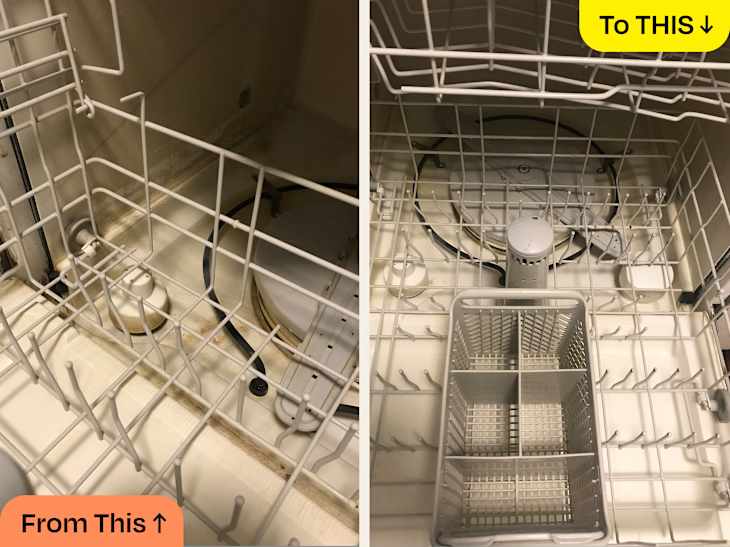
Credit: www.thekitchn.com
When To Call A Professional
If you see leaks, hear grinding noises, or find standing water even after cleaning, it may be a technical issue. Call a licensed appliance repair person before trying to fix electrical or plumbing problems yourself.
Frequently Asked Questions
How Often Should I Clean My Dishwasher Without Vinegar?
For most homes, deep cleaning once a month is enough. If you use the dishwasher daily or have hard water, clean every 2–3 weeks. Quick wipe-downs weekly keep things fresh between deep cleans.
Can I Use Lemon Juice Instead Of Vinegar?
Yes, lemon juice is a mild acid and works well for cleaning and removing odors. Sprinkle it inside or add to the detergent tray, then run a hot cycle. It is less harsh than vinegar and smells better.
Are Dishwasher Cleaner Tablets Safe To Use Regularly?
Yes, most tablets are safe for monthly use. Always follow the manufacturer’s directions. Do not mix with other cleaners in the same cycle.
What Is The Best Way To Clean A Dishwasher Filter?
Remove the filter (usually under the bottom rack), soak in hot soapy water for 10–15 minutes, scrub gently with a brush, and rinse well. Make sure to clear any mesh or holes.
Is It Okay To Use Bleach In My Dishwasher?
Usually, no. Bleach can damage stainless steel, rubber parts, and plastic. Only use bleach if your manufacturer recommends it for mold, and never mix with citric acid or vinegar.
Keeping your dishwasher clean does not have to be hard or risky. With the right tools and safe products like baking soda and citric acid, you can avoid vinegar and still enjoy spotless dishes every day. By following these steps and tips, you protect your machine, your health, and the environment.
A little regular care goes a long way—your dishwasher (and your family) will thank you.