
A microwave oven is a key appliance in many kitchens. We rely on it for fast meals and reheating leftovers. But what happens when the microwave door does not close or open properly? Maybe it feels loose, won’t latch, or the window looks damaged. These problems can make the microwave unsafe and stop it from working. The good news is, many common microwave door issues can be fixed at home, often without special tools.
Microwave doors are more complex than they look. They have latches, springs, hinges, and sometimes safety switches inside. Fixing a microwave door is not just about making it open and close. It’s also about making sure the door seals tightly, because microwaves can leak if the door is damaged or misaligned.
This can be dangerous.
If you want to fix a microwave door yourself, you need to know how the door works, which problems are easy to repair, and when to call a professional. This guide will walk you through everything you need—from understanding how a microwave door works, to diagnosing problems, performing repairs, and keeping your microwave safe for years to come.
How A Microwave Door Works
Before you start fixing anything, it helps to know how the door mechanism functions. The door is not just a simple cover; it is designed to keep the microwave energy inside the oven.
A typical microwave door has several key parts:
- Outer door panel: The main part you see and touch.
- Latch and hooks: Small plastic pieces that lock the door in place.
- Springs: Help the door open smoothly and close tightly.
- Hinges: Connect the door to the oven body and allow it to swing.
- Safety interlock switches: Inside the microwave, these detect if the door is closed. If not, the microwave will not turn on.
- Door seal (gasket): A rubber or foam strip that prevents leaks.
When you close the door, the latches hook into the oven body. This triggers the interlock switches and allows the microwave to start. If any part fails, the oven may not work, or worse, may leak microwaves.
Common Microwave Door Problems
Let’s look at the most frequent issues people face with microwave doors:
- Door won’t close or latch
- Door feels loose or wobbly
- Door won’t open
- Broken or cracked door panel
- Door doesn’t align with the body
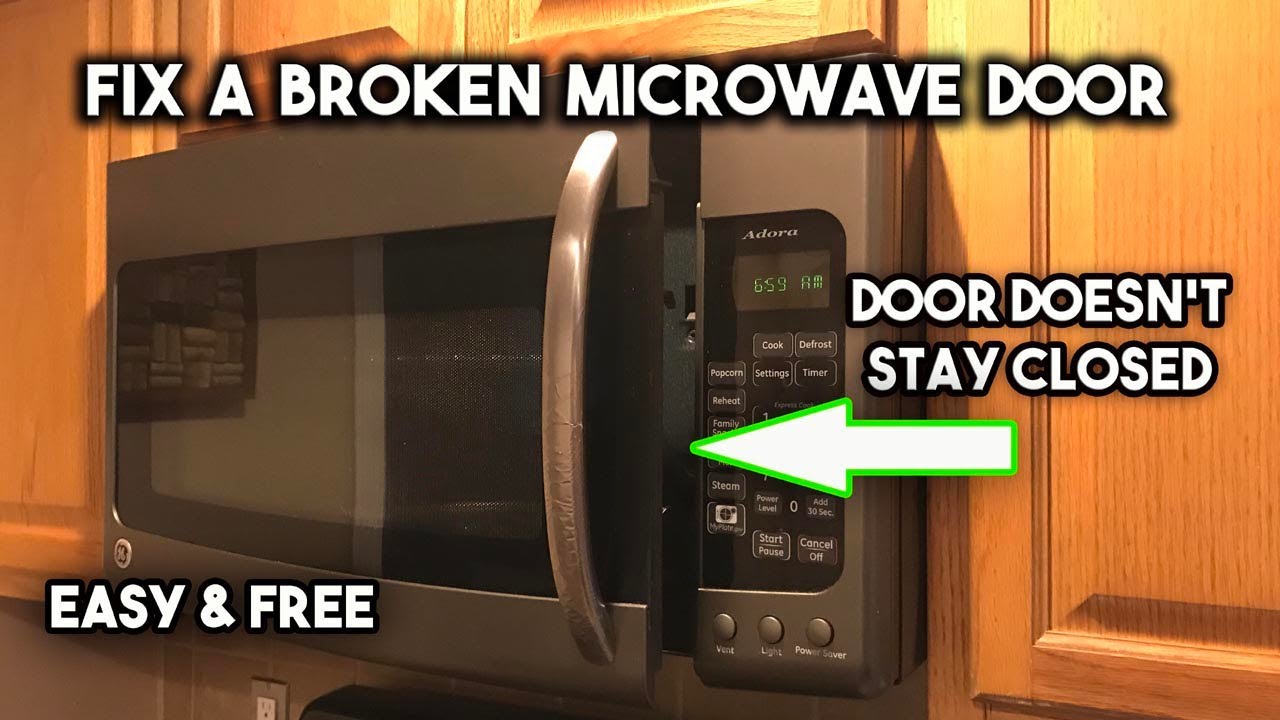
- Door won’t stay closed (pops open)
- Damaged or missing door seal
- Broken hinges
- Latch or hook is broken
- Microwave runs with door open (dangerous)
- Unusual noise when opening or closing
- Visible gaps around the door
Each problem has different causes and solutions. We’ll explain how to diagnose, fix, and prevent them.
Safety First: Precautions Before Repair
Microwaves use high voltage and can be dangerous even after unplugging. Here’s how to stay safe:
- Unplug the microwave before any work.
- Don’t touch internal parts near the magnetron or capacitor.
- Use insulated tools.
- If you see sparks, burning smells, or electric shocks, stop and call a professional.
- Never use a microwave with a damaged door or visible gaps.
For most door repairs, you can avoid touching any electrical components. But if you need to open the microwave case, extra caution is required.
Diagnosing The Problem
Before you fix anything, find the real cause. Here’s how to check:
1. Door Won’t Close Or Latch
- Check for food bits or grease blocking the latch or seal.
- Inspect the latch hooks for damage.
- Test if the door is misaligned (does it hit the frame? ).
2. Door Feels Loose Or Wobbly
- Wiggle the door gently. If there’s too much movement, hinges may be worn.
- Check for missing or broken hinge screws.
3. Door Won’t Open
- Try the door release button or handle.
- Listen for a click. If no sound, the latch may be stuck or broken.
4. Cracked Or Broken Door Panel
- Look for visible cracks, dents, or damage.
- If the window is loose or rattling, the outer panel may be separated.
5. Door Pops Open Or Won’t Stay Shut
- Open and close the door several times. If it opens by itself, the latch or springs may be weak.
6. Door Seal Is Damaged
- Look for gaps, tears, or missing pieces in the gasket.
If you’re not sure, compare your door’s movement and alignment to another microwave. Most issues are obvious with a close look.
Essential Tools And Parts Needed
For most microwave door repairs, you’ll need simple tools:
- Phillips screwdriver
- Flat-head screwdriver
- Needle-nose pliers
- Plastic putty knife (for prying)
- Replacement parts (latch, hinges, gasket, etc.)
Parts are often available online or from appliance stores. Always get the right part for your brand and model.
How To Fix A Microwave Door: Step-by-step Solutions
Let’s dive into fixing each common problem. Read through all steps before starting. Choose the solution that matches your issue.
Fixing A Door That Won’t Close Or Latch
- Unplug the microwave.
- Open the door and check the latch area for crumbs or grease. Clean gently with a damp cloth.
- Inspect the latch hooks. If bent or broken, they must be replaced.
- Check the door seal for any blockage.
- Try closing the door firmly but gently. If it still won’t latch:
- Remove the inner door panel (if necessary, see your manual).
- Use a screwdriver to remove screws holding the latch.
- Pull out the old latch and replace it with a new one.
- Reassemble and test.
Pro tip: If the latch doesn’t engage, the interlock switches inside the oven may be faulty. These should be replaced by a professional.
Fixing A Loose Or Wobbly Door
- Open the microwave door.
- Tighten all visible hinge screws with a screwdriver.
- If the hinges look bent or worn, they need replacement:
- Remove the screws holding the door to the hinges.
- Support the door to prevent dropping.
- Slide out the old hinges and install new ones.
- Reattach the door and check movement.
Non-obvious insight: Sometimes the screws holding the hinge are hidden behind trim pieces or rubber caps.
Fixing A Door That Won’t Open
- Try the release button or handle several times.
- If stuck, unplug the microwave.
- Use a plastic putty knife to gently pry the door open at the latch area.
- If the latch is stuck inside, you may need to remove the outer cover of the microwave (see your manual).
- Replace the broken latch or repair the spring mechanism if needed.
Warning: Never force the door open with excessive strength; it can break the frame or glass.
Fixing A Cracked Or Broken Door Panel
- Order a replacement door panel for your model.
- Remove the screws holding the inner door panel.
- Carefully separate the outer panel from the window and frame.
- Install the new panel and reattach all screws.
- Test for proper alignment.
Practical tip: If the panel is only slightly cracked and not at the window or seal, you may use strong clear tape as a temporary fix—but replace as soon as possible.
Realigning A Misaligned Door
- Open the door fully.
- Loosen the hinge screws (don’t remove them).
- Gently adjust the door up, down, or sideways for a better fit.
- Tighten the screws while holding the door in place.
- Check alignment by closing the door and looking for gaps.
If the door cannot be aligned, the hinges or frame may be bent and need replacement.
Fixing A Door That Pops Open
- Clean the latch area to remove grease or debris.
- If the spring inside the latch is weak, replace the latch assembly.
- Check for worn or broken hooks.
A door that pops open during operation is a safety hazard—never ignore this issue.
Replacing A Damaged Or Missing Door Seal
- Remove the old gasket or seal from the door channel.
- Clean the area with a damp cloth.
- Push the new seal into place, ensuring it fits tightly in the groove.
- Trim any excess length.
Non-obvious insight: Some microwaves use adhesive to hold the seal. Always check your manual for specific instructions.
Fixing Broken Hinges
- Support the door while removing hinge screws.
- Slide out the old hinges.
- Install new hinges and reattach the door.
- Test for smooth movement.
Hinge repairs are easier with two people—one to hold the door, one to work.
Replacing A Broken Latch Or Hook
- Remove the inner door panel to access the latch.
- Use pliers to pull out the broken part.
- Snap or screw the new latch into place.
- Reassemble and test.
Addressing A Microwave That Runs With Door Open
This is a very dangerous problem, usually caused by failed interlock switches. Do not use the microwave until fixed.
- Unplug the microwave.
- Access the interlock switches (often behind the control panel).
- Replace all faulty switches with new ones (match the part exactly).
- Reassemble and test with the door closed and open.
Important: If you are not comfortable with electrical repairs, call a professional.
Fixing Unusual Noises When Opening/closing
- Listen for scraping, grinding, or popping sounds.
- Tighten loose screws in the hinges or latch area.
- Apply a small amount of food-safe lubricant to the hinges (if allowed by your manual).
- If noise remains, the hinge or spring may be worn and should be replaced.
Sealing Visible Gaps Around The Door
- Check the door alignment and hinge tightness.
- Replace the door seal if damaged.
- If the frame is bent, it may need professional repair.
Never use a microwave with large visible gaps; microwave radiation can escape.
Credit: danmarcappliance.com
When To Call A Professional
Not all microwave door problems are safe to fix at home. Call a technician if:
- The door glass or frame is severely damaged.
- The microwave runs with the door open.
- You see sparks or smoke during use.
- The door repairs require opening the main case.
- You feel unsure about any step.
Microwave ovens store high voltage even when unplugged. If you need to access anything beyond the door, latch, or hinges, call a licensed repair technician.
Cost Comparison: Diy Vs. Professional Repair
Here’s a simple comparison of costs for common microwave door repairs.
| Repair Type | DIY Cost (Parts Only) | Professional Cost | Difficulty |
|---|---|---|---|
| Replace latch/hook | $10–$25 | $70–$120 | Easy |
| Replace hinges | $15–$35 | $80–$140 | Moderate |
| Replace door seal | $8–$20 | $60–$100 | Easy |
| Replace door panel | $30–$80 | $120–$250 | Moderate |
| Interlock switch repair | $5–$15 | $80–$180 | Hard |
DIY is usually much cheaper if you feel comfortable with basic repairs.
Choosing The Right Replacement Parts
Not all microwave parts are the same. Here’s what matters when buying replacements:
- Match the brand and model: Parts must fit exactly. Check the label inside the microwave.
- Buy from trusted sources: Use official parts dealers or respected online stores.
- Check return policies: If the part does not fit, you’ll want to return it.
- Watch out for used parts: Sometimes okay for hinges or panels, but never for seals or switches.
If you have doubts, contact the manufacturer or visit their website for part numbers.
Troubleshooting Table: Quick Solutions For Door Problems
Use this guide for a fast fix.
| Problem | Likely Cause | Solution |
|---|---|---|
| Door won’t close | Dirty latch, broken hook | Clean area, replace latch/hook |
| Door pops open | Weak spring, worn latch | Replace latch/spring |
| Door misaligned | Loose hinges | Tighten/replace hinges |
| Won’t open | Stuck latch | Replace latch |
| Noise when moving | Dry or damaged hinge | Lubricate/replace hinge |
| Seal damaged | Old or missing gasket | Replace seal |
| Microwave runs with door open | Broken interlock switch | Replace switch, call pro if unsure |
How To Prevent Future Microwave Door Problems
Prevention is always better than repair. Here’s how to keep your microwave door in top shape:
- Close the door gently: Slamming can break latches and hinges.
- Keep the seal clean: Wipe the gasket regularly to prevent debris.
- Don’t hang heavy items on the door: This strains the hinges.
- Check for wear every few months: Catch problems early.
- Never force the door open or closed: If stuck, check for blockage or call for help.
Non-obvious insight: Sometimes, steam or high humidity can cause the door seal to loosen. Leave the door open after cooking to let moisture escape.
How Long Does A Microwave Door Repair Take?
Most simple repairs (latch, seal, or hinge replacement) take 15–45 minutes for someone with basic skills. More complex repairs, like replacing the door panel or interlock switches, may take an hour or more.
If you’re doing it for the first time, allow extra time to read your microwave’s manual and review online videos for your model.
Credit: www.youtube.com
Signs You Should Replace The Microwave Instead
Some door repairs are not worth it, especially for old or cheap microwaves. Consider buying a new microwave if:
- The door frame is severely bent or cracked.
- Replacement parts cost more than half the price of a new unit.
- The microwave is more than 8–10 years old.
- Multiple parts fail at the same time.
A new microwave is often safer and more energy-efficient.
Environmental And Safety Considerations
Dispose of old microwave parts responsibly. Do not throw away electrical parts or glass in regular trash. Check your local recycling rules.
Never operate a microwave with a missing or damaged door. This can leak microwave radiation, which is harmful to health. For more on microwave safety, see the U.S. FDA guide.

Credit: www.youtube.com
Real-world Example: Repairing A Stuck Microwave Door
A user found their 5-year-old microwave door stuck shut. The release button made a clicking sound, but the door would not open. Here’s how they fixed it:
- Unplugged the microwave.
- Used a plastic putty knife to gently pry the door at the latch area.
- Opened the door and found a broken plastic latch hook.
- Ordered a replacement latch online for their exact model.
- Removed the inner door panel using a Phillips screwdriver.
- Replaced the latch and reassembled the door.
- Tested the microwave—door worked like new.
Time spent: about 30 minutes. Cost: $12 for the part.
Lesson: Many problems are simple and cheap to fix if you diagnose the issue correctly.
Frequently Asked Questions
Why Won’t My Microwave Door Stay Closed?
Usually, this happens because the latch or the door seal is worn out, dirty, or broken. Clean the latch area first. If it still pops open, replace the latch or spring. If the frame is bent, it may need professional repair.
Is It Safe To Use A Microwave With A Cracked Door?
No. A cracked or broken door can leak microwave radiation. Even small cracks can be dangerous. Stop using the microwave and repair or replace the door before using it again.
Can I Replace A Microwave Door Myself?
Yes, if you have basic tools and the right replacement parts, you can replace the door panel, latch, or hinges yourself. Always unplug the microwave and follow safety steps. For more complex repairs (like interlock switches), consider hiring a professional.
Why Does My Microwave Run With The Door Open?
This is a serious safety problem. The interlock switches may be broken, or the wiring is faulty. Do not use the microwave. Replace the switches or call a technician. Never use a microwave that runs with the door open.
Where Can I Buy Microwave Door Parts?
You can buy parts from the manufacturer’s website, online appliance stores, or local repair shops. Always use parts made for your specific brand and model. If you’re unsure, contact the manufacturer for help.
Repairing a microwave door is within reach for most people if you follow clear steps and use the right tools. With regular care, your microwave can last many more years—saving you money and keeping your kitchen running smoothly.