
A Blackstone griddle is more than just a cooking tool—it can be the heart of outdoor meals and family gatherings. But nothing ruins a great cookout faster than discovering rust on your beloved griddle. If you own a Blackstone or any flat-top grill, you probably worry about keeping it in great shape, especially when you see those brown spots starting to appear. Rust can eat away at your griddle, ruin the surface, and even affect the taste of your food. The good news: you can prevent rust and keep your Blackstone looking and performing like new with the right care.
Many people think a Blackstone is tough enough to survive anything, but the truth is, it’s made of cold-rolled steel—and steel rusts easily when not protected. Weather, moisture, and even leftover food can create the perfect environment for rust to grow. Understanding how and why rust forms is the first step to fighting it. In this guide, you’ll learn exactly how to keep your Blackstone from rusting, from daily cleaning habits to smart storage solutions. Let’s dive into the proven ways to protect your griddle, extend its life, and make every meal a success.
Why Does A Blackstone Griddle Rust?
Before you can prevent rust, it helps to know what causes it. Rust forms when iron, water, and oxygen combine. Your Blackstone’s surface is made of steel, which contains iron. When water (from rain, humidity, or even washing) sits on the surface, it reacts with oxygen in the air to create iron oxide—rust.
A few common causes of rust on Blackstone griddles:
- Moisture: Rain, dew, high humidity, or even a wet cloth can create rust if not wiped dry.
- Food residue: Bits of food or grease left behind can trap moisture.
- Improper cleaning: Using water without drying properly, or harsh chemicals that damage the protective layer.
- Lack of seasoning: Seasoning creates a barrier against moisture.
- Poor storage: Leaving your griddle uncovered outside exposes it to the elements.
Many beginners miss how quickly rust can start. Sometimes, even overnight dew can cause small rust spots if the griddle isn’t protected. That’s why it’s important to make rust prevention a routine, not a one-time fix.
Seasoning: The First And Best Defense
Seasoning is more than a cooking trick—it’s the most important way to protect your griddle from rust. Seasoning means coating the surface with a thin layer of oil and heating it until it forms a black, non-stick layer. This isn’t just for flavor; it’s a shield that keeps water and air away from the steel.
How To Season Your Blackstone
- Start with a clean surface: If your griddle is new or rusty, scrub it well with water and a little soap (use soap only the first time or after removing rust). Dry completely.
- Heat the griddle: Turn all burners to high and let the surface change color (about 10-15 minutes).
- Apply oil: Use a high-smoke-point oil like canola, flaxseed, or grapeseed. Pour a small amount and use tongs with a paper towel to spread a thin, even layer over the entire surface—even the edges and corners.
- Let it smoke: The oil will start to smoke. This is good! Let it smoke until it stops (about 15 minutes).
- Repeat: For best results, repeat the oil and smoke process 3-4 times. The more layers, the better the protection.
Which Oils Work Best?
Some oils form harder, more durable seasoning layers. Here’s a quick comparison:
| Oil Type | Smoke Point (°F) | Seasoning Quality |
|---|---|---|
| Flaxseed oil | 225 | Very hard, durable |
| Canola oil | 400 | Good, easy to find |
| Grapeseed oil | 420 | Good, neutral flavor |
| Vegetable oil | 400 | Acceptable for most use |
Non-obvious tip: Avoid olive oil for seasoning—it has a low smoke point and can leave a sticky layer.

Credit: www.reddit.com
Daily Cleaning: The Key To Long Life
Cleaning your Blackstone after each use is the simplest way to prevent rust. Food bits, grease, and liquids left on the surface trap moisture and feed rust. Many owners skip cleaning when tired or in a hurry, but this is a mistake.
Step-by-step Daily Cleaning
- Scrape while hot: After cooking, use a metal scraper or spatula to push food debris and grease into the grease trap.
- Wipe with a paper towel: While the surface is still warm, use a paper towel to wipe away remaining oil and crumbs.
- Add water if needed: For stuck-on bits, pour a little water (not too much) on the hot griddle. The steam will loosen residue. Scrape and wipe again.
- Dry completely: Always finish by drying the surface with paper towels.
- Apply a thin oil layer: After cleaning, add a light coating of oil to protect the surface until next time.
Pro tip: Never use soap or harsh chemicals for daily cleaning—they can strip away your seasoning. Soap is only for the very first clean or after removing rust.
Deep Cleaning And Rust Removal
Sometimes, even with good habits, rust appears—maybe after a rainy night, a forgotten cover, or a long break. Don’t panic. Most surface rust can be removed with a little effort.
How To Remove Rust
- Heat the griddle: Warm it up to loosen the rust.
- Scrub the rust: Use a griddle stone, steel wool, or coarse sandpaper (not too rough). Scrub in a circular motion until the rust is gone.
- Wipe clean: Remove all rust dust with paper towels.
- Clean with water: Wipe the surface with a damp cloth to remove grit. Dry completely.
- Re-season fully: After rust removal, season your griddle as if it was new.
When To Deep Clean
- After winter storage
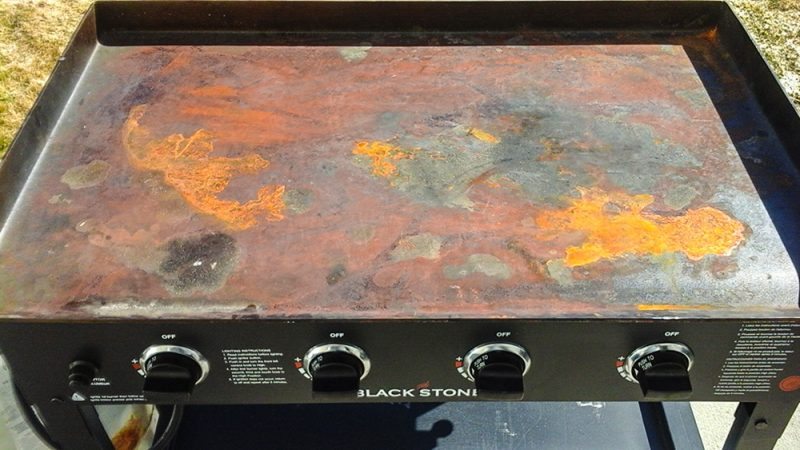
- If you see orange or brown patches
- After cooking acidic foods (like tomatoes) that can damage seasoning
A mistake many beginners make: cleaning away the rust but forgetting to re-season. Bare steel will rust again quickly if not protected.
Storage: Protecting Your Griddle From The Elements
Where and how you store your Blackstone is just as important as cleaning and seasoning. Even a single night left outside in the rain can undo months of care.
Outdoor Storage
If you must keep your griddle outdoors:
- Always use a fitted cover: Heavy-duty, waterproof covers keep out rain and dew. Make sure the cover fits well—loose covers can blow away or let water in.
- Elevate if possible: Placing the griddle on a cart or blocks keeps it off wet ground.
- Check for leaks: Sometimes, covers develop cracks or holes. Inspect regularly.
Indoor Or Sheltered Storage
- Store in a garage or shed: Indoors is best, especially in wet or snowy seasons.
- Remove the propane tank: For safety, disconnect and store the propane separately.
- Leave the lid slightly open: If your griddle has a lid, don’t seal it tight—let air circulate to prevent condensation.
Storage Comparison
Here’s a quick look at the benefits of different storage methods:
| Storage Method | Rust Risk | Best For |
|---|---|---|
| Outdoor, uncovered | Very high | Never recommended |
| Outdoor, covered | Moderate | Short-term, mild weather |
| Indoor, dry place | Very low | Long-term, winter storage |
Non-obvious tip: Never cover your griddle while it’s still hot or wet—the trapped steam can actually cause rust.
Weather And Seasonal Factors
Your local climate can change how you care for your Blackstone. If you live in a humid or rainy area, rust prevention is harder but even more important.
High Humidity Areas
- Increase oiling: Add a layer of oil after every use, and check the surface often for rust spots.
- Consider desiccant packs: Place moisture-absorbing packs under the cover or in the storage area.
- Store indoors when possible: Even a carport or covered porch is better than open air.
Winter Storage
- Clean and season deeply before storage: Give the griddle a full cleaning and 3-4 seasoning layers before putting it away for the winter.
- Check monthly: Inspect for condensation or rust during long storage.
- Avoid plastic tarps: They can trap moisture. Use only breathable, grill-specific covers.
Credit: blackstoneproducts.com
Handling And Maintenance Habits
How you use and move your griddle also affects its long-term health.
Smart Handling Tips
- Don’t cut food on the griddle: Knives can scratch the seasoning and expose bare metal.
- Avoid metal utensils with sharp edges: Use rounded spatulas or plastic tools for most tasks.
- Never pour cold water on a hot griddle: Sudden temperature changes can warp the steel and crack the seasoning.
Maintenance Checklist
- Check for loose screws or bolts monthly.
- Inspect the grease trap to prevent overflow, which can cause messy rust on the frame.
- Clean the underside and edges—rust can start here too.
Non-obvious insight: Many people only protect the cooking surface, but rust often starts on the corners, sides, or frame. Wipe oil on these spots too.
Choosing The Right Cover And Accessories
Not all covers are equal. The right accessories can make rust prevention much easier.
What To Look For In A Cover
- Waterproof but breathable: Good covers keep water out but let air move, preventing condensation.
- UV resistant: Sun can break down weaker covers, letting water in.
- Tight fit: Choose a cover made for your Blackstone’s size.
Useful Accessories
- Griddle hood: Some models come with a built-in hood that adds extra protection.
- Griddle caddy: Keeps cleaning tools and oil handy so you never skip maintenance.
- Weatherproof cart: Raises your griddle off the ground and shields the frame from rain.
Common Mistakes That Cause Rust
Even experienced owners sometimes slip up. Avoiding these common mistakes can save you a lot of trouble:
- Skipping oil after cleaning: Bare steel rusts in hours if not oiled.
- Using too much water: Steam cleaning is good, but flooding the griddle causes rust.
- Storing with food residue: Bits of food can hold water and attract pests.
- Covering a wet griddle: Trapped moisture is worse than rain.
- Ignoring the frame and corners: Rust often starts where you’re not looking.
- Not checking the cover regularly: Small tears or loose fits let water in.
How Long Does Seasoning Last?
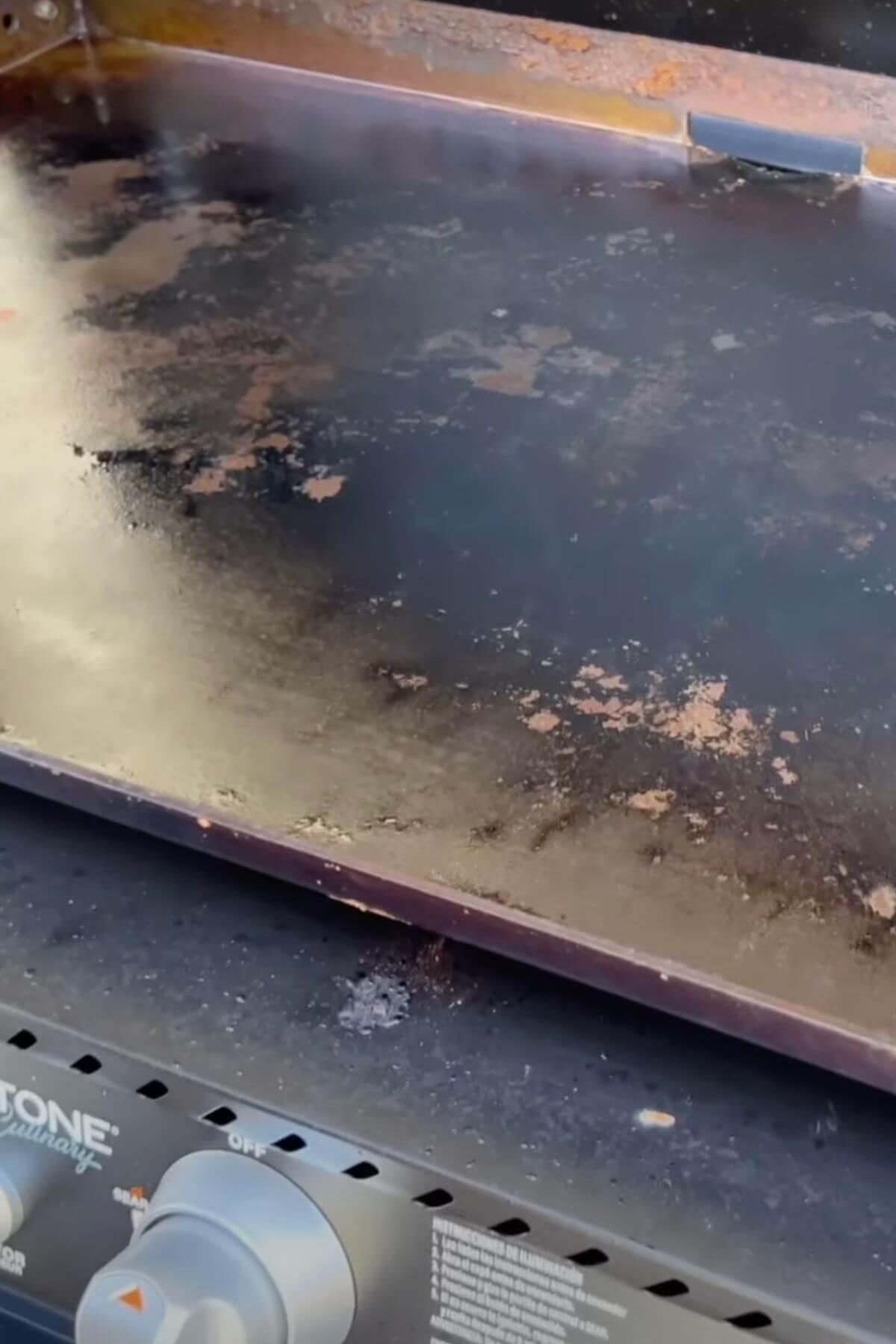
Seasoning can last for months if you care for it, but it’s not permanent. High heat, acid foods, or heavy scrubbing can wear it down. Signs you need to re-season:
- Dull or gray spots
- Food sticking more than usual
- Orange or brown patches (early rust)
A well-seasoned Blackstone develops a shiny, black, non-stick surface. If you notice changes, don’t wait—re-season before rust starts.
Credit: theflattopking.com
Advanced Tips For Serious Protection
If you want to go the extra mile, here are some advanced methods for maximum rust protection:
Use A Food-safe Rust Inhibitor
Some products are designed to add an extra layer of protection between seasoning and the air. These are especially useful in humid climates or for long-term storage. Make sure any product you use is safe for food contact.
Try “blackstone Conditioner”
Blackstone sells its own griddle conditioner—a blend of oils designed for seasoning and protection. While not required, many users find it gives a harder, more lasting layer.
Regular “burn-offs”
Every few weeks, turn the griddle to high and let it run empty for 10-15 minutes. This burns off any hidden moisture or residue and keeps the seasoning hard.
Keep A Maintenance Log
Serious outdoor cooks keep a small notebook. Write down when you last deep-cleaned, seasoned, or stored the griddle. This keeps you on schedule and helps spot patterns if rust returns.
What To Do If Rust Appears
Even with perfect habits, sometimes rust happens. Quick action can save your griddle.
- Don’t panic: Most rust is only on the surface.
- Scrub it off: Use a griddle stone or steel wool as described above.
- Re-season immediately: Never leave bare steel exposed.
- Check your habits: Try to figure out what caused the rust—was it storage, cleaning, or weather?
If the rust is deep (pitting or flaking), you may need to repeat scrubbing several times. In rare cases, if the steel is badly damaged, it may need professional repair.
Real-life Example: Saving A Rusty Blackstone
Let’s say you forgot your griddle outside during a rainy weekend. You find orange and brown spots across the surface. Here’s what to do:
- Heat the griddle to medium-high. This dries it out and loosens rust.
- Use a griddle stone to scrub the entire surface, focusing on rusty areas.
- Wipe away all rust dust. If needed, repeat with finer steel wool.
- Clean with a damp cloth, then dry completely.
- Season the griddle 3-4 times in a row.
- Store indoors with a thin oil layer.
With patience, most griddles can be restored to “like new” condition, even after a bad rust attack.
Comparing Blackstone To Other Griddles
Is Blackstone more likely to rust than other brands? Let’s compare:
| Griddle Type | Material | Rust Risk | Maintenance Level |
|---|---|---|---|
| Blackstone | Cold-rolled steel | High without care | Moderate |
| Cast iron griddle | Cast iron | High without care | High |
| Stainless steel griddle | Stainless steel | Low | Low |
| Ceramic griddle | Ceramic coated | Very low | Very low |
Non-obvious insight: Stainless steel and ceramic griddles are less likely to rust but don’t develop the same non-stick cooking surface as a well-seasoned Blackstone.
Frequently Asked Questions
How Often Should I Season My Blackstone Griddle?
For best results, season your griddle before first use, after deep cleaning or rust removal, and every few months with regular use. Lightly oiling after each cook helps maintain the seasoning between full seasonings.
What Oil Is Best For Seasoning A Blackstone?
Flaxseed oil is often recommended for a very hard layer, but canola, grapeseed, and vegetable oil work well and are easier to find. Avoid butter, olive oil, or other low-smoke-point oils.
Can I Use My Blackstone Right After It Rains?
It’s best not to cook on a wet or rusty griddle. First, dry the surface completely, check for rust, and re-oil if needed. Cooking on a wet surface can cause sticking and damage the seasoning.
Is Rust On My Griddle Dangerous?
Surface rust is not dangerous, but it can ruin the flavor and texture of your food. Deep rust can eventually damage the griddle. Always remove rust and re-season before cooking.
Where Can I Find More Information About Caring For My Blackstone?
For official guidance and tips, visit the Blackstone Products Griddle Care page. They offer manuals, videos, and troubleshooting for all models.
Keeping your Blackstone from rusting is all about good habits—cleaning, seasoning, and smart storage. With a little extra care, your griddle can deliver perfect meals for years. Each step you take extends the life of your investment and keeps every cookout fun, easy, and stress-free.
Don’t let rust win—protect your Blackstone and enjoy outdoor cooking at its best.