
Many people do not think about kitchen knives as a safety risk until an accident happens. These sharp tools are used every day for cooking, but they can be dangerous, especially if you have children or pets at home. You may also worry about guests, roommates, or elderly family members.
Good knife storage is not just about keeping the kitchen tidy—it protects everyone in your home. Locking up kitchen knives is one of the smartest steps you can take.
But how do you lock up kitchen knives safely, and which method is right for your kitchen? There are many options, each with its own pros and cons. Some people need a simple child-proof solution; others want high-security for sharp or expensive knives.
This guide explains the best ways to lock up kitchen knives, from basic safety locks to advanced cabinets. You will learn the real dangers, practical steps, and smart tips most people miss. Whether you are a new parent, a chef, or just careful, you will find a complete answer here.
Why Lock Up Kitchen Knives?
Kitchen knives are among the most-used tools in any home. But they can cause serious injuries, especially when left out or stored carelessly. According to the U.S. Consumer Product Safety Commission, over 350,000 knife-related injuries are treated in emergency rooms each year. Children under 10 and adults over 65 are at the highest risk. Pets can also get hurt if knives fall or are left where they can reach.
Locking up knives helps prevent accidents, but it also brings peace of mind. Here are the main reasons to lock up kitchen knives:
- Child safety – Curious kids can easily grab knives if they are not locked away.
- Pet safety – Cats and dogs can jump on counters or knock knives off tables.
- Protection from guests – Friends or visitors may not know your kitchen rules.
- Elderly care – Seniors with memory issues may use knives unsafely.
- Prevention of theft – Expensive knives are attractive targets for theft.
- Legal or foster care rules – Some homes must lock up knives by law.
A locked knife storage system is a smart investment. It is much easier to prevent accidents than to treat injuries.
Types Of Knife Storage That Can Be Locked
Not all knife storage solutions can be locked. Some are designed for quick access, which is not safe for homes with children or pets. Here are the main types of lockable knife storage:
Lockable Knife Drawers
A lockable knife drawer is a drawer with a built-in or add-on lock. You can install a child-proof latch, combination lock, or keyed lock. Some new kitchen cabinets even come with locking drawers as an option.
Pros:
- Easy to use for adults
- Hidden from view
- Can store many knives
Cons:
- May require tools to install a lock
- Needs enough drawer space
Lockable Knife Cabinets
A knife cabinet is a small cupboard or box with a lock. It can be wall-mounted or placed on a counter. Many are made from wood or metal and have foam slots to keep knives safe.
Pros:
- Very secure
- Keeps knives organized
- Can fit large or specialty knives
Cons:
- May take up extra space
- More expensive than simple locks
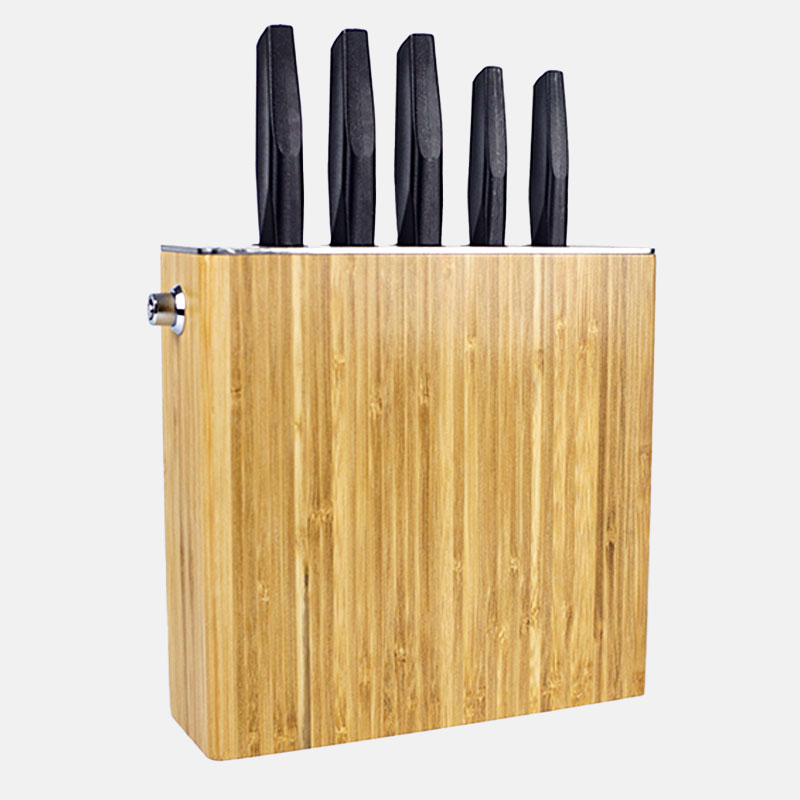
Lockable Knife Blocks
Some knife blocks now come with built-in locks. These blocks hold the knives in slots, but you need a key or code to open the cover. This is a newer product on the market.
Pros:
- Easy to access for adults
- Looks neat on the counter
Cons:
- Limited knife capacity
- Usually more costly
Magnetic Knife Strips With Locking Covers
A magnetic knife strip holds knives on the wall using strong magnets. To make it safe, you can add a locking cover or shield that blocks access. The cover can be locked with a key or combination.
Pros:
- Saves counter and drawer space
- Knives are visible but not accessible
Cons:
- Installation takes time
- Not all covers fit all strips
Portable Lockboxes
A portable lockbox is a small, secure box for valuable or dangerous items. Some people use these for knives, especially in shared spaces or when traveling.
Pros:
- Highly secure
- Easy to move
Cons:
- Limited space
- Not convenient for daily use
Custom-built Solutions
Some kitchens have custom cabinets or knife holders built with security in mind. These can include hidden compartments, biometric locks, or heavy-duty locks.
Pros:
- Maximum safety
- Fits your exact needs
Cons:
- Expensive
- Requires planning and building
Comparing Lockable Knife Storage Options
Choosing the right way to lock up kitchen knives depends on your needs, kitchen space, and budget. Here is a comparison of the most popular options:
| Storage Type | Security Level | Ease of Use | Cost | Capacity | Best For |
|---|---|---|---|---|---|
| Lockable Drawer | Medium | High | Low-Medium | High | Families, daily use |
| Lockable Cabinet | High | Medium | Medium-High | High | Chefs, collectors |
| Lockable Knife Block | Medium | High | Medium | Low-Medium | Small kitchens |
| Magnetic Strip + Cover | Medium | Medium | Low-Medium | Medium | Modern kitchens |
| Portable Lockbox | High | Low | Low-Medium | Low | Travel, shared homes |
| Custom Solution | Very High | Varies | High | Custom | Special needs |
How To Lock Up Kitchen Knives: Step-by-step Guide
Locking up kitchen knives is not just about buying a product. You need to plan, install, and use your storage correctly. Here is a clear process to help you do it right.
1. Assess Your Kitchen And Risks
First, look at your kitchen. Where are your knives now? Who uses the kitchen, and what are the main risks—children, pets, guests, or theft?
- Count your knives and their sizes.
- Notice which knives are used most often.
- Check if you have enough space for a new storage unit or lock.
A common mistake: Many people only lock up the largest knives, but even small paring knives can be dangerous. Lock up all sharp knives, not just the big ones.
2. Choose The Right Lockable Storage
Based on your needs, pick the best storage type. For example, if you want daily access but high security, a lockable drawer or cabinet is a good choice. If you have little counter space, a magnetic strip with a lockable cover may work better.
Think about:
- How often you need to access the knives
- Who needs access (just you, or other adults too)
- Your kitchen layout
3. Install The Lock Or Storage Solution
Follow the manufacturer’s instructions carefully. If you are adding a lock to an existing drawer or cabinet, make sure it is strong enough for safety.
- Use a drill and screwdriver for installing locks
- Attach the lock at the top of the drawer for child safety
- For magnetic strips, mount them out of children’s reach and add the cover
Test the lock several times before storing knives inside.
4. Store Knives Safely Inside
Never just toss knives into a locked drawer or box. Use a knife tray, foam insert, or blade guards to keep them from touching each other. This prevents dulling and accidents.
- Place knives with the blade facing down or away from you
- Use blade covers for extra safety
- Organize by size and type
5. Create Good Habits
Locking up knives works best when everyone in the home follows the rules.
- Always lock the storage after use
- Teach adults how to unlock and relock safely
- Remind children that knives are not toys
Set A Routine—lock Up Knives After Cooking, Not “later.”
6. Regularly Check And Maintain
Locks can break or become loose over time. Check your storage system every month.
- Test the lock mechanism
- Look for loose screws or worn parts
- Replace worn-out locks or covers
Do not wait for an accident to fix problems.
Advanced Security: High-tech And Custom Options
For those who want the highest level of safety, modern technology offers advanced solutions.
Electronic Locks
Some knife storage units now use electronic keypad locks or fingerprint (biometric) locks. These are popular in professional kitchens or homes with high security needs.
Benefits:
- No keys to lose
- Only trusted users can open
Drawbacks:
- Expensive
- Need batteries or power
Hidden Compartments
Custom cabinets can have secret knife compartments—hidden behind panels or inside drawers. This makes it nearly impossible for children or guests to find the knives.
Tip: If you choose this option, make sure at least one other adult knows the location in case of emergency.
Smart Home Integration
Some smart home systems can alert you if a knife cabinet is left unlocked. This is useful for people with memory concerns.
Example: A sensor sends a text to your phone if the lock is not engaged after use.
Mistakes To Avoid When Locking Up Kitchen Knives
Even with the best intentions, people make some common mistakes. Here are pitfalls to avoid:
- Forgetting to lock up after use – The system only works if you remember to lock it every time.
- Leaving keys or codes where children can find them – Store keys in a separate, hidden spot.
- Using weak locks – Cheap plastic locks can break easily. Choose metal or approved child-safety locks.
- Ignoring small knives – All sharp knives, even steak or paring knives, should be locked away.
- Overfilling storage – Crowded drawers or boxes make it easier for knives to fall or cut someone reaching in.
- Choosing style over safety – Some knife blocks look nice but are not secure. Always pick safety first.

Credit: senkenknives.com
How To Child-proof Kitchen Knives
Child-proofing is not just about locks. It includes teaching, supervision, and smart habits.
Use Child-safe Locks
Pick locks that children cannot open. Some child-safety locks need two hands to open or a special motion.
Store Out Of Reach
Even if knives are locked, keep the storage unit above a child’s reach, for example, in a high cabinet or on top of the fridge.
Teach Kitchen Safety
Show children that knives are tools, not toys. Explain why they are locked up and never use knives as punishment or to scare.
Supervise Closely
Never leave children alone in the kitchen if knives are out.
Remove Unnecessary Knives
Reduce the number of knives you keep. Store extras outside the kitchen if you do not need them daily.
Pet-proofing Kitchen Knives
Pets can surprise you by jumping on counters or opening cabinets. Here is how to keep them safe:
- Install locks on all low cabinets and drawers – Some dogs and cats can open simple cabinets.
- Use heavy knife blocks with covers – Light blocks are easy for pets to knock over.
- Avoid leaving knives on counters or in sinks – Even for a few minutes.
- Choose wall-mounted storage – Magnetic strips are good if covered and placed out of reach.
Knife Safety In Shared Or Rented Homes
Living with roommates or in a shared house adds new risks. You may not always know who is in the kitchen.
Use Personal Lockboxes
Store your best knives in a lockbox with a personal lock.
Set Clear Rules
Agree with roommates about knife use, cleaning, and storage. Post rules if needed.
Avoid Leaving Knives In Common Areas
Do not leave knives in sinks or on drying racks. Always return them to the locked storage.
Consider Insurance
If you own expensive knives, check if your home insurance covers theft or damage.
Knife Lock-up For Professional Kitchens
Restaurants, schools, and other professional kitchens have special rules.
- Lock up knives after closing
- Use heavy-duty cabinets with approved locks
- Log who uses each knife set
- Train all staff on knife safety
Some places use RFID tags to track knives. This is rare at home but common in big kitchens.
Cleaning And Caring For Locked-up Knives
Locking up knives can lead to moisture buildup and rust if you are not careful.
- Dry knives completely before storing
- Use a knife block or tray that allows air flow
- Check for rust spots monthly
- Avoid storing wet knife covers in closed spaces
A small silica gel pack inside the cabinet can absorb moisture.
Real-world Examples: Knife Lock-up In Action
Case 1: A family with two children under 5 installs a lockable knife drawer. They use a magnetic child-proof lock that requires a “key” hidden on top of the fridge. Since installing, they have had no knife-related accidents.
Case 2: A shared apartment uses a small lockbox for each roommate’s knives. One box disappeared during a party, but the knives were safe because only the owner had the key.
Case 3: A retired couple with dementia concerns builds a custom cabinet with a keypad lock. Only trusted caregivers know the code, reducing risks for the elderly spouse.
Credit: knifelock.com
Cost Breakdown: What To Expect
Locking up kitchen knives does not have to be expensive. Here is a general price range for common solutions:
| Solution | Low-End Price | High-End Price | Installation Cost |
|---|---|---|---|
| Child-proof drawer lock | $5 | $30 | DIY |
| Lockable knife cabinet | $30 | $150 | $0-$50 |
| Lockable knife block | $40 | $200 | DIY |
| Magnetic strip + lockable cover | $20 | $80 | DIY |
| Portable lockbox | $25 | $100 | DIY |
| Custom solution | $200 | $1,000+ | $100+ |
Tip: Most families can get a good lockable system for under $50. High-security or custom options cost more but may be needed for special cases.
Two Insights Most People Miss
- Knife injuries often happen during cleaning or putting away knives, not just while cooking. Always lock up knives immediately after washing and drying.
- Locks are only as strong as the weakest part of the system. If your knife block is easy to pick up, a child or thief can carry it away, even if it is locked. Always secure both the storage and the lock.

Credit: www.amazon.com.be
Legal Requirements And When To Lock Up Knives
Some states and countries have laws about knife storage—especially for foster homes, childcare providers, or group homes. For example, foster care rules in the U. S. often require all dangerous kitchen tools to be locked away. Check your local regulations to avoid legal trouble.
If you are unsure, it is always safer to lock up knives if you have:
- Children under 10
- Pets
- Elderly family members with memory loss
- Frequent guests
- Expensive knife collections
Where To Find Reliable Knife Lock-up Products
You can find lockable knife storage at home improvement stores, kitchen specialty shops, and online. Look for:
- Products with good customer reviews
- Safety certifications (such as ASTM or JPMA for child-safety locks)
- Clear installation instructions
For more details on kitchen safety, visit the National Safety Council.
Final Thoughts
Locking up kitchen knives is one of the best ways to make your home safer. With so many options—drawers, cabinets, blocks, and more—you can find a solution that fits your kitchen, budget, and lifestyle. Always pick the method that gives you daily convenience and strong protection.
Remember, a locked knife is a safe knife. Teach your family the rules, check your system often, and enjoy peace of mind knowing you are protecting those you care about.
Frequently Asked Questions
Why Is It Important To Lock Up Kitchen Knives?
Locking up kitchen knives prevents injuries, especially for children and pets. It also protects against theft and helps meet legal safety requirements in some homes.
What Is The Safest Way To Store Kitchen Knives?
A lockable knife cabinet or drawer with a strong lock is the safest for most homes. For extra security, use a cabinet with a combination or biometric lock.
Can I Lock Up Knives Without Buying New Storage?
Yes. You can add a child-proof lock to an existing drawer or cabinet, or use blade covers inside a locked box. The key is to use a lock that children and pets cannot open.
Are Magnetic Knife Strips Safe If I Add A Lockable Cover?
Yes, as long as the cover is strong and locks securely. Always mount magnetic strips out of children’s reach and check the cover regularly for damage.
How Often Should I Check My Knife Lock-up System?
Check your locks and storage at least once a month. Test the lock, look for damage, and make sure everyone follows the safety routine. Replace worn-out locks quickly to keep your kitchen safe.