
If your kitchen feels small or outdated, the bulky box above your cabinets—known as a soffit—might be the reason. Kitchen soffits, also called “bulkheads,” were once common in home design. They hide pipes, wiring, or simply fill the gap between cabinets and ceiling.
But today, most people prefer a more open, modern look. Removing a kitchen soffit can instantly make your space feel brighter and larger. However, this is not a simple DIY. You need to know what’s inside the soffit, how to remove it safely, and how to finish the wall and ceiling after.
This step-by-step guide will help you understand everything about removing kitchen soffits, from planning to finishing touches.
What Is A Kitchen Soffit?
A kitchen soffit is a box-shaped structure built above your cabinets. It can be made from drywall, wood, or other materials. Most soffits are 12 to 18 inches tall and deep, matching the depth of upper cabinets. While some are empty, others may hide plumbing, electrical wires, or ductwork. In older homes, soffits were used to cover uneven ceilings or unused space.
Why Were Soffits Installed?
There are a few reasons soffits became common:
- Hiding utilities: Pipes, wires, or vents are often routed above cabinets, and soffits make them invisible.
- Filling empty space: Without a soffit, there’s often an awkward gap between the cabinets and ceiling.
- Leveling: Soffits help hide uneven ceilings or walls in older houses.
However, tastes have changed. Now, people want tall cabinets or open shelves, making soffits look outdated.
Should You Remove Your Kitchen Soffit?
Before you grab a hammer, ask yourself: Is removing the soffit worth it? Here are the key benefits and risks.
Benefits
- More space: Removing soffits allows you to install taller cabinets or open shelves, increasing storage.
- Modern look: Homes with no soffits feel open, modern, and brighter.
- Higher resale value: Updated kitchens can increase your home’s value by up to 10% according to remodeling studies.
Risks And Challenges
- Hidden obstacles: Many soffits contain pipes, wires, or vents. Moving these can be costly.
- Repair work: Removing a soffit means you’ll need to repair the ceiling, walls, and sometimes cabinetry.
- Permit requirements: In some cities, changing electrical or plumbing needs a permit.
When Removal Is Not Recommended
- If your soffit contains structural beams or critical utilities you can’t move.
- If you’re not ready for the cost and effort of a full kitchen update.
- If your cabinets are already flush with the ceiling (no soffit to remove).
Non-obvious insight: Always check if your home was built before 1978. Older homes may have asbestos in drywall or joint compound. Removing these materials requires special safety steps.
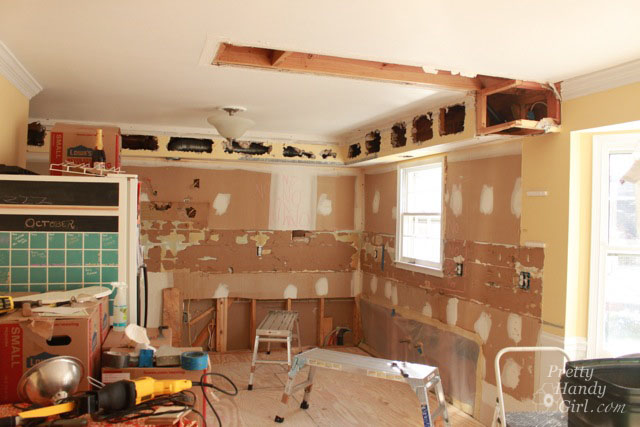
Credit: prettyhandygirl.com
How To Tell What’s Inside A Soffit
You need to know what you’re dealing with before you start tearing down anything. Here’s how to investigate safely:
- Look for clues: If there are vents, pipes, or electrical outlets near the soffit, it’s likely hiding something.
- Tap and listen: Hollow sounds usually mean it’s empty. A solid sound can mean framing, pipes, or wires inside.
- Check attic or basement: Sometimes you can see where pipes or wires go.
- Drill a test hole: Carefully cut a small hole in the soffit and peek inside with a flashlight and mirror.
- Consult blueprints: If you have them, house plans will show what’s inside walls and soffits.
Pro tip: If you see aluminum-wrapped pipes or thick wiring, call a professional. Moving these can be dangerous.
Planning And Preparation
Good planning saves time, money, and headaches. Here’s what you need to do before starting the removal.
Tools And Materials Needed
- Safety glasses and dust mask
- Work gloves
- Utility knife and drywall saw
- Pry bar and hammer
- Stud finder
- Drill/driver with screwdriver bits
- Flashlight and hand mirror
- Plastic sheeting and painter’s tape
- Ladder or sturdy step stool
- Trash bags or dumpster for debris
You may also need patching materials:
- Drywall sheets
- Drywall screws
- Joint compound
- Sandpaper
- Paint and primer
Safety First
- Turn off power to the kitchen at the breaker box.
- Shut off water if plumbing is present.
- Wear protective gear—removing soffits is dusty work.
- Keep children and pets away from the area.
Protect Your Kitchen
- Remove everything from cabinets and countertops.
- Cover floors and surfaces with plastic sheeting.
- Tape off doorways to keep dust in one room.
Non-obvious insight: Take photos of the soffit area before starting. They help you remember what was there and can be useful if you need professional help later.
Step-by-step: How To Remove A Kitchen Soffit
Let’s break down the soffit removal process into clear steps. For most kitchens, this project takes 1–3 days, depending on size and complexity.
1. Remove Cabinet Doors And Trim
Start by taking off all cabinet doors and crown molding near the soffit. This gives you space to work and prevents damage to cabinets.
- Use a screwdriver to remove hinges.
- Pry off trim carefully using a putty knife and pry bar.
- Store hardware in labeled bags.
2. Score And Cut The Drywall
Use a utility knife to score along the seams where the soffit meets the wall and ceiling. This helps prevent tearing drywall you want to keep.
- Cut carefully around the edges.
- Use a drywall saw to make larger openings.
3. Expose The Framing
Once you’ve scored the edges, use your hands or a pry bar to gently pull off the soffit’s drywall. Go slow—there may be wires or pipes behind.
- Remove drywall in small pieces.
- Use a flashlight to check for hidden obstacles.
4. Identify And Deal With Utilities
This is the most important step. When you see wires, pipes, or vents, stop and identify them.
- Electrical wires: Turn off power at the breaker. If you’re not sure, test with a non-contact voltage tester.
- Plumbing: If you see pipes, check if they’re active. Shut off water if needed.
- Ducts/vents: These may be for the stove hood, bathroom fan, or HVAC.
If you find anything you can’t move, you may need to leave part of the soffit or reroute utilities. This usually requires a professional electrician or plumber.
5. Remove Framing
Most soffits are framed with 2x4s attached to the ceiling, walls, and cabinets.
- Use a drill or pry bar to remove screws or nails holding the frame.
- Take out wood framing piece by piece.
- Be careful not to damage the ceiling or cabinets.
6. Patch And Repair
After the soffit is gone, you’ll need to patch holes and repair any damage.
- Replace drywall on ceiling and wall as needed.
- Tape and mud the seams.
- Sand smooth, then prime and paint.
If cabinets are left with an exposed top, you can:
- Install taller cabinets
- Add decorative trim
- Use open shelves
7. Clean Up
Kitchen soffit removal is messy. Sweep or vacuum all dust and debris. Remove protective coverings. Reinstall cabinet doors and hardware.
What To Do If You Find Utilities
Finding wires, pipes, or vents in your soffit doesn’t mean you have to stop your project—but it does change your options.
Electrical Wires
- Minor wires (for lighting) can often be rerouted by an electrician.
- Heavy wires (for major appliances) are harder to move.
- Never cut or move wires yourself unless you are trained.
Plumbing Pipes
- Water lines or drainpipes usually need a plumber to reroute.
- Sometimes, pipes can be boxed in with a much smaller soffit or a simple cover.
Ductwork Or Vents
- Stove hoods and bathroom fans need ducts to the outside.
- Moving these can be expensive, but flexible ducting may help.
- If moving isn’t possible, redesign the soffit to be as small as possible.
Key insight: It’s often possible to “shrink” a soffit instead of removing it completely, especially if only a small section contains utilities.

Credit: www.youtube.com
Cost Of Removing A Kitchen Soffit
The price for soffit removal varies by kitchen size and what’s inside the soffit.
| Removal Type | DIY Cost | Professional Cost |
|---|---|---|
| Empty soffit, no utilities | $100–$500 | $500–$1,500 |
| Soffit with basic wiring | $200–$800 | $800–$2,000 |
| Soffit with plumbing/ducts | $500–$1,500 | $2,000–$5,000+ |
Note: These are typical U.S. prices as of 2024. Prices vary by region and complexity.
Finishing Options After Soffit Removal
Once your soffit is gone, your kitchen will look different. Here’s how to make it look finished and attractive.
Taller Cabinets
Many people use the extra space to install taller cabinets reaching to the ceiling. This adds storage and gives a custom look.
- Standard cabinets are 30–36 inches tall.
- Ceiling-height cabinets can be 42 inches or more.
Crown Molding Or Decorative Trim
You can add crown molding where the cabinets meet the ceiling. This hides small gaps and creates a polished look.
- Choose simple or fancy molding to match your style.
- Paint or stain to match your cabinets.
Open Shelves
Some homeowners replace soffits with open shelves. This keeps the kitchen feeling open and modern.
- Use sturdy brackets for safety.
- Display dishes or decorative items.
Paint And Lighting
After patching, repaint the ceiling and walls for a clean finish. Consider adding new lighting to brighten the area.
- Recessed lights or LED strips above cabinets can create a dramatic effect.
- Choose light, neutral colors to make the room feel larger.
Common Mistakes To Avoid
Even experienced DIYers can make costly mistakes when removing kitchen soffits. Here are the pitfalls to watch out for:
- Skipping the inspection: Always check inside the soffit before demolition.
- Ignoring permits: Some cities require permits for electrical or plumbing changes.
- Damaging cabinets or ceiling: Take care when prying off trim and drywall.
- Underestimating cleanup: Removing soffits is dusty; protect your home.
- Not budgeting for surprises: Unexpected pipes or wires can add hundreds or thousands to your cost.
Comparing Soffit Removal Vs. Soffit Redesign
Sometimes, removing the entire soffit is not possible or practical. Instead, you might redesign it. Here’s a direct comparison:
| Option | Pros | Cons |
|---|---|---|
| Full removal | Modern look, more space, higher home value | Higher cost, possible utility relocation, more repairs |
| Redesign/shrink | Cheaper, less disruption, keeps access to utilities | May still look dated, less space gained |

Credit: www.riversideconstruction.com
When To Hire A Professional
Not all soffit removals are DIY-friendly. Here’s when to call in the pros:
- If you find structural beams or load-bearing framing inside the soffit.
- If there are major plumbing or electrical systems in the way.
- If you’re not comfortable with drywall repair or finishing.
- If your home has asbestos or lead paint.
A professional contractor can give you a clear estimate, help with permits, and ensure the job is safe and up to code. According to the National Association of Home Builders, hiring licensed professionals can also increase your home’s value and reduce risks.
Real-life Example: Small Kitchen, Big Impact
Let’s look at a real-world example:
Maria’s kitchen in a 1980s home had a 14-inch soffit above the cabinets. She wanted a more modern look and extra storage. After checking for wires and pipes (none found), she removed the soffit herself over a weekend. She patched the wall and ceiling, installed 42-inch cabinets, and added crown molding. The cost was about $1,200. The kitchen now feels twice as big, and a local real estate agent estimates her home value increased by $10,000.
Tips For A Smooth Soffit Removal
- Always work slowly and check as you go.
- Keep all hardware and trim in labeled bags—you may want to reuse them.
- If you’re not sure what you see inside the soffit, stop and ask a professional.
- Consider your kitchen lighting—removing a soffit can affect how shadows and lights fall in the room.
- Plan for a few days of dust and disruption.
Frequently Asked Questions
How Do I Know If My Kitchen Soffit Is Load-bearing?
Most kitchen soffits are not load-bearing, but some older homes may have soffits that hide structural beams. Use a stud finder to check for large framing, or consult your home’s blueprints. If you’re unsure, call a contractor or structural engineer before removing anything.
Can I Remove A Soffit Myself, Or Should I Hire A Professional?
If your soffit is empty and you have basic DIY skills, you can often remove it yourself. If you find wires, pipes, or anything you’re not sure about, it’s safer to hire a professional. Always turn off power and water before starting.
What If I Find Mold Or Water Damage Inside The Soffit?
Stop work immediately if you see mold or water stains. Mold can be harmful to your health. Fix the water source before continuing. You may need to replace damaged drywall or wood and treat the area with a mold-killing product.
Do I Need A Permit To Remove A Kitchen Soffit?
In many places, you do not need a permit to remove drywall and framing alone. But if you move electrical wires, plumbing, or make structural changes, you often need a permit. Check with your local building department before starting.
How Can I Make My Kitchen Look Finished After Soffit Removal?
Options include installing taller cabinets, adding crown molding, or using open shelves. Patch and paint the ceiling and wall for a smooth finish. Lighting upgrades can also help your kitchen look bright and modern.
Removing a kitchen soffit is a big job, but with careful planning and the right steps, it can completely transform your space. Take your time, plan for surprises, and don’t hesitate to get expert help if needed. The result: a kitchen that feels open, modern, and ready for years of use.