
Taking out the top rack of a dishwasher might look simple, but many people face small problems or even damage their dishwashers by not doing it the right way. Understanding how to remove the top rack properly can save you time and money.
It can also help you clean your dishwasher more deeply, fix stuck wheels, or make room for big items. In this article, you will find everything you need to know about removing the top rack from your dishwasher, including tips for different brands, common mistakes, and real solutions to tricky problems.
Why Remove The Top Rack?
The top rack of your dishwasher isn’t just for holding cups and bowls. Sometimes, you need to take it out for reasons like:
- Deep cleaning: Food or soap can build up under the rack.
- Making space: Removing the rack allows you to wash large pans, tall bottles, or oven trays.
- Maintenance: If the rack wobbles, the wheels break, or the spray arm gets stuck, you need to access these parts.
- Replacing parts: Racks can crack, rails might bend, or rollers may wear out.
Many owners don’t realize that regular cleaning and maintenance can keep your dishwasher working for years longer. Also, if you want to fix a rack or swap it with a new one, knowing the right steps will help you avoid breaking small, important parts.
Safety First: Preparing To Remove The Top Rack
Before you start, make sure you’re not putting yourself or your dishwasher at risk. Follow these steps:
- Turn off the dishwasher. Unplug it or switch off the power at the breaker. If the dishwasher is hard-wired, turn off the kitchen’s electricity.
- Open the door completely. This gives you better access and prevents the rack from sliding out suddenly.
- Remove all dishes. Take out cups, bowls, and anything else from the top rack. Wet dishes can make the rack heavier and increase the chance of dropping or breaking things.
- Check the user manual. Every dishwasher is a bit different. If you have the manual, look for the rack removal section. If you don’t, search for your model online.
Many people forget to turn off the power. This is important because some dishwashers have moving parts that could shift, even when “off. ” Also, leaving heavy dishes in the rack puts extra pressure on the rails, which can lead to breakage.
Understanding Different Types Of Top Racks
Not every dishwasher is built the same way. Some have a basic rack that slides out on plastic wheels, while others use adjustable racks with clips, levers, or metal ball bearings. Knowing your rack type will help you avoid mistakes.
| Rack Type | Common Features | Removal Difficulty |
|---|---|---|
| Standard (fixed height) | Plastic wheels, basic rails | Easy |
| Adjustable | Height levers, side clips | Medium |
| Third Rack (cutlery/tray) | Shallow, small wheels or rails | Easy to Medium |
| Ball-Bearing Rails | Smooth glide, locking tabs | Medium to Difficult |
How To Identify Your Rack Type
- Look for levers or tabs at the ends of the rails.
- Feel if the rack stops suddenly or slides out completely.
- Adjustable racks often have visible plastic or metal height adjusters on the sides.
If your rack doesn’t move smoothly or feels stuck, never force it. Forcing can break the rails, which are expensive to replace.
Step-by-step Guide: How To Take Top Rack Out Of Dishwasher
Now that you understand the basics, let’s get into the steps. These steps are designed to work for most common dishwashers (Bosch, Whirlpool, GE, Samsung, LG, Frigidaire, KitchenAid, and others). We will also discuss special cases and real-world problems.
1. Pull Out The Rack As Far As It Will Go
Gently slide the top rack out towards you. Most racks have a built-in stopping point. Don’t yank or rush. If it’s stuck, check for dishes or cutlery blocking the way.
2. Locate The End Stops Or Rail Clips
Nearly every dishwasher uses end stops or clips to keep the rack from sliding all the way out. These are found at the end of the rails, either as:
- Plastic tabs that flip up or down
- Small levers you press inward or outward
- Clips you squeeze or pull to release
Some older models use a simple plastic bump at the end, while newer machines might have spring-loaded or lockable stops.
3. Release The End Stops
Here’s where people often make mistakes. The method depends on your dishwasher:
- Plastic tab: Gently press the tab up or down and pull the rack forward.
- Lever: Press the lever in the direction shown by an arrow (usually inward).
- Clip: Pinch or pull the clip while sliding the rack out.
Be patient. If you meet resistance, check both sides—sometimes both rails have different release systems.
Example: Bosch Dishwashers
Many Bosch models use a small gray lever at the end of each rail. Press it inward with your thumb while pulling the rack forward.
Example: Whirlpool/ge/samsung
These often use plastic end caps. Twist or squeeze the cap to remove it, then pull out the rack.
4. Slide Out The Rack
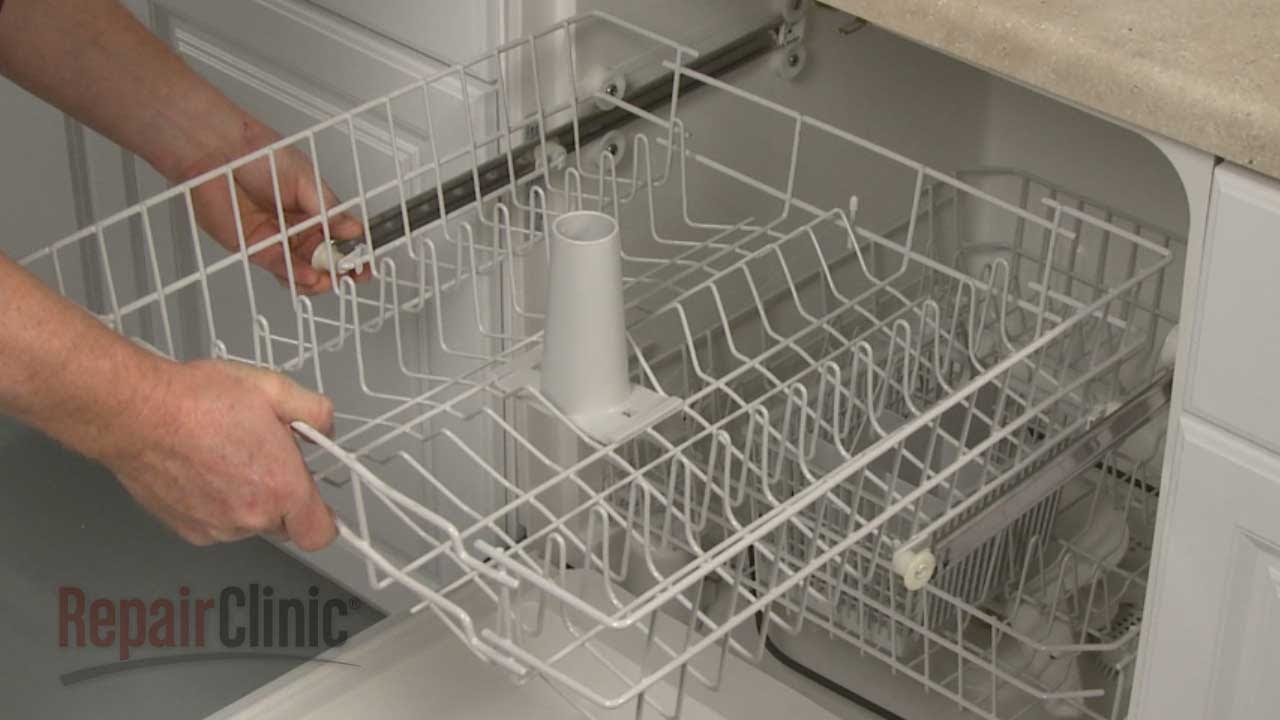
With the end stops released, gently pull the rack straight out of the rails. Support both sides to keep the rack level. If you tilt the rack, wheels may fall off or rails may bend.
If your rack is stuck:
- Check for debris, broken glass, or hard water deposits on the rails.
- Make sure all levers or tabs are fully open.
- Move the rack slightly from side to side to free jammed wheels.
5. Remove The Rack Completely
Lift the rack off the rails. Set it on a towel or soft surface to avoid scratching the floor or bending the wheels.
Some dishwashers have a middle spray arm attached to the top rack with a plastic coupling. If you see this, gently twist the spray arm counterclockwise to release it before taking out the rack.
6. Inspect And Clean
With the rack out, use a flashlight to check for:
- Food chunks
- Soap buildup
- Broken glass
- Rust or hard water residue
Wipe the rails with a damp cloth. Clean the rollers and rack edges. If you spot bent rails or loose wheels, now is the time to fix them.
Special Tips For Different Brands And Models
Dishwasher brands use their own designs, so it helps to know a few tricks for popular models.
Bosch
Bosch racks usually have gray plastic levers. If the rack feels stuck, it might be due to a middle spray arm connector. Remove the spray arm by twisting it, then slide out the rack.
Whirlpool And Kitchenaid
These brands use clear or white plastic end caps. Twist the end cap (like opening a bottle) and pull it off the rail. The rack should slide out easily.
Ge
Most GE racks use a simple snap-on end cap. Squeeze the sides of the cap and pull forward. Don’t force it, as old caps can crack.
Samsung And Lg
Samsung and LG often use a tab that you lift up while pulling out the rack. Some models use ball-bearing rails, so keep the rails level to avoid dropping ball bearings.
Frigidaire
Frigidaire usually has a tab or lever on the outside of the rail. Press and hold while sliding the rack out.
Third Racks
Some dishwashers have a third rack at the very top for cutlery or small items. These racks are often thinner and use small wheels. Removal is similar—look for small tabs or end stops.
If your brand isn’t listed, check your model number and search for the manual online. Many manufacturers provide free guides.
What To Do If The Rack Is Stuck
It’s common to find a rack that won’t budge. Here’s how to solve the problem:
- Check for obstructions. Look for utensils, glass chips, or stuck food.
- Clean the rails. Spray a little vinegar and wipe with a rag.
- Try gentle wiggling. Move the rack side to side, a little at a time.
- Lubricate if needed. Use a food-safe silicone spray on the rails—but never use oil, as it can damage plastics and leave residue on dishes.
- Remove the lower rack. This sometimes gives better access to the top rail and lets you see what’s blocking it.
Never use force or tools like screwdrivers unless the manual says so. Prying can crack the rails or snap important clips.
Credit: www.youtube.com
Reinstalling The Top Rack
After cleaning or fixing, you’ll want to put the rack back in. Here’s how:
- Align the wheels with the rails. Make sure all wheels are on top of the track.
- Slide the rack in slowly. Keep the rack level.
- Reinstall end stops or clips. Lock them in place. If you removed a spray arm, twist it back onto the connector.
- Test the movement. Pull the rack in and out several times to ensure it glides smoothly.
If the rack wobbles or feels loose, check the wheels and end stops. A loose rack can damage dishes or cause leaks.
Common Mistakes And How To Avoid Them
Removing a dishwasher rack isn’t hard, but there are a few common mistakes that can make things worse:
- Forcing stuck racks: This can break rails or wheels.
- Losing end caps or clips: These are small and easy to drop—have a bowl nearby to keep parts safe.
- Not checking both sides: Some dishwashers have different mechanisms on each rail.
- Forgetting the spray arm connector: Pulling without disconnecting can break the spray arm.
- Misplacing wheels: If a wheel falls off, put it back before reinstalling.
A big insight: Many people don’t realize that dishwasher racks are not universal. If you break a rack, you must buy the exact replacement for your brand and model. Always keep your model number handy.

Credit: www.domex-uk.co.uk
Advanced: Adjusting Or Replacing The Top Rack
Sometimes, you need to go beyond just removing the rack—maybe you want to adjust its height or replace it.
Adjusting Rack Height
Some dishwashers allow you to change the height of the top rack. This is helpful for washing big pots or tall glasses.
- Look for side levers or buttons on the rack.
- Push or pull the lever while lifting or lowering the rack.
- Make sure both sides are at the same height before reinstalling.
If your rack is hard to adjust, clean the rails and check for stuck debris.
Replacing The Rack
If your rack is cracked or rusted, you can buy a new one. Search for your dishwasher model number and order the correct replacement. To install:
- Remove the old rack using the steps above.
- Transfer any removable parts (like spray arms or clips) to the new rack.
- Slide the new rack into place.
- Lock all end stops or clips.
Some dishwashers have custom rack systems—these may require extra steps. Always check the manual before starting.
Cleaning The Top Rack And Rails
When the rack is out, take the chance to clean it well. Here’s how:
- Soak the rack in warm, soapy water for 15–20 minutes.
- Use a toothbrush to scrub corners, wheel axles, and under the spray arm.
- For hard water stains, soak a cloth in vinegar and wrap it around rusty spots.
- Rinse and dry the rack before reinstalling.
Rails can build up grease and soap scum. Wipe them with a damp cloth, then dry with a towel. Never use harsh chemicals, as these can damage plastic or rubber seals.
| Cleaning Method | Best For | Time Needed |
|---|---|---|
| Soapy water soak | General cleaning, stuck food | 15–20 minutes |
| Vinegar wipe | Hard water stains, rust | 5–10 minutes |
| Toothbrush scrub | Wheel axles, corners | 5–10 minutes |
:strip_icc()/bhg-top-rack-dishwasher-hero_8faResZ1qVh9oYjfODHb9i-b4674a9776174d3985a76507b82b2da4.jpg)
Credit: www.bhg.com
When To Call A Professional
Most top rack problems can be fixed at home, but there are times you should call a repair technician:
- Broken rails or metal parts
- Rack does not reinstall or is unstable
- Spray arm leaks or won’t reconnect
- Electronic sensors damaged or not working
If your dishwasher is under warranty, don’t try to force or fix complicated parts yourself. You could void your warranty.
Top Rack Removal: Real-world Example
Let’s look at a real example:
Sarah owns a Bosch 500 Series dishwasher. She wants to clean the top rack and the area underneath. She follows these steps:
- Unplugs the dishwasher.
- Opens the door and pulls out the top rack.
- Finds the gray levers at the end of the rails.
- Presses both levers inward and gently slides the rack out.
- Notices the spray arm is attached, so she twists it off before removing the rack.
- Cleans the rack with soapy water and scrubs the rails with vinegar.
- Reinstalls the rack and spray arm, making sure everything clicks into place.
- Runs a test wash—everything works smoothly.
Sarah’s experience shows that patience and careful checking can prevent damage and help you do a better cleaning job.
Maintenance Tips To Keep Your Dishwasher Running Smoothly
Keeping your top rack and rails in good shape means fewer problems later. Here are some tips:
- Clean the rails every month. Wipe with a damp cloth and a little vinegar.
- Inspect wheels and clips. Replace if cracked or loose.
- Don’t overload the rack. Heavy items can bend rails and break wheels.
- Check for leaks. After reinstalling, make sure water is not dripping from the spray arm area.
- Use dishwasher cleaner. Run a cleaning cycle every few months to prevent buildup.
A less obvious tip: Never use regular grease or oil on dishwasher parts. Only use food-safe, water-resistant lubricants if needed.
Troubleshooting: Quick Reference Table
Here’s a handy reference for common problems and solutions.
| Problem | Possible Cause | Solution |
|---|---|---|
| Rack will not slide out | End stops locked, debris in rails | Release stops, clean rails |
| Wheels fall off | Worn or broken wheel axles | Replace wheels, reinstall properly |
| Rack wobbles | Loose wheels, misaligned rails | Realign rack, check wheel clips |
| Spray arm stuck | Food debris, broken connector | Clean connector, replace if needed |
| End caps missing | Dropped during removal | Order replacements by model number |
Environmental And Health Benefits Of Regular Rack Removal
Deep cleaning your dishwasher, especially under the top rack, does more than keep dishes clean. It reduces mold, bacteria, and allergens. Studies show that poorly maintained dishwashers can harbor germs that could end up on your dishes. Regular cleaning and rack removal can cut these risks by up to 80%.
It also helps your dishwasher use less energy and water, as clean rails and racks let the spray arms work better. Over time, this can save you money on your utility bills.
For more information about the importance of cleaning household appliances, you can check this CDC guide on cleaning appliances.
Frequently Asked Questions
How Do I Know If My Top Rack Is Removable?
Almost all modern dishwashers have a removable top rack. Look for end stops or clips at the end of the rails. If you see levers, tabs, or caps, your rack is designed to come out.
What Should I Do If I Break A Rack Wheel Or Clip?
Don’t worry. Replacement wheels and clips are sold for most brands. Search for your dishwasher model number online and order the exact part. Never glue broken plastic parts, as this won’t last in hot water.
Is It Safe To Use Lubricant On The Rails?
Only use food-safe, water-resistant lubricants—never oil or grease. Most rails don’t need lubrication if you keep them clean. If the rack is still stiff after cleaning, a small spray of food-grade silicone is safe.
Can I Run The Dishwasher Without The Top Rack?
Yes, but only if the spray arm is not attached to the top rack. If your spray arm is connected, never run the dishwasher with the rack removed, as this can cause leaks or damage. Always check your user manual.
How Often Should I Clean Under The Top Rack?
Clean under the top rack every 1–3 months, depending on how often you use your dishwasher. Regular cleaning keeps your dishes cleaner and prevents smells and buildup.
Removing the top rack of your dishwasher is a simple skill that pays off in better cleaning, fewer repairs, and longer appliance life. With careful steps and a little patience, you can keep your dishwasher running smoothly and your kitchen healthier.