
The kitchen sink is one of the busiest spots in any home. It’s where you wash fruits, vegetables, dishes, and sometimes even your hands after a messy job. But there’s one problem almost everyone faces: water splashing. Water splashes can make your countertops wet, dirty your clothes, and even damage cabinets over time. If you are tired of wiping water every time you use your sink, you’re not alone. Learning how to prevent water splashing in the kitchen sink is not just about keeping things tidy—it’s about saving effort, protecting your kitchen, and enjoying a smoother cooking experience.
This guide will show you why water splashing happens, which methods really work, and how you can stop splash problems at the source. You’ll find practical solutions, useful comparisons, and simple adjustments that make a big difference. Whether you want quick fixes or a long-term upgrade, you’ll discover something you can do today.
Why Does Water Splash In The Kitchen Sink?
Before you can stop water from splashing, you need to know why it happens. Surprisingly, it’s not always the sink’s fault. Several factors work together to create those annoying splashes.
Faucet Water Pressure
High water pressure can make water bounce off the sink surface. In many kitchens, the water comes out fast and strong, hitting the sink or items inside and causing droplets to fly everywhere.
Sink Shape And Material
The design of your sink plays a big role. Deep sinks, shallow sinks, rounded edges, and even the type of metal or stone affect how water behaves. For example, a flat sink bottom may cause more splash than a gently sloped one.
Distance Between Faucet And Sink
If your faucet is too high above the sink, water falls from a greater height, hitting with more force. This creates bigger splashes, especially if the sink is shallow.
Dirty Or Uneven Surfaces
Food scraps, soap, and grease can make the sink surface uneven. When water hits these spots, it scatters in unexpected directions.
Type Of Faucet Spout
Aerated faucets (which mix air with water) often reduce splash, while laminar flow faucets (solid streams) can increase it. The angle and size of the spout also matter.
Items In The Sink
Plates, pots, or even a small spoon can deflect water and cause it to splash out of the sink.
Temperature Difference
Sometimes, hot water hitting a cold metal sink can create small bursts of steam that push water drops out.
Understanding these causes is the first step. Now, let’s see how to prevent water splashing in your kitchen sink with simple changes and smart upgrades.
Adjusting Water Pressure
One of the easiest ways to reduce splashing is to control water pressure. High pressure isn’t always better for kitchen tasks.
How To Test And Adjust Water Pressure
- Turn on the faucet and check the flow. If it’s strong enough to bounce off the sink, it’s too high.
- Many faucets have a small lever or screw under the sink to control pressure.
- If you cannot adjust it directly, you can fit a flow restrictor or an aerator (a small device at the tip of the faucet).
When To Call A Plumber
If your water pressure is high throughout the house, not just the kitchen, you might need a plumber to install a pressure reducing valve at your main supply.
Common Mistakes
- Lowering pressure too much makes it hard to rinse food or fill pots.
- Ignoring high pressure can wear out your faucet and pipes faster.
Tip: For most kitchens, a flow rate of 1.5 gallons per minute is enough for daily use.
Choosing The Right Sink Design
The sink design can make a huge difference in splashing. Some sinks are simply more splash-proof than others.
Comparing Sink Types
Here’s how different sink shapes affect splashing:
| Sink Type | Splash Risk | Best For |
|---|---|---|
| Deep single-bowl | Low | Families, heavy use |
| Shallow single-bowl | High | Quick tasks |
| Double-bowl | Medium | Multi-tasking, soaking |
| Rounded corners | Low | Easy cleaning |
| Flat-bottom | High | Stacking dishes |
Material Matters
- Stainless steel: Bounces water easily unless it has a brushed finish.
- Granite composite: Absorbs some impact, so less splash.
- Ceramic/Porcelain: Slippery but usually deep, so splashes stay inside.
Size And Depth
A 9-10 inch deep sink reduces splashing much more than a 6-7 inch one. Wider sinks also help, as water is less likely to escape.
Pro Insight
Most people choose a sink based on looks or price, but the shape and depth are more important for splash control. If you’re renovating, consider this before you buy.
Faucet Selection And Placement
Your faucet is just as important as your sink. The right faucet design and placement can almost eliminate splashing.
Key Faucet Features
- Aerator: Mixes air into the water, creating a soft stream that splashes less.
- Adjustable Spout: Lets you aim the water where you want.
- Pull-down/Pull-out Sprayer: Allows you to rinse close to the surface.
Comparing Faucet Types
| Faucet Type | Splash Control | Notes |
|---|---|---|
| Standard fixed | Medium | Common, reliable |
| High-arc | Low (if deep sink) | Good for big pots |
| Pull-down sprayer | Very low | Best for splash control |
| Laminar flow | High | Solid stream, more splash |
Ideal Placement
- The faucet spout should reach near the center of the sink, not the edge.
- The height from the sink surface to the faucet tip should be about 8-10 inches for most kitchens.
- If you have a shallow sink, choose a shorter faucet.
Common Mistakes
- Placing the faucet too far back or too high causes water to hit with more force.
- Choosing a faucet without an aerator increases splash.
Tip: If you can’t change your faucet, you can still attach an aerator for a few dollars.
Improving Sink Accessories
Accessories may seem simple, but they can make your sink almost splash-free.
Sink Grids And Mats
- Sink grids are metal racks that sit on the bottom. They break the force of water and catch splashes before they bounce up.
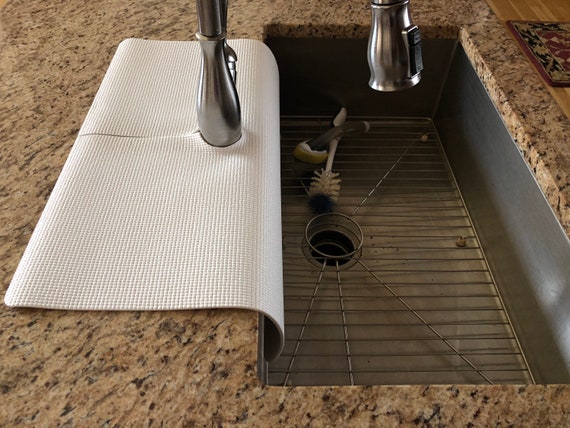
- Silicone mats are soft, non-slip surfaces that reduce noise and splash.
Splash Guards
- Silicone or rubber splash guards attach to the edge of your sink. They block water from escaping and are easy to remove for cleaning.
Faucet Attachments
- Swivel aerators let you change the direction of the water.
- Water-saving nozzles can reduce pressure but still rinse well.
Drainboard Sinks
Some sinks come with a built-in drainboard—a sloped area next to the main bowl. It catches splashes and drains water back into the sink.
Mistakes To Avoid
- Using a grid that sits too high can make cleaning hard.
- Mats must be cleaned often to avoid mold or smells.
Tip: Choose accessories that are easy to remove and dishwasher-safe.
Changing Sink Habits
How you use your sink can make a bigger difference than you think. Small changes in your routine can prevent most splashes.
Smart Washing Techniques
- Rinse at an angle: Tilt dishes so water flows down, not across.
- Keep items low: Wash dishes close to the sink bottom, not near the faucet.
- Don’t overload: Too many items in the sink deflect water in all directions.
- Turn on water gently: Open the faucet slowly to avoid a strong initial splash.
Dry Before You Scrub
Wipe greasy pans before washing. Oil makes water bead up and splash more.
Rinse Fruits And Veggies In A Colander
A colander keeps items steady and lets water drain without bouncing off surfaces.
Use The Right Tools
A soft sponge creates fewer splashes than a hard brush. For stuck food, soak items instead of scrubbing hard.
Wipe As You Go
Keep a microfiber towel nearby. Wipe small splashes before they dry, so water doesn’t spread.
Insight: Most people don’t realize that changing just one habit (like rinsing at an angle) can cut splash by half.
Credit: www.mainsplumbers.co.nz
Upgrading To A Splash-proof Sink
If you’re planning a kitchen remodel or replacing your sink, it’s a chance to solve splashing for good.
What To Look For
- Deep basin: At least 9 inches.
- Rounded corners: Easier to clean, less splash.
- Matte or textured finish: Shiny sinks reflect water more.
- Wide bowl: Gives water more room to fall.
- Integrated accessories: Some sinks come with built-in grids or drainboards.
Top Materials For Splash Reduction
- Granite composite: Quiet, absorbs impact.
- Fireclay: Heavy, often deep, less likely to splash.
- Brushed stainless steel: Better than polished.
Example: Upgrading Results
Homeowners who switch from a shallow stainless sink to a deep granite composite often report 80% less splashing. That means less wiping, less water on cabinets, and fewer stains over time.
Price Vs. Performance
A more splash-proof sink may cost more up front, but it saves money on repairs and cleaning in the long run.
Non-obvious tip: Ask your supplier if you can test the sink with running water before buying. Many showrooms allow this, but few people ask.
Installing A Water Softener
Hard water (water with lots of minerals) can make splashing worse. When water is hard, it forms bigger droplets instead of a smooth stream.
How A Water Softener Helps
A water softener removes minerals, making water flow smoother and less likely to bounce.
When To Consider This
- If you see white spots on dishes or the sink, your water is hard.
- If splashing is combined with soap scum, a softener may help.
Other Benefits
Soft water makes cleaning easier, reduces limescale in pipes, and extends faucet life.
Cost And Installation
Whole-house water softeners can be expensive, but small under-sink models are available for kitchens. Installation usually takes 1-2 hours.
Insight: Most people add a softener for cleaning reasons, but it also reduces splashing—a hidden benefit.

Credit: www.amazon.de
Comparing Splash Prevention Methods
Which solution works best? Here’s a quick comparison:
| Method | Effectiveness | Cost | Difficulty |
|---|---|---|---|
| Lowering water pressure | High | Low | Easy |
| Adding an aerator | High | Low | Very easy |
| Sink grid/mat | Medium | Low | Easy |
| Changing habits | Medium | Free | Easy |
| New deep sink | Very high | High | Hard |
| Water softener | Medium | Medium | Medium |
If you want a quick fix, try lowering the pressure or adding an aerator. For the best long-term solution, a deeper, better-designed sink is the top choice.
Common Mistakes To Avoid
Trying to fix water splashing sometimes leads to new problems. Here are mistakes to watch out for:
- Blocking the drain with a mat or grid: Water must flow freely, or you’ll get pooling.
- Choosing a stylish but shallow sink: Looks aren’t everything; check the depth.
- Using harsh chemicals on accessories: Some mats or guards can be damaged by bleach or strong cleaners.
- Ignoring leaks: Water under the sink often comes from splashes running down the outside. Fix leaks quickly.
- Over-tightening faucet attachments: This can strip threads or break the faucet.
Cleaning And Maintenance Tips
A clean sink splashes less. Here’s how to keep it that way:
- Wipe the sink and faucet daily with a microfiber cloth.
- Use vinegar to remove hard water spots.
- Clean grids, mats, and guards weekly in the dishwasher or with hot, soapy water.
- Check faucet aerators for blockages every few months; soak in vinegar if needed.
- Dry around the faucet base to prevent mold and water damage.
Pro tip: Don’t forget the underside of the faucet spout, where splash-causing mineral buildup can hide.
When To Get Professional Help
Some splash problems need an expert:
- Persistent leaks: Water under the sink or behind cabinets.
- Very high water pressure: More than 80 psi can damage pipes and faucets.
- Major sink upgrades: Installing a new sink or faucet is a job for a licensed plumber.
If you’re unsure, a quick call to a professional can save time and future repairs.
Real-world Examples
Seeing is believing. Here’s how three different households solved their splash problems:
Family Kitchen: Switched from a shallow sink and solid stream faucet to a 10-inch deep sink with a pull-down sprayer. Splashing dropped by 90%. The kids could wash dishes without making a mess.
Small Apartment: Added a silicone mat and a flow restrictor. Splashing was reduced, and water bills went down by 15%.
Busy Cook: Changed habits—washing at an angle and using a colander for veggies. No new equipment needed, and the counters stayed dry.
Frequently Asked Questions
What Is The Best Quick Fix For Water Splashing In My Kitchen Sink?
Adding an aerator to your faucet is the fastest and easiest way to reduce splashing. It softens the water stream, making it less likely to bounce off the sink or dishes. You can buy one at any hardware store and screw it onto your faucet in minutes.
Will A Deeper Sink Always Prevent Splashing?
A deeper sink greatly reduces splashing because water has more space to fall and is less likely to escape. However, other factors like water pressure and faucet height also matter. For best results, combine a deep sink with an aerated faucet and good washing habits.
How Do I Know If My Water Pressure Is Too High?
If water hits the sink hard and splashes a lot, your water pressure may be high. You can buy a simple pressure gauge and attach it to your faucet. Ideal kitchen pressure is 40–60 psi. If it’s higher, install a flow restrictor or ask a plumber for help.
Can I Use Kitchen Sink Mats For All Sink Types?
Yes, sink mats work in most sinks. Just make sure they fit well and don’t block the drain. For unusual shapes or very small sinks, look for customizable mats that can be trimmed to size.
Are There Any Long-term Benefits To Preventing Water Splashing?
Yes. Preventing water splashing keeps your kitchen cleaner, protects cabinets from water damage, and reduces the risk of mold. It also saves time on cleaning and may lower your water bill if you use less water.
Keeping your kitchen sink area dry and clean is not just about looks—it’s about making your kitchen a safer, more comfortable space. With these methods, you can finally say goodbye to endless wiping and enjoy a splash-free kitchen. For more detailed information on sink types and accessories, visit Wikipedia’s Kitchen Sink page.
Credit: www.etsy.com