
Every homeowner who owns a dishwasher has faced this problem: you open the door, expecting sparkling clean dishes, but instead you see cloudy spots, white streaks, and sometimes even a chalky film. These are hard water stains. They not only make your dishes look dirty but also affect your dishwasher’s performance over time. If you’ve ever wondered why your plates don’t shine like they used to, you’re not alone. Luckily, you don’t need to accept these stubborn stains as part of life. With the right knowledge and some proven methods, you can remove hard water stains from your dishwasher and keep it working like new.
This guide will show you exactly how to tackle the problem, whether you want a quick fix or a long-term solution. We’ll cover what causes these stains, how to clean them step-by-step, and what you can do to prevent them from coming back.
Plus, you’ll learn about the best products, eco-friendly options, and even how to deal with tough cases. By the end, you’ll have everything you need to keep your dishwasher—and your dishes—shining bright.
Understanding Hard Water Stains In Your Dishwasher
Before you start cleaning, it’s important to know what you’re dealing with. Hard water contains high levels of minerals, especially calcium and magnesium. When water dries on surfaces, these minerals stay behind. Over time, they build up as white, chalky spots or a filmy residue.
Why Does Hard Water Cause Stains?
When your dishwasher uses hard water, minerals stick to both your dishes and the inside walls. Every cycle adds a little more, and soon, you have stains that regular washing won’t remove. If you ignore them, these deposits can even clog your dishwasher’s spray arms and filters, causing poor cleaning and expensive repairs.
How To Spot Hard Water Stains
You’ll notice:
- Dishes come out looking cloudy or with white marks
- The inside of your dishwasher has a white film
- Glasses lose their shine
- Metal parts develop a dull, grayish look
If you see these signs, it’s time to take action.
Why It’s Important To Remove Hard Water Stains
Letting stains build up is more than just a cosmetic issue. Here’s why you should address them quickly:
- Poor cleaning performance: Mineral buildup blocks water jets, so dishes don’t get fully clean.
- Shorter dishwasher life: Deposits can damage parts and lead to breakdowns.
- Higher energy costs: Hard water makes your dishwasher work harder, using more energy and water.
- Unhygienic results: Mineral buildup can trap food particles and bacteria.
A clean dishwasher works better, lasts longer, and keeps your family safe.
Essential Tools And Products For Removing Hard Water Stains
You don’t need expensive cleaners to remove hard water stains, but using the right materials makes the job easier and safer.
Here are the most effective options:
Household Items
- White vinegar: Natural acid that dissolves mineral deposits.
- Baking soda: Gentle abrasive for scrubbing stains.
- Lemon juice: Similar to vinegar, with a fresh scent.
- Old toothbrush: For cleaning corners and spray arms.
- Soft sponge or cloth: To avoid scratching surfaces.
Commercial Cleaners
- Dishwasher cleaner tablets: Designed to remove mineral and grease buildup.
- Descaler solutions: Stronger acids for heavy stains.
- Rinse aids: Help prevent future stains.
Safety Gear
- Gloves: Protect hands from harsh cleaners.
- Eye protection: If using strong chemicals.
Many people overlook the importance of using rinse aid or regularly running a cleaning cycle. These simple steps can prevent hard water stains from ever appearing.
Step-by-step Guide: Removing Hard Water Stains From Your Dishwasher
Now, let’s tackle the problem. Follow these steps for best results:
1. Empty The Dishwasher
Take out all dishes, racks, and utensil trays. This gives you full access to the interior.
2. Clean The Filter
Most dishwashers have a removable filter at the bottom. Take it out and rinse under hot water. Use a brush to remove stubborn debris. A clogged filter can make stains worse and block cleaning.
3. Check And Clean Spray Arms
Minerals can block the tiny holes in your spray arms. Remove them (check your manual), and poke out debris using a toothpick or small brush. Rinse well.
4. Wipe Down The Interior
Mix equal parts white vinegar and water. Dip a soft cloth and wipe the walls, door, and seals. For tough spots, press a cloth soaked in vinegar onto the area for a few minutes.
5. Run A Vinegar Wash
Pour 2 cups of white vinegar into a dishwasher-safe bowl. Place it on the top rack (empty dishwasher). Run a hot water cycle. Vinegar dissolves mineral deposits and deodorizes.
Why Vinegar?
Vinegar is a weak acid that reacts with the minerals and helps break them down. It’s safe for most dishwasher parts and leaves no harmful residue.
6. Baking Soda Rinse
After the vinegar cycle, sprinkle 1 cup of baking soda across the bottom of the dishwasher. Run a short, hot cycle. Baking soda removes stains and odors, leaving surfaces smooth.
7. Tackle Remaining Spots
Use a paste of baking soda and water for any stubborn stains. Apply with a soft sponge or old toothbrush. Gently scrub until the spot is gone.
8. Clean Door Edges And Seals
Dip a brush in vinegar and scrub around the door seals, hinges, and edges—places where stains often hide.
9. Dry And Inspect
Leave the door open for an hour to air out. Check for any missed spots and repeat the steps if needed.
10. Replace Racks And Parts
Once everything is clean and dry, put the racks, trays, and spray arms back.

Credit: www.reddit.com
Comparing Cleaning Methods
Some cleaning methods work better than others, depending on how severe the stains are. Here’s a quick comparison:
| Method | Best For | Pros | Cons |
|---|---|---|---|
| Vinegar Wash | Light to Moderate Stains | Cheap, natural, easy | May need repeats for heavy stains |
| Baking Soda Scrub | Stubborn Spots | Gentle, deodorizes | Requires manual effort |
| Commercial Cleaners | Heavy Stains | Fast, effective | More expensive, chemicals |
| Lemon Juice | Light Stains, Freshening | Natural, smells good | Less powerful than vinegar |
Advanced Techniques For Tough Hard Water Stains
Sometimes, regular cleaning isn’t enough. Here are advanced methods for stubborn buildup:
Using A Dishwasher Descaler
A descaler is a strong cleaner made to remove heavy mineral deposits. Follow the package instructions carefully, usually:
- Run the dishwasher empty with the descaler in the detergent compartment.
- Use a hot water cycle.
- Rinse with a vinegar cycle afterward for best results.
Cleaning With Citric Acid
Citric acid is a powder found in many cleaning products or even in lemon-flavored drink mixes. It’s stronger than vinegar but still food-safe.
- Add 2-3 tablespoons to the detergent cup.
- Run a full hot cycle.
- Wipe down any remaining residue.
Manual Scrubbing
For years-old buildup, you may need to scrub by hand. Use a plastic scraper (never metal) to gently lift thick deposits. Always wear gloves and be careful not to scratch surfaces.
Checking The Water Inlet Valve
In rare cases, hard water can clog the inlet valve (where water enters the dishwasher). If you notice very poor cleaning even after descaling, have a technician check and clean or replace the valve.
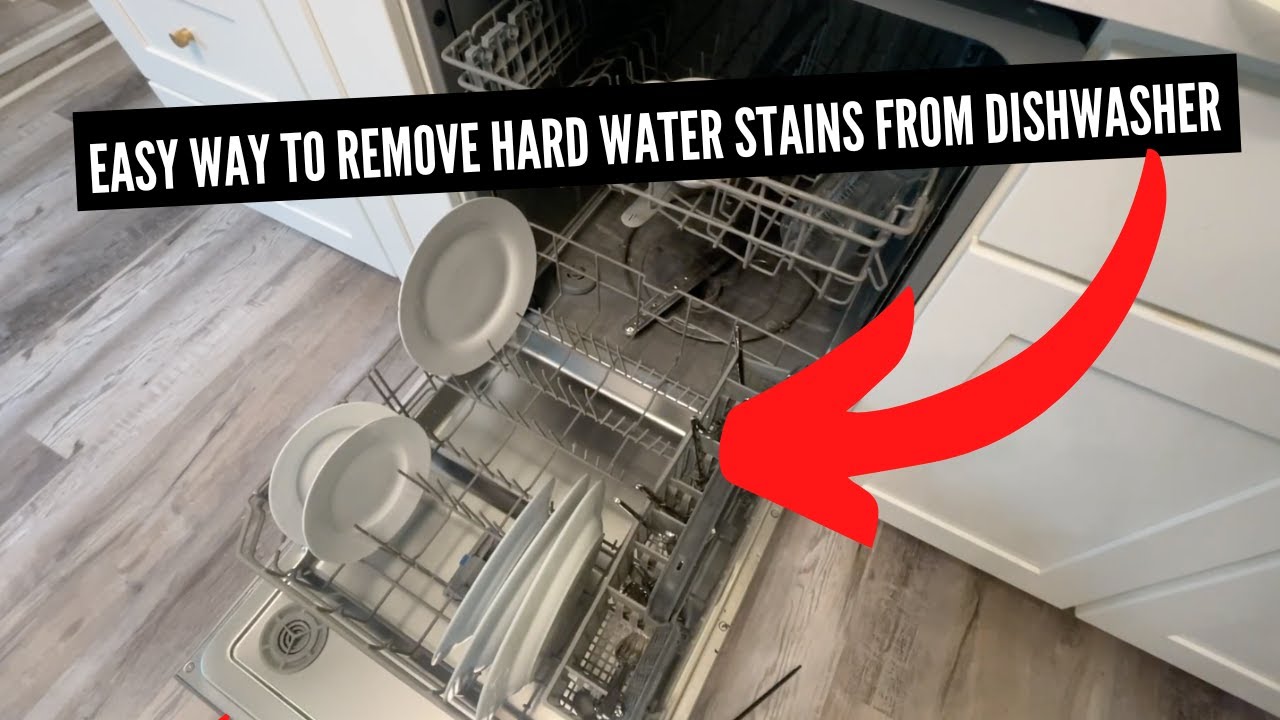
Credit: www.youtube.com
Preventing Hard Water Stains In The Future
Prevention is easier than constant cleaning. Here’s what really works:
1. Use Rinse Aid Regularly
A rinse aid breaks surface tension so water slides off dishes without leaving spots. Fill the compartment monthly.
2. Install A Water Softener
If your home has very hard water (ask your water supplier for a test), a water softener is the best solution. It removes minerals before they reach your dishwasher.
3. Run Cleaning Cycles Monthly
Even if you don’t see stains, run a vinegar or dishwasher cleaner cycle once a month. This stops buildup before it becomes visible.
4. Avoid Overloading Dishes
Crowding blocks water flow, making stains worse. Load dishes so water can reach every surface.
5. Use The Right Detergent
Some detergents are made for hard water. Look for labels that mention “hard water” or “limescale protection. ”
6. Dry Dishes With Heat
If your dishwasher has a heated dry option, use it. This prevents minerals from settling on wet surfaces.
7. Wipe Down After Each Use
After heavy cycles, quickly wipe the door and seals with a cloth. This removes water droplets before they dry into stains.
8. Check Local Water Hardness
Knowing your water’s mineral level helps you choose the right products and cleaning frequency. Most water suppliers can provide this information.
9. Don’t Use Too Much Detergent
More soap does not mean cleaner dishes. In hard water, extra detergent can cause more film. Follow the manufacturer’s instructions.
10. Clean The Filter Weekly
A clean filter improves water flow and reduces mineral buildup. Make it a habit to check every week.
Comparing Popular Dishwasher Cleaners
If you want to use a commercial cleaner, here’s how some leading brands compare:
| Brand | Main Ingredient | Eco-Friendly | Effectiveness | Cost (Approx.) |
|---|---|---|---|---|
| Finish Dishwasher Cleaner | Citric Acid | Somewhat | High | $5 per bottle |
| Affresh Dishwasher Cleaner | Sodium Bicarbonate | Yes | Medium-High | $7 for 6 tablets |
| Lemi Shine | Natural Citric Extracts | Yes | High | $4 per bottle |
| Glisten Dishwasher Magic | Sulfonic Acid | No | Very High | $6 per bottle |
Tip: For homes with children or pets, choose eco-friendly cleaners without strong chemicals.

Credit: www.reddit.com
Eco-friendly Ways To Remove Hard Water Stains
Many people prefer natural solutions. Here’s how to clean your dishwasher safely:
Vinegar And Baking Soda
As described above, these are safe, cheap, and effective. They won’t harm septic systems or leave chemical smells.
Lemon Juice
Squeeze fresh lemon juice or use bottled. Run a hot cycle with a cup of lemon juice on the top rack. It adds a pleasant scent and helps dissolve minerals.
Citric Acid Powder
Available in most supermarkets, it’s natural and powerful. Use as described earlier.
Microfiber Cloths
Using a microfiber cloth instead of paper towels reduces waste and cleans more effectively.
Non-obvious Insight: Avoid using bleach. Many dishwashers have stainless steel parts that bleach can damage, and it does not dissolve minerals.
What Not To Do When Removing Hard Water Stains
Mistakes can damage your dishwasher or make stains worse. Avoid these common errors:
- Never use metal scrubbers: These scratch and ruin the protective coating.
- Don’t mix vinegar with bleach: This makes toxic fumes.
- Avoid strong acids unless needed: Products like muriatic acid are dangerous and usually unnecessary.
- Don’t ignore the filter and spray arms: Cleaning only the interior walls won’t solve the root problem.
- Don’t overload detergent: Extra soap leaves more film, not less.
How Hard Water Affects Dishwasher Performance
Hard water doesn’t just leave stains—it changes how your dishwasher works. Over time, mineral buildup narrows spray holes and clogs filters, reducing water pressure. Dishes come out dirty, and cycles may run longer. In severe cases, the heating element (which dries dishes) can become coated in limescale, making it less efficient.
Real Data: Water Hardness And Appliance Life
Studies show that homes with hard water (over 7 grains per gallon) see dishwashers failing up to 30% faster than homes with soft water. Replacing a dishwasher early can cost hundreds of dollars. Even small steps, like monthly vinegar washes, can add years to your appliance.
For more background on water hardness, see this Wikipedia article.
When To Call A Professional
Most hard water stains can be handled at home. But call a repair service if:
- The dishwasher isn’t cleaning at all after several deep cleans
- You see visible limescale on the heating element
- There’s a burning smell or electrical issue
- The water inlet valve is blocked
A professional can fully disassemble the machine and clear blockages safely.
Table: Signs You Need A Professional
| Sign | Possible Cause | DIY Fix? |
|---|---|---|
| No water spraying | Clogged spray arm or inlet valve | Sometimes |
| Visible thick limescale | Years of neglect | Rarely |
| Burning smell | Damaged heating element | No |
| Repeated poor cleaning | Internal blockage | Sometimes |
Pro Tips For Keeping Your Dishwasher Spot-free
- Run hot water in your kitchen sink before starting a cycle. This brings hot water to the dishwasher immediately.
- Always remove large food scraps from dishes before loading.
- Use the “sanitize” or hottest cycle once a week to kill bacteria and reduce buildup.
- If you’re in a very hard water area, consider adding a small cup of vinegar to each cycle (on the top rack, not the detergent compartment).
- Keep your dishwasher door slightly open after every cycle. This prevents trapped moisture and reduces the chance of stains.
Frequently Asked Questions
What Is The Best Homemade Solution To Remove Hard Water Stains From A Dishwasher?
The most effective homemade solution is a combination of white vinegar and baking soda. Run a hot cycle with two cups of vinegar in a bowl on the top rack, then sprinkle a cup of baking soda on the bottom and run a short, hot cycle. This dissolves minerals and deodorizes naturally.
How Often Should I Clean My Dishwasher To Prevent Hard Water Stains?
For most homes, once a month is enough. In areas with very hard water, clean every two weeks. Regular cleaning stops buildup before it becomes a problem.
Can I Use Bleach To Remove Hard Water Stains?
No, bleach is not recommended for hard water stains. It does not dissolve mineral deposits and can damage stainless steel parts. Always use vinegar, citric acid, or a dishwasher-safe descaler instead.
Will A Water Softener Remove Existing Stains?
A water softener prevents new stains but does not remove old ones. You’ll still need to clean the dishwasher with vinegar, baking soda, or a commercial cleaner to get rid of existing buildup.
What Should I Do If Stains Keep Coming Back Quickly?
If stains return soon after cleaning:
- Make sure you’re using enough rinse aid
- Check your local water hardness and consider a water softener
- Don’t overload dishes
- Clean the filter and spray arms more often
Persistent stains usually mean the water is very hard, or cleaning isn’t thorough enough.
Keeping your dishwasher free from hard water stains is possible with regular care and a few simple products. When you understand the causes and use the right methods, you’ll enjoy spotless dishes and a longer-lasting appliance.