
Using a can opener should be simple, but if you’ve ever struggled with a stubborn can or a complicated device, you know that choosing the right opener matters. The Hamilton Beach can opener is popular in homes, offices, and even small cafes because it’s dependable and easy to use. But, like any kitchen tool, you’ll get the best results if you use it the right way. Whether you’re opening soup for lunch, prepping for a family dinner, or stocking up your pantry, learning to use this can opener correctly saves time and avoids mess.
This guide will walk you through everything you need to know. You’ll find out how to set up the Hamilton Beach can opener, use it safely, clean it, and keep it working for years. There are tips for avoiding common mistakes, answers to the questions people ask most, and even advice for troubleshooting problems.
If you’re new to electric can openers, don’t worry—this article will make you feel like a pro by the end.
Understanding The Hamilton Beach Can Opener
Before you start, it helps to know the different types of Hamilton Beach can openers and how they work. Hamilton Beach is a trusted kitchen brand with several models. Most people use their electric can openers, but the brand also makes manual ones.
Main Features
Hamilton Beach electric can openers often come with:
- Automatic shutoff: Stops cutting when the lid is off.
- Removable cutting unit: Makes cleaning easy.
- Cord storage: Keeps your counter neat.
- Extra-tall design: Fits both small and large cans.
- Built-in knife sharpener: Some models include this.
Types Of Hamilton Beach Can Openers
There are a few main types:
- Electric can openers (most common for home use)
- Manual can openers (for travel or backup)
- Heavy-duty models (for bulk or commercial use)
Most homes have electric models, so this guide will focus on them. Still, many tips apply to manual types as well.
Why People Choose Hamilton Beach
Hamilton Beach can openers are known for:
- Reliability: They last for years with proper care.
- Safety: Fewer sharp edges than many manual openers.
- Ease of use: Simple for kids, adults, and seniors.
- Affordable price: Fits most budgets.
Setting Up Your Hamilton Beach Can Opener
Unboxing and setting up your can opener is the first step. Doing it correctly helps the device work well and last longer.
Unpacking
Take the can opener out of the box and remove all plastic or tape. Check for:
- The main can opener unit
- Removable cutting assembly (often attached)
- Instruction manual (keep for reference)
Placing The Can Opener
Choose a stable, flat surface near an electrical outlet. The base should sit evenly, so the can opener doesn’t wobble when in use.
- Avoid placing it near the stove or sink, to prevent splashes or heat damage.
- Leave enough space above and beside the can opener for large cans.
Plugging In
Before plugging in, make sure your hands are dry. Insert the plug into a standard 120V electrical outlet. If your model has a retractable cord, pull out only as much as you need.
Checking The Cutting Assembly
Most Hamilton Beach electric openers have a removable cutting unit (the part that holds the blade and gear). Make sure it’s securely snapped into place. If it’s loose, the can opener won’t work well.
Testing The Opener
Before opening a can, test the lever by pressing it down gently (without a can). You should hear the motor start. Release the lever to stop. If nothing happens, check the plug and assembly again.
How To Use A Hamilton Beach Can Opener: Step-by-step
Opening a can with a Hamilton Beach can opener is fast and simple. Here’s how to do it safely and correctly.
Step 1: Prepare The Can
Wipe the top of the can with a clean cloth to remove dust or food. This keeps your food clean and helps the opener work smoothly.
Step 2: Position The Can
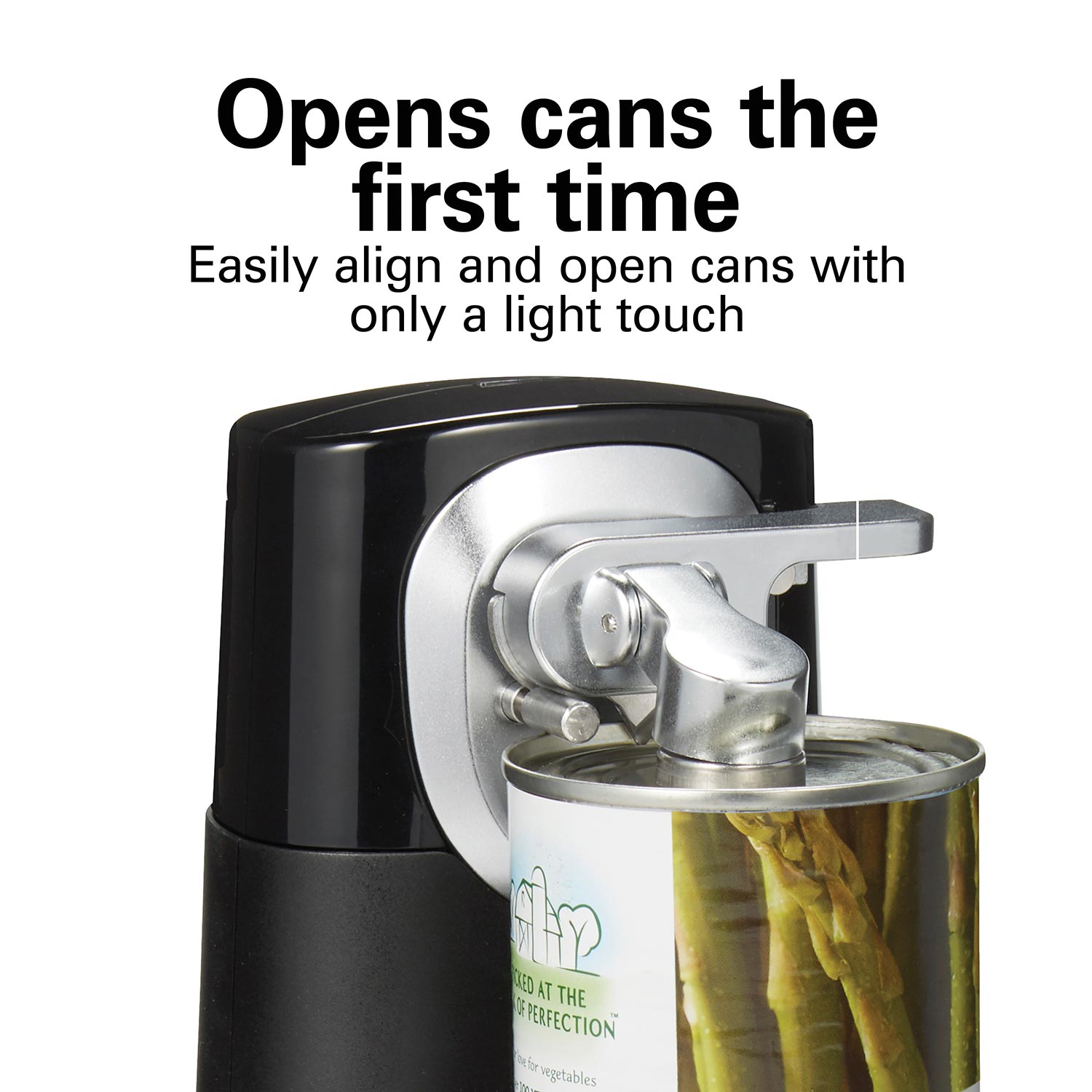
Hold the can upright and place it under the cutting assembly. The rim should fit into the small groove beside the cutting blade.
- For tall cans, steady the can with your hand.
- For heavy cans, use two hands if needed.
Step 3: Engage The Cutting Blade
Push down the lever (usually on top of the unit) until you feel the blade pierce the lid. You’ll hear a soft motor noise. The can will begin to rotate.
- Keep light pressure on the lever.
- Don’t force the lever—if it’s hard to push, check the can’s position.
Step 4: Let The Can Opener Work
The motor will turn the can automatically. Hold the can lightly so it doesn’t tip, but don’t grip tightly.
- Most models stop automatically when the cut is complete.
- If your model doesn’t, release the lever when you feel the lid separate.
Step 5: Remove The Lid And Can
Lift the lever to release the can. Carefully remove the can from the opener. The lid may still be attached by a small piece of metal—use caution.
- Use the built-in magnet (if your model has one) to lift the lid safely.
- Avoid touching the sharp edge.
Step 6: Clean Up
Wipe the cutting unit with a damp cloth after each use. This keeps food from building up and prevents rust.
Step 7: Store Safely
Unplug the can opener if you won’t use it for a while. Store it in a dry place, away from heat.
Safety Tips For Using A Hamilton Beach Can Opener
Electric can openers are safe, but there are still risks if you don’t use them properly. Follow these tips for safe operation.
Read The Manual
Always read the instruction manual that comes with your model. Each can opener may have small differences.
Watch Your Fingers
Keep fingers away from the cutting blade and gears when the opener is plugged in.
Handle Lids Carefully
Can lids can be sharp. Use the magnetic lid lifter if your opener has one. Otherwise, lift the lid with a utensil or thick towel.
Don’t Force The Lever
If the opener jams, don’t push harder. Stop and check for a stuck can or misaligned blade.
Keep Away From Water
Never submerge the electric base in water. Wipe with a damp cloth instead.
Unplug When Cleaning
Always unplug the can opener before cleaning or removing the cutting unit.
Supervise Kids
If children use the can opener, supervise them closely. Show them how to avoid sharp edges.

Credit: www.youtube.com
Cleaning And Maintaining Your Can Opener
A clean can opener lasts longer and works better. Food buildup can cause jams, dull the blade, or even attract pests. Here’s how to keep your Hamilton Beach can opener clean and in top shape.
After Each Use
Wipe the cutting blade and gear with a damp cloth. Dry completely.
Weekly Deep Clean
Remove the cutting assembly if your model allows. Wash it in warm, soapy water. Rinse and dry well before reattaching.
- Do not put the motor base in water.
- Some cutting assemblies are dishwasher safe (check your manual).
Removing Tough Buildup
If food is stuck, use a small brush (like an old toothbrush) to clean crevices. Avoid metal scrubbers, which can scratch the surface.
Lubricating The Gear
If the gear feels stiff, a drop of food-safe oil can help. Apply lightly to the gear, then run the opener (without a can) to spread the oil.
Checking For Damage
Inspect the blade and gear monthly. If they look dull or rusty, contact Hamilton Beach for replacement parts.
Storing Properly
Always store the can opener in a dry place. Wrap the cord neatly if not in use.
Common Cleaning Mistakes
- Forgetting to unplug before cleaning (risk of shock)
- Letting water drip into the motor base
- Using harsh chemicals that damage the finish
Troubleshooting Common Problems
Even the best can openers sometimes have issues. Here’s how to solve the most common problems with a Hamilton Beach can opener.
The Can Won’t Turn
- Check that the can is lined up correctly.
- Make sure the blade is sharp and clean.
- Confirm the cutting assembly is snapped in place.
- Test the power outlet with another device.
The Opener Stops Before The Lid Is Cut
- The can may be too heavy or tall. Try holding it steady.
- The blade could be dull—clean or replace it.
- The motor may be overheating. Wait a few minutes, then try again.
The Lid Falls Into The Can
- Use the magnetic lifter if your model has one.
- For models without a magnet, stop the opener just before the lid is fully cut. Lift the lid with a utensil.
The Opener Makes A Grinding Noise
- Food may be stuck in the gear—clean thoroughly.
- If noise continues, the motor may need service.
The Lever Is Hard To Push
- Clean the cutting assembly.
- Lubricate the gear with food-safe oil.
- Make sure you’re not forcing a can that is dented or misshapen.
Blade Rusts Or Dulls
- Dry the blade after every wash.
- If rust appears, gently scrub with baking soda paste and rinse well.
- Replace the blade if it stays dull.
Comparing Hamilton Beach Models
Hamilton Beach offers several can opener models. Choosing the right one depends on your needs. Here’s a comparison of popular options.
| Model | Size | Key Features | Price Range |
|---|---|---|---|
| Classic Chrome 76380Z | Tall | Automatic shutoff, removable cutter | $20-$30 |
| Extra-Tall 76389R | Extra Tall | Fits all can sizes, cord storage | $25-$35 |
| Ensemble 76388R | Medium | Built-in knife sharpener, magnetic lid holder | $20-$28 |
| Commercial 76607 | Heavy Duty | Stainless steel, high volume use | $60-$80 |
Key Differences
- Classic models are best for everyday home use.
- Extra-tall models fit large cans, great for families or bulk shopping.
- Commercial models are for heavy use in restaurants or group kitchens.
Tips For Getting The Best Results
Using your Hamilton Beach can opener the right way can make a big difference. Here are some expert tips most beginners miss:
- Check for Dents: Dented or bent cans can jam the opener or cause uneven cuts. If you must open a dented can, turn it so the smoothest part faces the blade.
- Clean Right After Use: Food dries quickly and is harder to remove later. A quick wipe now saves time later.
- Don’t Overload: Don’t try to open extra-large or industrial cans on a home model. Use the right tool for the job.
- Replace Blades When Needed: A dull blade makes messy cuts and strains the motor. Replacement parts are available online or from Hamilton Beach.
- Store the Cord: Keeping the cord tidy prevents tangling and damage.
- Use the Magnet: The magnetic lid lifter isn’t just for safety—it also keeps your hands clean.
- Try the Knife Sharpener: If your model has one, you can sharpen kitchen knives safely and easily.
- Avoid Overheating: If you’re opening many cans in a row, give the opener a few minutes to cool.
- Label Your Cans: If you open cans to store leftovers, write the date and contents on the lid.
- Keep a Manual Backup: Electric openers are great, but a manual opener can be a lifesaver during power outages.
Hamilton Beach Can Opener Vs. Manual Openers
Many people ask if electric can openers are really better than manual ones. Here’s a quick comparison.
| Feature | Hamilton Beach Electric | Manual Opener |
|---|---|---|
| Ease of Use | Very easy, especially for seniors | Requires hand strength |
| Speed | Fast (5-10 seconds per can) | Moderate (10-30 seconds) |
| Safety | Fewer sharp edges | Can leave sharp lids |
| Cleaning | Removable parts, easy to clean | Simple, but sometimes harder to clean gears |
| Power Needed | Electricity required | None |
| Cost | Higher | Lower |
Advanced Usage And Creative Ideas
You can use your Hamilton Beach can opener for more than just soup or beans. Here are some creative ways people use their can openers:
- Opening canned pet food: Keeps your hands clean and makes feeding pets faster.
- Craft projects: Open cans cleanly for storage tins, planters, or pencil holders.
- Recycling: Remove both ends of a can to flatten it for recycling.
- Left-handed use: Most models are designed for right-handed users, but with practice, left-handed people can use them comfortably.
- Assisting with food donations: Opening multiple cans for charity or group meals is faster and safer.
When To Replace Your Can Opener
A well-maintained Hamilton Beach can opener can last many years. But it may be time to replace it if:
- The motor slows or stops often.
- The blade is dull, and replacement parts are unavailable.
- The device no longer holds the can securely.
- You see sparks, smoke, or smell burning (unplug immediately).
- It no longer cuts cans cleanly, leaving jagged edges.
New models often have better safety features, quieter motors, and improved designs. If your opener is over five years old, consider checking for upgrades.
Environmental Impact And Recycling
Electric can openers use a small amount of electricity—less than 100 watts per use. That’s much less than most kitchen appliances.
When your opener reaches the end of its life:
- Recycle the metal parts at a local recycling center.
- Dispose of the motor base as electronic waste. Many cities have special e-waste collection days.
If you care about energy use, remember that manual openers use no electricity. You can also unplug your electric opener when not in use to save a little power.
For more on recycling small appliances, visit the EPA Electronics Recycling page.
Credit: hamiltonbeach.com
Frequently Asked Questions
How Do I Sharpen The Blade On My Hamilton Beach Can Opener?
You can’t sharpen the cutting blade itself, but some models have a built-in knife sharpener for kitchen knives. If your can opener blade becomes dull, it’s best to replace the cutting assembly.
My Can Opener Is Stuck On A Can. What Should I Do?
Unplug the opener first. Gently wiggle the can while lifting the lever to release the blade. If it’s still stuck, carefully remove the cutting assembly following your user manual.
Can I Open Oversized Or Industrial Cans With A Regular Hamilton Beach Can Opener?
No, home models are designed for standard household cans. For oversized or industrial cans, use a commercial can opener or a heavy-duty manual model.
Are Hamilton Beach Can Openers Dishwasher Safe?
Only the removable cutting assembly (not the motor base) may be dishwasher safe on some models. Always check your manual first. The motor base should never go in water or the dishwasher.
What Should I Do If My Can Opener Stops Working Completely?
First, check the outlet and cord for damage. Try a different outlet. If the opener still doesn’t work, the motor may have failed. Contact Hamilton Beach customer service or a repair center for help.
Final Thoughts
A Hamilton Beach can opener is a small kitchen tool that makes a big difference in your daily routine. When you use it the right way, you enjoy safer, cleaner, and faster meal prep. Remember to keep it clean, use it gently, and store it safely. With the tips and troubleshooting advice in this guide, you’ll avoid common problems and keep your can opener working for years. And if you ever run into trouble, you’re now equipped with the knowledge to fix it or know when to replace it. Your kitchen will run smoother, and you’ll spend less time fighting with cans—and more time enjoying your meals.

Credit: www.youtube.com