
Cheese is more than just a food—it’s an experience. Sharing a cheese board with friends or family can make any gathering special. But often, there’s confusion about the tools: why are there so many cheese knives, and what does each one do? If you’ve ever wondered how to use cheese knives, you’re not alone. The world of cheese tools can seem complicated, but with the right guidance, you’ll feel confident every time you serve cheese.
This guide will walk you through everything you need to know about cheese knives. You’ll discover the purpose of each type, how to use them correctly, and simple tips to make your cheese platter look and taste better. Along the way, you’ll learn tricks that even many hosts and food lovers miss.
Let’s unlock the secrets behind cheese knives and take your cheese tasting to the next level.
Why Cheese Knives Matter
Many people ask, “Can’t I just use a regular knife for cheese?” The short answer is yes, but you’ll miss out on a lot. Cheese knives are designed for specific types of cheese. Their shapes, sizes, and edges help you cut cheese cleanly, keep pieces from sticking, and even enhance the flavor experience.
For example, a soft cheese like brie can get squashed with a regular knife, while a hard cheese like parmesan might break your kitchen knife. Using the right tool makes serving easier, looks more elegant, and keeps each cheese at its best.
Cheese knives also help with hygiene—guests don’t need to mix flavors by using the same knife for all types. This small detail can make your next cheese board more professional and inviting.
Main Types Of Cheese Knives
Let’s explore the most common cheese knives you’ll encounter. Knowing what each one does will help you choose and use the right tool every time.
1. Soft Cheese Knife
This knife is made for cheeses like brie, camembert, and chèvre. It usually has a thin, narrow blade with holes or a nonstick surface. The holes prevent soft, sticky cheese from clinging to the knife.
To use it, gently saw through the cheese. Don’t press too hard—let the knife do the work. The pointed tip is perfect for picking up slices and serving them.
2. Hard Cheese Knife
Designed for tough cheeses like parmesan, pecorino romano, or aged gouda, this knife has a thick, strong blade. Often, the blade is short and the handle is sturdy so you can push down with force.
Hold the cheese steady, then press the knife down in a rocking motion. You’ll get clean, even wedges without splintering the cheese.
3. Cheese Cleaver (or Chopper)
This mini-cleaver looks like a small axe and is great for hard and semi-hard cheeses such as cheddar or asiago. The wide, heavy blade lets you chop through blocks with control.
Place the blade on the cheese, then push down in a straight line. For extra tough cheeses, gently rock the cleaver back and forth.
4. Parmesan Knife (or Spade Knife)
The parmesan knife has a short, pointed blade shaped like a teardrop or spade. It’s made for breaking off chunks from very hard cheeses.
Insert the tip into the cheese, twist, and let a chunk break off naturally. This method keeps the texture and flavor intact.
5. Flat Cheese Knife
This knife has a flat, rectangular blade. It’s excellent for slicing semi-soft cheeses like havarti, fontina, or young gouda.
Use it by pressing straight down to cut thin slices. The wide blade can also help lift and serve each piece.
6. Cheese Fork
The cheese fork isn’t really a knife, but it’s a key part of any cheese set. With two sharp tines, it helps hold a block of cheese still while you cut, or you can use it to serve pieces neatly.
Stick the fork into the cheese, use your knife to cut, and then lift with the fork.
7. Cheese Spreader
Perfect for soft, creamy cheeses like cream cheese or Boursin, the spreader has a wide, dull blade. It’s made for scooping and spreading cheese onto crackers or bread.
Scoop a portion, then use the flat edge to spread it smoothly.
8. Cheese Plane
The cheese plane is shaped like a spatula with a slit in the middle. It’s best for slicing semi-hard to hard cheeses like gouda, edam, or Swiss into thin, even slices.
Place the plane flat on the cheese, then pull it towards you. The slice will slide up the blade for easy serving.
9. Wire Cheese Cutter
This tool uses a thin metal wire instead of a blade. It’s ideal for soft and semi-soft cheeses like mozzarella or blue cheese.
Simply push or pull the wire through the cheese. The wire makes smooth, uniform cuts without sticking.
10. Rind Cutter
Some cheeses, especially hard or aged varieties, develop a thick rind. The rind cutter helps you score and remove the outer layer without wasting the cheese inside.
Gently run the blade along the edge, following the shape of the cheese. Peel off the rind before slicing the rest.
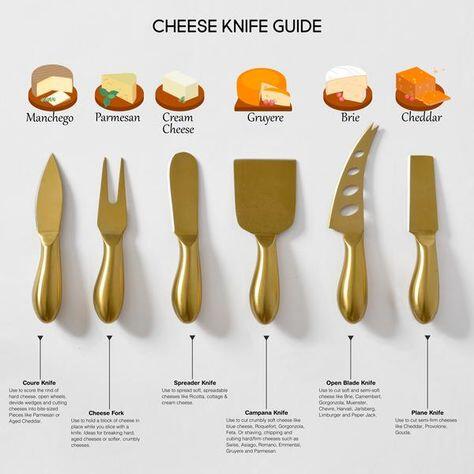
Credit: www.helloknife.com
Matching Knives To Cheese Types
It’s important to pair the right knife with each cheese. This keeps your cheese board tidy and makes tasting more enjoyable. Here’s a practical overview:
| Cheese Type | Best Knife | Why |
|---|---|---|
| Soft (Brie, Camembert) | Soft Cheese Knife, Spreader | Prevents sticking, spreads easily |
| Semi-soft (Havarti, Fontina) | Flat Cheese Knife, Wire Cutter | Makes smooth, thin slices |
| Semi-hard (Cheddar, Gouda) | Cheese Cleaver, Plane | Strong enough for firmer textures |
| Hard (Parmesan, Pecorino) | Parmesan Knife, Hard Cheese Knife | Breaks off chunks cleanly |
| Blue Cheese | Wire Cutter, Spreader | Prevents crumbling, easy serving |
Using the correct knife for each cheese protects the flavor, stops crumbs, and makes your platter look neat. It also helps your guests know which knife to use, preventing flavor mix-ups.
How To Use Each Cheese Knife (step-by-step)
Let’s break down how to handle each main knife. This section will give you clear, direct steps and practical tips for everyday use.
Soft Cheese Knife
- Hold the knife with your dominant hand, and lightly grip the cheese with your other hand.
- Place the blade at the edge of the cheese.
- Use a gentle sawing motion, letting the knife glide through.
- Use the tip to lift and serve the slice.
Tip: Chill soft cheeses for 10–15 minutes before cutting. This prevents squashing and keeps your slices neat.
Hard Cheese Knife
- Place the cheese on a sturdy surface.
- Hold the knife firmly, positioning the blade where you want to cut.
- Push down with steady pressure, using a rocking motion if needed.
- Separate the wedge and serve.
Tip: Let hard cheeses sit at room temperature for 30 minutes before cutting. This softens them just enough for easy slicing.
Cheese Cleaver
- Place the cheese block on a board.
- Hold the cleaver by the handle and align the blade with the spot to cut.
- Press down firmly, rocking slightly if the cheese is very hard.
- Use the wide blade to lift the piece.
Tip: For very hard cheeses, score the surface with the tip first to guide your cut.
Parmesan Knife
- Stick the pointed tip into the rind or top of the cheese.
- Twist gently until a chunk breaks off.
- Continue breaking off small pieces instead of slicing.
Tip: Serve parmesan in irregular chunks—this keeps the natural texture and enhances the taste.
Flat Cheese Knife
- Lay the cheese flat on a board.
- Press the knife straight down for thin, even slices.
- Use the flat blade to lift and move the cheese.
Tip: If the cheese is sticky, dip the blade in warm water before each cut.
Cheese Fork
- Stick the fork into the cheese to hold it steady.
- Cut with your chosen knife.
- Use the fork to lift and serve the cheese.
Tip: The fork is also useful for arranging pieces on a platter without touching them.
Cheese Spreader
- Scoop a portion of soft cheese with the flat blade.
- Spread onto bread or crackers with a gentle swipe.
Tip: Use a separate spreader for each cheese to avoid mixing flavors.
Cheese Plane
- Place the plane flat on the cheese.
- Pull towards you with even pressure.
- Let the thin slice collect on the blade.
Tip: The cheese should be cold for the cleanest slices.
Wire Cheese Cutter
- Place the cheese under the wire.
- Press or pull the wire through in one smooth motion.
- Lift the slice with a knife or fork.
Tip: Wipe the wire clean between cheeses to keep flavors pure.
Rind Cutter
- Score the rind with the blade.
- Peel away the tough outer layer.
- Proceed to cut the cheese as desired.
Tip: Don’t remove too much rind—just enough to make cutting easy.

Credit: blog.tagltd.com
How To Set Up A Cheese Board With Knives
A cheese board is a feast for the eyes and taste buds. The right setup can help your guests enjoy every bite.
- Choose a variety: Select 3–5 cheeses of different types (soft, semi-soft, hard).
- Match knives to cheeses: Place a dedicated knife (or spreader, fork, plane, etc.) With each cheese. This avoids mixing flavors.
- Arrange for flow: Place knives so handles point outwards. Guests can reach them easily without touching the cheese.
- Label each cheese: Small cards or tags help guests know what they’re eating.
- Add extras: Include crackers, bread, fruit, and nuts for variety.
- Separate strong flavors: Put blue cheese away from milder ones to avoid cross-contamination.
If you have limited knives, clean each one before switching cheeses. This small detail shows care and keeps flavors pure.
Cleaning And Caring For Cheese Knives
Good knives last longer with proper care. Here’s how to keep them in top shape:
- Wash by hand: Most cheese knives should not go in the dishwasher. Hand wash with mild soap and warm water.
- Dry right away: Water spots can cause rust, especially on high-carbon steel.
- Sharpen regularly: Even specialty knives benefit from occasional sharpening. Use a fine stone or professional service.
- Store safely: Keep knives in a block, drawer, or sheath. Avoid tossing them in with other utensils.
A common mistake is leaving cheese residue on knives. Cheese can dry and become hard to clean. Rinse or wipe knives during your event if needed.
Mistakes Beginners Make (and How To Avoid Them)
Learning to use cheese knives takes practice. Here are some common slip-ups and how to dodge them:
- Using the wrong knife: This can crush soft cheeses or shatter hard ones. Always check which knife suits your cheese.
- Applying too much force: Let the knife do the work, especially with soft cheeses.
- Not cleaning between cheeses: Strong flavors can transfer, ruining delicate tastes.
- Cutting all cheese the same way: Some cheeses are best in slices, others in chunks. Adjust your technique.
- Ignoring knife care: Dull or rusty knives are dangerous and messy.
A little attention to detail can make a huge difference in presentation and taste.
Cheese Knife Materials: What’s Best?
The material of your cheese knife affects performance and maintenance. Here’s a comparison of the main types:
| Material | Pros | Cons |
|---|---|---|
| Stainless Steel | Durable, easy to clean, doesn’t rust easily | Can be heavy, may not keep the sharpest edge |
| High-Carbon Steel | Sharp edge, professional feel | Can rust if not dried quickly |
| Ceramic | Lightweight, very sharp, nonstick | Can chip or break if dropped |
| Plastic | Cheap, good for soft cheese, dishwasher safe | Not strong enough for hard cheese |
| Wood Handles | Comfortable grip, classic look | Can absorb odors, needs oiling |
Stainless steel is the most common and user-friendly. For special occasions, a ceramic knife or a set with wood handles can add style.
When To Replace Cheese Knives
Even quality knives wear out over time. Watch for these signs:
- Rust spots that won’t come off
- Loose handles or cracks
- Blades that won’t sharpen
- Chipped ceramic blades
If you host often, consider replacing knives every few years. For occasional use, a good set can last a decade or more.
Choosing A Cheese Knife Set
When buying a set, keep these points in mind:
- Variety: A good set includes at least a soft cheese knife, hard cheese knife, spreader, and fork.
- Quality: Look for solid construction and sharp blades.
- Comfort: Handles should feel good in your hand.
- Material: Stainless steel is practical; wood or ceramic can be stylish.
- Storage: Some sets come with a box or holder.
Avoid sets that look impressive but are made from cheap materials. Test the knives if possible—balance and sharpness matter more than appearance.
For expert advice, the Serious Eats Cheese Knife Guide offers detailed reviews and buying tips.
Fun Cheese Knife Facts
- The cheese plane was invented in Norway in 1925.
- French cheese boards often include three knives: One for soft cheese, one for hard cheese, and one for blue cheese.
- A dedicated cheese knife prevents flavors from mixing, which is important for professional tastings.
- Some cheese knives have forked tips for serving, while others have holes to reduce sticking.
These small details have a big impact on your cheese experience.
Cheese Knife Etiquette
Cheese can be formal or casual, but knowing a few etiquette rules will impress any guest:
- Use a separate knife for each cheese.
- Don’t double-dip a knife into multiple cheeses.
- Cut cheese in the same direction as others—this keeps the wedge tidy.
- Take only what you will eat, and avoid handling cheese with your fingers.
If you’re serving, provide small plates and napkins so guests can enjoy their selections without mess.
Cleaning Up After Your Cheese Board
After an event, cleaning up quickly prevents stuck-on cheese and saves time. Here’s how:
- Scrape off any remaining cheese with a spatula or the back of a knife.
- Wash knives in warm, soapy water.
- Dry with a towel immediately.
- Store knives safely, away from moisture.
For wood handles, rub a drop of mineral oil every few months to keep them looking new.
Creative Uses For Cheese Knives
Cheese knives aren’t just for cheese. Here are ways to get more value from your set:
- Parmesan knife: Break chocolate or toffee into chunks.
- Cheese plane: Slice butter for baking or sandwiches.
- Cheese spreader: Spread dips, hummus, or soft spreads.
- Wire cutter: Slice boiled eggs or soft desserts.
Always wash the knife thoroughly before switching to a new food to avoid flavor transfer.
Credit: www.reddit.com
Frequently Asked Questions
What Is The Best Cheese Knife For Beginners?
For most beginners, a basic cheese knife set with a soft cheese knife, hard cheese knife, spreader, and fork is enough. These cover almost all cheese types you’ll serve at home. Start simple, then add specialty knives as your interest grows.
Can I Use Regular Kitchen Knives For Cheese?
You can, but regular knives often stick, squash soft cheese, or shatter hard cheese. Cheese knives are shaped for clean cuts and better presentation. If you love cheese, investing in a few proper knives makes a big difference.
How Do I Keep Cheese From Sticking To The Knife?
Use a knife with holes or a nonstick surface for soft cheeses. For sticky cheeses, dip the blade in warm water and wipe between cuts. The right knife and technique prevent most sticking problems.
How Should I Clean Cheese Knives With Wooden Handles?
Wash by hand with mild soap and warm water. Never soak or put them in the dishwasher. Dry immediately, and rub with a little mineral oil every few months to prevent cracking.
How Many Cheese Knives Do I Need For A Cheese Board?
Aim for one knife per cheese when possible. At the very least, provide a separate knife for each cheese type (soft, hard, blue, etc.). This keeps flavors pure and makes serving easier for your guests.
Cheese knives may seem like a small detail, but they change the way you enjoy cheese. With the right tools, you’ll serve with confidence and style—every time.