
Does Algae Die When Dry?
=======================
Algae are everywhere—ponds, oceans, even damp walls. You might see green patches, slimy mats, or powdery dust. But what happens when these organisms lose water? Can algae survive drying, or do they die quickly? Many people assume algae are fragile and dry spells kill them. The truth is more complex. Whether algae die when dry depends on their type, environment, and other factors. Let’s dive deep into what really happens when algae dry out, how different types react, and why this matters in nature, industry, and daily life.
What Are Algae?
Algae are simple, plant-like organisms. They range from tiny single cells to large seaweeds like kelp. Most algae live in water, but some grow on rocks, soil, or even trees. They use sunlight to make food through photosynthesis. Unlike land plants, algae don’t have roots, stems, or leaves. Some float freely, while others stick to surfaces.
Algae play a big role in producing oxygen and are the base of many food chains. In fact, they make about half of the world’s oxygen. Some algae are so small you need a microscope to see them, while others, like giant kelp, can grow over 30 meters long.
Whether in fresh water or salty seas, algae are key to life on Earth.
Types Of Algae
Algae are grouped by color and structure:
- Green algae (Chlorophyta): Found in ponds, lakes, and moist soil. They are often seen as green scum on water or as thin coatings on damp surfaces.
- Blue-green algae (Cyanobacteria): Actually bacteria, but act like algae. They can form thick blooms in water and survive in extreme places like hot springs or deserts.
- Brown algae (Phaeophyta): Includes kelp, mostly in oceans. These are the largest algae, important in coastal ecosystems.
- Red algae (Rhodophyta): Often in warm seas. Many are used in foods like sushi (nori) and produce useful gels.
- Diatoms: Golden-brown, live in fresh and salt water. They have glass-like shells and are important for both nature and industry.
Each type has unique features. Some can handle drying better than others. For example, diatoms’ silica shells offer some protection, while brown algae, lacking tough spores, are more vulnerable.
What Happens To Algae When They Dry?
Drying removes water from algae cells. Water is essential for their life processes. When algae lose water, their cells shrink and their metabolism slows or stops. This process is called desiccation.
Physical Changes
- Cell dehydration: Water leaves the cell, causing it to shrink. The cell wall may collapse, losing its normal shape.
- Cell membrane damage: Without water, membranes can crack. This lets unwanted substances enter the cell or causes leaks.
- Photosynthesis stops: No water means no food production. The machinery inside the cell needed for making energy shuts down.
- Pigment fading: Colors fade as cells die. The green, brown, or red pigments break down when cells are stressed.
Some algae die quickly after drying. Others survive by going dormant.
A less obvious effect is the formation of microscopic cracks in the cell wall. These cracks can allow bacteria or fungi to attack dried algae, making survival harder.
Chemical Changes
- Loss of enzyme activity: Enzymes need water to work. When dry, they can’t help with cell functions.
- Build-up of toxins: Waste products can’t be removed. This can poison the cell from the inside.
- DNA damage: Drying can break DNA strands. Without repair, the cell cannot divide or make proteins.
These changes affect survival. Some algae repair themselves when water returns, others cannot. For example, some green algae start fixing their DNA as soon as moisture returns, but if damage is too great, they die.
Why Do Some Algae Survive Drying?
Not all algae die when dry. Some have special strategies:
Dormancy
Many algae enter dormancy—a resting state. They stop growing, and their metabolism slows. Dormant algae can survive for days, weeks, or even months without water. During this time, they use very little energy and wait for better conditions. Some algae can switch into dormancy in just a few hours when they sense water loss.
Protective Structures
Some algae form spores or cysts. These are tough, dry-resistant forms. Spores have thick walls, protecting the cell inside from drying and heat. This process is called sporulation. Spores can survive not just dryness, but also heat, cold, and even some chemicals.
For example, some freshwater green algae produce “akinetes”—special thick-walled cells that last through harsh seasons.
Biochemical Adaptations
Certain algae produce protective sugars or proteins. These substances help keep cell parts stable during drying.
Example: Trehalose
Trehalose is a sugar that acts like a shield. It prevents cell damage during drying. Some green algae and cyanobacteria make trehalose. This sugar acts like a sponge, holding water around important cell parts, so they don’t break down.
Some algae also make proteins called LEA proteins (Late Embryogenesis Abundant proteins), which help protect cell structures during stress. These proteins can unfold and refold, reducing damage from drying.
Habitat Influence
Algae living in harsh environments—deserts, rocks, tree bark—are used to drying out. They have evolved ways to survive repeated dehydration. For example, desert crust algae go dormant and can restart life after years of drought.
Not all algae have these tools. Algae from stable, wet places, like deep ocean kelp, are less likely to survive if dried.
Which Algae Die When Dry?
Different algae have different tolerance to drying. Here’s how the main types react:
| Algae Type | Drying Tolerance | Common Survival Strategy |
|---|---|---|
| Green algae | Medium | Dormancy, spore formation |
| Cyanobacteria | High | Protective sugars, cysts |
| Brown algae | Low | Limited resistance |
| Red algae | Low | Some form spores |
| Diatoms | Medium | Silica shells, some dormancy |
Cyanobacteria are especially tough. They survive in deserts, on rocks, even inside stones. Some studies found them alive under dry crusts decades later. Brown algae, like kelp, usually die when dry because they live in the ocean and lack strong protective forms.
Real-life Examples: Algae Drying And Survival
Let’s look at how drying affects algae in different situations.
Pond Algae In Summer
In hot weather, pond water levels drop. Green algae on rocks or soil dry out. Some die, but others form spores and wait for rain. When water returns, the spores open and algae grow again. This is why ponds often turn green quickly after rainfall.
A beginner might think all algae vanish in dry spells, but pond owners see new blooms after every wet period.
Desert Algae
Desert crusts often contain cyanobacteria. These can dry out completely and survive for months. When rain comes, they revive quickly. In fact, some desert soils get their dark color from these hardy algae.
A non-obvious detail: some desert algae “wake up” within minutes of water contact, starting photosynthesis even before fully rehydrated.
Seaweed On Beaches
Seaweed washed ashore dries in the sun. Most brown and red algae die, but some green algae can survive if they’re moist inside. This is why you might see green patches on rocks that stay damp, even at low tide.
Building Surfaces
Algae on walls or roofs dry out during sunny days. Most die, but some cyanobacteria survive and recolonize when humidity rises. This explains why black or green stains return after rain, even if you clean surfaces regularly.
Industrial Algae Cultures
In labs and factories, algae are dried for use in food, fuel, or medicine. Drying kills most cells, but spores or cysts might survive and restart growth if conditions change. This is useful for companies that want to store algae for long periods.
Factors Affecting Algae Survival After Drying
Several factors decide if algae live or die when dry:
Type Of Algae
Some species are naturally tough. Others are fragile. For example, algae from deserts or harsh climates often survive better.
Duration Of Drying
Short drying is less harmful. Long drying increases cell damage. Some algae can handle a few days dry, but not weeks or months.
Temperature
High heat during drying speeds up cell death. Cool drying is less deadly. For example, algae dried in shade may live longer than those in direct sun.
Humidity
Low humidity dries algae faster and more completely. Some survive better in moist air. In humid climates, even “dry” surfaces may let some algae live.
Sunlight Exposure
Direct sunlight can bleach and kill algae. Shade or indirect light is less harmful. UV light breaks down cell walls and DNA.
Presence Of Protective Structures
Spores, cysts, and protective sugars improve survival. Algae without these adaptations die quickly.
Age And Health Of Algae
Young, healthy algae resist drying better. Old or stressed algae die faster. Algae growing in polluted or nutrient-poor water are usually weaker.
A non-obvious factor: Pollution can make some algae more fragile, while others become more stress-resistant after repeated drying cycles.

Credit: www.researchgate.net
How Scientists Study Algae Drying
Researchers use many methods to test algae survival:
- Microscopy: Examines cell changes after drying. Scientists look for damage or survival structures.
- Culture tests: Algae are dried, then rehydrated to see if they grow. This shows if cells can truly recover.
- DNA analysis: Checks for genetic damage. DNA breaks mean cells cannot function.
- Pigment measurement: Faded pigments mean dead cells. Healthy cells regain color when wet.
- Enzyme assays: Shows if metabolism returns after rehydration.
Some researchers also use special dyes that change color if cells are alive, giving a quick answer after drying.
These tests reveal which algae can survive and how long.
Why Does Algae Drying Matter?
Understanding algae drying helps in many fields:
Environmental Management
Drying controls algae blooms in ponds and lakes. Removing water kills many algae, but some survive and return. Knowing which types survive helps plan better control methods. For example, repeated drying and refilling of ponds may select for more resistant algae, making control harder over time.
Agriculture
Algae are used as biofertilizers. Dried algae can be stored and added to soil later. Spores survive drying, making them useful for farming. Some farmers spread dry cyanobacteria on fields to improve soil health.
Food And Health Products
Many products use dried algae—spirulina, chlorella, seaweed snacks. Drying kills most cells, but some nutrients and spores remain. The drying process must be controlled so that important vitamins and proteins are not lost.
Bioremediation
Algae clean water and soil. Dried algae may lose cleaning power, so choosing the right species is important. Some algae can still absorb toxins after drying, but others cannot.
Industrial Applications
Algae make biofuel, plastics, and medicines. Drying affects quality and usefulness. In some cases, dried algae are “reactivated” by adding water to start production.
Space Research
Scientists study algae drying for space missions. Dried algae could be revived to make food and oxygen in space. This reduces the need to carry fresh supplies.
Algae drying is not just an academic question. It affects food, clean water, pollution control, and even future space travel.
Non-obvious Insights About Algae Drying
Most people think drying kills all algae. But here are some lesser-known facts:
- Algae can revive even after severe drying. Some cyanobacteria revive after years without water. This is why old desert soils can turn green overnight after rare rains.
- Drying can trigger spore formation. For some algae, drying is needed to produce spores, which then survive tough conditions. This is a survival trick not seen in most land plants.
- Drying can increase resistance. Repeated drying and re-wetting make some algae stronger over time. This is called “priming,” and it trains cells to handle future stress better.
- Algae can survive inside dust. Desert dust often carries dormant algae spores, which come alive when they land in water. This is one way algae spread to new places.
- Some algae produce sunscreen chemicals. These protect them from UV light during dry periods.
Comparison: Algae Survival In Dry Vs Wet Conditions
Let’s compare algae survival in wet and dry environments.
| Condition | Survival Rate | Main Challenge | Adaptation |
|---|---|---|---|
| Wet | High | Predators, competition | Rapid growth, movement |
| Dry | Low to Medium | Dehydration, UV damage | Dormancy, spores, protective sugars |
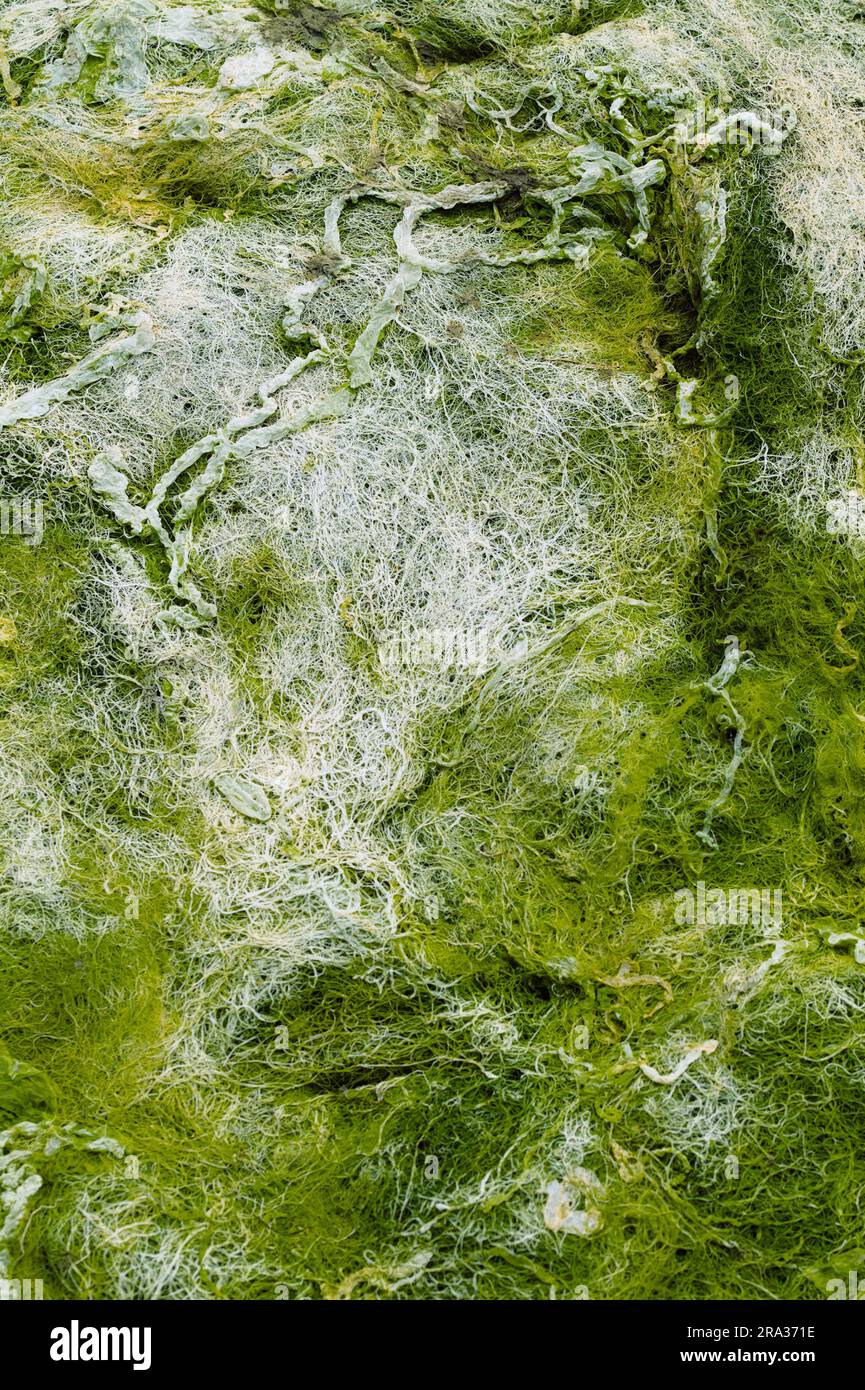
Wet conditions favor growth, but dry conditions test algae’s survival skills. Some algae even change their shape or color in dry periods, making them less visible to predators.
Credit: www.alamy.com
Algae Drying In Human-made Systems
Drying algae isn’t just a natural event. Humans dry algae for many reasons.
Algae Harvesting
Farmers and companies grow algae in tanks or ponds. After harvest, algae are dried to make powder or flakes. Drying kills most cells, but spores may survive. This is useful for making animal feed, fertilizers, or dietary supplements.
Wastewater Treatment
Algae help clean wastewater. Sometimes, drying is used to remove excess algae. Some spores survive and can restart growth if water returns. This means dried sludge should be handled carefully to prevent regrowth.
Art And Decoration
People use dried algae in art, crafts, and aquariums. Most algae die, but some spores or cysts may survive, especially in humid conditions. Aquarium owners sometimes see new algae growth after adding dried decorations.
Drying changes the color and texture of algae, which can be used creatively in design.
How To Kill Algae Completely
If you want to remove algae from tanks or surfaces, drying alone may not be enough. Some algae survive, especially spores. Here’s how to improve algae removal:
- Combine drying with heat: High temperatures kill more cells. Using a hair dryer or leaving items in the sun helps.
- Use chemical cleaners: Disinfectants destroy spores. Bleach or hydrogen peroxide can be effective but must be used safely.
- Scrub surfaces: Physical removal helps eliminate surviving algae. Use a brush or sponge to remove layers.
- Expose to UV light: Sunlight or UV lamps break down cell DNA. This is especially useful for stubborn black stains.
Even so, some algae are extremely tough and can return. Regular cleaning and monitoring are best for long-term control.
Algae Resilience: Lessons From Nature
Algae’s ability to survive drying teaches us about resilience. They adapt quickly, form protective structures, and recover when conditions improve. This makes algae important for ecological balance and useful for human needs.
Key Lessons
- Adaptability: Algae adapt to harsh environments. They change their life cycle or chemistry to survive.
- Hidden survival: Dormancy and spore formation allow survival without visible signs. Surfaces may look clean, but spores can hide in cracks.
- Unexpected revival: Algae can reappear after long dry periods. This surprises many homeowners and farmers.
Nature uses many tricks to keep algae alive, making them both helpful and sometimes hard to control.
Data: Algae Survival Times After Drying
Scientists have measured how long different algae survive after drying.
| Algae Type | Survival Time (Dry) | Revival Possible? |
|---|---|---|
| Cyanobacteria | Up to 5 years | Yes |
| Green algae | Several months | Yes |
| Diatoms | Weeks to months | Yes |
| Brown algae | Few days | No |
| Red algae | Up to 1 week | Rarely |
Cyanobacteria are the toughest, while brown algae are the most fragile. Diatoms’ silica shells help them survive longer than you might expect.

Credit: aavalabs.com
Practical Tips For Handling Algae Drying
If you’re dealing with algae—whether in ponds, tanks, or industrial settings—here are practical tips:
- Expect some survival: Even after drying, some algae may return. Plan for ongoing management.
- Clean thoroughly: Combine drying with cleaning for best results. Don’t rely on drying alone.
- Monitor after drying: Watch for regrowth, especially in humid conditions. Early action stops big problems.
- Choose resistant species for products: If you want to revive dried algae, pick those with strong survival skills. Read product information for storage tips.
- Use drying for control: Drying can reduce algae, but may not eliminate all types. Repeat as needed.
Also, remember to check hidden corners and cracks where spores might hide.
Common Mistakes In Algae Drying
Many beginners make mistakes:
- Assuming all algae die when dry: Spores and cysts often survive. This leads to surprise regrowth.
- Ignoring humidity: Moist air lets some algae live longer. Drying is less effective in damp climates.
- Not combining methods: Drying alone may not be effective. Add cleaning or chemicals for best results.
- Missing dormant forms: Dormant algae are hard to detect. Surfaces may look clean but still have living spores.
Avoid these mistakes to manage algae better. If you see fast regrowth, suspect hidden survivors.
Algae Drying And Ecosystem Impact
Drying affects more than just algae. It influences whole ecosystems.
Soil Health
Algae in soil help fix nitrogen and stabilize earth. Drying can reduce these benefits, but dormant spores restore them when rain comes. In deserts, algae crusts prevent erosion.
Water Quality
Drying reduces algae blooms, but surviving spores can cause new blooms after re-wetting. This is why some lakes “turn green” after droughts break.
Wildlife
Many animals eat algae. Drying reduces food supply temporarily, but algae often return. Some insects and snails time their life cycles to match algae growth.
Climate
Algae contribute to carbon cycling. Drying interrupts this, but revival restores balance. Changes in algae growth can affect carbon dioxide levels in the air.
A less obvious effect: In some areas, dried algae create dust that affects weather and air quality.
Research And Future Directions
Scientists are exploring algae drying to solve big problems:
- Food storage: Dried algae could be a food source for emergencies. Their long shelf life makes them practical.
- Space travel: Dormant algae might support life on Mars or the Moon. Tests show some can survive years in space-like conditions.
- Climate control: Algae help absorb carbon; understanding drying helps predict their impact. This is important for climate models.
- Medicine: Dried algae are being studied for making new antibiotics and health supplements.
More research is needed to unlock algae’s full potential.
Frequently Asked Questions
What Happens To Algae When They Dry Out?
When algae dry, they lose water. Their cells shrink, metabolism stops, and pigments fade. Some die quickly, while others survive by forming spores or going dormant. The process can also cause DNA and membrane damage.
Can Dried Algae Be Revived?
Yes, some algae can revive after drying. Cyanobacteria and green algae often recover when water returns, especially if they formed spores or cysts. The revival speed and success depend on drying time and conditions.
Is Drying An Effective Way To Kill Algae?
Drying kills many algae, but not all. Spores and dormant forms can survive and regrow when conditions improve. Combining drying with cleaning or chemicals works better for complete removal.
How Long Can Algae Survive Without Water?
Survival time depends on type. Cyanobacteria can last up to 5 years dry. Green algae survive for months. Brown and red algae usually die within days or weeks. Environmental factors like temperature and humidity also matter.
Why Do Some Algae Survive Drying While Others Do Not?
Some algae have protective structures, like spores, or produce special sugars. These adaptations help them survive drying. Others lack these features and die quickly. The place where algae live also affects their survival skills.
Algae may seem simple, but their ability to survive drying is a story of resilience and adaptation. Whether you’re managing a pond, studying nature, or using algae in products, understanding their drying process helps you make smarter decisions. For more scientific details, see this [Wikipedia article on algae](https://en.wikipedia.org/wiki/Algae).