
Setting up an above ground pool is exciting. But most pool owners discover that the surface under the pool is a big deal. Small rocks, roots, or even uneven ground can make swimming uncomfortable and even damage the pool liner. That’s where foam under above ground pool setups come in. Foam sounds simple, but it can make a huge difference in how long your pool lasts and how much you enjoy it.
Let’s explore why foam matters, the types you can use, how to install it, common mistakes, and practical tips for a smooth, safe pool base. Whether you’re new to pools or just want a better experience, learning about foam under your pool will help you get the most from your summer fun.
Why Use Foam Under An Above Ground Pool?
Many pool owners wonder why they should bother with foam. After all, isn’t the ground enough? Not really. There are several benefits to using foam under above ground pool liners.
First, foam creates a smooth, soft surface for your pool. When you walk or play inside, it feels comfortable under your feet. No more feeling every little rock or sharp twig.
Second, foam protects the pool liner. Pool liners are tough but not indestructible. Small stones, sticks, and even grass can poke through the liner over time. Foam acts as a barrier, reducing the risk of leaks.
Third, foam helps with insulation. Pools lose heat quickly, especially when placed directly on bare ground. Foam slows down heat loss, which means warmer water for longer.
Fourth, foam can help level small imperfections in the ground. While you still need to prepare the base, foam can smooth over minor bumps.
Finally, foam makes cleaning easier. Dirt and debris are less likely to gather under the liner, and you’ll have fewer worries about mold or mildew.
Types Of Foam For Above Ground Pools
Choosing the right foam is important. Not all foam works well under a pool. Here are the main types you’ll find:
1. Pool Pad Foam
This foam is made specifically for pools. It comes in rolls or sheets and is designed to handle weight, moisture, and outdoor use. It’s usually ⅛ to ¼ inch thick, dense, and resists water absorption.
2. Rigid Foam Insulation Boards
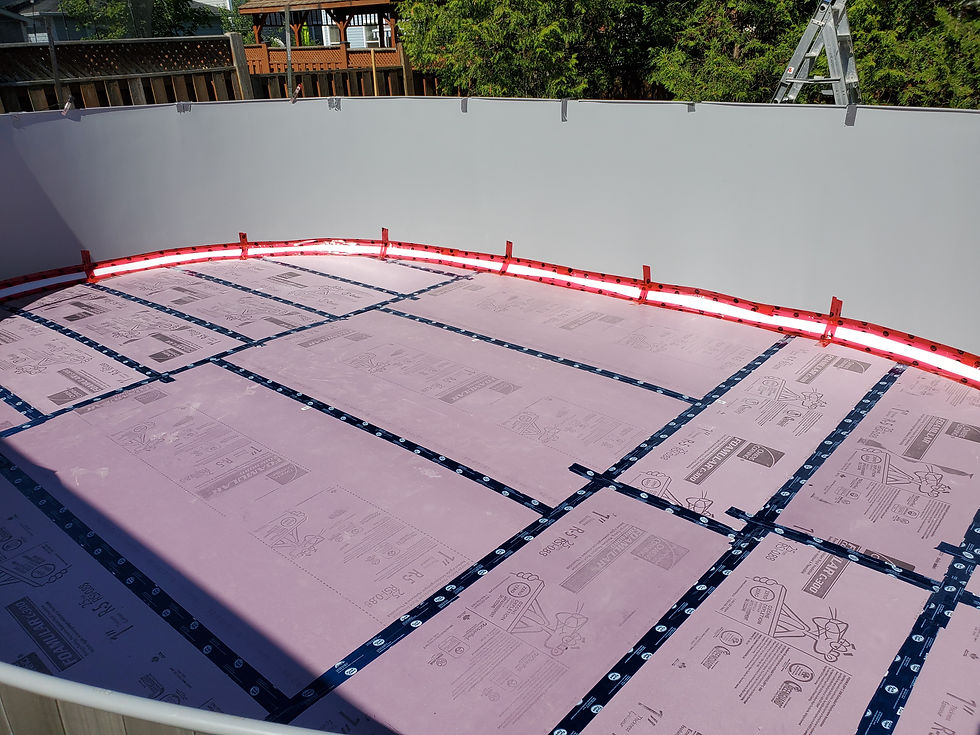
These are common in building supply stores. Brands like Owens Corning Foamular or Blue Board are popular. Boards are usually 4 ft x 8 ft and come in thicknesses from ½ inch to 2 inches. Rigid foam is strong, doesn’t compress much, and provides excellent insulation.
3. Carpet Underlayment Foam
Some people use carpet underlayment (the soft foam placed under carpets). It’s cheap and easy to find, but it’s not as durable as pool pad or rigid foam. Still, it’s better than nothing for small pools or temporary setups.
4. Interlocking Foam Mats
These are the puzzle-piece mats you see in kids’ play areas or gyms. They’re easy to cut and fit together, and they provide a soft surface. However, they may not be as water-resistant as pool-specific foam and can separate over time.
5. Recycled Or Specialty Foams
Some eco-friendly options use recycled materials. These are less common but can be found online. Always check that the foam is closed-cell (doesn’t absorb water) and strong enough for pool use.
Non-obvious tip: Avoid using low-density packing foam, mattress toppers, or old couch foam. These break down quickly, absorb water, and can cause more problems than they solve.
Key Benefits Of Foam Under Pools
To understand why foam is so popular, let’s look at the main benefits in detail:
Comfort
Walking on a pool floor with foam feels much softer than on bare ground or sand. This is especially helpful for kids and anyone with sensitive feet. You can even kneel or sit in the pool without discomfort.
Liner Protection
Foam acts as a shield. It reduces the risk of punctures, tears, and wear from small objects below the pool. Over time, this can save money by preventing liner replacement.
Insulation
Rigid foam especially helps keep pool water warmer. In cooler climates, this can extend your swimming season by several weeks. Even in hot areas, foam slows heat loss at night.
Pest And Weed Barrier
Some types of foam (especially rigid foam boards) prevent grass, weeds, and even small insects from getting through. Grass like Bermuda is notorious for poking up through pool liners. Foam makes this much harder.
Smoother Appearance
A foam base helps prevent visible wrinkles and divots in your liner. Your pool looks nicer and feels more professional.
Long-term Savings
While foam adds some up-front cost, it can prevent expensive repairs down the line. Replacing a pool liner is much more costly than installing foam at the start.
Insight: Some pool warranties require a protective base under the liner. Skipping foam might void your warranty, so check the details before installation.
How To Install Foam Under An Above Ground Pool
A solid installation is key to getting all the benefits from foam. Here’s a step-by-step guide for most pool types:
1. Prepare The Ground
Clear the area of all grass, rocks, roots, and debris. Use a shovel or sod cutter to remove organic material. The ground should be as level as possible—use a long board and a carpenter’s level to check.
For stubborn spots, add or remove soil to create a flat base. Compact the soil using a tamper or roller. Uneven ground leads to wrinkles and can damage the liner over time.
Pro tip: Check for water drainage. Pools should never sit in a spot where rainwater collects.
2. Add A Base Layer (optional)
Some people add a thin layer of mason sand or crushed limestone for extra leveling. Spread it evenly (about 1-2 inches thick) and compact it well. This step is optional if your ground is already flat and smooth.
3. Lay Down A Ground Cloth
A ground cloth (usually made of tough woven fabric) goes under the foam to add an extra layer of protection. It helps keep moisture and pests away from the foam.
4. Cut And Place The Foam
Roll out pool pad foam or lay down rigid boards. Overlap or butt the edges as needed, depending on the type:
- For pool pad foam: Overlap edges by a few inches, tape the seams with waterproof tape if needed.
- For rigid foam boards: Lay them in a brick pattern so seams don’t line up. Tape the seams to prevent shifting.
- For interlocking mats: Snap them together, trim the edges with a utility knife.
Cut the foam to fit the pool shape exactly. For round pools, use a marker and string to trace the circle, then cut with a sharp knife.
5. Secure The Foam
Tape seams with waterproof duct tape or heavy-duty packing tape. This keeps the foam from shifting during pool setup.
Common mistake: Not taping or securing the foam. Unsecured foam can move, creating bumps or gaps under the liner.
6. Install The Pool Liner
Carefully unroll the liner over the foam. Avoid dragging it, as this can catch and move the foam. Smooth out wrinkles by gently pulling the liner into place.
Start filling with a few inches of water, then adjust the liner as needed. The water’s weight will press the liner against the foam, creating a smooth surface.
7. Finish Setup
Once the liner is smooth and the pool is filling, assemble the walls and complete the pool setup according to the manufacturer’s instructions.
Non-obvious insight: If you plan to add a pool cove (a wedge of foam at the edge of the pool), install it after laying the main foam but before the liner. The cove helps support the liner and prevents stretching at the base.

Credit: www.troublefreepool.com
Comparing Popular Foam Options
Choosing the right foam can be tricky. Here’s a simple comparison of the main types:
| Foam Type | Durability | Comfort | Insulation | Cost | Ease of Use |
|---|---|---|---|---|---|
| Pool Pad Foam | High | High | Medium | Medium | Easy |
| Rigid Foam Board | Very High | Medium | High | Medium-High | Moderate |
| Carpet Underlayment | Low | Medium | Low | Low | Easy |
| Interlocking Mats | Medium | High | Low | Medium | Easy |
Foam Thickness: Does It Matter?
Many people ask, “How thick should the foam be? ” The answer depends on your needs and budget.
- Pool pad foam is usually ⅛ to ¼ inch thick. This is enough for most soft-sided pools.
- Rigid foam board is often ½ inch to 1 inch thick. Some people use 2-inch boards for extra comfort and insulation.
- Carpet underlayment is usually ¼ inch thick.
Thicker foam gives more comfort and better insulation, but it costs more and may require more work to install. For most above ground pools, ½ inch to 1 inch of rigid foam is a great balance.
Important: If you go too thick, the foam can compress unevenly under heavy weight, causing wrinkles in the liner. Always choose firm, dense foam that won’t squish too much.
Pool Cove: What Is It And Why Use It?
A pool cove is a rounded wedge of foam placed where the pool floor meets the wall. It’s often overlooked, but it does several important jobs:
- Supports the liner at the base, preventing it from stretching or tearing.
- Helps dirt and debris slide down into the pool, making cleaning easier.
- Protects the liner from sharp bends, which are weak points.
You can buy pre-made foam coves or make your own by cutting strips of rigid foam and shaping them into a curve. Always install the cove before laying the liner.
Common Mistakes To Avoid
Even experienced pool owners make mistakes with foam installation. Here are the most common:
- Skipping ground preparation: Foam can’t fix major lumps, rocks, or slopes. Always level and compact the ground first.
- Using the wrong foam: Packing foam, mattress pads, or open-cell foam absorb water and break down quickly.
- Not taping seams: Unsecured foam shifts and creates wrinkles under the liner.
- Forgetting the pool cove: Without a cove, the liner is more likely to stretch and fail at the base.
- Using foam that’s too soft: Low-density foam compresses and loses shape, creating dips and wrinkles.
- Not checking for pests: Some insects (like ants) can chew through foam. Treat the ground for pests before installation.
- Installing on a wet surface: Moisture trapped under the foam can lead to mold or mildew.
Insider tip: If you’re replacing a pool liner, always replace or inspect the foam. Old foam can harbor mold or pests, and it may have compressed over time.

Credit: www.youtube.com
Foam Vs. Other Pool Base Materials
Many people wonder if foam is really better than sand, ground cloth, or nothing at all. Here’s a quick side-by-side look:
| Base Material | Comfort | Liner Protection | Insulation | Cost | Installation |
|---|---|---|---|---|---|
| Foam | Excellent | Excellent | Good | Medium | Moderate |
| Sand | Good | Good | Poor | Low | Easy |
| Ground Cloth | Medium | Medium | Poor | Low | Very Easy |
| Bare Ground | Poor | Poor | Poor | Free | Very Easy |
Foam offers the best comfort and liner protection, but it’s more work and costs more than just using sand or ground cloth. For families or anyone who wants a pool that lasts, foam is a smart investment.
Real-world Examples
Let’s look at two examples to see how foam changes the pool experience.
Example 1: Family With Kids
A family sets up a 15-foot above ground pool on their lawn. The first year, they skip foam and use just a ground cloth. By mid-summer, the kids complain about bumps and small rocks hurting their feet. The liner develops a small leak.
The next year, they install ¾-inch rigid foam board under the new liner. The pool floor feels soft, no more “ouch” moments, and the liner stays intact all season.
Example 2: Pool In A Rocky Yard
A homeowner in a rocky area tries to set up a pool directly on the ground. Despite removing the biggest rocks, small stones poke through and create visible lumps. The liner tears after a few weeks.
Switching to pool pad foam solves the problem. The foam absorbs pressure from small rocks, keeping the liner safe and the pool smooth.
Hidden insight: Foam can also reduce noise. Splashing water and movement inside the pool are quieter with a foam base—great for evening swims.
Credit: www.niceguyspools.ca
Maintenance Tips For Foam Under Pools
Once your foam is installed, it needs little attention. But here’s how to keep it working for years:
- Check for shifting: After heavy rain or ground movement, check that the foam hasn’t shifted or bunched up. Smooth out any bumps if needed.
- Watch for pests: Treat the area around the pool for ants or termites yearly.
- Dry before storage: If you take your pool down for winter, let the foam dry completely before storing to prevent mold.
- Inspect for damage: When replacing the liner, check the foam for cracks, compression, or mold. Replace damaged sections.
Environmental Impact
Most pool foam is made from closed-cell polyethylene or polystyrene. These are not biodegradable, but they’re durable and can last for many years. Some brands offer recycled or eco-friendly options.
If you ever remove the foam, check local recycling rules. Rigid foam boards are often recyclable at building supply centers, but pool pad foam may not be.
Extra tip: Use leftover foam pieces for garden paths, kneeling pads, or insulation projects instead of throwing them out.
Where To Buy Foam For Above Ground Pools
You can find pool pad foam and rigid foam boards at:
- Pool supply stores (local and online)
- Home improvement stores (like Home Depot, Lowe’s)
- Flooring supply shops (for carpet underlayment)
- Online retailers (Amazon, specialty pool sites)
Always check the foam’s specs—look for “closed-cell,” “water-resistant,” and “high density” to ensure it’s suitable for pool use.
For a deeper look at foam types and installation methods, see this Wikipedia page on swimming pool sanitation.
Frequently Asked Questions
How Thick Should Foam Be Under An Above Ground Pool?
For most pools, ½ inch to 1 inch of rigid foam board or pool pad foam is ideal. This provides good comfort and protection without causing liner wrinkles. Thicker foam can be used, but make sure it’s high-density and won’t compress too much.
Can I Use Regular House Insulation Foam Under My Pool?
Yes, but with caution. Only use closed-cell, rigid foam boards like extruded polystyrene (XPS). Avoid open-cell or soft insulation, which absorbs water and breaks down. Make sure the foam is strong enough to handle the pool’s weight.
Do I Still Need Sand If I Use Foam?
Sand is optional. If your ground is flat and smooth, you can skip sand and lay foam directly on a ground cloth. Some people use a thin sand layer to help with leveling, but foam provides the comfort and protection.
Will Foam Under My Pool Stop Grass From Growing Through?
Foam helps, but isn’t a guarantee. Rigid foam and pool pad create a good barrier, but aggressive grasses like Bermuda can sometimes poke through. For best results, remove all grass and treat the ground with a weed killer before installation.
How Long Does Foam Under A Pool Last?
Most quality pool foams last 5–10 years or more, depending on type and conditions. High-density, closed-cell foam boards last longer than soft or open-cell foam. Inspect the foam when replacing the liner and replace if compressed or damaged.
Setting up your above ground pool with foam may take a little more time and investment, but the rewards are clear: better comfort, longer liner life, and a smoother swim experience. With the right foam and proper installation, you’ll enjoy a worry-free pool season year after year.