
A musty smell in the house can be frustrating. You walk in, and the air feels heavy, a little damp, and not fresh. Yet, you search for mold—in the bathroom, under the sink, behind the furniture—and find nothing. If your house smells musty but no mold is visible, you are not alone. Many homeowners face this confusing situation. The good news is that musty odors have causes beyond mold, and you can take steps to identify and remove them.
Let’s look at why your home might smell musty, how to find the source, and what you can do to restore clean, fresh air.
Why Does My House Smell Musty Without Mold?
The first thought for musty odors is always mold. But musty smells can happen even when there is no visible mold. Here are several key reasons:
- Moisture and Humidity: High humidity or dampness allows organic materials to break down and release musty odors—even without mold.
- Hidden Water Leaks: Water may be trapped behind walls, under floors, or in crawl spaces, leading to musty smells.
- Stale Air: Poor ventilation causes air to stagnate, letting odors linger and concentrate.
- Old Carpets and Furniture: Over time, fabrics absorb odors from spills, pets, and moisture.
- HVAC and Ductwork Issues: Dust, moisture, or organic matter in air ducts can create musty smells when the system runs.
- Plumbing Problems: Drains or pipes with trapped debris or standing water can smell musty.
- Hidden Organic Debris: Fallen leaves, dust, or pet hair in out-of-sight places can break down, releasing odors.
Understanding these causes helps you find the source faster—even when mold is not present.
Common Non-mold Causes Of Musty Odors
Many sources can create a musty scent similar to mold, but are not dangerous. Let’s review the most common:
1. High Indoor Humidity
When the air is too humid, it feels sticky and smells stale. Humidity above 60% creates an ideal environment for musty odors. Everyday activities like cooking, showering, or drying clothes indoors add moisture to the air.
Quick check: Use a hygrometer to measure the humidity in your home. If it is high, you have found an important clue.
2. Water Intrusion And Leaks
Leaks are not always obvious. Water can seep in through:
- Roof damage or missing shingles
- Cracked foundation or basement walls
- Old windows with poor seals
- Leaking pipes behind walls or under floors
Even small leaks allow moisture to collect, leading to musty smells. You may not see water, but you might notice soft walls, peeling paint, or warped flooring.
3. Damp Crawl Spaces And Basements
Basements and crawl spaces are known for being damp. They often have:
- Poor ventilation
- Groundwater seepage
- Condensation on pipes or walls
These areas can produce musty smells that travel throughout the house, even without visible mold.
4. Old Or Wet Carpets
Carpets hold onto moisture and organic matter. If a carpet has ever been wet, it can develop a musty smell. This is common after floods, leaks, or even if it’s cleaned but not dried properly.
5. Hvac System Issues
Your heating and air conditioning system (HVAC) circulates air through ducts. If dust, pet hair, or even insects build up in the ducts, they can create musty odors. Moisture in the system makes it worse.
HVAC evaporator coils can also collect dirt and bacteria, producing a stale smell when you turn on the air.
6. Plumbing Problems
Pipes and drains can trap water, food, and organic waste. Over time, this can smell musty or like rotten eggs. Sometimes, unused drains let sewer gases rise into the house.
7. Old Or Unwashed Fabrics
Furniture, curtains, pillows, and blankets can trap odors. If they get damp or are not washed often, musty smells develop.
8. Pet Odors
Pet hair and dander collect in corners, carpets, and furniture. If not cleaned often, these can break down and smell musty.
9. Stale Air From Poor Ventilation
When windows are rarely opened and the air is not refreshed, odors from cooking, cleaning, or daily life build up. The result is a stale, musty smell.
10. Organic Debris In Out-of-sight Places
Behind appliances, under furniture, or in closets, dust and organic matter can pile up. Over time, these break down and smell musty.
How To Identify The Source Of Musty Odors
Pinpointing where the smell comes from is the first step to solving the problem. Here’s how you can systematically find the source:
Step 1: Check Humidity Levels
Measure the humidity in different rooms. High humidity means moisture is a likely cause.
Step 2: Inspect For Water Problems
Look for signs of leaks or water damage:
- Stains on ceilings or walls
- Peeling paint or wallpaper
- Warped floors or baseboards
- Rust on pipes or nails
Step 3: Examine Carpets And Upholstery
Smell carpets, rugs, and soft furniture closely. Are there spots that smell stronger? Check for dampness.
Step 4: Review The Hvac System
Turn on your heating or cooling. Does the musty smell get stronger? Open vents and look inside for dust or debris.
Step 5: Test Plumbing
Run water in all sinks, tubs, and showers. Smell near drains. Check under sinks for leaks or dampness.
Step 6: Look In Hidden Areas
Move furniture, open closets, and check behind appliances. Sometimes, the source is a forgotten pile of laundry or spilled food.
Step 7: Assess Pet Areas
Check where pets sleep or spend time. Clean bedding and toys often to reduce musty smells.
Step 8: Check For Outdoor Sources
Sometimes, odors enter from outside. Wet leaves, standing water, or decaying plants near the foundation can contribute.
When Should You Be Concerned About Musty Smells?
A musty odor is not always dangerous. However, sometimes it signals a bigger issue. Be alert for these warning signs:
- The smell is strong and gets worse over time.
- You or your family develop allergy symptoms (sneezing, coughing, headaches).
- There are visible signs of water damage.
- The musty smell is strongest near walls, floors, or vents.
If these happen, consider contacting a professional. Hidden mold, water damage, or HVAC problems can harm your health and home.
Health Effects Of Musty Smells (even Without Mold)
Many people worry that musty odors mean poor air quality. While musty smells without mold are usually less harmful, they can still cause:
- Headaches or dizziness
- Allergic reactions (runny nose, itchy eyes)
- Asthma symptoms
- General discomfort or poor sleep
Children, the elderly, and people with allergies are more sensitive. That’s why it’s important to find and fix the cause—even if you do not see mold.
How To Get Rid Of Musty Smells When There Is No Mold
Removing musty odors means dealing with the root cause. Here are proven steps:
1. Lower Humidity
Use a dehumidifier to keep indoor humidity below 60%. In bathrooms and kitchens, use exhaust fans when cooking or showering. Open windows to let fresh air in when possible.
2. Fix Water Leaks
Check your roof, pipes, and foundation. Repair leaks immediately. Dry any wet areas with fans and towels.
3. Clean Carpets And Upholstery
Steam clean carpets and soft furniture. If the smell does not go away, consider replacing them.
4. Maintain The Hvac System
Have your system serviced by a professional once a year. Clean or replace air filters every 1-3 months. Ask for duct cleaning if you suspect a problem.
5. Flush Drains And Clean Plumbing
Pour a mixture of baking soda and vinegar down drains to remove trapped debris. Run water in unused drains once a week.
6. Wash Fabrics Regularly
Launder curtains, bedding, and removable cushion covers. Dry them completely before putting them back.
7. Deep Clean Hidden Areas
Move furniture and clean behind and under it. Remove dust, hair, and any organic debris.
8. Improve Ventilation
Open windows daily, even for a short time. Use ceiling fans or portable fans to keep air moving.
9. Use Odor Absorbers
Place activated charcoal, baking soda, or commercial odor absorbers in rooms or closets to trap smells.
10. Address Outdoor Causes
Clean gutters and downspouts. Remove leaves and debris near the house. Make sure soil slopes away from the foundation to avoid water pooling.

Credit: www.aireserv.com
Comparing Musty Odors: Mold Vs. Non-mold Causes
It helps to know the difference between musty smells from mold and those from other causes. Here’s a side-by-side comparison:
| Feature | Mold-Related Musty Odor | Non-Mold Musty Odor |
|---|---|---|
| Visible Signs | Discoloration, spots, or fuzzy growth | No visible mold, possible water stains |
| Health Effects | Strong reactions, allergies, asthma | Mild irritation, discomfort |
| Location | Bathrooms, basements, behind walls | Carpets, furniture, HVAC, drains |
| Persistence | Smell returns after cleaning | Often improves after cleaning or drying |
Tools And Products To Help Eliminate Musty Odors
Using the right products can make a big difference. Here’s what works:
| Product | Purpose | How to Use |
|---|---|---|
| Dehumidifier | Reduces air moisture | Place in damp rooms, empty water tray daily |
| Activated Charcoal | Absorbs odors naturally | Put bags in closets, corners, or shoes |
| Baking Soda | Neutralizes smells | Sprinkle on carpets, vacuum after a few hours |
| HEPA Air Purifier | Removes particles and allergens | Run in main living areas daily |
| White Vinegar | Breaks down odors | Spray diluted on surfaces, wipe clean |
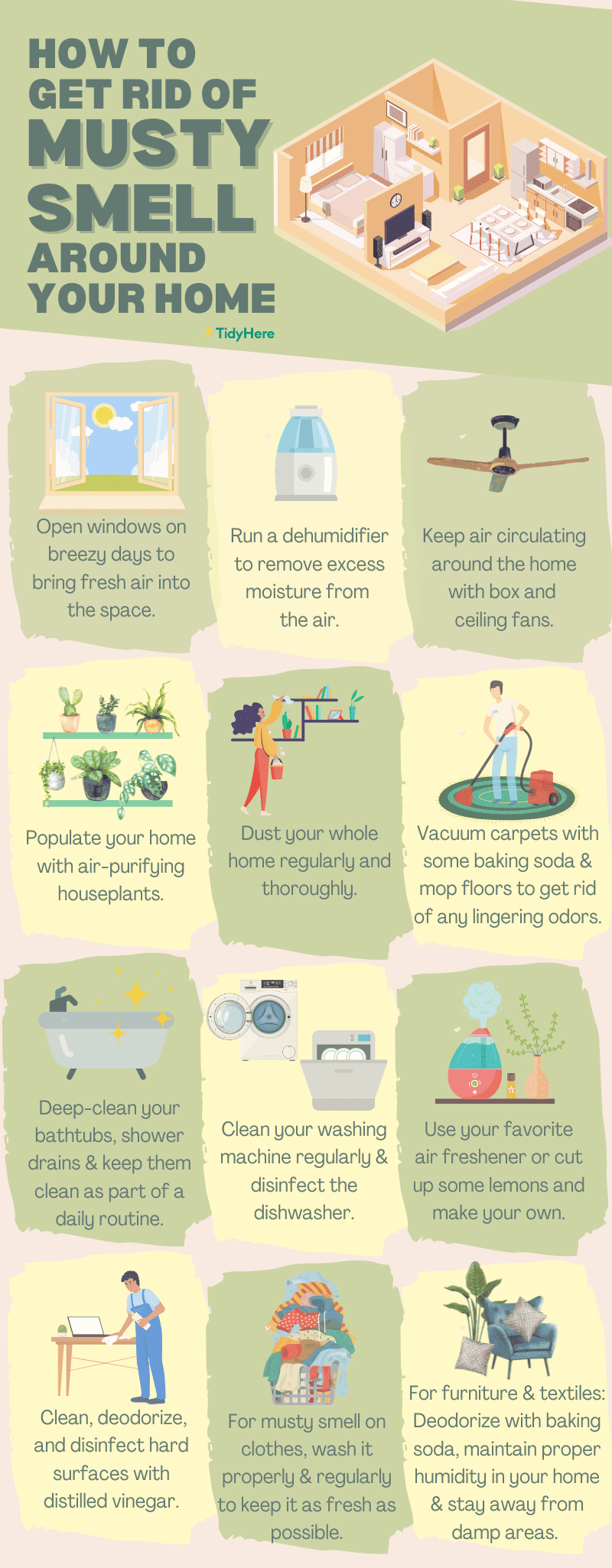
Credit: tidyhere.com
Practical Tips For Preventing Musty Smells
Prevention saves time and stress. Here’s how to keep your home fresh year-round:
- Keep humidity low: Use dehumidifiers in basements and bathrooms.
- Fix leaks fast: Do regular checks of pipes, roofs, and windows.
- Ventilate: Open windows and use fans often.
- Clean regularly: Vacuum carpets and wash fabrics.
- Maintain HVAC: Change filters and have annual check-ups.
- Store items dry: Do not keep clothes or boxes in damp areas.
- Use odor absorbers: Place them in closets and storage rooms.
- Clear debris outside: Keep leaves, mulch, and plants away from the foundation.
Common Mistakes When Dealing With Musty Smells
People often make these errors, which can keep the smell around longer than needed:
- Masking the smell: Using air fresheners without fixing the cause only hides the problem.
- Ignoring small leaks: Even tiny leaks can cause big odors.
- Skipping deep cleaning: Not cleaning under furniture, behind appliances, or inside ducts misses hidden sources.
- Drying carpets poorly: After cleaning, not drying thoroughly leads to lingering mustiness.
- Not checking the HVAC: Many forget that air systems spread odors through the house.
:max_bytes(150000):strip_icc()/SourcesofMoldandMildewintheHome-ce806df0302340cf9305715533e7ccb4.jpg)
Credit: www.thespruce.com
When To Call A Professional
Sometimes, you cannot find or fix the musty smell yourself. Here are signs you need expert help:
- The smell persists after deep cleaning and repairs.
- You find water damage but cannot locate the source.
- Family members have ongoing allergy or asthma symptoms.
- You suspect hidden mold behind walls or under floors.
A qualified inspector uses tools like moisture meters, thermal cameras, and air tests. They find problems you might miss. It is worth the cost when your health or home value is at risk.
Real-life Examples
Let’s look at two real situations:
Case 1:
Maria noticed a musty smell each morning in her bedroom. She found no mold, but her windows had condensation and her closet walls felt damp. The problem was poor insulation and high humidity. Using a dehumidifier and adding weatherstripping fixed the issue.
Case 2:
John’s living room always smelled musty, especially when the air conditioner ran. He cleaned carpets and furniture, but it did not help. A technician checked his HVAC system and found wet insulation in the ducts. After removing the insulation and cleaning the ducts, the smell disappeared.
These examples show that solving musty odors often means looking beyond mold.
The Science Behind Musty Smells
Musty odors come from volatile organic compounds (VOCs) released by bacteria, fungi, or decaying organic material. Even without mold, bacteria and natural decay can make air smell stale. Moisture speeds up this process. That’s why bathrooms, basements, and old carpets are common sources.
A study from the Environmental Protection Agency found that keeping humidity below 60% reduces VOCs and musty smells. This is why controlling moisture is always the first step.
Myths About Musty Odors
Many homeowners believe myths that can waste time and money:
- Myth: Musty smells mean mold is always present.
- Fact: Many things can smell musty without mold.
- Myth: Air fresheners remove musty smells.
- Fact: They only cover up the odor, not remove the source.
- Myth: If you don’t see water, there’s no leak.
- Fact: Hidden leaks are common and hard to spot.
- Myth: Old houses always smell musty.
- Fact: Modern cleaning and ventilation can keep any home fresh.
How Often Should You Check For Musty Odors?
Regular checks are smart. Here’s a simple schedule:
- Monthly: Inspect under sinks, around windows, and in basements for moisture.
- Every 3 months: Change HVAC filters, clean behind appliances, and vacuum carpets.
- Twice a year: Inspect the roof, gutters, and foundation for leaks.
Staying proactive keeps musty smells away for good.
The Role Of Professional Testing
If you have tried everything and the smell remains, professional testing can help. Experts use:
- Moisture meters: Detect hidden dampness in walls or floors.
- Thermal cameras: Find cold, wet areas invisible to the eye.
- Air quality tests: Measure VOCs or hidden mold spores.
Professional testing gives clear answers and peace of mind. For more on indoor air quality testing, visit the EPA’s official site.
Frequently Asked Questions
What Causes A Musty Smell If There Is No Visible Mold?
A musty smell often comes from moisture, high humidity, old carpets, or stale air. Even without visible mold, water leaks, organic debris, and poor ventilation can create this odor.
Can Musty Smells Make You Sick If There Is No Mold?
Musty odors can cause mild irritation, headaches, or allergy symptoms, especially for sensitive people. Even without mold, it’s best to remove the cause for comfort and health.
How Do I Know If The Musty Smell Is Dangerous?
If the smell is strong, persistent, or comes with allergy symptoms, it could signal hidden water damage or mold. Call a professional if you cannot find or fix the source.
How Long Does It Take To Remove Musty Smells?
It depends on the cause. Simple cleaning and drying can work in a few days. If there are leaks or HVAC issues, it may take longer. Deep cleaning and fixing the source is key.
Is It Possible For New Homes To Develop Musty Odors?
Yes. New homes can have musty smells if there are leaks, poor ventilation, or construction debris. Always check for moisture and keep air moving.
A musty smell is annoying, but you do not have to live with it. By understanding all the non-mold causes and using these proven steps, you can breathe easier in a fresh, clean home. Don’t ignore musty odors—find the source, fix it, and enjoy peace of mind.