
Turning on a pool light might seem simple, but the process can vary depending on the type of light, pool setup, and safety requirements. Many pool owners find themselves unsure of where to start, especially when dealing with older pools, new smart lighting systems, or complex electrical panels.
Understanding the right steps is important not only for convenience but also for safety and the longevity of your pool lighting equipment.
This guide will walk you through every aspect of how to turn on a pool light, whether you’re working with classic halogen fixtures, modern LED systems, or even color-changing smart lights. You’ll learn what to check before flipping the switch, how to identify your type of system, and what to do when things don’t work as expected.
Along the way, you’ll pick up practical tips and avoid common mistakes that can damage your pool lighting or put your safety at risk.
Understanding Pool Light Types
Before you try to turn on your pool light, it’s useful to know what kind of light you have. Pool lighting technology has changed a lot over the years, and the process to operate them can differ.
1. Halogen Pool Lights
Halogen pool lights have been used for decades. They produce a bright white light and are usually found in older pools. These lights are typically wired to a standard wall switch or a time clock near the pool equipment area.
2. Led Pool Lights
LED pool lights are popular for their energy efficiency and long life. They use less electricity and can last up to 50,000 hours. Many LED lights offer multiple color options and can be controlled by remotes, wall switches, or smart systems.
3. Fiber Optic Pool Lights
Fiber optic lights are less common but offer safe, cool lighting. The light source is outside the pool, and the light travels through cables into the water. The control box is usually near the pool equipment.
4. Smart And Color-changing Lights
Modern pools may feature smart lighting systems. These can be controlled by mobile apps, voice assistants, or advanced pool control panels. They often allow for color changes, dimming, and preset lighting scenes.
5. Solar Pool Lights
Solar-powered pool lights are wireless and float on the pool surface or attach to the walls. They charge from the sun and turn on automatically at night, but some models have manual controls.
Key Insight
Knowing your pool light type is the first step. Controls, troubleshooting, and even safety requirements can change depending on the system. If you’re unsure, check your pool manual or look for labels on the light fixture or control box.
Safety Precautions Before Turning On Pool Lights
Water and electricity can be a dangerous mix if handled incorrectly. Taking the right safety steps is essential.
1. Check For Water In The Light Fixture
Before you turn on any pool light, make sure there’s no water inside the fixture. Water can cause short circuits or even electrocution. Cloudy water inside the lens or visible moisture is a warning sign.
2. Inspect Gfci Outlets And Breakers
Most pool lights are connected to a ground-fault circuit interrupter (GFCI). This device cuts power if it detects a problem. Test the GFCI by pressing the “Test” and “Reset” buttons. If the GFCI trips immediately, do not try to turn on the light.
3. Turn Off Power Before Inspection
If you need to look at the wiring or open any panels, always shut off the power at the breaker. Double-check with a voltage tester.
4. Avoid Wet Hands And Feet
Never operate electrical switches with wet hands or while standing in water. Dry yourself completely and wear rubber-soled shoes if possible.
5. Know Local Codes
Some areas require pool lights to be installed a certain way, with specific wiring and safety devices. If you’re unsure, consult a licensed electrician or your local building authority.
Non-Obvious Insight: Many pool light failures happen because the light was turned on when the fixture was not fully underwater. Some models use water as a coolant; running them dry can damage the light quickly.

Credit: www.youtube.com
Locating The Pool Light Switch
Finding the right switch is sometimes harder than expected, especially in older or custom pool setups.
1. Near The Pool Equipment
Most pool light switches are installed near the pump or filter area. Look for a weatherproof box on the wall with a toggle or rocker switch.
2. Inside The Home
Some pool lights are controlled from inside the house, especially if you have an indoor pool or an attached pool room. Check near the back door, garage, or utility room.
3. Control Panels
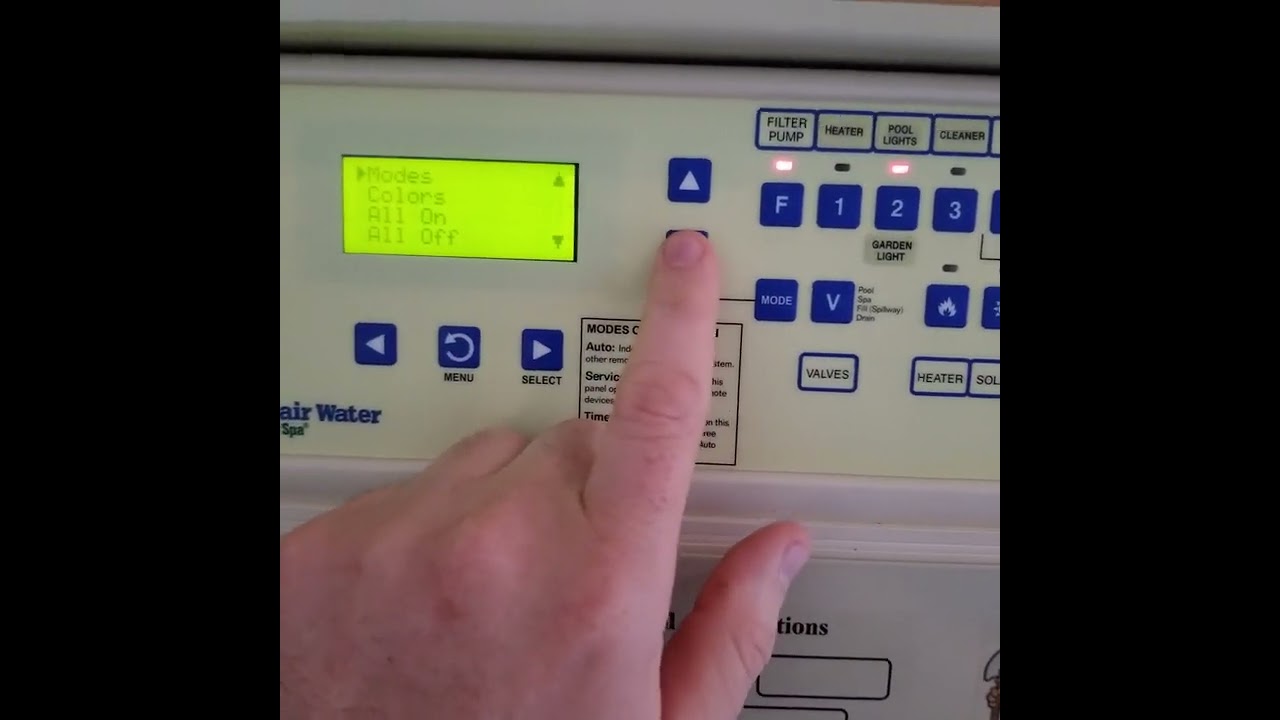
If your pool uses an automated control system (like Pentair, Hayward, or Jandy), the pool light may be activated from a digital panel. These panels often have labeled buttons for “Pool Light” or “Spa Light.”
4. Remote Controls
Wireless remotes are popular with LED and smart lights. If you have a remote, check that the batteries are working and that you’re within range.
5. Mobile Apps
Smart pools often use phone or tablet apps to control lights. Open the app, connect to your pool system, and look for the light controls.
Key Insight
If you can’t find the switch, trace the wiring from your pool equipment or look for documentation. Many pool owners miss hidden switches in breaker boxes or behind access doors.
Step-by-step: How To Turn On A Pool Light
Turning on a pool light is usually simple, but small differences matter. Here’s a clear process that covers most systems.
1. Confirm The Water Level
Make sure the water covers the light fixture fully. Running most pool lights above water can cause overheating.
2. Check Power And Gfci
Ensure the GFCI outlet or breaker is in the ON position and has not tripped. Reset if needed.
3. Find The Correct Switch Or Control
Locate the switch, remote, or app control that operates your specific pool light.
4. Flip The Switch Or Press The Button
Turn on the light using the control method. For wall switches, move the toggle to ON. For remotes or apps, press the light icon or labeled button.
5. Observe The Light
The light should come on immediately. If it flickers, fails to light, or turns off quickly, shut it down and check for problems.
6. Adjust Color Or Brightness (if Available)
If you have LED or smart lights, you may be able to change colors, cycle through modes, or dim the brightness. Use your remote, panel, or app to experiment with settings.
7. Turn Off The Light When Not Needed
To save energy and extend bulb life, turn off pool lights when you’re finished swimming.
Non-obvious Insight
Some LED pool lights change color by cycling power. For example, turning the switch OFF and ON quickly can move to the next color mode. Check your light’s manual for details.
Troubleshooting: When The Pool Light Won’t Turn On
Sometimes, you’ll follow all the steps and the light still won’t work. Here’s how to diagnose common problems.
1. Gfci Or Breaker Tripped
If the GFCI outlet or breaker keeps tripping, there may be moisture in the fixture or a wiring fault. Let a professional handle repairs.
2. Burned-out Bulb
Most halogen bulbs and older LEDs eventually burn out. If the pool light is old and not turning on, the bulb may need replacement.
3. Loose Or Corroded Wiring
Wires can become loose or corroded, especially in humid pool environments. Look for rust or green corrosion on connections.
4. Broken Switch Or Remote
A faulty switch or dead remote battery can prevent the light from turning on. Test the switch or replace the remote batteries.
5. Faulty Transformer
Low-voltage pool lights use a transformer to reduce voltage. If the transformer fails, the light will not receive power.
6. Smart System Not Connected
If you’re using a smart lighting system, check your Wi-Fi connection and update the app if needed.
7. Fixture Not Fully Submerged
Many pool lights will overheat and shut down if the water level is too low. Ensure the water is above the fixture.
8. Incorrect Timer Settings
Some pools use automated timers to control lights. Double-check the timer’s schedule and override the program if needed.
Example
A common scenario: You turn on your pool light, but nothing happens. You check the GFCI outlet and see it’s tripped. After resetting, the light works for a second, then trips again. This often means water has entered the light fixture—a serious safety issue. Do not keep trying. Call a qualified electrician.
Comparing Pool Light Control Methods
Different pools use different control systems. Here’s a comparison to help you understand the main differences.
| Control Method | Ease of Use | Features | Common Problems |
|---|---|---|---|
| Wall Switch | Very Easy | On/Off Only | Wiring Issues, Switch Failure |
| Remote Control | Easy | On/Off, Color Change | Dead Batteries, Signal Loss |
| Control Panel | Moderate | Multiple Lights, Timers | Programming Errors |
| Mobile App | Easy to Moderate | Color, Scenes, Scheduling | Wi-Fi Issues, App Bugs |
| Timer | Easy | Automatic On/Off | Incorrect Time Settings |
Pool Light Replacement: When And How
If your pool light fails and troubleshooting doesn’t solve it, replacement may be needed.
1. Choose The Right Bulb
Match the wattage, voltage, and size of your current fixture. Switching from halogen to LED can save energy and add features, but make sure the new bulb fits your housing.
2. Turn Off All Power
Before replacing a bulb, shut off power at the breaker and confirm with a voltage tester.
3. Remove The Fixture
Most pool light fixtures are held by a single screw at the top. Remove the screw, gently pull the fixture out, and bring it to the pool deck.
4. Replace The Bulb
Open the fixture, replace the bulb, and check the gasket (O-ring) for cracks. A damaged gasket can let water in.
5. Test Before Reinstalling
Reconnect the fixture out of the water, turn on the power briefly, and make sure the bulb lights up.
6. Reinstall And Submerge
Replace the fixture, tighten the screw, and ensure the cord is neatly coiled. Fully submerge the fixture before turning it on.
Key Insight
Never use household bulbs for pool lights. Pool bulbs are designed to handle water pressure and heat. Using the wrong bulb can cause leaks or failures.
Upgrading To Led Or Smart Pool Lights
Many pool owners upgrade to LED or smart lights for better color, energy savings, and control options.
Benefits
- Longer lifespan: LEDs can last 5–10 times longer than halogen.
- Lower energy use: LEDs use up to 85% less energy.
- More features: Color, dimming, and automation.
- Cooler operation: Less heat, reducing fixture damage.
Upgrade Considerations
- Some old fixtures cannot accept LED bulbs. You may need a new housing.
- Smart lights usually require Wi-Fi and a compatible control system.
- Upgrading may require rewiring or new transformers.
Example
A pool owner with a 400-watt halogen light can upgrade to a 40-watt LED. The light will be just as bright, use less power, and offer color-changing features.
Pool Light Automation And Scheduling
Automating your pool light makes pool management easier and saves energy.
1. Using Timers
Timers can be mechanical (dial type) or digital. Set the timer to turn the light on at sunset and off at a set time.
2. Smart Control Systems
Advanced pools use smart controllers that sync with mobile apps. Schedule lights for parties, holidays, or regular swimming times.
3. Integration With Home Automation
Some pool lights connect with home automation systems like Alexa or Google Home. You can use voice commands or routines to control your pool light.
4. Energy Savings
Automation prevents lights from staying on all night. This saves electricity and extends bulb life.
5. Example Schedules
- On at 7: 00 PM, Off at 10:00 PM (Weekdays)
- On at sunset, Off at midnight (Weekends)
- Party mode with color cycling on demand
Pool Light Maintenance Tips
Regular maintenance keeps your pool lighting safe and bright.
1. Inspect Gaskets Regularly
The gasket seals the fixture against water. Replace it at least every 2–3 years or if you see cracks.
2. Clean The Lens
A dirty lens reduces light output. Wipe with a soft cloth and mild pool-safe cleaner.
3. Check Wiring Annually
Look for corrosion or loose wires in the control box and at the fixture connection.
4. Monitor For Flickering Or Dimming
If the light flickers or seems dim, check for water inside the fixture or a failing bulb.
5. Avoid Running Dry
Never turn on the light if it is not fully underwater.
Comparing Halogen Vs. Led Pool Lights
If you’re deciding between halogen and LED, here’s a direct comparison.
| Feature | Halogen | LED |
|---|---|---|
| Energy Use | High | Low |
| Lifespan | 1,000-3,000 hours | 20,000-50,000 hours |
| Color Options | White only | Multiple colors |
| Cost | Lower upfront | Higher upfront, lower over time |
| Heat Output | High | Low |
Pool Light Safety: Myths And Facts
Myth: Any Waterproof Bulb Can Be Used In A Pool.
Fact: Only pool-rated bulbs and fixtures are safe. Household waterproof bulbs are not rated for pool pressure or chemicals.
Myth: Pool Lights Are Low Voltage And Cannot Cause Harm.
Fact: Even low-voltage systems can cause electric shock if installed or maintained incorrectly.
Myth: Led Lights Never Need Replacement.
Fact: LEDs last longer, but they can still fail, especially if water leaks into the fixture.
Myth: Solar Pool Lights Are As Bright As Wired Lights.
Fact: Solar lights are good for ambiance but not as bright as halogen or wired LED fixtures.

Credit: www.reddit.com
Environmental Impact: Choosing Energy-efficient Pool Lighting
Pool lighting uses energy, but your choices can make a difference.
- Switching to LED can cut lighting energy use by up to 80%.
- Using timers or automation reduces wasted electricity.
- Solar pool lights use renewable energy but offer less brightness.
Non-Obvious Insight: If you run a 400-watt halogen pool light for 4 hours a night, it uses about 48 kWh per month. At $0.15 per kWh, that’s $7.20 per month. An equivalent LED uses less than $1.50 worth of power monthly.
When To Call A Professional
Some problems need expert help.
- Water inside the fixture
- GFCI keeps tripping
- Repeated bulb failures
- Upgrading to smart controls or LED systems
- Unclear wiring or electrical codes
A licensed pool electrician can fix problems safely and make sure your lighting meets local regulations.
Real-world Examples
Example 1: Halogen To Led Upgrade
A homeowner with an old halogen pool light noticed the fixture was hot and the bulb failed often. After switching to an LED fixture, the pool was brighter, stayed cooler, and electricity costs dropped by 70%.
Example 2: Smart Lighting For Parties
A family installed smart color-changing lights. Now, they set the pool to “blue” for relaxing evenings and “rainbow” mode for parties, all from their phones.
Example 3: Safety Issue Detected
A pool owner noticed their light flickered after rain. An electrician found water inside the fixture. The gasket was replaced, preventing a potential shock hazard.
Frequently Asked Questions
What Should I Do If My Pool Light Keeps Tripping The Gfci?
If your pool light causes the GFCI to trip, it usually means there’s moisture inside the fixture or a wiring problem. Do not keep resetting the GFCI. Turn off all power and call a licensed electrician right away for inspection and repair.
Can I Turn On The Pool Light If The Water Is Below The Fixture?
No, most pool lights require full water coverage for cooling. Running the light while exposed can cause overheating, damage, or even cracking of the fixture.
How Do I Change The Color On My Led Pool Light?
For many LED pool lights, cycling the power (turning the switch off and on quickly) changes the color. Some models use a remote or mobile app. Check your manufacturer’s manual for exact instructions.
Is It Safe To Replace A Pool Light Bulb Myself?
Replacing a pool light bulb is possible for many owners, but only if you’re comfortable turning off power and working with water-safe fixtures. Always shut off the breaker and use the correct replacement bulb. If you see water in the fixture or are unsure, call a professional.
Where Can I Find Reliable Information About Pool Lighting Safety?
Good sources include your pool manufacturer’s website, local building codes, and reputable organizations like the National Electric Code (NEC). For more details, visit the U.S. Consumer Product Safety Commission.
Turning on your pool light should be easy and safe with the right knowledge. By understanding your pool lighting system, following safety steps, and knowing when to call for help, you can enjoy bright, beautiful nights by the pool with confidence.
Credit: www.youtube.com