
Keeping your pool clean is not just about having clear water. It’s about safety, comfort, and even saving money on repairs. Many pool owners struggle with dirt, leaves, and debris, especially if they don’t have a robotic cleaner or advanced filtration system. But did you know you can use your pool skimmer to vacuum your pool? This method is both affordable and effective—if you do it right. In this guide, you’ll learn exactly how to vacuum a pool using a skimmer. You’ll get step-by-step instructions, practical tips, and answers to common problems most beginners never expect. Let’s make your pool cleaning routine easier, smarter, and more successful.
Understanding The Pool Skimmer
Before you start, it’s important to understand what a pool skimmer does. The skimmer is a rectangular or round opening on the pool’s side. It pulls in water and debris from the surface before they sink to the bottom. Most pools have at least one skimmer, connected to the pool’s filtration system.
When you vacuum with the skimmer, you use the pool’s suction power to remove dirt, sand, leaves, and even algae from the pool floor. This method is reliable for both above-ground and in-ground pools.
How The Skimmer Connects To The Vacuum
Your skimmer has a suction line that leads to the pool pump. When you connect a vacuum hose to the skimmer, you use this suction to pull debris directly from the pool floor into the filter. The skimmer acts as the entry point for the vacuum’s suction.
Tip: Always check your pool’s manual or manufacturer’s website for specific instructions about your skimmer model. Some pools have unique designs.
Essential Equipment For Pool Vacuuming
To vacuum your pool using the skimmer, you need a few basic tools. Here’s what you’ll need:
- Telescopic pole: Extends your reach across the pool.
- Vacuum head: Attaches to the pole and sits on the pool floor.
- Vacuum hose: Flexible hose that connects the vacuum head to the skimmer.
- Skim-vac plate (optional): A flat disc that fits over the skimmer basket, allowing you to connect the hose without removing the basket.
- Pool brush: For loosening stubborn dirt before vacuuming.
- Pool net: To remove large debris like leaves or twigs before vacuuming.
Pro insight: Many beginners skip the skim-vac plate because they don’t know what it is. This simple tool prevents clogging by keeping the skimmer basket in place while you vacuum.
Here is a quick comparison between vacuuming with and without a skim-vac plate:
| With Skim-Vac Plate | Without Skim-Vac Plate |
|---|---|
| Skimmer basket stays in place | Skimmer basket removed |
| Reduces risk of clogging | Debris can enter pipes directly |
| Safer for beginners | Needs more attention to avoid damage |
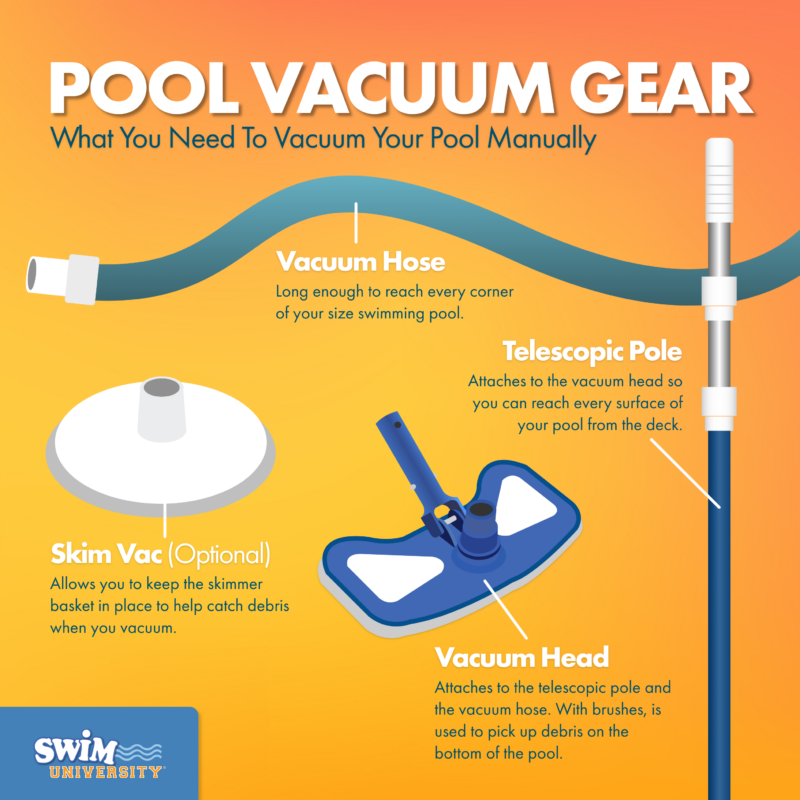
Credit: www.swimuniversity.com
Preparing Your Pool For Vacuuming
Preparation is key to efficient pool vacuuming. Here’s how to get your pool ready:
Remove Large Debris
Use a pool net to scoop out large leaves, twigs, or insects. If you skip this step, these items can block your skimmer or vacuum hose.
Brush The Pool Walls
Brush the sides and steps of your pool with a pool brush. This loosens algae and dirt, making them easier to vacuum.
Check Water Level
Make sure the water level is at least halfway up the skimmer opening. If the water is too low, the pump may suck in air, which can cause damage.
Turn Off The Heater
If your pool has a heater, turn it off before vacuuming. This prevents any hot water from entering the pump if the water level drops.
Insider tip: Many people forget to check for air leaks in the vacuum hose. Before starting, inspect your hose for cracks or holes. Even small leaks can reduce suction and leave dirt behind.
Setting Up Your Pool Vacuum System
Getting your equipment set up properly makes the entire process smoother. Here’s a step-by-step guide:
1. Assemble The Vacuum
- Attach the vacuum head to the telescopic pole.
- Connect one end of the vacuum hose to the vacuum head.
2. Fill The Hose With Water
- Submerge the vacuum head and hose completely in the pool.
- Hold the free end of the hose against a return jet (where water comes back into the pool). This will force water through the hose, pushing out all the air.
- Wait until you see bubbles stop coming out of the vacuum head. This means the hose is full of water and no air remains.
3. Attach To The Skimmer
There are two ways to connect the hose to the skimmer:
- With a skim-vac plate: Place the plate over the skimmer basket, then attach the hose to the plate.
- Without a skim-vac plate: Remove the skimmer basket, then insert the hose directly into the suction hole at the bottom of the skimmer.
Warning: If you don’t use a basket or plate, debris can get sucked into your pool’s pipes. This can cause blockages and expensive repairs.
Choosing The Right Vacuuming Technique
Not all pools are the same, and not all dirt is equal. Here’s how to choose the best vacuuming method:
Manual Vacuuming
This is the most common method. You move the vacuum head slowly across the pool floor, covering all areas.
Best for: General cleaning, small pools, and spot cleaning.
Automatic Suction Cleaners
Some automatic cleaners can connect to the skimmer. They crawl across the pool floor on their own.
Best for: Busy pool owners, larger pools, or those who want less manual work.
When To Use Each Method
Manual vacuuming is better for deep cleaning or when there is a lot of debris. Automatic cleaners are great for regular maintenance but may miss corners or steps.
| Manual Vacuuming | Automatic Cleaner |
|---|---|
| More control | Less effort |
| Great for stubborn dirt | Good for daily/weekly cleaning |
| Needs more time | Can miss spots |
Step-by-step Guide: How To Vacuum A Pool Using Skimmer
Now let’s dive into the main steps. Follow these instructions to vacuum your pool efficiently:
1. Turn Off The Pool Pump
This sounds strange, but you need to turn off the pump before attaching any equipment. This prevents air from entering the system.
2. Set The Filter Valve
If you have a multiport filter valve, set it to “Filter” for routine cleaning. If you have a lot of debris or algae, set it to “Waste” to send dirty water directly out of the pool (you’ll need to refill water after).
3. Connect The Vacuum
- Attach the vacuum head to the pole and hose.
- Fill the hose with water (as described earlier).
- Insert the hose end into the skimmer suction port (with or without a skim-vac plate).
4. Turn The Pump Back On
Turn the pool pump on. You should feel suction at the vacuum head.
5. Vacuum Slowly And Steadily
Move the vacuum head slowly across the pool floor. Use long, even strokes. If you go too fast, you’ll stir up dirt and make the water cloudy.
Expert advice: Overlapping strokes helps ensure you don’t miss spots. Imagine you’re mowing a lawn—cover each area carefully.
6. Watch The Pressure Gauge
Keep an eye on your pool filter’s pressure gauge. If the pressure rises sharply, your filter may be clogged. Stop and backwash the filter if needed.
7. Empty The Skimmer Basket Frequently
Check the skimmer basket often. If it fills with debris, suction will drop, and cleaning will be less effective.
8. Finish And Clean Up
- Turn off the pump.
- Remove the vacuum hose and head from the pool.
- Remove and clean the skimmer basket.
- Backwash or rinse your pool filter if you vacuumed a lot of dirt.
Pro insight: If you notice air bubbles coming from the return jets while vacuuming, you may have a loose hose connection or a leak. Tighten all connections and check for cracks.

Credit: www.youtube.com
Handling Common Pool Vacuuming Problems
Even with the best setup, things can go wrong. Here’s how to fix some frequent issues:
Air In The Vacuum Hose
If you see bubbles or lose suction, air has entered the hose. Disconnect, refill the hose with water, and reconnect.
Weak Suction
Check for blockages in the hose, skimmer basket, or filter. Also, make sure the pool water level is high enough.
Pool Water Turns Cloudy
This happens if you vacuum too fast or if there’s lots of fine dirt. Wait for debris to settle, then vacuum again more slowly.
Vacuum Head Sticks To The Pool Floor
This means your pump is too strong or your vacuum head is for a different surface type. Try opening the main drain slightly to reduce suction.
Bonus tip: If your pool has a vinyl liner, always use a vacuum head made for vinyl. Hard wheels can tear the liner.
How Often Should You Vacuum Your Pool?
Vacuuming frequency depends on the pool’s location, usage, and weather:
- Weekly: Most pools need vacuuming once a week.
- After storms: Heavy rain or wind can blow in extra debris.
- After parties: More swimmers mean more dirt and sunscreen in the water.
- When you see algae: Vacuum as soon as you notice green or brown patches.
Stat: According to the Pool & Hot Tub Alliance, regular vacuuming can reduce chemical use by up to 30%. Clean pools need fewer shock treatments and less chlorine.

Credit: www.youtube.com
Skimmer Maintenance For Best Results
Taking care of your skimmer keeps your vacuuming effective and extends the life of your pool equipment.
Clean The Skimmer Basket
Remove and empty the basket at least once a week, or more often during heavy use.
Inspect The Skimmer Weir
The weir is the floating flap at the skimmer mouth. Make sure it moves freely. This part helps trap debris and prevents it from floating back into the pool.
Check For Cracks
Inspect the skimmer body and lid for any cracks. Even small cracks can leak water and reduce suction.
Non-obvious insight: A cracked skimmer lid can be dangerous. If someone steps on it, it can break and cause injury. Always replace cracked lids immediately.
The Science Behind Skimmer Vacuuming
Vacuuming through the skimmer uses basic principles of water flow and filtration. Here’s how it works:
- The pool pump creates suction at the skimmer.
- Water (and debris) is pulled through the vacuum hose into the skimmer.
- Debris is caught in the skimmer basket (or filter).
- Clean water returns to the pool through the filter system.
Fact: Most pool pumps move water at 40-60 gallons per minute. That’s enough to clean a standard 24-foot pool in about 1-2 hours, depending on debris.
Expert note: If your pool uses a cartridge filter, clean it after every vacuuming session. Sand and DE filters should be backwashed as needed.
Advanced Tips For Efficient Pool Vacuuming
Once you know the basics, these advanced tips can save you time and improve results:
Use A Leaf Canister
If your pool gets lots of leaves, add a leaf canister between the vacuum hose and the skimmer. This traps leaves before they reach the basket.
Adjust Suction For Delicate Surfaces
If you have a painted or vinyl pool, lower the suction slightly to avoid damaging the surface.
Pre-treat Algae
If you’re fighting algae, brush and treat with algaecide before vacuuming. This makes removal much easier and prevents the filter from clogging.
Vacuum To Waste For Extreme Dirt
If your pool is very dirty (after a storm or algae bloom), set the filter valve to “Waste. ” This sends dirty water out of the pool, not through the filter. Remember to refill the pool afterward.
Important: Always supervise children or pets around the pool while vacuuming. Hoses and poles can be tripping hazards.
Comparing Skimmer Vacuuming To Other Methods
How does vacuuming with a skimmer stack up against other pool cleaning methods? Here’s a direct comparison:
| Method | Cost | Effort | Effectiveness | Maintenance |
|---|---|---|---|---|
| Skimmer Vacuuming | Low | Medium | High | Medium |
| Automatic Cleaner | Medium to High | Low | Medium | Low |
| Robotic Cleaner | High | Very Low | High | Low |
Insight: For most pool owners, skimmer vacuuming gives the best balance of cost and effectiveness. Robotic cleaners are easier but cost much more.
Pool Water Chemistry After Vacuuming
Vacuuming removes dirt, but it can also affect your pool’s chemical balance. Here’s what you need to know:
Test Your Water
After vacuuming, test your pool water for:
- Chlorine levels
- PH
- Alkalinity
Vacuuming can stir up fine particles, causing temporary cloudiness. Adjust chemicals as needed to restore clarity.
Add Water If Needed
If you vacuumed to waste, add fresh water and retest chemicals. New water can dilute chlorine and change pH.
Pro tip: Always wait at least 1-2 hours after vacuuming before adding chemicals. This lets the water circulate and debris settle.
Safety Precautions When Using The Skimmer
Vacuuming a pool is safe if you follow a few simple rules:
- Never use electrical tools near the pool.
- Make sure all hose connections are tight to avoid leaks.
- Do not leave equipment in the pool after cleaning.
- Store chemicals and equipment out of reach of children.
Stat: The U.S. Consumer Product Safety Commission reports that most pool accidents happen due to unattended equipment or slippery decks. Always clean up after vacuuming.
Mistakes To Avoid When Vacuuming A Pool With Skimmer
Even experienced pool owners make errors. Here are common mistakes and how to avoid them:
- Skipping the air purge: Not filling the hose with water before connecting causes air to enter the pump, leading to loss of suction.
- Vacuuming too fast: This stirs up debris, making water cloudy.
- Not cleaning the basket: A full skimmer basket reduces suction and can damage the pump.
- Ignoring suction loss: Weak suction often means a blocked hose or basket.
- Vacuuming with the wrong filter setting: Use “Waste” for very dirty pools, and “Filter” for regular cleaning.
- Leaving the vacuum in the sun: Pool vacuum heads and hoses degrade faster in sunlight.
Non-obvious insight: Pool hoses can become brittle if left in the sun. Always store them in a shaded area when not in use.
When To Call A Professional
Most pool owners can handle skimmer vacuuming themselves. But if you notice these issues, get professional help:
- Suction is always weak, even after cleaning.
- There are leaks around the skimmer or pump.
- The pool has large amounts of algae or black stains that don’t brush off.
- Equipment makes loud noises or vibrates heavily.
Resource: For more on pool maintenance and safety, see the CDC Healthy Swimming website.
Frequently Asked Questions
What Is The Difference Between Vacuuming To “filter” And “waste”?
Vacuuming to filter means debris is trapped in the pool filter, and the clean water returns to the pool. Use this for light cleaning. Vacuuming to waste sends dirty water out of the pool, bypassing the filter. Use “waste” for heavy debris or algae, but remember to add water afterward.
Can I Vacuum My Pool If I Have A Sand Filter?
Yes, you can. Set your sand filter to “Filter” for normal cleaning or “Waste” for heavy debris. After vacuuming, backwash your sand filter to remove trapped dirt.
Why Does My Vacuum Lose Suction After A Few Minutes?
This usually means the skimmer basket or filter is full, or there is an air leak in the hose. Check and clean the basket and hose, and look for cracks or loose connections.
How Do I Remove Fine Silt That Passes Through The Filter?
For fine silt, use a pool vacuum with a fine mesh bag or set your filter to “Waste. ” You can also use a pool clarifier to bind small particles so the filter can catch them.
Is It Safe To Vacuum A Pool With Children Swimming?
No, you should not vacuum the pool while people are swimming. The hose and pole can be hazardous, and swimmers may stir up dirt, making vacuuming less effective.
Keeping your pool clean doesn’t have to be a chore. With the right method and a little practice, vacuuming with your skimmer can give you crystal-clear water and a safer swimming environment. Take your time, follow the steps above, and enjoy a sparkling pool all season long.