
Many people love to relax and swim in pools, but not everyone knows what keeps pool water clean and safe. When you jump into a pool, do you ever wonder if it’s saltwater or chlorine? At first glance, most pools look the same. However, the way the water is sanitized can be very different. Knowing the difference is important for your skin, your health, and how you care for the pool.
Understanding if a pool uses saltwater or traditional chlorine helps you make better choices. Maybe you want to avoid strong smells, or your skin reacts to chemicals. Maybe you’re thinking of building your own pool, or you just want to keep your family safe. In this guide, you’ll learn clear, practical methods to tell the difference between saltwater and chlorine pools. We’ll look at what signs to notice, how each system works, and even what tools you can use to test the water. By the end, you’ll feel confident identifying any pool, even if you’re just visiting for a swim.
The Basics: Saltwater Vs. Chlorine Pools
Before you can spot the difference, you need to understand how each pool type works. Both systems aim to keep water clean by killing bacteria and algae. But the way they do this is not the same.
Chlorine pools use liquid chlorine, chlorine tablets, or granular chlorine. These are added directly to the water. The chlorine dissolves and works to sanitize the pool.
Saltwater pools use a special device called a salt chlorine generator. You add salt to the pool water, which passes through the generator. The device converts salt (sodium chloride) into chlorine through a process called electrolysis. This means saltwater pools still use chlorine, but it is made from salt right in the water, not added from outside.
It’s easy to think saltwater pools are chlorine-free, but that’s not true. They just produce chlorine in a gentler way. This difference leads to changes in how the water feels, smells, and affects your body.
Why Telling The Difference Matters
You might ask, “Why do I need to know if my pool is saltwater or chlorine?” It matters for several reasons:
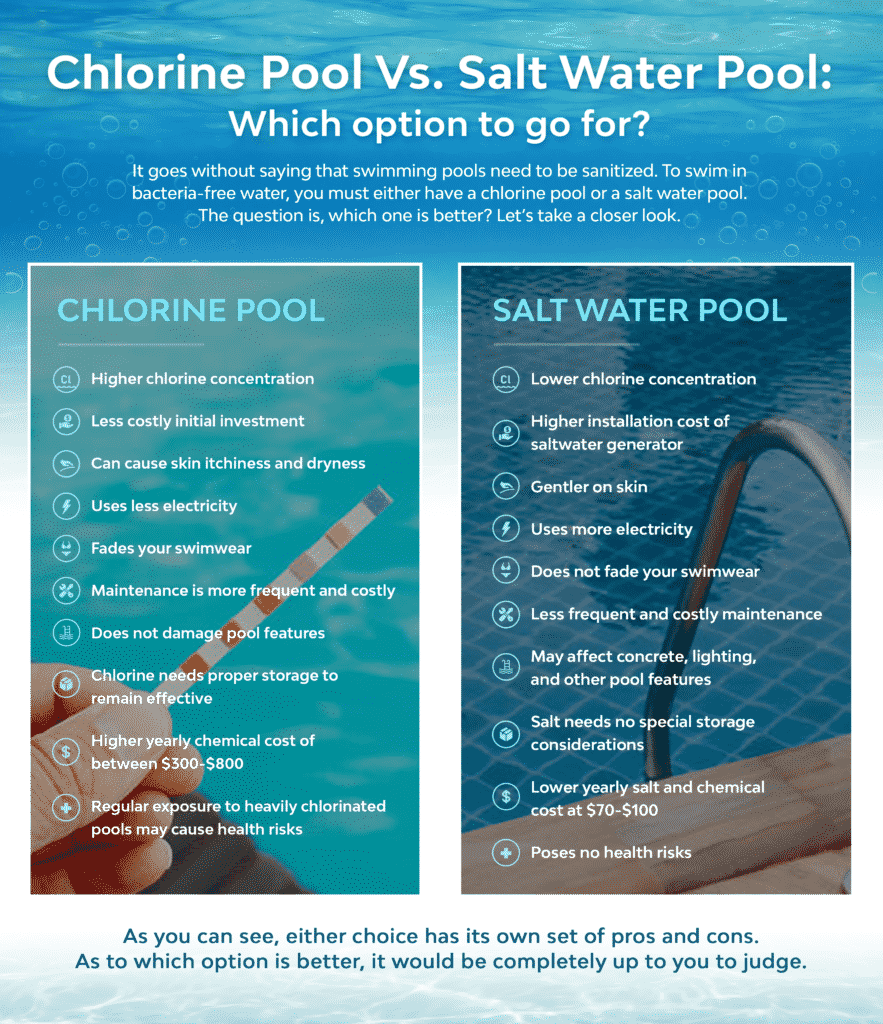
- Skin and eye comfort: Saltwater pools are usually milder. If you have sensitive skin, you might prefer saltwater.
- Pool care: Maintenance is different. If you help care for a pool, you need to know how to add chemicals properly.
- Health: Some people have allergies or reactions to chlorine.
- Cost: Saltwater pools can be more expensive to set up but cheaper to run.
Knowing what kind of pool you’re swimming in helps you make smart choices.
Credit: katchakid.com
Visual Clues: What To Look For Around The Pool
Sometimes, you can tell what kind of pool it is just by looking at the equipment and surroundings.
Inspect The Pool Equipment
The easiest way to identify a saltwater pool is by finding the salt chlorine generator. This device is usually installed near the pool’s filter and pump. It’s a small box or tube with wires attached, often labeled “chlorinator” or “salt cell.” If you see this, the pool is almost certainly saltwater.
In contrast, chlorine pools often have:
- A floating chlorine dispenser (looks like a small plastic canister)
- Large buckets or containers of chlorine tablets nearby
- A chemical feeder labeled for chlorine
Poolside Storage And Supplies
Look for chemical storage. If you see bags of pool salt (often labeled “pool-grade salt” or “sodium chloride”), you’re likely near a saltwater pool. If you spot containers marked “chlorine tablets,” “liquid chlorine,” or “calcium hypochlorite,” it’s a standard chlorine pool.
Waterline And Pool Surface
Salt can leave a faint white residue or scaling along the waterline in a saltwater pool, especially if the water isn’t perfectly balanced. Chlorine pools rarely have this kind of salt scale, but may show faded pool liners or rough spots caused by the chemicals.
Pool Deck Material
Over time, saltwater can cause more corrosion to metal objects near the pool, like handrails or pool ladders. You might notice small rust spots or pitting on metal surfaces. Chlorine pools can also cause corrosion, but usually less quickly than saltwater.
Sensory Tests: Using Your Senses
You don’t need fancy tools to get clues. Your senses – smell, taste, touch, and even sight – can help you decide if you’re in a saltwater or chlorine pool.
Smell
Chlorine pools often have a strong chemical smell. This isn’t just chlorine; it’s actually chloramines, which form when chlorine combines with sweat, oils, and other stuff in the pool. Saltwater pools usually have a much softer, less harsh smell because they keep chlorine levels lower and more stable.
Taste
If a tiny bit of water gets in your mouth, saltwater pools have a mild, slightly salty taste, but not as strong as the ocean. It’s usually less than 1/10th the salt of seawater. Chlorine pools have almost no taste, or sometimes a faint chemical taste, but not salty.
Never drink pool water on purpose. A quick touch to the tongue is enough for a test.
Feel
Saltwater pools feel softer and silkier on your skin. Many swimmers notice their skin feels less dry and itchy after swimming. Chlorine pools can make skin feel tight, dry, or even a little sticky from the chemicals.
Eyes And Hair
Saltwater pools are less likely to make your eyes red or irritate them. Your hair may also feel less brittle after swimming in saltwater. If your eyes sting or your hair feels straw-like, you’re probably in a chlorine pool.
Water Testing: Simple Methods For Accurate Results
If you want to be sure, a quick water test gives a clear answer. You can do this with inexpensive kits from pool stores or even with home supplies.
Using Pool Test Strips
Test strips are the fastest way to check pool water. Here’s how:
- Dip the test strip into the pool, following the instructions.
- Wait for the colors to change.
- Compare the strip to the chart provided.
Look at the salt (sodium chloride) level:
- Saltwater pools: 2,500 to 4,000 ppm (parts per million)
- Chlorine pools: Usually under 500 ppm
Look at the free chlorine level:
- Both pool types should have some chlorine, usually 1–3 ppm.
Using A Digital Salt Meter
For a more precise measurement, use a digital salt meter. You simply dip the probe into the water and read the salt level. If the reading is over 2,500 ppm, it’s a saltwater pool.
Home Kitchen Test (for Salt)
If you have no pool test kit, you can try this basic kitchen method:
- Fill a clear glass with pool water.
- Place the glass in a sunny spot and let the water evaporate completely (may take a day).
- Look for a thin white residue at the bottom. If it’s there, the pool likely uses saltwater.
This method is not as accurate as test strips or meters, but it can give you a clue.
Pool Maintenance: Clues In How The Pool Is Cared For
How a pool is cleaned and maintained can also reveal what type it is.
Chemical Addition
Saltwater pools require adding pool salt a few times a year, and sometimes a stabilizer. Chlorine is not usually added directly.
Chlorine pools need regular additions of chlorine tablets, sticks, or liquid chlorine – often weekly or even daily.
Cleaning Routine
Saltwater pools often need less day-to-day chemical management. The salt generator keeps chlorine levels steady. Owners may check salt and pH levels every week or two.
Chlorine pools require more attention, adjusting chemicals to keep the water safe.
Pool Service Records
If you can see service logs or records, they may list “salt cell cleaning” or “salt addition” for saltwater pools. Chlorine pools will note when chlorine is added or adjusted.
Credit: exploreindustries.com
Equipment Differences: How To Spot Them
The machinery used to keep pool water clean looks different for each system. Here’s how to check:
| Feature | Saltwater Pool | Chlorine Pool |
|---|---|---|
| Chlorine Generator | Present (salt cell or control box) | Not present |
| Chlorine Feeders | Not present | Usually present (inline feeder or floater) |
| Salt Storage | Bags of pool-grade salt | Not used |
| Chlorine Chemical Storage | Rarely seen | Often seen (tablets, liquid, powder) |
If you’re allowed to look at the pool’s pump area, the presence of a salt cell or generator is a giveaway for saltwater. Chlorine feeders or floating dispensers are signs of a chlorine pool.
Pool User Experience: What People Notice
Ask people who regularly use the pool. Swimmers often notice differences, even if they don’t know the science.
Comments About Comfort
People might say:
- “The water feels silky.” (Saltwater)
- “I don’t smell like chlorine when I leave.” (Saltwater)
- “My eyes don’t hurt after swimming.” (Saltwater)
- “My hair gets really dry.” (Chlorine)
- “The pool smells really strong.” (Chlorine)
Swimsuit And Towel Wear
Saltwater pools tend to be gentler on swimwear and towels. Over time, chlorine pools can cause colors to fade faster and fabric to break down more quickly.
Skin And Health Reports
People with eczema, allergies, or sensitive skin often report fewer problems in saltwater pools.
Chemical Differences: What’s Really In The Water?
Even though both pool types use chlorine, there are important chemical differences.
Chlorine Levels
Saltwater pools usually have chlorine levels between 1–3 ppm, but these stay more stable. Chlorine pools can swing higher or lower, depending on how often chlorine is added.
Salt Concentration
Saltwater pools have 2,500–4,000 ppm of salt. The ocean has around 35,000 ppm. Chlorine pools have much less, often under 500 ppm.
Other Chemicals
Saltwater pools may need stabilizer (cyanuric acid), pH adjusters, or calcium hardness control, but less often. Chlorine pools often need extra chemicals to keep the water balanced.
Byproducts
Saltwater pools produce fewer chloramines (the compounds that cause strong smells and irritation) because the chlorine is made fresh and stays at a steady level. Chlorine pools can develop more chloramines if the water isn’t managed well.
Seasonal And Weather Clues
Environmental factors can also give you hints.
After Rain
Saltwater pools often need more salt added after heavy rain, because rainwater dilutes the salt. If you see someone adding salt after a storm, it’s probably a saltwater pool.
Winterizing
In cold climates, saltwater pool owners may remove the salt cell or cover it to protect it from freezing. Chlorine pools don’t have this equipment to winterize.
Cost And Installation Signs
If you’re thinking of building a pool or visiting a new one, the price and installation process can be a clue.
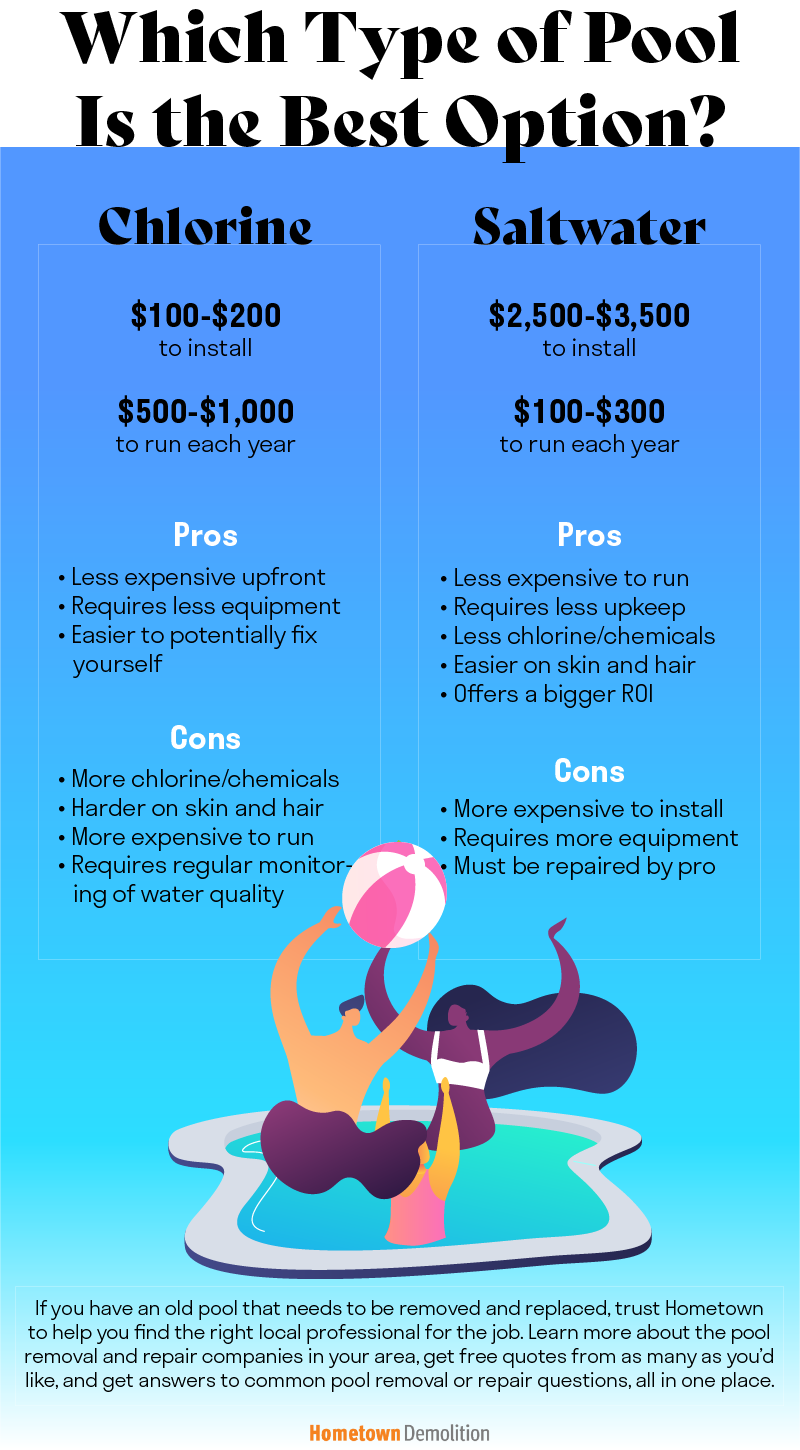
- Saltwater pools cost more to set up, mostly because of the salt chlorine generator (often $1,000–$2,500 extra).
- Chlorine pools are cheaper to install but can cost more in chemicals each year.
If the owner mentions a bigger upfront cost but lower yearly expenses, it’s probably a saltwater pool.
Myths And Misunderstandings
There are many myths about pool water. Here are some truths:
- Saltwater pools are not chlorine-free. They just make their own chlorine.
- Saltwater pools don’t taste like the ocean. The salt level is much lower.
- Chlorine pools are not always harsher. A well-maintained chlorine pool can be gentle too.
- You don’t add table salt to pools. Special pool-grade salt is used.
Knowing these facts helps you avoid confusion.
Common Beginner Mistakes When Identifying Pools
It’s easy to make mistakes when trying to tell the difference. Here are two non-obvious things beginners often miss:
- Assuming no chlorine smell means no chlorine: Saltwater pools still use chlorine. They just don’t smell as strong because the chlorine is made fresh and there are fewer chloramines.
- Trusting taste alone: Sometimes, a chlorine pool can taste a bit salty if certain chemicals are used or if the water is hard. Always use more than one method to check.
If you rely only on one clue, you might get it wrong. Combine what you see, feel, and test for the most accurate answer.
Quick Reference: Signs Of Each Pool Type
Here’s a summary for easy comparison:
| Clue | Saltwater Pool | Chlorine Pool |
|---|---|---|
| Chlorine smell | Very mild or none | Strong, harsh |
| Water taste | Slightly salty | No taste or chemical |
| Skin feel | Soft, silky | Dry, sometimes itchy |
| Equipment | Salt cell/generator | Chlorine feeder/dispenser |
| Residue | White scale at waterline | Rarely any |
Use several clues together for the best results.
Real-world Examples
Let’s look at a few scenarios:
Example 1: You visit a friend’s house. The pool has a faint, clean smell. You notice a control box labeled “Salt Chlorinator” by the pump. After swimming, your skin feels smooth, and you see some salt bags near the shed. This is a saltwater pool.
Example 2: At a hotel pool, you smell a strong chemical odor as soon as you walk in. You see a floating dispenser and buckets marked “chlorine tablets.” Your eyes sting after swimming. This is a chlorine pool.
Example 3: You try a water test at a community pool. The salt level is 3,200 ppm, and the chlorine is 2 ppm. There’s no strong smell. This means it’s a saltwater pool.
Advanced Testing: Lab Analysis
For absolute certainty, you can send a water sample to a professional lab. They will test for a wide range of chemicals, including:
- Sodium chloride (salt)
- Free and total chlorine
- PH and alkalinity
This is usually only necessary for big public pools or health inspections, not for home use.
Credit: www.hometowndemolitioncontractors.com
Environmental Impact
Saltwater pools are often described as more eco-friendly. They use fewer harsh chemicals, and there’s less risk of chemical spills from storing or adding chlorine. However, saltwater can be harmful to some plants and landscaping if pool water is drained into the yard. Chlorine pools can release more chloramines into the air, especially indoors, which is less healthy for people with asthma.
For more on the environmental effects, the Wikipedia page on salt water chlorination explains the science and environmental impact in depth.
When To Ask An Expert
If you’re still unsure, ask a pool professional. Many pool service companies can identify the system in minutes. They can also check if the equipment is working right or if the water is safe to swim in.
Frequently Asked Questions
How Salty Is A Saltwater Pool Compared To The Ocean?
A saltwater pool has about 2,500–4,000 ppm of salt. The ocean has around 35,000 ppm. This means a saltwater pool is much less salty than seawater. Most people can barely taste the salt.
Will A Saltwater Pool Damage My Hair Or Swimsuit?
Saltwater pools are gentler on hair and swimsuits than chlorine pools. The low salt level and steady chlorine production reduce damage and fading. However, always rinse with fresh water after swimming.
Can I Add Regular Table Salt To My Saltwater Pool?
No. Only use pool-grade salt for saltwater pools. Table salt can have additives that may harm the pool system or make the water cloudy.
Is A Saltwater Pool Better For People With Allergies?
Many people with sensitive skin or allergies find saltwater pools more comfortable. The water feels softer, and there is less irritation. However, everyone is different. Always test the water before spending a long time swimming.
Do Saltwater Pools Need Less Maintenance?
Saltwater pools need different maintenance, not always less. You check salt and pH levels instead of adding chlorine. The salt cell also needs cleaning. But overall, many owners find them easier to manage.
Pool water may look the same, but the way it’s kept clean can make a big difference. By using your senses, checking the equipment, and doing a simple test, you can tell if a pool is saltwater or chlorine. Next time you go for a swim, you’ll know exactly what you’re diving into – and how to keep yourself and your pool in the best shape possible.