
Blowing out pool lines is an important step for anyone who wants to protect their swimming pool during winter. If you live in a place where freezing temperatures are common, water left in pool pipes can freeze, expand, and cause pipes to crack.
The best way to avoid expensive repairs is to remove water from the plumbing system. Many pool owners use an air compressor for this job—but choosing the right size air compressor is not as simple as it sounds. Picking the wrong size can make the job difficult or even damage your pipes.
This article explains how to select the correct size air compressor to blow out pool lines, with expert advice, real examples, and useful tips.
Why Blowing Out Pool Lines Matters
When cold weather arrives, any water inside your pool’s pipes will freeze. Frozen water expands, and this expansion can easily crack PVC pipes or break fittings. Fixing broken pipes can cost hundreds or even thousands of dollars. Draining the pool is not enough—water remains trapped in the underground lines. Blowing out the lines with compressed air is a proven method to push this water out, so your pool survives the winter with no damage.
Many pool owners try to skip this step, thinking their pool is safe. But even a little water can freeze and create leaks. Insurance often doesn’t cover damage from poor winterization. That’s why using an air compressor to clear the lines is a must if you want to open your pool next season without surprises.
How An Air Compressor Helps
An air compressor is a machine that pushes air under pressure into the pool pipes. This air forces the remaining water out of the lines and into the pool or out through drain ports. The process is called “blowing out” the lines.
You usually connect the compressor to the pump or the skimmer line, then run it in short bursts until only air comes out.
The right air compressor makes the job fast and safe. But if your compressor is too small, it won’t clear all the water. If it’s too large, you might risk damaging valves or plumbing with too much pressure.
Key Factors When Choosing An Air Compressor
Before you select an air compressor for blowing out pool lines, it’s important to understand a few key terms and factors. These will help you make the best choice for your specific pool setup.
1. Cfm (cubic Feet Per Minute)
CFM measures how much air the compressor can deliver per minute. Think of it as the “volume” of air. A higher CFM means the compressor can push more air into the lines, which is useful for long or wide pipes. For most residential pools, you need at least 4-6 CFM at 40 PSI.
2. Psi (pounds Per Square Inch)
PSI is the air pressure. Too little pressure won’t push the water out. Too much pressure can damage your pipes. For pool lines, you want a compressor that can deliver between 20 and 50 PSI. Most pool pipes are rated for higher pressure, but staying around 30-40 PSI is safest.
3. Tank Size
Air compressors have tanks that store air. A bigger tank means the compressor can deliver air longer before refilling. For pool lines, a 4-6 gallon tank is usually enough. For very large pools or commercial setups, you may need a larger tank.
4. Portability And Power Source
Most people prefer a portable compressor—these are easier to move around the pool. Electric compressors are common, but if your pool is far from a power outlet, you might need a gas-powered unit.
5. Type Of Compressor
There are several types: pancake, hot dog, twin-stack, and wheelbarrow. For most pool owners, a pancake or hot dog compressor is enough. They are light, portable, and powerful enough for the job.
Common Pool Plumbing Setups
Not every pool has the same plumbing. Your pool’s design affects how much air you need to clear the lines.
- Inground pools usually have longer, more complex lines (skimmer, main drain, returns, cleaner lines).
- Above-ground pools often have shorter, simpler piping.
- Some pools have extra features (spa jets, waterfalls) that add to the number of lines.
Knowing your setup will help you estimate the right compressor size.
Example: Residential Inground Pool
A typical inground pool has three lines to blow out: skimmer, main drain, and returns. Each line may be 40-60 feet long. The total pipe length can be over 100 feet.
Example: Above-ground Pool
An above-ground pool usually has one or two lines, each less than 20 feet. The air demand is much lower.
Minimum Air Compressor Size For Blowing Out Pool Lines
For most residential pools, you need a compressor that can deliver at least:
- 4 CFM at 40 PSI (for small pools or above-ground)
- 6-7 CFM at 40 PSI (for larger inground pools)
- Tank size: 4-6 gallons minimum
If your compressor can’t meet these numbers, it may not clear the lines completely.
How To Calculate The Right Size For Your Pool
If you want to be precise, you can estimate the air volume needed for your pool lines. Here’s a simple method:
- Measure the total length of your pool lines (main drain, skimmer, returns, etc. ).
- Most pool pipes are 1.5″ or 2″ in diameter.
- Use this formula to estimate total pipe volume:
Pipe volume (gallons) = Length (ft) × 0. 12 (for 1. 5” pipe) or 0. 16 (for 2” pipe)
- You need enough air to push all water out of this volume, plus extra for any leaks.
For example, if you have 100 feet of 1.5” pipe:
- Pipe volume = 100 × 0.12 = 12 gallons
- Your compressor must deliver enough air to push at least 12 gallons quickly (about 1.6 cubic feet).
Since compressors work in CFM, and you want a strong burst, a 4-6 CFM unit is usually more than enough.
Comparing Popular Air Compressor Sizes
Let’s compare the most common air compressor sizes used for pool line blowout.
| Compressor Size | CFM @ 40 PSI | Tank Size | Best For |
|---|---|---|---|
| 2-gallon Pancake | 2.5 | 2 gal | Small above-ground pools |
| 6-gallon Pancake | 4.0 | 6 gal | Most above-ground, small inground pools |
| 8-gallon Hot Dog | 5.0 | 8 gal | Medium/large inground pools |
| 20-gallon Wheelbarrow | 6.5 | 20 gal | Very large/commercial pools |
For most people, the 6-gallon pancake or 8-gallon hot dog compressor is the best mix of power and portability.
Step-by-step: How To Blow Out Pool Lines With An Air Compressor
Using the right size compressor is only one part of the process. Here’s how to safely and effectively blow out your pool lines.
1. Turn Off And Drain Equipment
- Turn off the pool pump and heater.
- Open the drain plugs on the pump, filter, and heater to let water escape.
- Remove any chlorinators or salt cells.
2. Lower The Water Level
- Lower pool water below the returns and skimmer mouth.
3. Set Up The Compressor
- Attach the correct fitting (often a rubber plug or “blowout” plug) to the compressor hose.
- Connect it to the pool’s pump basket or skimmer line.
4. Blow Out The Lines
- Start the compressor at low pressure.
- Open one line at a time (skimmer, main drain, returns).
- Watch for water to spray out, followed by a steady stream of air (bubbles in pool).
- Plug each line with a winter plug as soon as air replaces water.
5. Add Pool Antifreeze (optional)
- For extra protection, pour pool-safe antifreeze into the lines before plugging.
6. Repeat For All Lines
- Move to the next line and repeat the process.
7. Finish Up
- Remove the compressor, close up all equipment, and cover the pool.
This method works for nearly all pool setups. Always follow your pool manufacturer’s guidelines.
Mistakes To Avoid When Selecting An Air Compressor
Many pool owners make simple mistakes that cause problems. Here are common errors and how to avoid them:
- Choosing a compressor with too low CFM: This won’t clear the lines, leaving water behind.
- Using excessive PSI: Too much pressure can burst pipes or blow out fittings. Stay under 50 PSI.
- Ignoring tank size: A very small tank means the compressor cycles on/off often, making the process slow.
- Skipping pipe measurements: Guessing the size of your pool lines can lead to the wrong compressor choice.
- Not checking power source: Electric compressors need a nearby outlet. Plan ahead if your pool is far from power.
Air Compressors Vs. Shop Vacs And Pool Blowers
Some people use shop vacs or specialized pool line blowers instead of air compressors. Here’s how these options compare:
| Device | Air Volume | Pressure | Best Use |
|---|---|---|---|
| Air Compressor | Medium | Medium (20-50 PSI) | Most pool lines |
| Shop Vac | High | Low (<5 PSI) | Short lines, above-ground pools |
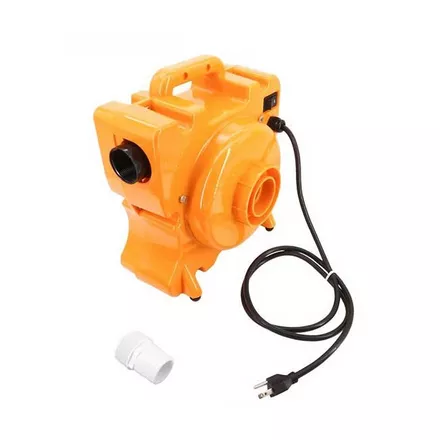
| Pool Blower | Very High | Low (<3 PSI) | Long, large-diameter lines |
- Shop vacs move a lot of air but with little pressure. Good for short runs, but not strong enough for long or deep lines.
- Pool blowers (like “Mighty Vac” or “Cyclone”) are designed for this job and can handle any pool, but they are more expensive.
- An air compressor is the best mix for most homeowners: Affordable, portable, and versatile.

Credit: www.youtube.com
Non-obvious Insights Most Beginners Miss
Choosing an air compressor isn’t just about CFM and PSI. Two key points are often overlooked:
- Temperature affects air pressure. If you blow out lines on a very cold day, air expands less, and you may need to run the compressor a bit longer. Try to winterize on a mild day if possible.
- Long hoses reduce effective pressure. If you use a long air hose from compressor to pool, you’ll lose some PSI before the air reaches the pipes. Use the shortest, largest-diameter hose possible.
How Long Does It Take To Blow Out Pool Lines?
The total time depends on your pool size, compressor power, and preparation.
- Small above-ground pool: 10-20 minutes
- Average inground pool: 30-45 minutes
- Large complex pool: Up to 1 hour
Most of the time is spent setting up and moving the compressor between lines.
Safety Tips When Using Air Compressors For Pool Lines
Working with pressurized air is safe if you follow basic rules. But mistakes can cause injury or damage.
- Always wear eye protection. Water and debris can spray out of pipes.
- Never exceed 50 PSI. High pressure can burst pipes.
- Secure all fittings. Loose connections can pop off under pressure.
- Keep children and pets away. The process is noisy and can be dangerous.
- Unplug electric compressors when not in use. Water and electricity don’t mix.
When To Hire A Professional
Some situations call for expert help:
- Complex pools with many lines or features (spas, waterfalls, solar heaters)
- Pools with old or fragile pipes
- If you’re not comfortable using power tools
A pool service company has commercial-grade blowers and experience. The cost is higher, but peace of mind is worth it if you’re unsure.
Credit: intheswim.com
Cost Of Buying Vs. Renting An Air Compressor
Many people wonder if it’s better to buy or rent an air compressor for pool winterizing. Here’s a quick comparison.
Buying
- Good-quality 6-gallon pancake compressor: $120–$200
- Lasts for years, can be used for other projects (tires, tools, etc.)
- One-time investment
Renting
- Daily rental: $25–$40 per day
- No storage or maintenance needed
- Good for one-time use or if you don’t plan to use it often
If you have other uses for a compressor, buying makes sense. For single use, renting may be smarter.
Recommended Air Compressor Features For Pool Lines
Look for these features when shopping:
- Adjustable pressure regulator: Lets you set PSI to safe levels.
- Quick-connect fittings: Easy to attach hoses and adapters.
- Portable design: Wheels or handles for moving around the pool.
- Oil-free motor: Less maintenance needed.
Brands like Porter-Cable, DeWalt, Craftsman, and California Air Tools make reliable models that work well for pool blowout.

Credit: www.amazon.com
Real-world Example: Pool Owner Experiences
Case 1: Jim owns a 16×32 ft inground pool with three returns and one skimmer. He uses a 6-gallon, 4.5 CFM pancake compressor. Each line clears in under 2 minutes, and he’s never had a problem in 6 winters.
Case 2: Maria has a small above-ground pool. She tried a 2-gallon compressor (2.0 CFM). It took a long time and left water in the lines. She upgraded to a 6-gallon model and now finishes the job much faster.
Case 3: A neighbor tried a large, industrial compressor at 90 PSI. It blew the return fitting off the pool wall, causing a costly repair. This shows why you should never use more pressure than needed.
Environmental Considerations
If you live in an area where water is scarce or there are drainage rules, be careful where the blown-out water goes. Try to direct it into the pool or a safe drainage area. Never let chlorinated water run into storm drains, as it can harm local wildlife.
Summary Table: What Size Air Compressor For Different Pool Types
Here’s a quick reference for choosing the right size:
| Pool Type | Recommended CFM | Recommended Tank Size | Notes |
|---|---|---|---|
| Small Above-Ground | 2.5–4.0 | 2–4 gal | Short lines, low air needed |
| Large Above-Ground | 4.0–5.0 | 4–6 gal | Multiple returns, longer pipes |
| Small Inground | 4.0–5.5 | 6–8 gal | 3–4 lines, deeper pipes |
| Large Inground | 6.0–7.0 | 8–20 gal | Many features, long runs |
Other Tools You May Need
Besides the air compressor, these items make the job easier:
- Blowout plugs: Rubber or threaded plugs for sealing lines.
- Air hose adapters: Fit the compressor to pool plumbing.
- Teflon tape: For airtight seals on threaded connections.
- Pool antifreeze: Non-toxic, protects against any trapped water.
Pool Manufacturer Recommendations
Always check your pool manufacturer’s winterizing guide. Some pools have special features or sensitive equipment that need gentle air pressure. Following official guidance helps you avoid voiding warranties or causing damage.
You can find more technical details about air compressors and pool plumbing at the Wikipedia Air Compressor page.
Frequently Asked Questions
What Happens If I Use A Compressor That’s Too Powerful?
If your compressor delivers too much air at high pressure, you could damage pool pipes, blow out fittings, or even injure yourself. Always set the pressure below 50 PSI and watch the process closely.
Can I Use A Leaf Blower Instead Of An Air Compressor?
A leaf blower moves a lot of air but at very low pressure. It might work for short, straight lines in an above-ground pool, but it won’t clear long or deep pipes in inground pools.
How Do I Know When The Pool Lines Are Fully Blown Out?
You’ll see water spray out of the line, then only air (bubbles) coming out of the return jets or skimmer. That’s the sign the line is clear. Plug the line quickly to prevent water from returning.
Is Pool Antifreeze Necessary After Blowing Out Lines?
If you’re confident all water is gone, antifreeze is not required. But adding pool-safe antifreeze is a good backup, especially if you’re not sure or live in a very cold area.
Can I Blow Out Pool Lines Without A Compressor?
You can try with a shop vac or pool blower for small pools, but for most inground pools, an air compressor is the only way to push all water out with enough force.
Blowing out your pool lines is a small effort that prevents big headaches in spring. Using the right size air compressor makes the job safe, fast, and effective—so your pool is always ready when the warm weather returns.