
Owning a Pebble Tec pool means enjoying a beautiful, durable, and luxurious swimming experience. The unique pebble finish gives pools a natural look, feels smooth underfoot, and resists staining better than plaster. But over time, even this robust surface needs proper care to stay clean and attractive. Dirt, algae, calcium deposits, and organic stains can build up, making your pool look less inviting. Pressure washing is one method to restore your pool’s appearance, but it must be done with great care.
Many pool owners don’t realize that cleaning a Pebble Tec surface is different from cleaning other types of pools. Using the wrong technique or equipment can cause expensive damage. In this article, you’ll learn everything you need to know about pressure washing a Pebble Tec pool, including when it’s necessary, the right tools, safety tips, and how to get the best results without harming your investment.
Plus, you’ll discover expert insights and maintenance strategies most beginners overlook.
Understanding Pebble Tec Pool Surfaces
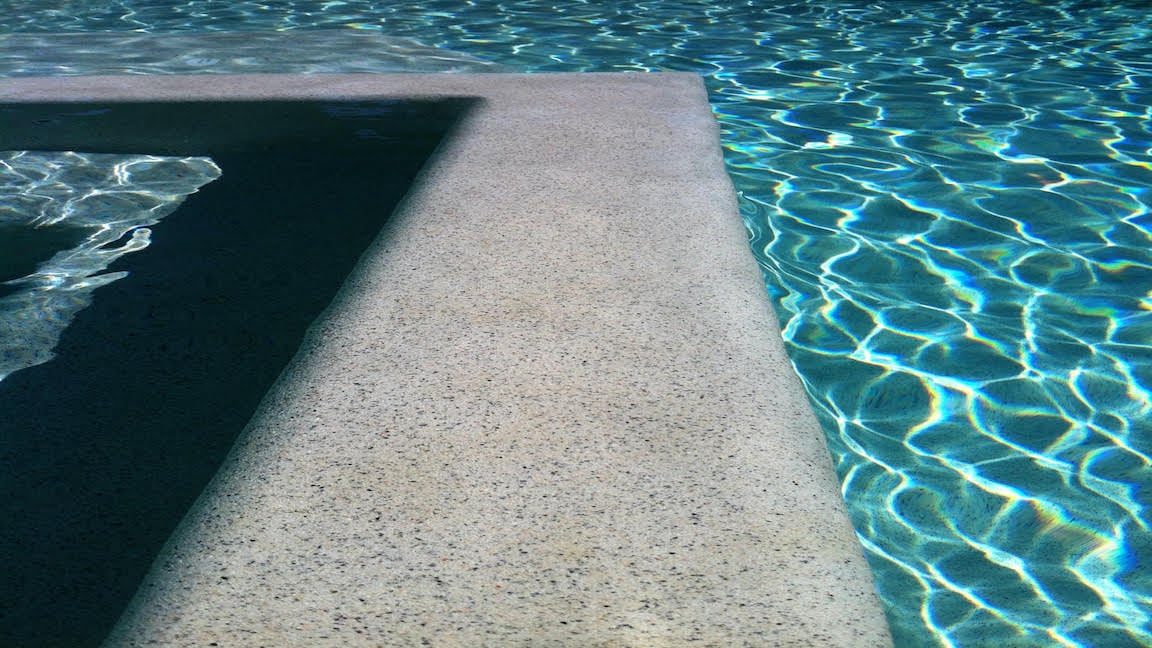
Pebble Tec is a type of exposed aggregate pool finish. Instead of a simple plaster coating, tiny pebbles are mixed with cement and applied to the pool shell. After application, the surface is hand-troweled for smoothness and then washed to expose the pebbles. This creates a textured, natural look and a finish that can last 15-20 years or more with proper care.
Why Pebble Tec Is Special
- Durability: Pebble Tec withstands chemicals, UV rays, and physical wear better than standard plaster.
- Variety: It comes in many colors and blends, letting you match your pool to your landscape.
- Texture: The pebbled surface resists slipping, making it safer for swimmers.
While Pebble Tec is tough, it’s not indestructible. Cleaning it with harsh chemicals or too much water pressure can loosen the pebbles or etch the cement, leading to repairs. Proper cleaning keeps it beautiful and strong for years.
Why Pressure Wash A Pebble Tec Pool?
Regular pool maintenance involves brushing, vacuuming, and chemical balancing. But sometimes, these methods aren’t enough. Pressure washing is considered when:
- Stubborn stains refuse to come off with brushing
- Algae or mold has taken hold in textured areas
- Calcium or mineral deposits have built up
- The pool surface looks dull and rough
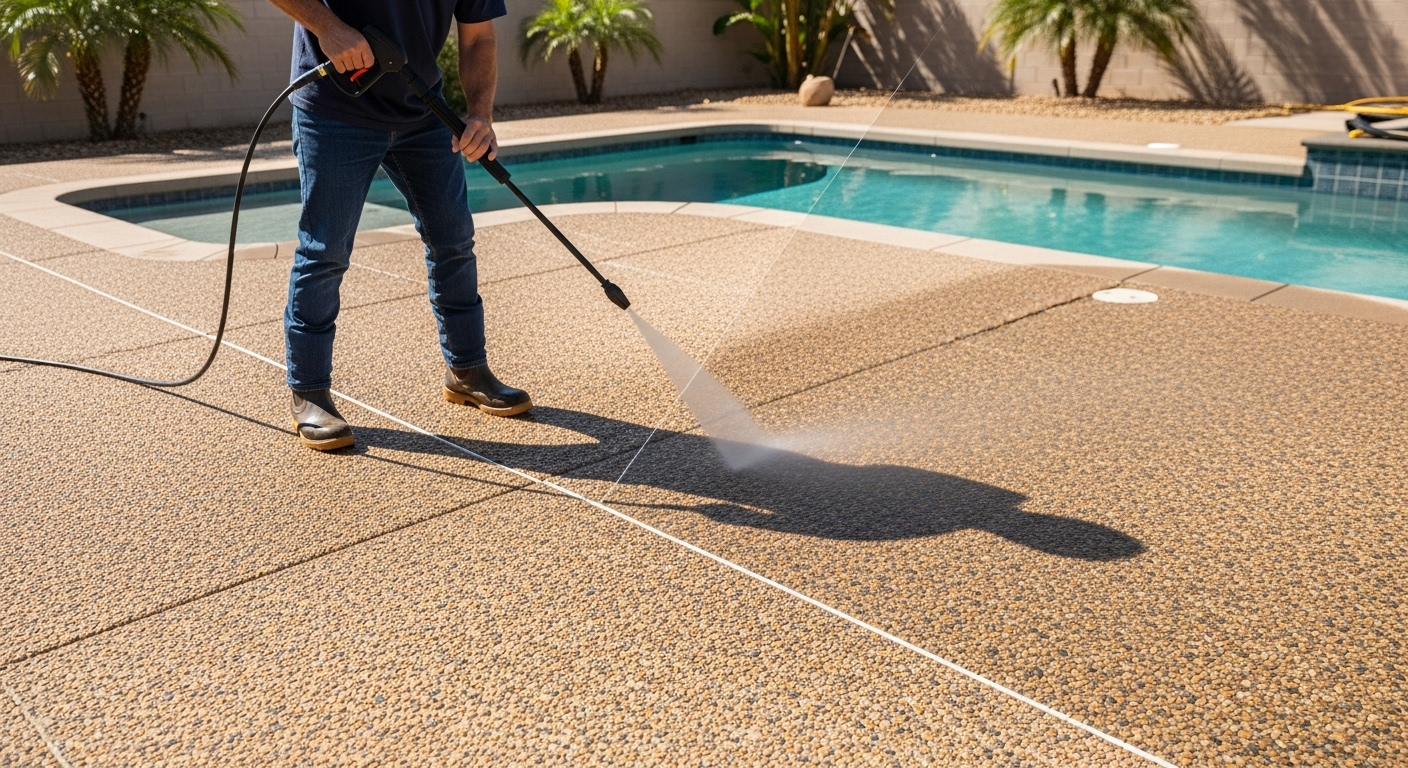
Pressure washing can restore the pebble finish’s color and texture, removing debris and buildup that hide the pool’s beauty. However, it’s a task that requires careful planning and the right technique.
Credit: coppercanyonpressurewash.com
How Pressure Washing Works
Pressure washing uses a machine to force water through a nozzle at high speed. The water stream loosens and lifts dirt, algae, and grime from surfaces. For Pebble Tec pools, the pressure level and spray pattern are critical. Too much pressure can damage the surface, while too little won’t clean effectively.
Most pool professionals use a pressure setting between 1,500 and 2,000 PSI with a wide fan nozzle (usually 25 or 40 degrees). This combination is strong enough to clean but gentle enough to protect the pebbles and cement.
Preparing To Pressure Wash Your Pebble Tec Pool
Before you start, preparation is vital. Rushing into pressure washing without the proper steps can result in costly mistakes.
Step 1: Gather The Right Equipment
You’ll need:
- A pressure washer (gas or electric) with adjustable PSI
- A wide-angle fan tip (25-40 degrees)
- Extension hoses for reach
- Protective gear: Gloves, goggles, boots
- A wet/dry vacuum (for water removal)
- Pool brush and leaf net
If you don’t own a pressure washer, you can rent one from a hardware store. Some stores offer pool-specific cleaning attachments.
Step 2: Drain The Pool
You must fully drain the pool to expose the Pebble Tec surface. Do not pressure wash underwater. Use a submersible pump to remove water, following local water disposal rules.
Step 3: Remove Debris
Once drained, use a leaf net and brush to clear leaves, sticks, and dirt from the pool floor and steps. This prevents clogging your pressure washer and makes cleaning more efficient.
Step 4: Inspect The Surface
Look for:
- Loose or missing pebbles
- Cracks or chips
- Signs of previous repairs
Pressure washing a damaged surface can make problems worse. If you see issues, contact a pool professional before cleaning.
Credit: www.jdesigns.com
The Right Way To Pressure Wash Pebble Tec
Step 1: Adjust Pressure And Test
Set your pressure washer to no more than 2,000 PSI. Attach the wide fan nozzle. Start by testing on a small, hidden area. Hold the nozzle 2-3 feet from the surface and sweep back and forth. Check for damage before continuing.
Step 2: Begin At The Shallow End
Work from the shallow end to the deep end. This lets dirty water flow downward and out. Hold the wand at a 45-degree angle to the surface, moving in smooth, overlapping passes. Do not focus on one spot for long, as this can etch the cement.
Step 3: Clean Steps, Walls, And Floor
Use extra care on steps and sharp angles where pebbles are more exposed. Move at a steady pace, keeping the nozzle moving at all times. For tough spots, try a gentle back-and-forth motion rather than holding the stream in place.
Step 4: Rinse And Repeat If Needed
After your first pass, rinse the pool with a hose. Check for missed stains or algae patches. Repeat pressure washing on stubborn spots, but do not overdo it.
Step 5: Remove Water And Debris
Use a wet/dry vacuum to collect dirty water and debris. Do not let it dry on the surface, as it can leave stains.
Step 6: Inspect The Surface Again
Look for any new damage or loose pebbles. If you see problems, stop and consult a pro.
Common Pressure Washing Mistakes To Avoid
Many pool owners make errors that can shorten the life of their Pebble Tec finish. Here’s what to watch out for:
- Using too much pressure: This can blast away pebbles or scar the cement.
- Narrow nozzles: A pinpoint spray is too harsh. Always use a wide fan tip.
- Holding the wand too close: Keep it at least 2 feet away.
- Ignoring repairs: Don’t clean a surface with cracks or missing pebbles.
- Skipping protective gear: Flying debris or water spray can injure you.
- Not draining properly: Water left in the pool can hide dirty spots or cause uneven cleaning.
When To Call A Professional
While DIY pressure washing is possible, there are times when hiring a pro is the best choice:
- Large pools: Cleaning a big pool is time-consuming and tiring.
- Heavy staining: Black algae, deep calcium buildup, or metal stains often need special treatment.
- Surface damage: Pros can spot problems and avoid making them worse.
- No equipment: Renting or buying the right tools adds cost.
Professionals use specialized tools, cleaning solutions, and have years of experience. They can pressure wash efficiently and safely, protecting your investment.
Comparing Pebble Tec Cleaning Methods
Not all pool cleaning methods are equal. Here’s how pressure washing compares to other common techniques:
| Cleaning Method | Effectiveness | Surface Safety | Best For |
|---|---|---|---|
| Pressure Washing | High (when used correctly) | Good (if under 2,000 PSI) | Algae, stains, deep cleaning |
| Manual Brushing | Medium | Excellent | Regular maintenance, light debris |
| Chemical Cleaning | High (for specific stains) | Varies (can etch or fade) | Organic stains, calcium, metals |
| Acid Washing | Very High | Poor (can damage pebbles) | Extreme stains, restoration |
Pressure washing offers a balance of power and safety when done correctly. Acid washing is only for extreme cases and can shorten the life of your finish.
Key Safety Tips For Pressure Washing Pebble Tec
Safety should never be an afterthought. High-pressure water can injure, and wet pool surfaces are slippery. Here’s how to keep yourself safe:
- Wear goggles and gloves: Protect your eyes and hands from spray and debris.
- Use non-slip boots: Wet pebbles can be very slick.
- Never point the wand at people or pets: Even a quick burst can cause injury.
- Keep cords and hoses tidy: Reduce tripping hazards.
- Check electrical equipment: If using an electric pressure washer, make sure outlets and cords are dry and rated for outdoor use.
Special Stains And Pressure Washing
Some stains require more than just water pressure. Here’s how to handle common problems:
Algae And Organic Stains
For green or black algae, pressure washing removes the visible growth, but spores may remain. Scrub first with a pool-safe algaecide, then pressure wash. For tough black algae, you may need a wire brush and special cleaner.
Calcium Deposits
White, chalky stains are often calcium. Pressure washing can remove some, but thick deposits need a pumice stone or a special descaling agent. Never use acid without professional guidance.
Metal Stains
Brown or blue-green stains may be from iron or copper. Pressure washing will not remove these. Use a metal sequestrant or consult a pool store for advice.
After Pressure Washing: Steps To Restore Your Pool
Once the pool is clean, it’s time to get it back in use.
1. Rinse Thoroughly
Rinse all surfaces with a garden hose. Any leftover dirt or cleaning solution should be washed away.
2. Inspect For Damage
Walk the pool and check for loose pebbles or chips. Mark any problem areas for repair.
3. Clean The Drains
Make sure the main drain and skimmers are clear before refilling.
4. Refill The Pool
Use a hose filter to reduce metals and debris entering the clean pool. Fill slowly to prevent staining.
5. Balance Chemicals
Test water for pH, alkalinity, and calcium. Add chemicals as needed before swimming.
How Often Should You Pressure Wash Pebble Tec?
Most Pebble Tec pools only need pressure washing every 2-3 years. Over-cleaning can wear out the surface. For normal maintenance, stick to weekly brushing, vacuuming, and good chemical balance. Spot clean stains as they appear.
Real-world Example: Saving A Neglected Pool
Consider a 15-year-old Pebble Tec pool in Arizona. After years of neglect, the surface was covered in algae, scale, and brown stains. The owner tried brushing and chemicals, but nothing worked. A professional pressure washing service was called in.
- The pool was drained and inspected.
- A pressure washer set at 1,700 PSI with a 40-degree nozzle was used.
- The team worked from shallow to deep, taking care on steps and corners.
- After two passes and some spot treatment, the pool looked nearly new.
- Final repairs were made to a few chipped areas.
The owner learned two lessons: routine maintenance prevents heavy cleaning, and professionals can save time and money compared to DIY mistakes.
Diy Vs. Professional Pressure Washing: Cost Comparison
Budget is always a concern. Here’s a typical cost breakdown:
| Option | Estimated Cost | What’s Included | Risks |
|---|---|---|---|
| DIY | $100-$250 (rental + supplies) | Pressure washer, safety gear, time | Possible surface damage, missed stains |
| Professional Service | $400-$800 (varies by pool size) | Expert cleaning, inspection, minor repairs | Higher cost, scheduling needed |
While DIY is cheaper, inexperience can lead to costly repairs. For large or older pools, pros are often worth the extra investment.
Long-term Maintenance Tips For Pebble Tec Pools
Pressure washing is just one part of keeping your pool beautiful. Here’s what pool experts recommend:
- Brush weekly: Use a soft-bristle brush to prevent algae and scale.
- Vacuum regularly: Removes dirt before it hardens.
- Balance chemicals: Proper pH and calcium levels prevent staining and roughness.
- Address stains early: Spot clean as soon as you see discoloration.
- Inspect annually: Look for cracks, chips, or loose pebbles each year.
- Limit pressure washing: Only every 2-3 years, or as needed.
- Use a pool cover: Keeps leaves and debris out, reducing cleaning needs.
Two Insights Most Beginners Miss
- Not all stains are removed with pressure washing. Metal and deep calcium stains often need chemical treatment. Pressure washing is best for algae, dirt, and organic buildup.
- Pebble Tec can develop micro-cracks if over-cleaned. Each pressure wash removes a tiny layer of cement. Over time, this can lead to early surface failure. Less is more.

Credit: www.reddit.com
The Environmental Impact Of Pressure Washing
Pressure washing uses a significant amount of water and can wash chemicals or debris into storm drains. Always follow local regulations for draining and water disposal. Consider capturing and filtering dirty water before it leaves your property.
For more details on Pebble Tec finishes and proper pool care, see the official Pebble Tec website.
Frequently Asked Questions
How Often Should I Pressure Wash My Pebble Tec Pool?
Usually, every 2-3 years is enough. Frequent pressure washing can wear out the surface. For most pools, regular brushing and chemical care keep the finish clean.
Can I Use Any Pressure Washer On A Pebble Tec Pool?
No. Use a washer that can be adjusted to no more than 2,000 PSI. Always use a 25- to 40-degree fan nozzle. Too much pressure or a narrow tip can damage the surface.
Will Pressure Washing Remove All Stains?
Pressure washing works well on dirt, algae, and organic stains. Metal and deep calcium stains often need special chemicals. Test a small area first and treat stubborn stains separately.
Is It Safe To Pressure Wash A Pool Myself?
It’s possible, but you must follow safety and technique guidelines. Wear protective gear, use the right pressure, and inspect your pool before and after. If your pool is large, old, or heavily stained, consider hiring a professional.
What Should I Do After Pressure Washing My Pool?
Rinse all surfaces, check for damage, clean drains, and refill the pool. Balance your pool chemicals before swimming again. Address any repairs before filling with water.
A clean Pebble Tec pool adds value and enjoyment to your home. With the right tools, knowledge, and care, you can keep your pool looking great for years—without unnecessary damage or stress.