
If you own a swimming pool or spa, you know that keeping the water safe, clean, and comfortable is a big responsibility. Many people look for alternatives to traditional chlorine-based sanitizers, hoping to find something gentler for the skin, simpler to use, or friendlier to the environment. One product that stands out is Pristine Blue, a copper-based pool and spa treatment system. But is it the right solution for you?
This article explores the full range of pros and cons of Pristine Blue. You’ll get a clear picture of what it offers, where it shines, and where it may fall short. Whether you are thinking of switching from chlorine or just starting with pool care, this guide will help you make an informed decision.
What Is Pristine Blue?
Pristine Blue is a pool and spa water treatment system that uses copper sulfate as its main active ingredient. Unlike chlorine, which works by oxidation, Pristine Blue uses copper ions to kill algae and bacteria. It’s often marketed as a gentler, low-maintenance, and more natural solution for sanitizing pool and spa water.
Pristine Blue is sold as a liquid that you add to your pool or spa every 2 weeks. It can be used in above-ground or in-ground pools, hot tubs, and even fountains or ponds. The product is EPA-registered and has been used for more than 20 years in pool care.
How Does Pristine Blue Work?
Pristine Blue’s active ingredient is copper sulfate pentahydrate. When added to water, copper ions are released. These ions are toxic to algae and some bacteria, which helps prevent the growth of green water and other contaminants.
You must still balance your water’s pH, alkalinity, and hardness, just like with any other pool sanitizer. Pristine Blue is not a “set it and forget it” product, but it does reduce the need for regular shocking and the strong odor of chlorine.
Pros Of Pristine Blue
People choose Pristine Blue for many reasons. Here are the main advantages, explained in detail.
1. Gentler On Skin And Eyes
One of the biggest complaints about chlorine is how it can dry out skin, irritate eyes, or cause allergic reactions. Pristine Blue does not have the same harsh effects. Most users find the water feels softer and more comfortable. If you have sensitive skin or swim with children, this difference can be very important.
2. No Strong Chemical Smell
Traditional chlorine pools often smell like bleach, especially after shocking. This odor can linger on hair, skin, and swimsuits. Pristine Blue has almost no smell because copper ions do not produce chloramines (the compounds responsible for chlorine’s odor). This leads to a more pleasant swimming environment.
3. Less Frequent Maintenance
With chlorine or bromine, you need to check levels and add chemicals several times a week. Pristine Blue requires dosing only every 2 weeks for most pools and spas. This is a big time-saver, especially for busy families or people who travel often.
4. Algae Control
Copper is a well-known algaecide. Pristine Blue is very effective at preventing and controlling green, yellow, or black algae. Many pool owners who struggle with recurring algae blooms find Pristine Blue keeps their water clear with less effort.
5. Softer Water Feel
Swimmers often notice the water feels softer and silkier. This is because Pristine Blue does not contain calcium, and copper ions can reduce water hardness slightly. It’s a small but pleasant effect, especially compared to some saltwater or mineral systems.
6. Compatibility With Most Pool Types
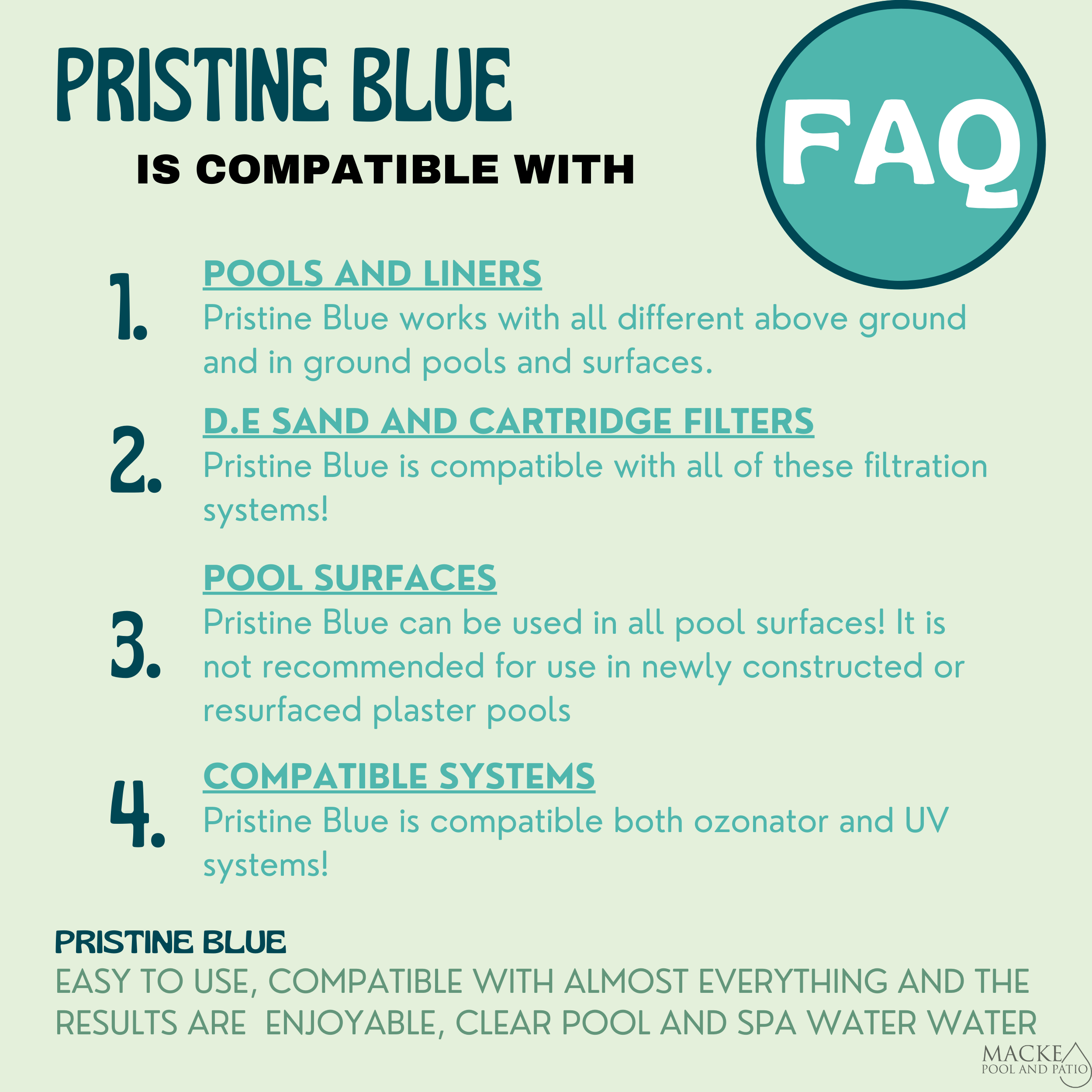
Pristine Blue works with vinyl, fiberglass, and concrete pools, as well as hot tubs and spas. It can also be used in fountains and ponds. This versatility makes it a useful option for many homeowners.
7. Long Shelf Life
You don’t have to worry about Pristine Blue losing effectiveness if stored over the winter. The product has a long shelf life and does not degrade quickly like some chlorine-based products.
8. Reduced Chlorine Demand
Some people use Pristine Blue with very low levels of chlorine or as a supplement to chlorine systems. This can reduce the total amount of chlorine needed, saving money and further minimizing chemical smell and irritation.
9. Minimal Fading Of Swimsuits And Liners
Chlorine can cause colors to fade quickly, especially in swimsuits and pool liners. Pristine Blue does not bleach fabrics in the same way, so your pool accessories and clothing last longer.
10. No Need For Stabilizer
Chlorine pools often need a stabilizer (cyanuric acid) to keep chlorine from breaking down in sunlight. Pristine Blue does not require this, simplifying water chemistry and reducing cost.
11. Lower Risk Of Overdosing
Because Pristine Blue is dosed every 2 weeks and has a wide safe range, there is less risk of accidentally adding too much. Overdosing with chlorine can cause dangerous situations, but with Pristine Blue, the margin for error is wider.
12. Easier On Pool Equipment
Chlorine is corrosive, especially to metal parts, heaters, and pool covers. Pristine Blue is less aggressive, so your equipment may last longer and require fewer repairs.
13. Consistent Water Quality
With less frequent maintenance and steady dosing, Pristine Blue keeps pool water balanced and clear for longer periods. You are less likely to experience sudden changes in water quality or appearance.
14. Simple Dosing Instructions
The Pristine Blue system is designed to be user-friendly. The manufacturer provides clear instructions, and you can test your copper level with a simple test kit. No complicated calculations are needed.
15. Environmental Benefits
Copper is a naturally occurring mineral. Pristine Blue contains no chlorine byproducts, which are harmful to the environment. The product claims to be more eco-friendly than chlorine, with fewer harmful residues.
Cons Of Pristine Blue
While Pristine Blue has many advantages, it’s not perfect for everyone. Here are the most important drawbacks to consider.
1. Initial Cost
Pristine Blue usually costs more upfront than chlorine or bromine. You need to buy the starter kit and a test kit for copper. While long-term costs may balance out, the initial investment is higher.
2. Risk Of Copper Staining
The biggest risk with copper-based systems is staining. If the copper level gets too high, or if your pool water has low pH, copper can stain pool surfaces, especially white plaster or light-colored liners. Blue or green stains can be difficult or impossible to remove.
3. Limited Disinfection Spectrum
Copper is excellent at killing algae, but less effective against some bacteria and viruses. The EPA rates copper-based systems as algaecides, not as primary sanitizers. Some states do not allow copper-only systems for public pools. You may need to add a small amount of chlorine, especially if your pool has heavy use.
4. Water Chemistry Still Matters
You can’t ignore water balance with Pristine Blue. You must still test and control pH, alkalinity, and hardness. If your water becomes unbalanced, the risk of staining, cloudy water, or ineffective sanitation increases.
5. Possible Build-up Over Time
Copper does not evaporate. If you overdose, levels can rise over time, especially in pools with little water turnover. Removing excess copper can require special treatments or partial draining.
6. May Not Be Compatible With All Pool Chemicals
Some pool products, such as certain shock treatments, algaecides, or metal removers, can react with copper. You need to read labels carefully and follow manufacturer instructions to avoid problems.
7. Not Ideal For Heavy Swimmer Loads
If you host pool parties, have many swimmers, or have pets in the pool, Pristine Blue alone may not provide enough sanitation. In such cases, a small backup of chlorine or another sanitizer is recommended.
8. Slower Response To Problems
With chlorine, you can shock a pool and get immediate results. Pristine Blue works more slowly. If you have a sudden algae bloom or contamination, it may take longer to restore water quality.
9. Testing Is Different
Instead of testing for chlorine, you must test for copper levels. This means buying a special test kit and learning a new process. Some pool stores may not be familiar with Pristine Blue, so you may have to do more home testing.
10. Not Universally Accepted
Some health departments or local laws do not allow copper-based systems as the sole sanitizer, especially for public pools or spas. Always check local codes before switching.
11. Sensitive To Ph Swings
If your pH drops below 7. 2, the risk of copper stains increases sharply. You must monitor pH carefully and avoid acid shocks or low pH events.
12. Potential For Green Hair
High copper levels can sometimes cause light or blonde hair to turn greenish. This is rare if you keep levels correct, but it does happen, especially in pools with poor water balance.
13. Not Completely Odor-free
While Pristine Blue itself has little smell, you may still need to use a small amount of chlorine or oxidizer. This can introduce a faint chemical odor, though much less than in traditional chlorine pools.
14. Possible Impact On Sensitive Plants
If you drain pool water onto grass or into ponds, copper residues can harm sensitive plants or aquatic life. Always follow safe disposal guidelines.
15. Availability And Support
Pristine Blue is not as widely available as chlorine. Not all pool stores carry it, and some technicians are less familiar with copper-based systems. You may need to order supplies online or directly from the manufacturer.
Pristine Blue Vs. Chlorine: Comparison
To help you see the main differences, here is a direct comparison between Pristine Blue and traditional chlorine pool systems.
| Feature | Pristine Blue | Chlorine |
|---|---|---|
| Active Ingredient | Copper Sulfate | Sodium or Calcium Hypochlorite |
| Dosage Frequency | Every 2 weeks | 2-3 times per week |
| Odor | Very mild | Strong (chloramines) |
| Skin Irritation | Minimal | Common |
| Algae Control | Excellent | Good (may need extra algaecide) |
| Staining Risk | Possible (if overdosed/low pH) | Rare |
| Equipment Corrosion | Low | High |
| Effectiveness vs. Bacteria | Good, but limited | Excellent |
| Water Feel | Softer | Normal |
Real-world Experiences With Pristine Blue
Many pool owners share positive stories after switching to Pristine Blue. People often mention:
- No more red eyes or itchy skin after swimming.
- Less time spent on pool maintenance.
- Clear, sparkling water for longer periods.
However, some report challenges:
- Difficulty in removing stains after accidental overdosing.
- Needing a backup sanitizer during very hot weather or heavy use.
- Limited support from local pool stores.
One pool owner from Florida wrote, “I struggled with green water every summer. Since switching to Pristine Blue, my pool has stayed clear for two years. Just be careful not to overdose, and keep the pH in range. ”
Another user from Texas commented, “I love the feel of the water, and my kids don’t complain about burning eyes anymore. I did get some blue stains on my steps when I let the copper get too high, but I learned to test more often.
”
These stories show that Pristine Blue can work very well, but there is a learning curve. If you follow the instructions and test your water regularly, most problems can be avoided.
Credit: mackepoolproducts.com
Key Considerations Before Switching
Not everyone will benefit equally from Pristine Blue. Here are some important factors to consider before making a change:
Pool Type And Size
Pristine Blue works in most pools and spas, but it’s not recommended for very large commercial pools or where very strict hygiene is required (such as public pools).
Local Water Chemistry
If your water is already high in metals, adding copper can increase the risk of staining. Have your fill water tested before switching.
Swimmer Load
If your pool is used by many people, especially young children, you may need a backup sanitizer. Pristine Blue is best for private pools with moderate use.
Budget
The initial cost of switching to Pristine Blue is higher than chlorine. Consider your long-term budget and if the benefits are worth the investment.
Willingness To Learn
Pristine Blue requires you to learn a new system for testing and maintenance. If you’re comfortable with chlorine and want the simplest option, switching may not be ideal.
Pristine Blue: A Closer Look At Water Testing
Testing is an important part of any pool care system, and Pristine Blue is no exception. Here’s what you need to know:
- Copper Test Kits: You will need a kit that can measure copper levels in parts per million (ppm). The target range is usually 0.5 to 1.0 ppm.
- Frequency: Test copper levels every 2 weeks, or whenever you add Pristine Blue.
- PH and Alkalinity: Keep pH between 7.2 and 7.6, and alkalinity in the recommended range. Low pH increases the risk of stains.
- Other Tests: Regularly check calcium hardness, total dissolved solids, and other standard pool parameters.
Here’s a comparison of testing routines:
| Test Parameter | Pristine Blue | Chlorine |
|---|---|---|
| Main Sanitizer Test | Copper (0.5–1.0 ppm) | Free Chlorine (1–3 ppm) |
| pH | 7.2–7.6 | 7.2–7.6 |
| Alkalinity | 60–120 ppm | 80–120 ppm |
| Test Frequency | Every 2 weeks | 2–3 times per week |

Credit: poc.com
Practical Tips For Using Pristine Blue
If you decide to try Pristine Blue, here are some tips from experienced users:
- Start with a Clean Pool: Remove all algae and debris before your first dose.
- Balance Water First: Adjust pH, alkalinity, and hardness before adding Pristine Blue.
- Dose Carefully: Measure and add the correct amount based on pool volume.
- Test Regularly: Don’t skip water tests—especially copper and pH.
- Avoid Mixing Chemicals: Do not add other metal-based products or incompatible algaecides.
- Watch for Stains: If you see blue or green stains, stop adding Pristine Blue and check your pH.
- Back Up for Heavy Use: Add a small amount of chlorine or non-chlorine shock during pool parties or very hot weather.
These steps help prevent most common mistakes and make your experience smoother.
Pristine Blue And The Environment
Copper is a natural mineral, but too much can be harmful to plants and aquatic life. Always dispose of pool water properly, and do not drain directly into gardens, lakes, or rivers. In most cases, Pristine Blue is safer for the environment than chlorine, which produces harmful byproducts like trihalomethanes. You can find more about pool chemical safety from the U.S. Environmental Protection Agency.

Credit: mackepoolproducts.com
Common Mistakes To Avoid
Many first-time users make these errors:
- Overdosing Pristine Blue: More is not better. Stick to the guidelines.
- Ignoring pH: Low pH increases stain risk.
- Not testing copper: Guessing can lead to problems.
- Mixing with incompatible chemicals: Always read labels.
- Letting water get too dirty before starting: Pristine Blue works best in clean, clear water.
When Is Pristine Blue A Good Choice?
Pristine Blue is an excellent choice if:
- You have sensitive skin or allergies.
- You want to reduce pool maintenance time.
- You struggle with algae problems.
- You have a private, lightly used pool or spa.
- You prefer a more natural, gentle sanitizer.
It may not be the best choice if:
- You have very high swimmer loads.
- You are not comfortable learning new testing routines.
- Your pool has a history of metal stains.
- Local regulations require chlorine as a primary sanitizer.
Frequently Asked Questions
What Happens If I Overdose Pristine Blue In My Pool?
If you add too much Pristine Blue, copper levels can rise above the safe range. This increases the risk of blue or green stains on pool surfaces and may turn blonde hair green. If this happens, stop adding Pristine Blue and partially drain and refill your pool to lower copper levels.
Can I Use Pristine Blue With Chlorine Or Other Sanitizers?
Yes, you can use Pristine Blue with low levels of chlorine, bromine, or non-chlorine oxidizers. In fact, for heavy use or public pools, a backup sanitizer is recommended because copper does not kill all bacteria and viruses as quickly as chlorine.
Will Pristine Blue Stain My Pool Liner Or Steps?
Staining can happen if copper levels get too high or if pH drops below 7. 2. Light-colored liners and plaster are most at risk. To avoid stains, always test and balance your water before adding more Pristine Blue.
Is Pristine Blue Safe For Pets And Children?
When used as directed, Pristine Blue is safe for children and pets. It does not produce harmful fumes, and copper at recommended levels is not toxic. Always keep chemicals out of reach and follow label instructions.
Do I Need Special Equipment To Use Pristine Blue?
You do not need special pool equipment, but you do need a copper test kit. Most pool filters, pumps, and heaters are compatible with Pristine Blue.
—
Choosing the right pool sanitizer is a big decision. Pristine Blue offers many benefits, especially for those seeking gentler, lower-maintenance water care. However, it is not a perfect fit for every pool or owner. By understanding the pros and cons of Pristine Blue, you can decide if this system matches your needs, lifestyle, and budget. With proper use and regular testing, Pristine Blue can provide a safe, comfortable, and beautiful swimming experience for years to come.