
Swimming pools are wonderful for relaxation, exercise, and family fun. But maintaining perfect water balance is not always simple. One common mistake pool owners make is adding too much baking soda. While baking soda (sodium bicarbonate) is great for raising total alkalinity and stabilizing pH, an overdose can lead to several water problems. If you’ve accidentally added too much, don’t panic. Fixing the situation is possible, but you need the right steps, patience, and a bit of know-how.
This article walks you through everything you need to know to correct excess baking soda in your pool. You’ll learn why baking soda matters, what happens when you use too much, how to test and diagnose your water, and step-by-step instructions to bring your pool back to balance.
Along the way, you’ll find practical tips, real data, and solutions for both quick fixes and long-term maintenance. By the end, you’ll feel confident handling this issue and preventing it in the future.
Why Baking Soda Is Used In Pools
Baking soda is not just a household cleaner or a baking ingredient. In pool care, its main job is to raise total alkalinity. Alkalinity acts as a buffer for pH, helping to keep it stable and within the ideal range (usually 7.2–7.8). When alkalinity is too low, your pool’s pH can swing wildly, making the water uncomfortable and possibly damaging pool equipment.
Baking soda is popular because it’s safe, affordable, and easy to find. For most residential pools, the ideal alkalinity range is between 80–120 ppm (parts per million). Pool professionals recommend baking soda because it raises alkalinity gently, compared to other chemicals like soda ash, which can spike pH too much.
What Happens When You Add Too Much Baking Soda
It’s easy to think “more is better,” but that’s not true with pool chemicals. Adding too much baking soda can create new headaches.
Common Problems Caused By Excess Baking Soda
- High Alkalinity: Water becomes too buffered, making it hard to adjust pH.
- High pH: Baking soda can push pH above 7.8, making water less comfortable.
- Cloudy Water: High alkalinity and pH can cause calcium and other minerals to come out of solution, leading to a cloudy appearance.
- Scale Formation: White, chalky deposits may form on pool surfaces, ladders, and inside pipes.
- Reduced Chlorine Effectiveness: Sanitizer (chlorine) works best when pH is in the right range. High pH means less effective disinfection, potentially leading to algae growth and unsafe water.
- Increased Maintenance Costs: You may need to add more chemicals to fix the balance, which wastes time and money.
Real Example
Suppose you have a 20,000-gallon pool and mistakenly add 10 pounds of baking soda instead of 2 pounds. Your alkalinity could jump from 90 ppm to over 200 ppm. In a week, you might notice the water turning cloudy and a white film developing on tiles.
Credit: www.reddit.com
How To Diagnose If You Added Too Much Baking Soda
Before you start fixing, you need to know what you’re dealing with. Accurate testing is the key.
What To Test For
- Total alkalinity (TA): Should be 80–120 ppm.
- PH: Should be 7.2–7.8.
- Calcium hardness: To check if cloudiness is due to calcium scaling.
- Chlorine: To ensure sanitizer is still effective.
Best Testing Methods
- Test Strips: Fast and easy, but not as precise. Good for a quick check.
- Liquid Test Kits: More accurate. Use a drop-count kit for alkalinity and pH.
- Digital Meters: Professional-grade and very accurate, but more expensive.
Example Test Results After Overdosing Baking Soda
| Parameter | Ideal Range | Result (After Overdose) |
|---|---|---|
| Total Alkalinity | 80–120 ppm | 180 ppm |
| pH | 7.2–7.8 | 8.2 |
| Chlorine | 1–3 ppm | 1.5 ppm |
| Calcium Hardness | 200–400 ppm | 250 ppm |
If your numbers look like this, you have too much baking soda and need to lower alkalinity and pH.
Step-by-step Guide: Fixing Too Much Baking Soda In Your Pool
Correcting high alkalinity and pH takes careful action. Rushing can make things worse. Here’s how to do it right.
1. Stop Adding Chemicals
First, don’t add anything else, especially baking soda or pH increasers. Give your pool time to stabilize. Sometimes, water will naturally balance itself, especially if you only added a little too much.
2. Aerate The Pool
Aeration means increasing the amount of air mixing with the water. This helps lower pH without changing alkalinity much.
How to Aerate:
- Run your pool jets so they break the surface.
- Turn on water features like fountains or waterfalls.
- Use an air compressor or leaf blower to agitate the water for a few hours.
Aeration is a gentle way to lower pH, but it works slowly. It’s best used if pH is just a bit high (up to 8. 0).
3. Partially Drain And Refill The Pool
If alkalinity is very high (over 150 ppm), the fastest way is to dilute the pool water.
How to Do It:
- Drain 10–20% of the pool water.
- Refill with fresh water.
- Retest alkalinity and pH.
- Repeat if needed.
Caution: Always check local rules before draining water. Never let the water level fall below the skimmer.
4. Add A Ph Decreaser (acid)
To lower both alkalinity and pH, use a pool acid. The two most common types are:
- Muriatic acid (hydrochloric acid)
- Dry acid (sodium bisulfate)
How Much to Add:
Most pools need about 1 quart of muriatic acid to lower alkalinity by 10 ppm in 10,000 gallons. Always follow the product instructions and add acid in small doses. Wait several hours, then retest before adding more.
How to Add Acid Safely:
- Wear gloves and safety goggles.
- Turn on the pool pump.
- Dilute acid in a bucket of water (never add water to acid).
- Pour slowly around the pool perimeter.
5. Retest And Repeat
After each adjustment, wait at least 6–12 hours, then retest. It may take several cycles to bring everything back to normal.
Tip: When using acid, pH will drop faster than alkalinity. Don’t try to fix both at once. Focus on alkalinity first, then fine-tune pH.
6. Balance Other Pool Chemicals
Once alkalinity and pH are back in range, check all other levels:
- Chlorine: Add if needed to keep water safe.
- Calcium hardness: Should be 200–400 ppm.
- Stabilizer (Cyanuric acid): 30–50 ppm for most outdoor pools.
Keeping all chemicals in balance helps prevent future problems.
How Long Does It Take To Fix Excess Baking Soda?
There is no instant fix. The time depends on:
- How much overdosed: A small mistake can be fixed in a day or two. Major overdoses may take a week or more.
- Pool size: Larger pools need more time and chemicals.
- Water temperature: Warm water reacts faster.
- Type of fix: Aeration is slow, draining and acid are faster.
Typical Timeline:
- Small overdose: 24–48 hours
- Large overdose: 3–7 days
Patience is important. Rushing can create new imbalances.
Common Mistakes To Avoid
Many pool owners repeat the same errors when trying to fix too much baking soda. Avoid these for best results:
- Adding more chemicals too quickly: Overcorrecting can swing levels too far the other way.
- Not retesting often: Water chemistry changes after each adjustment.
- Ignoring local water quality: If your fill water is hard or alkaline, it can make things worse.
- Forgetting to run the pump: Circulation is critical for even mixing of chemicals.
- Adding acid too fast: This can damage pool surfaces and equipment.
- Not checking all chemical levels: Fixing one problem can trigger another if you’re not careful.
Comparing The Main Fixes: Which Is Best?
Different pools and situations need different solutions. Here’s a side-by-side look:
| Method | Speed | Cost | When to Use |
|---|---|---|---|
| Aeration | Slow (24–72 hrs) | Low | Slight pH/alkalinity excess |
| Partial Drain & Refill | Fast (hours) | Medium | Severe overdose, high levels |
| Acid Addition | Medium (hours–days) | Low–Medium | Moderate to high excess |
For most pools, using a mix of draining and acid gives the best results. Aeration is helpful for fine-tuning.
Special Considerations For Different Types Of Pools
Not all pools are the same. The type of pool you have can change your approach.
Vinyl Pools
Vinyl liners are more sensitive to harsh chemicals. Always dilute acid before adding. Never let pH drop below 7. 0, as acidic water can damage the liner and cause fading.
Plaster Or Concrete Pools
Plaster is tough, but high alkalinity can cause scaling. Acid washing is sometimes needed for severe buildup. Be careful not to add too much acid at once, or you risk etching the surface.
Fiberglass Pools
Fiberglass is smooth and easy to clean, but scale and cloudy water show up quickly. Use gentle methods and retest often to avoid surface damage.
Saltwater Pools
Saltwater generators need balanced water to work well. High alkalinity and pH can cause scaling inside the generator cell, reducing its life. Clean the cell after correcting water balance.
What If Your Pool Is Still Cloudy?
Sometimes, even after fixing alkalinity and pH, your pool water stays cloudy. Here are possible reasons and solutions:
- Leftover calcium scaling: Brush the pool surfaces and vacuum.
- Dead algae: Shock the pool and run the filter non-stop until clear.
- Filter problems: Backwash or clean your filter.
- Microscopic debris: Use a pool clarifier to help the filter catch fine particles.
Cloudy water is usually a sign that chemistry is still off or the filter isn’t working properly. Persistent cloudiness can also mean there’s a problem with your source water.
How To Prevent Overdosing Baking Soda In The Future
Prevention is always better (and cheaper) than fixing mistakes. Here’s how to avoid adding too much baking soda next time:
- Read the label and measure carefully: Always double-check the amount your pool needs.
- Add in small amounts: It’s easier to add more than to remove excess.
- Retest after each addition: Wait a few hours for the water to circulate and test again before adding more.
- Keep records: Write down what you add and when. This helps spot patterns and avoid repeating mistakes.
- Educate everyone who maintains the pool: Make sure everyone knows the correct doses.
- Use a pool calculator: Many online tools help you figure out the exact amount for your pool size.
Pro tip: If you’re unsure, start with half the recommended dose, then retest. Small steps save big headaches.
Real-life Case Study
Let’s look at a real-world example to see how these steps work.
Situation:
A homeowner with a 25,000-gallon pool accidentally adds 12 pounds of baking soda (double the needed amount). After a few days, water becomes cloudy, and pH rises to 8. 4.
Steps Taken:
- Tests show alkalinity at 200 ppm.
- Owner drains 15% of water and refills.
- Retests show alkalinity down to 160 ppm, pH at 8.0.
- Adds 1 quart of muriatic acid, circulates for 6 hours.
- Retests: Alkalinity at 130 ppm, pH at 7.6.
- Waits 24 hours, then shocks the pool and runs the filter.
- Water clears up after 2 days.
Result:
Pool returns to perfect balance in less than a week. No permanent damage, but the owner learns to measure chemicals more carefully.
Comparing Baking Soda To Other Chemicals
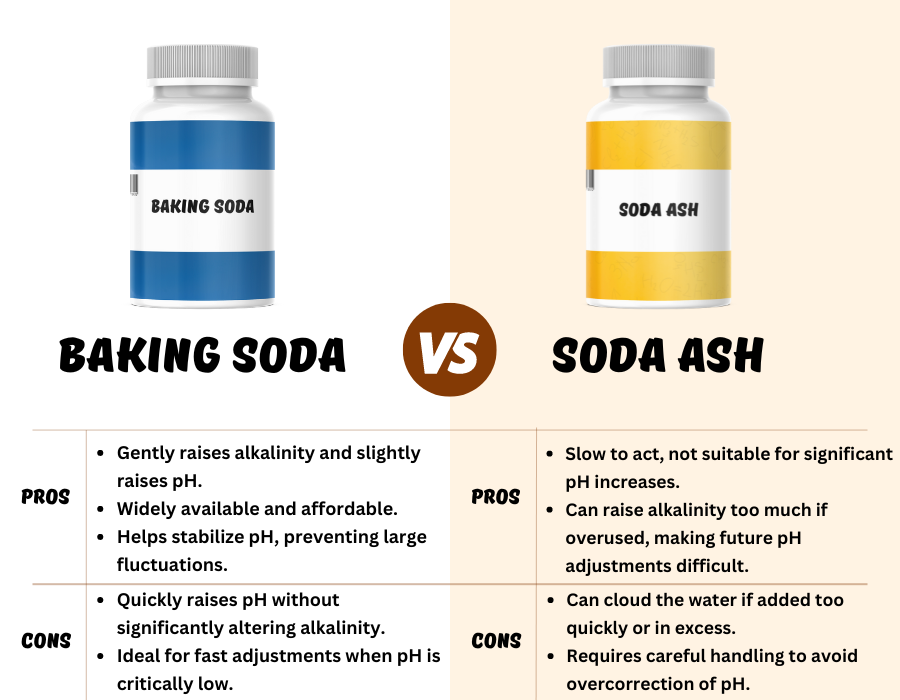
Some pool owners use soda ash (sodium carbonate) instead of baking soda. Here’s how they compare:
| Product | Main Use | Effect on pH | Effect on Alkalinity |
|---|---|---|---|
| Baking Soda | Raise alkalinity | Small increase | Large increase |
| Soda Ash | Raise pH | Large increase | Small increase |
Key insight: Baking soda is best for raising alkalinity with minimal pH change. Soda ash is for raising pH quickly. Using the wrong product can cause imbalances.

Credit: www.homedepot.com
The Hidden Dangers Of Ignoring High Alkalinity
Many pool owners think a little high alkalinity is harmless. In reality, letting it stay too high can cause long-term issues:
- Scale buildup: Clogs pipes and shortens pump/filter life.
- Reduced chlorine efficiency: Higher risk of algae and bacteria.
- Poor swimmer comfort: Water can feel “slippery” or cause eye/skin irritation.
- Stained surfaces: Minerals settle and leave marks.
Fixing the problem quickly protects your pool’s value and keeps swimming safe.
When To Call A Professional
Most pool owners can handle excess baking soda with patience and care. However, some situations need expert help:
- Massive overdose (over 2x recommended amount)
- Persistent cloudy water after several fixes
- Visible scale or stains on pool surfaces
- Complex pool systems (heaters, saltwater, automation)
A certified pool service can diagnose and correct these issues, often with specialized tools or treatments.
Credit: poolcarespecialists.com
Frequently Asked Questions
What Is The Ideal Range For Baking Soda (alkalinity) In A Pool?
The best range for total alkalinity is 80–120 ppm. This keeps pH stable and water comfortable. If alkalinity drops below 80 ppm, pH may swing wildly. Over 120 ppm, you risk cloudy water and scale.
Can I Use Vinegar Instead Of Acid To Lower Alkalinity?
Vinegar is much weaker than pool acid. While it can lower pH a little, it’s not practical for pools—too much would be needed, and it can add unwanted contaminants. Always use pool-grade acid for best results.
How Do I Know If My Pool Water Is Safe To Swim In After Fixing The Problem?
Test your water for pH (7.2–7.8), alkalinity (80–120 ppm), and chlorine (1–3 ppm). If all are in range and water is clear, it’s safe to swim. When in doubt, wait a day and retest.
Is Cloudy Water Always Caused By Too Much Baking Soda?
Not always. Cloudy water can also be caused by high calcium, poor filtration, dead algae, or debris. Testing is the only way to know for sure.
Where Can I Find More Information About Pool Chemistry?
A good resource is the Pool & Hot Tub Alliance. You can visit their official site at Pool & Hot Tub Alliance for guides and professional advice.
Balancing pool chemistry is a science, but it’s not magic. With the right steps, careful testing, and a little patience, you can fix too much baking soda and enjoy clean, sparkling water all season long. Remember, small changes and steady habits are the secret to a stress-free pool.