
Choosing the right hardware for your kitchen cabinets can transform an ordinary kitchen into a space that feels custom and inviting. For many homeowners, this decision is as important as picking out the cabinets themselves. Cabinet hardware is not just about looks—it affects how you use your kitchen every single day.
The right handles or knobs make cabinets easier to open, keep surfaces clean, and can even reflect your personality. Yet, with so many styles, finishes, and types available, it’s easy to feel overwhelmed. This guide will help you make smart choices, avoid common mistakes, and select hardware that fits your kitchen’s style, your budget, and your needs.
Understanding Kitchen Cabinet Hardware
Before you start shopping, it’s important to know what counts as cabinet hardware. In kitchens, hardware usually means the pulls, knobs, hinges, and sometimes even special catches or latches you install on cabinet doors and drawers. Handles and knobs help you open and close doors, while hinges let the doors swing open smoothly. Hardware is both decorative and functional, and the choices you make will affect your kitchen’s daily use and long-term appearance.
Cabinet hardware is often called the “jewelry” of the kitchen. Just as jewelry can make an outfit feel special, well-chosen hardware can make your cabinets look polished and complete. But unlike jewelry, you touch and use hardware dozens of times each day—so comfort and durability matter as much as style.
Types Of Kitchen Cabinet Hardware
Choosing hardware starts with understanding the main types available. Each type suits different cabinet styles and user preferences.
Knobs
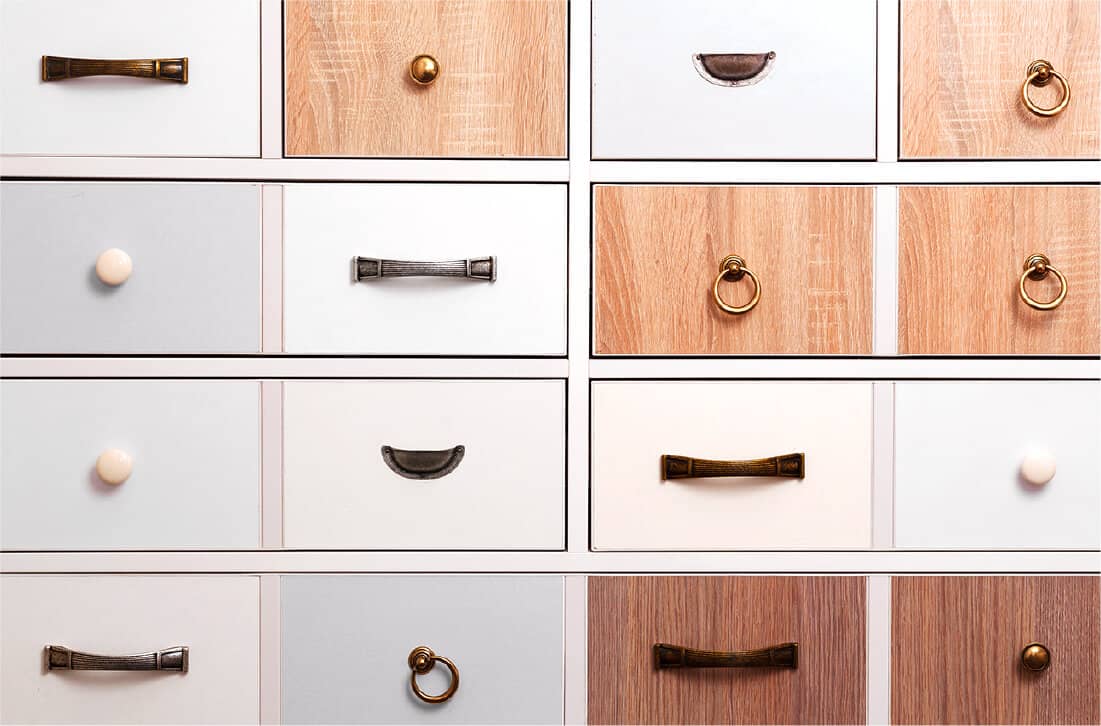
Knobs are small, usually round, and are mounted with one screw. They are most often used on cabinet doors, though some people use them on drawers as well. Knobs are easy to install and work well in smaller kitchens or on traditional-style cabinets. Because they have a single point of contact, they are generally best for lighter doors and drawers.
Pulls (handles)
Pulls—sometimes called handles or bars—are mounted with two screws and provide a bigger surface to grip. They are popular for drawers and for large cabinet doors. Pulls come in many lengths and shapes, from short and curved to long and linear. They give a more modern look and are easier to grab, especially for people with arthritis or limited hand strength.
Cup Pulls
Cup pulls are a special type of pull with a semi-circular or “cup” shape. You slip your fingers underneath to open the drawer. They work best for drawers and suit vintage, farmhouse, or classic kitchens.
Latches And Catches
Latches and catches are mostly used for special cabinets, like those with glass doors or for a decorative, old-fashioned touch. They can help keep doors closed tightly, which is useful for cabinets holding fragile items.
Hinges
Hinges are not always visible, but they are critical. You can pick between exposed hinges (visible when the door is closed) and concealed hinges (hidden inside the cabinet). Hinges affect how far your cabinet doors open and how they look.
Factors To Consider When Choosing Hardware
Selecting kitchen cabinet hardware is about more than just picking something pretty. Several key factors can guide you toward the best decision for your home.
1. Kitchen Style And Design
Your hardware should fit your kitchen’s overall style. For example:
- Modern kitchens look best with simple bar pulls or minimalistic knobs in matte black, stainless steel, or chrome.
- Traditional kitchens pair well with round or oval knobs, ornate pulls, or antique finishes like brass or bronze.
- Farmhouse or rustic kitchens often use cup pulls, wrought iron, or distressed metal finishes.
Matching hardware with your kitchen’s design creates a sense of unity. Mixing styles can work, but it’s tricky—usually best for confident decorators.
2. Cabinet Color And Finish
The color of your cabinets influences which hardware finish will look best:
- White cabinets: Almost any hardware color works, but black, gold, or nickel are most popular.
- Dark cabinets: Lighter hardware like polished nickel or brass stands out.
- Wood-tone cabinets: Oil-rubbed bronze or antique brass complements warm woods, while chrome or stainless steel suits cool woods.
A common beginner mistake is choosing hardware that blends in too much, making it hard to see or use.
3. Hardware Finish
Finish refers to the surface coating or color of the hardware. Common finishes include:
- Polished chrome (shiny, modern)
- Brushed nickel (soft, matte look, hides fingerprints)
- Oil-rubbed bronze (dark, antique look)
- Matte black (trendy, bold)
- Satin brass (warm gold, elegant)
Some kitchens look best with one finish throughout; others mix finishes for a custom look. If you mix, keep at least one element (like all knobs or all pulls) the same for balance.
4. Size And Proportion
The size of your hardware should suit your cabinets. Tiny knobs on big drawers look odd and are hard to use. As a rule:
- Knobs: 1–1.5 inches in diameter for standard doors.
- Pulls: 1/3 to 1/2 the width of the drawer is a good guide. For example, a 30-inch drawer looks best with a 10–15 inch pull.
Long pulls are popular for modern kitchens, while shorter pulls or knobs fit traditional spaces.
5. Comfort And Usability
You’ll touch your cabinet hardware hundreds of times a week. Pick a style that feels comfortable in your hand. Avoid sharp edges or designs that pinch fingers. Try samples in person if possible. Hardware that looks nice but is uncomfortable will quickly become annoying.
6. Durability And Quality
Kitchens are busy, and hardware gets a lot of use. Choose solid materials like solid brass, stainless steel, or zinc alloy. Avoid cheap, hollow hardware, which can bend or break. Good hardware lasts decades, while poor-quality pieces may need replacing in a few years.
7. Budget
Prices range widely. A simple knob may cost $2, while designer pulls can be $20 or more each. Multiply by the number of cabinets and drawers—cost adds up quickly. Set a budget before you fall in love with expensive hardware.
8. Functionality And Kitchen Layout
Think about how you use your kitchen. Wide drawers for pots and pans need strong, long pulls. Upper cabinets used less often might be fine with smaller knobs. Consider special hardware for tricky spots—like finger pulls for hidden cabinets or touch-latch for ultra-modern, handleless designs.
9. Cohesion With Appliances And Fixtures
Coordinate your hardware with faucets, lighting, and appliances. If your kitchen has stainless steel appliances, brushed nickel or chrome hardware often works best. For black or colored appliances, matte black or custom finishes might look better.
10. Installation And Replacement
If you’re upgrading old hardware, check the existing screw holes. Reusing holes makes installation easier. If the new hardware has different hole spacing, you may need to fill and drill new holes—which adds time and cost.
Popular Hardware Materials And Their Pros And Cons
Not all hardware materials are created equal. The material affects look, feel, and lifespan.
| Material | Pros | Cons |
|---|---|---|
| Solid Brass | Durable, heavy, many finishes | Expensive, may tarnish |
| Stainless Steel | Modern, strong, resists rust | Can show fingerprints, costly |
| Zinc Alloy | Affordable, many styles | Less durable, lighter feel |
| Iron/Wrought Iron | Rustic look, strong | Can rust, limited finishes |
| Ceramic/Glass | Decorative, unique, vintage style | Fragile, harder to clean |
| Plastic/Acrylic | Very affordable, modern look | Less durable, can yellow or scratch |
Non-obvious insight: Solid brass hardware is often coated with a protective layer, but harsh cleaners can wear this off, leading to tarnish. For humid climates, stainless steel resists rust better than most metals.
Matching Hardware To Cabinet Style
Cabinets come in many styles, and the hardware should match or enhance the look.
Shaker Cabinets
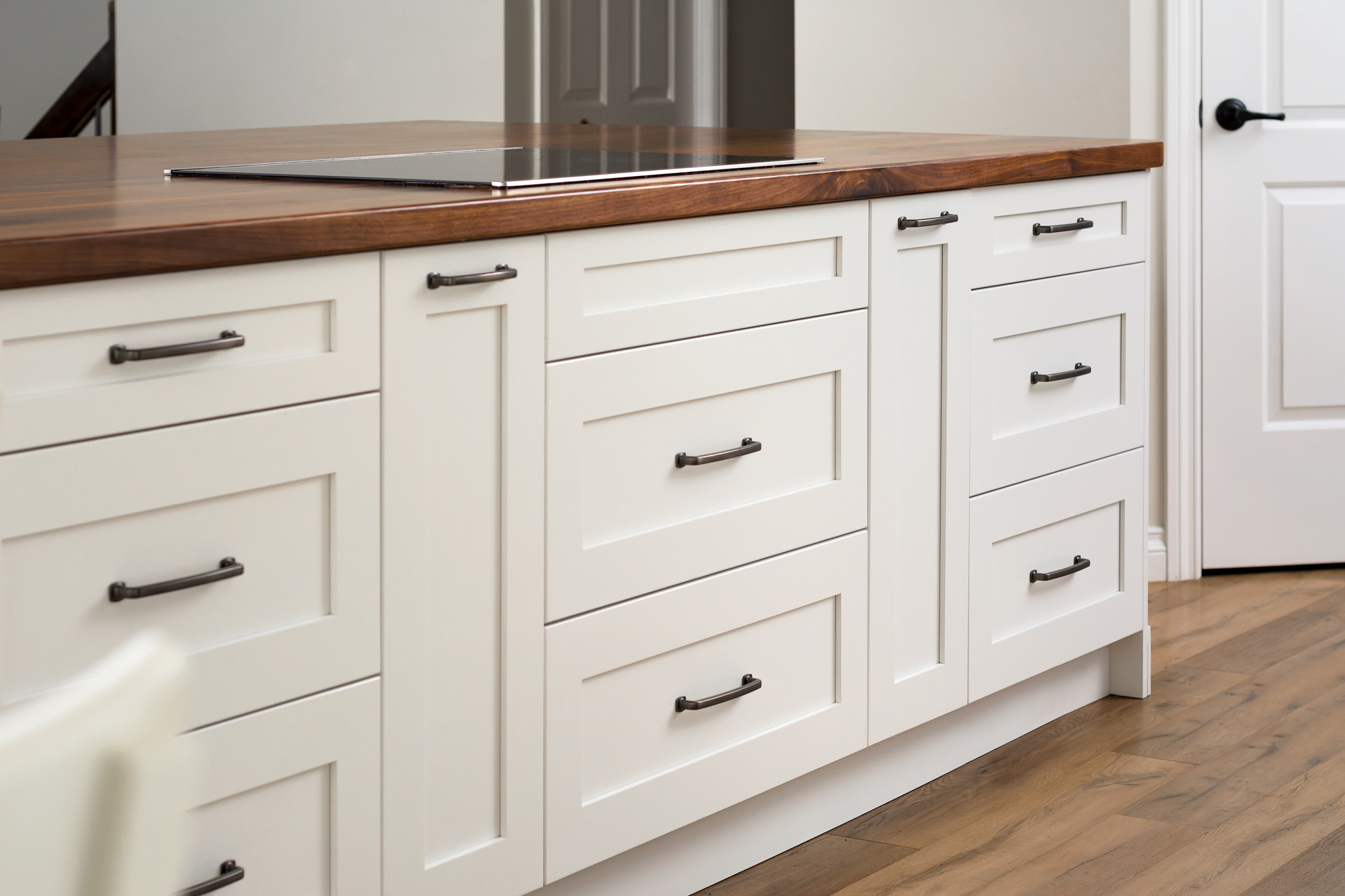
Shaker cabinets are simple, flat-paneled. They suit almost any hardware style. Modern kitchens often use long bar pulls, while classic kitchens use round knobs or cup pulls.
Raised Panel Cabinets
Raised panel cabinets have a center panel that sticks out. They look best with traditional hardware—ornate pulls, antique finishes, or detailed knobs.
Slab Cabinets
Slab cabinets are flat and sleek. Long, linear pulls or hidden finger pulls look best. Minimalistic hardware keeps the clean lines.
Glass-front Cabinets
For glass-front cabinets, small knobs or latches work well. Avoid heavy pulls that could stress the glass.
Inset Cabinets
Inset cabinets have doors that sit inside the frame. Exposed hinges and classic knobs or pulls enhance their custom look.
Mixing Knobs And Pulls: When And How
Many designers mix knobs and pulls for a more interesting look. A common approach:
- Knobs on doors, pulls on drawers
- Pulls on large drawers, small pulls or knobs on small drawers
Mixing adds variety but should feel intentional. Use the same finish and style family for cohesion. If unsure, stick to one type for simplicity.
Hardware Sizing Guide
Getting the right size hardware is critical for both look and function. Here’s a quick sizing guide:
| Cabinet/Drawer Width | Recommended Pull Length | Recommended Knob Size |
|---|---|---|
| Up to 12 inches | 3 to 4 inches | 1 to 1.25 inches |
| 12 to 30 inches | 4 to 8 inches | 1.25 to 1.5 inches |
| 30 to 48 inches | 8 to 12+ inches | 1.5 inches or larger |
Non-obvious insight: For very wide drawers, consider two pulls (evenly spaced) instead of one long pull for easier opening and less stress on the drawer front.
Choosing Hardware For Special Needs
Kitchens should be comfortable for everyone. If you or a family member has arthritis or limited grip strength, look for:
- Long bar pulls (easier to grab)
- D-shaped pulls (no twisting needed)
- Touch-latch hardware (press to open, no handle required)
Avoid tiny knobs or sharp-cornered hardware, which can be painful or hard to use.
Credit: kitchencabinetkings.com
How To Test Hardware Before Buying
If possible, buy one or two samples before committing. Check:
- How the finish looks in your kitchen’s lighting
- If it feels comfortable in your hand
- If it matches the cabinet thickness (some screws may be too short or long)
Testing helps avoid expensive mistakes and ensures long-term satisfaction.
Installation Tips And Common Mistakes
Installing hardware is usually easy, but mistakes can ruin the look.
Tips:
- Measure carefully before drilling—double-check hole spacing.
- Use a template or jig for perfectly aligned hardware.
- For heavy drawers, use hardware rated for higher weight.
Common mistakes to avoid:
- Drilling holes in the wrong place (measure twice, drill once)
- Picking hardware too small for large cabinets
- Forgetting to buy extra hardware (always order a few extras for future repairs)

Credit: www.ksrenovationgroup.com
Where To Buy Kitchen Cabinet Hardware
Hardware is available at big-box stores, specialty shops, and online retailers. Specialty shops often have more unique styles and better quality. Online reviews can help spot durability issues.
Some top brands include Amerock, Top Knobs, Liberty Hardware, and Belwith Keeler. For inspiration, see images and advice at Houzz.
How Hardware Impacts Kitchen Value
The right hardware can actually increase your home’s value. According to a 2023 survey by the National Kitchen & Bath Association, 72% of real estate agents say kitchens with updated hardware attract more buyers and sell faster. While the increase in resale value is small, the improved appearance and usability are often worth the modest investment.
Credit: decorcabinets.com
Trends In Kitchen Cabinet Hardware
Hardware trends change every few years. In 2024, the most popular trends are:
- Matte black and champagne gold finishes
- Oversized pulls for large drawers
- Minimalistic, linear shapes
- Hidden or integrated pulls for ultra-modern kitchens
- Mixing metals (e.g., black pulls with brass faucets)
Remember, trends come and go, but classic finishes like brushed nickel and chrome rarely go out of style.
Upgrading Hardware: A Small Change, Big Impact
If you’re not ready for a full kitchen remodel, changing hardware is one of the easiest ways to update your kitchen’s look. For less than $200, you can swap old, dated hardware for something fresh. The change is instant and requires only basic tools.
Before you start, clean the cabinet surfaces and fill old screw holes if switching to a different size or style.
Troubleshooting Common Hardware Problems
Some issues can arise after installing new hardware:
- Loose knobs or pulls: Tighten screws; use thread-locking glue if they keep loosening.
- Stained or tarnished hardware: Clean with mild soap and water; avoid harsh cleaners, especially on brass.
- Squeaky hinges: A drop of oil or silicone spray usually fixes it.
- Scratched or chipped finishes: For minor scratches, try a furniture marker in a similar color.
If you notice hardware wearing out faster than expected, it might be a sign of poor material or finish. Consider upgrading to higher-quality pieces.
Environmental Considerations And Sustainability
Many homeowners today want eco-friendly options. Look for hardware made from recycled metals, locally sourced materials, or low-VOC finishes. Some brands offer certified “green” hardware. While often more expensive, these choices help reduce your environmental impact.
Sample Hardware Combinations For Different Kitchens
If you’re not sure where to start, here are some sample combinations that work well:
- Modern White Kitchen: Long stainless steel bar pulls on drawers, matching small pulls on doors.
- Traditional Cherry Cabinets: Antique brass cup pulls on drawers, round knobs on doors.
- Farmhouse Style: Matte black cup pulls on drawers, matching latches on glass-front doors.
- Coastal Look: Brushed nickel slim pulls on all doors and drawers.
- Industrial Kitchen: Thick iron pulls on drawers, matching exposed hinges on doors.
Seeing these combinations in design magazines or showrooms can help you visualize what will work best in your space.
Frequently Asked Questions
What Is The Best Material For Kitchen Cabinet Hardware?
Solid brass and stainless steel are considered the best choices for durability and appearance. They resist corrosion and last many years. For a lower-cost option, zinc alloy is common but less robust.
How Do I Choose The Right Size Pull Or Knob?
Pick pulls that are about 1/3 to 1/2 the drawer width. For knobs, 1–1. 5 inches in diameter works for most cabinets. Oversized hardware suits modern kitchens, while smaller pieces fit traditional designs.
Can I Mix Different Hardware Finishes In One Kitchen?
Yes, but do so carefully. Limit mixes to two finishes (like black and brass) and repeat each finish at least twice for balance. Too many finishes can make the kitchen look chaotic.
How Many Handles Or Knobs Do I Need For My Kitchen?
Count each cabinet door and drawer. Buy a few extras for future repairs or replacements, since manufacturers sometimes discontinue styles.
What Is The Easiest Way To Update My Kitchen Cabinets?
Replacing old hardware with new knobs or pulls is the fastest, most affordable update. No painting or new cabinets needed—just new hardware, a screwdriver, and 1–2 hours of work.
A well-chosen set of hardware can transform your kitchen from basic to beautiful. Take your time, test a few options, and you’ll find hardware that looks great, feels comfortable, and lasts for years. Whether you want a bold new look or a subtle upgrade, the right hardware brings your kitchen’s personality to life.