
Choosing the right pendant lights for your kitchen island can seem simple, but it’s a decision that affects both the look and the function of your kitchen. The right pendant lights do more than just brighten your workspace—they set the mood, add style, and can even make a small kitchen feel larger.
If you get it wrong, you could end up with poor lighting, awkward shadows, or fixtures that clash with your décor. But if you get it right, your kitchen island becomes the heart of your home, perfect for cooking, eating, or gathering with friends.
Many people focus only on style or price, but there’s more to consider. The size, number, spacing, and brightness of your pendant lights all matter. Even the color of the bulbs and the way the fixtures hang can change how your kitchen feels.
In this article, you’ll learn everything you need to make a smart choice—from measuring your island to picking the perfect style. You’ll find data, practical advice, and examples, so you can make decisions with confidence and avoid common mistakes.
Why Pendant Lights Matter For Kitchen Islands
Pendant lights are not just decoration. They are a key part of kitchen island lighting for several reasons:
- They give focused light where you prepare food or eat.
- They add personality and style, making your kitchen unique.
- They help create zones in open-plan spaces, separating the island from other areas.
- They can highlight your countertop material or color.
Many kitchens have only ceiling lights, which can leave the island in shadow or make the room feel flat. Pendant lights bring depth, making your kitchen more welcoming and practical.
Understanding Your Kitchen Island
Before choosing any lights, you need to know the size, shape, and use of your kitchen island. These things decide what lighting works best.
Measure Your Island
Start with the length and width. For example, a typical island might be 2 feet wide and 6 feet long (about 60 cm by 180 cm). Write down the exact size.
Think About How You Use It
Do you mostly cook, eat, or work at the island? If you often chop vegetables, you need bright, even light. If you eat or talk with friends, you might prefer a warmer, softer glow.
Ceiling Height Matters
Standard ceilings are 8 feet (about 2. 4 meters), but some kitchens have higher or lower ceilings. The height affects how low your pendant lights should hang.
Quick insight: Many people forget to measure ceiling height. If your lights hang too low, you’ll bump your head. Too high, and the light won’t reach your work area.
Deciding The Right Number Of Pendant Lights
Getting the number of pendants right is crucial. Too many can overwhelm your space. Too few leave dark spots.
Rule Of Thumb
Most kitchen islands use two or three pendants. Here’s a simple guide:
- For islands under 4 feet (120 cm): 1 large pendant or 2 small ones
- For islands 5 to 7 feet (150–210 cm): 2–3 pendants
- For islands over 8 feet (240 cm): 3 or more pendants
Spacing Your Pendants
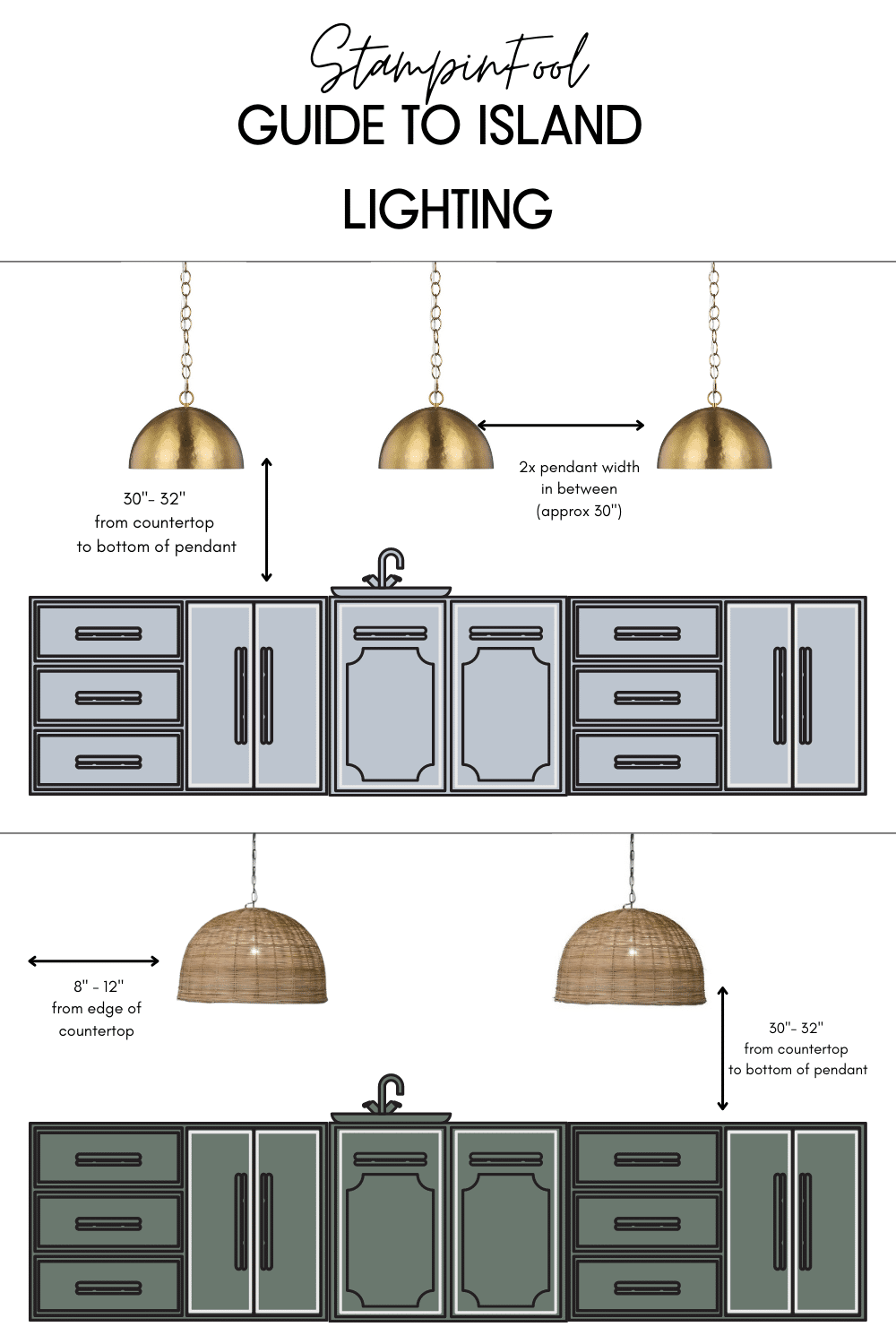
Each pendant should be evenly spaced, with the same distance from the edge of the island. A common mistake is to put lights too close together or too far from the edge.
Practical tip: Measure the full length of your island, subtract 12 inches (30 cm) from each end, then divide the remaining space by the number of lights plus one. This gives even spacing.
Choosing The Right Size For Pendant Lights
Size is about both looks and performance. Large pendants make a bold statement, while small ones can be elegant and subtle. But they also affect how much light you get.
Diameter And Height
A good rule: Add the length and width of your kitchen (in feet), then use that number in inches as a rough maximum diameter for a single pendant. For example, if your kitchen is 12 feet by 14 feet (26 feet), don’t use pendants wider than 26 inches.
For multiple pendants, choose smaller diameters. Most kitchen pendants are 10–16 inches wide.
Pendant Size Comparison
Here’s a quick look at different pendant sizes and how they suit different islands:
| Pendant Diameter | Best For Island Size | Visual Impact |
|---|---|---|
| 8-10 inches | Small islands (3-4 feet) | Subtle, modern |
| 12-16 inches | Medium islands (5-7 feet) | Balanced, classic |
| 18-22 inches | Large islands (8+ feet) | Bold, statement piece |
Beginner insight: Many first-time buyers choose pendants that are too small, thinking they’ll “blend in.” But small pendants over a big island can look lost and won’t give enough light.
Picking The Perfect Style
Your pendant lights should match your kitchen’s style, but they don’t have to be boring or predictable.
Popular Styles
- Glass pendants: These give a clean, airy feel and spread light evenly.
- Metal shades: Great for industrial or modern kitchens. They focus light downward.
- Fabric shades: Softer look, but can be harder to clean.
- Lantern-style: Adds vintage or classic charm.
- Cluster pendants: Several small lights in a group—good for narrow islands.
Matching Fixtures To Your Kitchen
- Modern kitchens: Try geometric shapes, chrome, or black finishes.
- Farmhouse kitchens: Go for aged brass, rustic wood, or clear glass.
- Traditional kitchens: Look for lanterns, iron, or fabric shades.
- Minimalist kitchens: Simple lines, matte finishes, or even bare bulbs.
Non-obvious tip: Don’t be afraid to mix metals. If your faucets are stainless steel, black or brass pendants can still work—just keep the overall look balanced.
Choosing The Right Light Bulbs
People often focus only on the fixture, but the light bulb can change the entire feel of your kitchen.
Bulb Type
- LED bulbs: Last long, save energy, and come in many colors.
- Edison bulbs: Vintage style, but less bright and less energy efficient.
- Halogen bulbs: Bright and crisp, but get hot and use more power.
Brightness And Color Temperature
Brightness is measured in lumens. For kitchen islands, aim for 300–400 lumens per pendant as a minimum.
Color temperature is measured in Kelvin (K):
- 2700K: Warm, cozy light (like a living room)
- 3000K–3500K: Soft white, good balance for kitchens
- 4000K+: Cool white, very bright and crisp
For most kitchens, 3000K bulbs give a warm, inviting look without being too yellow.
Extra insight: Choose bulbs with a high Color Rendering Index (CRI 80+) to see food colors accurately. Low-CRI bulbs can make food look dull.
How High Should You Hang Pendant Lights?
Hanging your pendants at the right height is key for safety and comfort.
Standard Height
The bottom of the pendant should be 30–36 inches (76–91 cm) above the island countertop. This is high enough for eye contact but low enough for good light.
If your ceilings are higher than 9 feet, you can hang pendants a bit higher—add about 3 inches for every extra foot of ceiling height.
Adjustable Vs. Fixed Height
Some pendants have adjustable cords or chains. This is helpful if you want to change the height later, for example, when you move or remodel.
Common mistake: Hanging pendants too low. This blocks views and makes the space feel crowded.
Material Choices And Maintenance
Pendant lights come in different materials. Think about both the look and how easy they are to clean.
- Glass: Shows fingerprints but is easy to wipe.
- Metal: Durable, but some finishes (like brass) need special care.
- Fabric: Can collect dust and grease, so not ideal right above cooking areas.
- Wood: Adds warmth but may need regular dusting.
For islands where you cook a lot, stick with glass or metal. They’re easier to keep clean.

Credit: www.tlcinteriors.com.au
Matching Pendant Lights With Other Lighting
Pendant lights work best when they’re part of a complete lighting plan.
- Recessed lights: Fill in general light.
- Under-cabinet lights: Great for extra task lighting.
- Wall sconces: Add accent light in open kitchens.
Don’t rely only on pendants. Layer your lights for the best results.
Comparing Pendant Light Placement Patterns
There are a few main ways to arrange pendant lights over an island:
| Pattern | Number of Lights | Best For | Drawback |
|---|---|---|---|
| Linear | 2–4 | Most standard islands | Can look plain if too small |
| Cluster | 3–7 (grouped) | Narrow or round islands | Can look busy if overdone |
| Single Statement | 1 large | Small islands or bold style | May not give even light |
Beginner mistake: Choosing a cluster for a wide island—clusters work best on small or round islands.
Calculating The Right Wattage And Dimmability
Brightness isn’t just about the number of bulbs. The total wattage and whether your lights are dimmable matter too.
How Much Light Do You Need?
A kitchen island used for prep work needs about 35–50 lumens per square foot. For example, if your island is 3×6 feet (18 square feet), you need about 630–900 lumens total.
Dimmable Lights
Dimmers let you change the mood for different times—bright for cooking, soft for evening meals. Many modern pendants use LED bulbs that are dimmable, but check the package before buying.
Pro tip: Always use compatible dimmer switches if you want dimmable pendants. Using the wrong switch can damage your bulbs.
Matching Pendant Lights To Your Countertop
Pendants can highlight the color and material of your countertop.
- Light countertops: Use dark or bold pendants for contrast.
- Dark countertops: Try lighter or metallic pendants to add brightness.
- Patterned counters: Stick with simple pendants so the space doesn’t look too busy.

Credit: southernyankeediy.com
Cost And Budget Considerations
Pendant lights range from $40 to $500+ each. The price depends on size, materials, and brand.
What Affects The Price?
- Designer brands cost more but may offer better build quality and unique styles.
- Handmade or imported pendants are usually more expensive.
- Simple glass or metal pendants can be very affordable.
Set a budget before you shop. Remember to include installation costs, especially if you need an electrician.
Cost Comparison Example
| Pendant Type | Average Price (USD) | Pros | Cons |
|---|---|---|---|
| Basic glass | $40–$100 | Affordable, easy to clean | Simple look |
| Designer metal | $150–$400 | Stylish, durable | More expensive |
| Custom/Handmade | $300–$1000+ | Unique, artistic | Can be hard to replace |
Installation Tips And Safety
Proper installation is as important as choosing the right lights.
- Always turn off the power at the main switch before installing.
- Use the correct anchors for your ceiling type.
- If you’re not comfortable with wiring, hire a licensed electrician.
- Make sure the fixtures are rated for kitchen use—some can’t handle heat or moisture.
Safety insight: Avoid pendants with open flames or exposed wiring near cooking surfaces.
Credit: stampinfool.com
Mistakes To Avoid When Choosing Pendant Lights
- Ignoring scale: Small pendants over a large island look out of place.
- Bad spacing: Uneven placement makes your kitchen look unbalanced.
- Too little light: Dim bulbs make prep work hard.
- Hard-to-clean materials: Fabric or textured shades gather grease and dust.
- Clashing styles: Mismatched pendants can ruin your kitchen’s look.
- Forgetting dimmers: Fixed-brightness lights can be too harsh at night.
- Wrong height: Pendants that hang too low or high cause problems.
- Ignoring the rest of the lighting: Pendants can’t do it all.
Beginner insight: Many people buy pendants online without checking return policies. Always check the policy in case the size or style doesn’t fit your space.
Sustainable And Smart Lighting Options
If you care about energy use or want to control your lights with your phone, look for:
- LED pendants: Use up to 80% less energy than incandescent bulbs.
- Smart bulbs: Let you change brightness or color with an app.
- Recycled materials: Some pendants are made from glass or metal waste.
For more on energy-saving options, see U.S. Department of Energy.
Real-life Examples And Inspiration
Example 1: Small Kitchen, Big Impact
Anna’s kitchen island is only 4 feet long, but she chose two 12-inch matte black pendants. The lights hang at 33 inches above the counter—perfect for task lighting. She added dimmers so the space goes from bright prep area to cozy dinner spot in seconds.
Example 2: Open-plan Family Kitchen
David’s island is 8 feet long. He picked three clear glass pendants, each 14 inches wide, spaced evenly. The clear glass spreads light across the island, while the simple shape matches his modern cabinets. He installed LED bulbs at 3000K for a warm look.
Example 3: Showpiece Island
Maria wanted drama. Her 5-foot island features a single 20-inch brass pendant with an art deco design. The bold fixture is the focus of her kitchen, but she added under-cabinet lights for extra brightness.
Non-obvious insight: Sometimes less is more. A single, large pendant can make a statement, but it works best in small kitchens or when the rest of the lighting is well planned.
Frequently Asked Questions
How Many Pendant Lights Should I Put Over My Kitchen Island?
Most islands need two or three pendants. For islands under 4 feet, use one large or two small pendants. For 5–7 feet, go for two or three. For islands over 8 feet, consider three or more, spaced evenly.
What Height Should Pendant Lights Be Above A Kitchen Island?
The best height is 30–36 inches above the countertop. This gives good light without blocking your view. For ceilings over 9 feet, you can hang them a little higher.
Should Pendant Lights Be Brighter Than Other Kitchen Lights?
Pendant lights should be bright enough for tasks, but not the only source of light. Aim for 300–400 lumens per pendant, and layer with other lighting like recessed or under-cabinet lights.
What Style Of Pendant Light Works Best With A Modern Kitchen?
Modern kitchens look great with geometric shapes, chrome, matte black, or glass pendants. Simple lines and neutral colors fit well. Avoid overly ornate or vintage styles unless you want contrast.
Can I Install Pendant Lights Myself, Or Do I Need An Electrician?
If you’re comfortable with basic wiring and turn off the power, you can install pendants yourself. But for safety, hiring a licensed electrician is best, especially for new wiring or heavy fixtures.
Choosing pendant lights for your kitchen island is about more than picking something pretty. Think about your space, your needs, and how the lights will work with the rest of your kitchen. With these tips, you’ll find pendants that make your kitchen both beautiful and practical.
Remember to measure, plan your lighting layers, and don’t be afraid to try something bold. Your kitchen island deserves to be the star of your home.