
Every time you load dishes into your dishwasher and press start, you expect sparkling clean plates and cups at the end. But have you ever wondered how your dishwasher heats the water to get those results? The way a dishwasher heats water is more complex than it might seem.
This process involves electricity, clever engineering, and safety controls, all working together so you can enjoy the convenience of clean dishes without extra effort. Understanding this can help you use your machine better, solve problems, and even save on energy costs.
Let’s explore every detail of how a dishwasher heats water, the technology behind it, its impact on your dishes, and what you can do to make your dishwasher work more effectively.
The Basics: Why Dishwashers Need Hot Water
Hot water is essential in a dishwasher for several reasons. First, hot water dissolves grease and food particles more efficiently than cold water. It also activates detergent ingredients that break down tough stains. Finally, high temperatures help sanitize dishes by killing germs and bacteria. Most dishwashers aim to use water at 120°F to 160°F (49°C to 71°C) for the main wash and rinse cycles. This range is hot enough to clean and sanitize but not so hot that it damages dishes or the machine.
If water is not hot enough, you might notice leftover stains, cloudy glasses, or even a musty smell. That’s why understanding how a dishwasher heats water can help you spot issues early and keep your machine running at its best.
How Dishwashers Get Their Water
Dishwashers do not have a built-in water tank. Instead, they connect directly to your home’s plumbing. When you start a cycle, the machine’s inlet valve opens, allowing water from your home supply to flow in. Most homes deliver water between 100°F to 120°F (38°C to 49°C), but this is not always hot enough for deep cleaning. This is where the dishwasher’s internal heating system comes into play.
Some dishwashers connect to the cold water line, but most use the hot water line to save energy and reduce heating time. If your home water heater is set very low, your dishwasher may need to work harder to heat the water to the required temperature.
The Internal Heating System Explained
The heart of a dishwasher’s water heating system is the heating element. This component works much like the coil in an electric kettle or the element in an oven. When electricity passes through it, the element heats up, warming the water inside the dishwasher.
The Heating Element
Most dishwashers use a metal coil at the bottom of the tub. When the cycle starts, and water fills the bottom, the heating element is activated. It heats the water directly, raising it from the incoming temperature (usually around 120°F) to the target temperature (up to 160°F for some cycles).
The element is often made from nickel-chromium alloy because this material can handle high heat without breaking down. It is also coated to prevent rust and corrosion. Some newer dishwashers use a hidden or integrated heating element under the tub, which saves space and is less likely to get damaged by dropped utensils.
How The Heating Process Works
- Filling: Water enters the dishwasher via the inlet valve.
- Heating: The heating element turns on, warming the water in the bottom of the tub.
- Circulation: A pump moves the hot water through spray arms, covering all dishes.
- Temperature Sensors: The dishwasher has sensors that monitor the water temperature. These sensors tell the control board when the water reaches the right heat.
- Shutoff: Once the correct temperature is reached, the heating element either turns off or reduces power to maintain the heat.
Here’s a simplified look at the process:
| Step | Action | Component Involved |
|---|---|---|
| 1 | Water fills tub | Inlet Valve |
| 2 | Element heats water | Heating Element |
| 3 | Water temperature checked | Temperature Sensor |
| 4 | Circulation for cleaning | Pump & Spray Arms |
The Role Of Thermostats And Sensors
Inside every modern dishwasher, you’ll find thermostats or temperature sensors. These tiny devices check the water’s heat level continuously. If the water is too cold, the heating element stays on longer. If it’s too hot, the system turns the element off to prevent overheating.
Some advanced dishwashers use thermistors (a type of electronic sensor) that give very accurate readings. This ensures water is always at the best temperature for cleaning and safety.
Different Types Of Dishwasher Heating Systems
Not all dishwashers heat water the same way. Let’s look at the main types of systems used today.
Exposed Coil Heating Elements
Most traditional dishwashers use a visible metal coil at the bottom of the tub. This coil gets red-hot during the heating cycle. While effective, these elements can become blocked by plastic items that fall onto them, sometimes melting the plastic.
Hidden Or Integrated Heating Elements
Modern dishwashers, especially those made in Europe or newer U.S. models, use a hidden heating element. This is installed beneath a stainless steel base plate. It’s safer for plastic items and reduces the risk of burns or melting. These systems are also more energy efficient, as they are better insulated.
Flow-through Water Heaters
Some high-end dishwashers use a flow-through water heater. Instead of heating water in the bottom of the tub, these machines have a special chamber where water flows past a powerful heater. This method heats water quickly and evenly. It also means the machine can keep water at a stable temperature throughout the wash.
Here’s a comparison of the three systems:
| System Type | Location | Main Benefit | Main Drawback |
|---|---|---|---|
| Exposed Coil | Bottom of tub | Simple, low cost | Risk of melting plastics |
| Hidden Element | Under base plate | Safer, more efficient | More expensive |
| Flow-Through Heater | Separate chamber | Fast, precise heating | Higher cost, complex repair |
Heating During Different Dishwasher Cycles
Dishwashers don’t heat water continuously. Instead, they heat at specific times during the wash process. Here’s how it usually works:
- Pre-Wash: Some models heat water slightly to loosen food. Others just use tap temperature.
- Main Wash: The heating element is activated to reach the target temperature for deep cleaning.
- Rinse: Hot water is used to wash away detergent and food. The final rinse is often the hottest stage.
- Drying: In many dishwashers, the same element used for water heating is also used to heat air for drying.
Not every cycle uses the heating element the same way. For example, Eco or Energy Saver cycles use lower temperatures to save energy but take longer to clean.
What Happens If Water Isn’t Hot Enough?
If your dishwasher doesn’t heat water properly, the results are easy to spot:
- Dirty dishes: Grease and food don’t dissolve well.
- Cloudy glassware: Minerals and soap remain.
- Bad odors: Bacteria and mold can grow in cooler water.
- Poor drying: Hot water helps dishes dry faster by evaporating moisture.
Common reasons for low water temperature include a broken heating element, faulty thermostat, or low home water heater setting.
How The Dishwasher Knows When Water Is Hot
You might wonder how the dishwasher “knows” the water is hot enough. The answer is temperature sensors or thermostats. These devices are programmed to signal the control board when water hits the right temperature, usually between 120°F to 160°F (49°C to 71°C). If the water is not hot enough, the dishwasher waits and heats longer before moving to the next stage.
Some dishwashers also have time-based controls. If the water doesn’t reach the set temperature after a certain period, the cycle continues anyway, but the cleaning results may be worse.
The Impact Of Your Home’s Water Heater
The temperature of water entering your dishwasher depends on your home’s water heater setting. Most experts recommend keeping your home heater at 120°F (49°C). If set lower, your dishwasher will have to work harder, using more electricity. If set higher, you risk burns at faucets and waste energy.
Some dishwashers can only raise water temperature by 20–30°F (6–10°C) above the incoming temperature. If your supply is too cold, the dishwasher may never reach the ideal cleaning temperature.
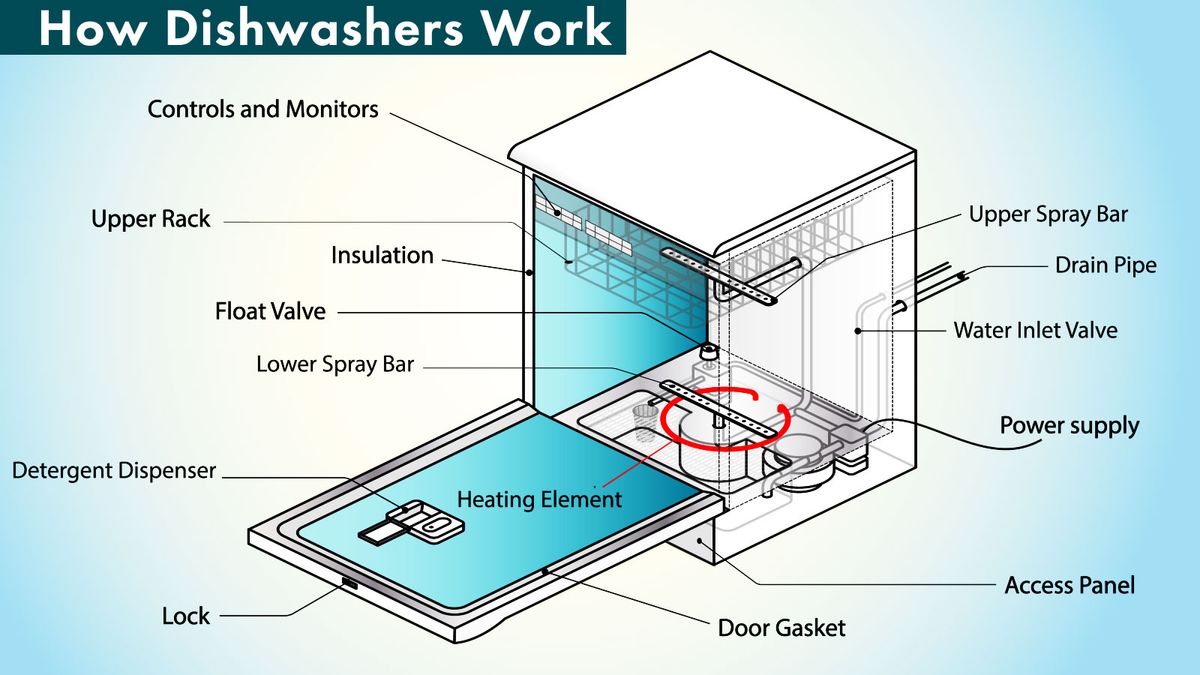
Credit: home.howstuffworks.com
Energy Use: How Much Power Does Water Heating Take?
Heating water is the most energy-intensive part of the dishwasher cycle. According to the U.S. Department of Energy, about 80–90% of a dishwasher’s energy use goes to heating water. Modern Energy Star-rated models use less power by:
- Using insulated tubs to keep heat in
- Heating only the water needed for each cycle
- Offering Eco modes with lower temperatures and longer wash times
Average energy use for a dishwasher is 1.5 kWh per cycle, but this varies widely depending on the age and design of the appliance.
Water Softening And Heating: How They Work Together
Many dishwashers, especially in Europe, include a water softener. Hard water contains minerals that make cleaning harder and can leave white spots on glasses. The softener removes these minerals, making detergent work better and helping the heater operate efficiently.
If your water is very hard, your dishwasher’s heater may have to work longer, using more energy. Using a water softener or special salt can help your heater last longer and keep your dishes spotless.

Credit: www.baikalservices.com
Common Problems With Dishwasher Water Heating
Even the best dishwashers can develop problems with heating. Some of the most common issues include:
- Broken heating element: The coil can burn out and stop heating.
- Faulty thermostat: If the sensor is broken, the machine may not know when to turn the heater on.
- Wiring issues: Loose wires or faulty connections prevent electricity from reaching the heating element.
- Control board failure: The electronic brain of the dishwasher may stop sending signals to heat water.
Signs that your dishwasher’s heating system is not working include cold water in the tub after a wash, dishes not drying, or persistent bad smells.
Diagnosing And Fixing Heating Problems
If you notice your dishwasher is not heating water, here are some steps you can take:
- Check your home’s hot water: Run the hot tap closest to the dishwasher. If the water is cold, the problem may be your home heater, not the dishwasher.
- Inspect the heating element: Look for visible signs of damage or burning.
- Check for error codes: Many modern dishwashers display error codes if the heater is not working.
- Listen for strange sounds: Clicking or buzzing can mean a relay or control board problem.
- Call a professional: If you’re not comfortable with electrical repairs, it’s best to get expert help.
Some repairs, such as replacing a heating element, are straightforward. Others, like fixing a control board, require more expertise.
How To Help Your Dishwasher Heat Water Better
You can take simple steps to make sure your dishwasher always gets hot enough water:
- Run the hot water tap near your dishwasher for 30 seconds before starting. This brings hot water to the pipe, so the machine fills with warmer water from the start.
- Set your water heater to at least 120°F (49°C) for best results.
- Use dishwasher salt if you have hard water. This helps the heater work more efficiently.
- Don’t overload the machine. Crowded dishes block water flow, making heating less effective.
- Clean the spray arms and filter regularly so hot water can reach all areas.
Smart And Modern Dishwasher Heating Technologies
New dishwasher designs include features that improve heating and energy use:
- Smart sensors monitor water temperature and adjust heating automatically.
- Eco and quick wash cycles use less hot water or heat more efficiently.
- Heat exchangers transfer heat from used water to fresh water, saving energy.
- Wi-Fi controls allow users to check cycle progress and get alerts about heating issues.
Some brands now offer dishwashers that connect to your smart home system, letting you control settings from your phone and get maintenance reminders.
Comparing Dishwasher Heating To Hand Washing
Many people think washing dishes by hand uses less energy, but this isn’t always true. Research shows that using a dishwasher is often more energy and water efficient than hand washing, especially when the dishwasher uses hot water efficiently.
Here’s a quick comparison:
| Method | Water Used (gallons) | Energy Used (kWh) | Typical Water Temperature |
|---|---|---|---|
| Dishwasher (modern) | 3–5 | 1–1.5 | 120–160°F |
| Hand washing (with running tap) | 10–20 | 1.5–2 | 100–110°F |
Using a dishwasher with a good heating system saves resources and gives better cleaning results.
Practical Tips For Best Dishwasher Performance
To get the most from your dishwasher’s water heating system, follow these practical tips:
- Scrape, don’t rinse: Modern dishwashers and detergents work best with a little food left on plates. Pre-rinsing is not needed and wastes water.
- Use the right cycle: For heavily soiled dishes, use the “Heavy” or “Sanitize” cycle. For lightly soiled items, use Eco or Quick.
- Check detergent type: Some detergents require very hot water to dissolve properly. Powder works best with hotter water; gels can work at lower temps.
- Regular maintenance: Clean filters, spray arms, and the door seal monthly.
- Check the owner’s manual: Some dishwashers have special settings for different water temperatures or hard water conditions.

Credit: southendplumbingllc.com
Two Insights Most People Miss
- Dishwasher water heating is closely linked to drying performance. Many people think the drying step is separate, but most dishwashers use the same heating element for both. If your dishes aren’t drying well, it may be due to a problem with water heating, not just airflow.
- Using the “Sanitize” setting can consume much more energy. This setting heats water to above 150°F (66°C) for germ-killing power, but it can double energy use for a single cycle. Use it only when needed, like after sickness or for baby items.
When To Call A Professional
If you have tried all simple fixes—such as running hot water first, checking your home’s heater, and cleaning filters—but your dishwasher still isn’t heating water, it’s time to call a repair technician. Electrical repairs can be dangerous if you’re not trained.
A pro can test the element, sensors, and control board safely.
Environmental Impact Of Dishwasher Water Heating
Using the dishwasher’s heating system efficiently helps the environment. Lower energy use means fewer greenhouse gas emissions. Energy Star dishwashers save up to 3,870 gallons of water and $35 a year in energy costs compared to hand washing, according to the EPA.
For more details on how dishwashers work and energy savings, you can visit this Wikipedia page.
Frequently Asked Questions
How Hot Does A Dishwasher Get During A Wash Cycle?
Most dishwashers heat water to between 120°F and 160°F (49°C–71°C) during the main wash and rinse cycles. The hottest setting, usually called “Sanitize,” can reach up to 160°F (71°C) to kill germs and bacteria.
Can I Connect My Dishwasher To Cold Water Only?
While some dishwashers can heat water from a cold supply, most work best when connected to a hot water line. Heating from cold takes more time and energy, and may not reach the ideal temperature for cleaning and drying.
What Should I Do If My Dishwasher Is Not Heating Water?
First, check your home water heater setting and run the hot tap near the dishwasher. If the water is still cold after a cycle, you may have a broken heating element or a faulty sensor. Cleaning filters and spray arms can also help. For serious issues, call a qualified repair technician.
Will A Broken Heating Element Affect Drying?
Yes. Many dishwashers use the same heating element for both heating water and drying dishes. If the element is broken, you may notice both cold water and wet dishes at the end of the cycle.
Is It Safe To Wash Plastic Items In A Dishwasher With A Heating Element?
It depends on the location of the heating element. Exposed coil elements can melt plastic if items fall onto them. Hidden or integrated elements are safer for plastics, but always check if your plastic items are labeled “dishwasher safe.”
When you understand how a dishwasher heats water, you can get cleaner dishes, save on energy, and keep your machine running smoothly for years. With the right settings, good maintenance, and a little knowledge, your dishwasher becomes one of the most reliable tools in your kitchen.