
Mixing Trichlor And Calcium Hypochlorite: What Every Pool Owner Should Know
Owning a pool brings joy, relaxation, and fun. But behind those perfect blue waters is a science that keeps swimmers safe. If you maintain your own pool, you might use different chemicals. Two of the most common are trichlor (trichloroisocyanuric acid) and calcium hypochlorite. Both are used to sanitize water, but mixing them, or even using them the wrong way, can lead to dangerous reactions. Some pool owners have heard rumors and stories about mixing these products, but few understand the real risks.
If you’re wondering whether you can mix trichlor and calcium hypochlorite or use them together, this guide will explain it all. You’ll learn what these chemicals are, how they work, why mixing them is risky, and what safe alternatives exist.
We’ll also discuss pool maintenance strategies, answer common questions, and share expert advice that most beginners miss. By the end, you’ll know exactly how to keep your pool safe, clear, and inviting—without putting your health or property in danger.
What Are Trichlor And Calcium Hypochlorite?
Before talking about mixing, it’s important to understand what trichlor and calcium hypochlorite are, and how they work in pool care.
Trichlor (trichloroisocyanuric Acid)
Trichlor is a slow-dissolving, solid chlorine product. It usually comes in the form of tablets or sticks. Pool owners often use it in floating dispensers or automatic chlorinators. Trichlor provides:
- Stabilized chlorine: It contains cyanuric acid, which helps prevent chlorine loss from sunlight.
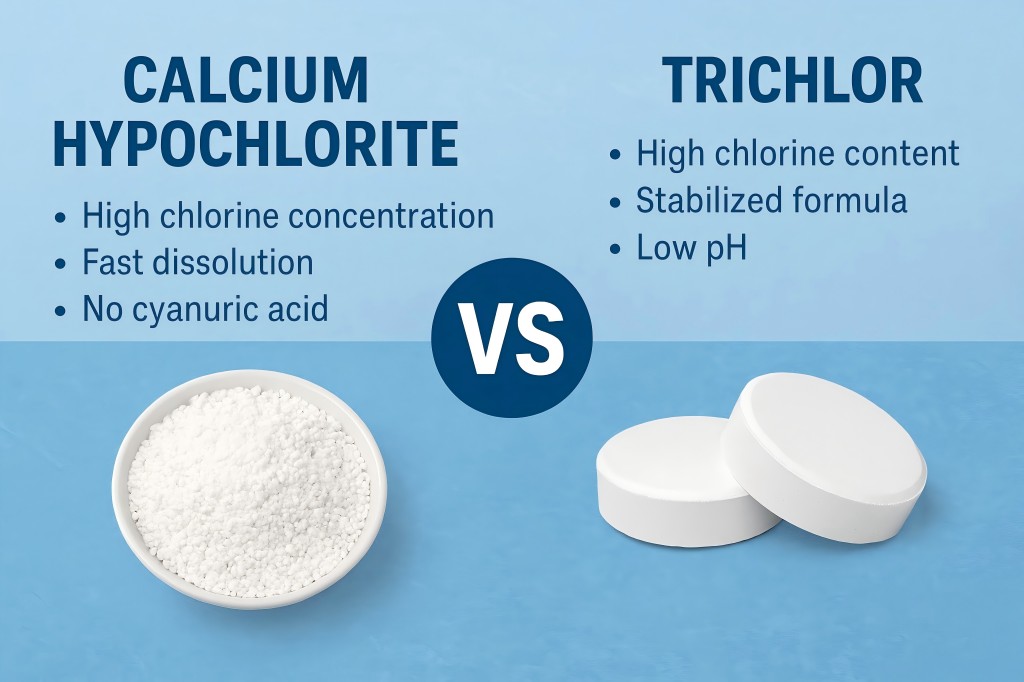
- High chlorine content: About 90% available chlorine by weight.
- Acidic properties: It lowers pool water pH over time.
Trichlor is popular for its convenience and ability to maintain a steady chlorine level. However, it’s also strong and acidic, so it must be handled carefully.
Calcium Hypochlorite
Calcium hypochlorite is another solid chlorine compound. It often comes as white granules or tablets. Unlike trichlor, it is:
- Unstabilized chlorine: Does not contain cyanuric acid.
- High chlorine content: Typically 65-75% available chlorine by weight.
- Alkaline properties: Raises pool water pH.
Calcium hypochlorite is usually used for shocking the pool—giving a strong dose of chlorine to kill bacteria and clear cloudy water.
Why Pool Owners Use Both Chemicals
Some pool owners keep both chemicals on hand. But why? Each offers benefits for different situations:
- Trichlor is easy for daily maintenance because it dissolves slowly and keeps chlorine levels steady.
- Calcium hypochlorite is powerful for shocking or quickly raising chlorine.
Using both at the right times can help keep water clear and safe. But using them incorrectly—or mixing them—can cause big problems.
The Dangers Of Mixing Trichlor And Calcium Hypochlorite
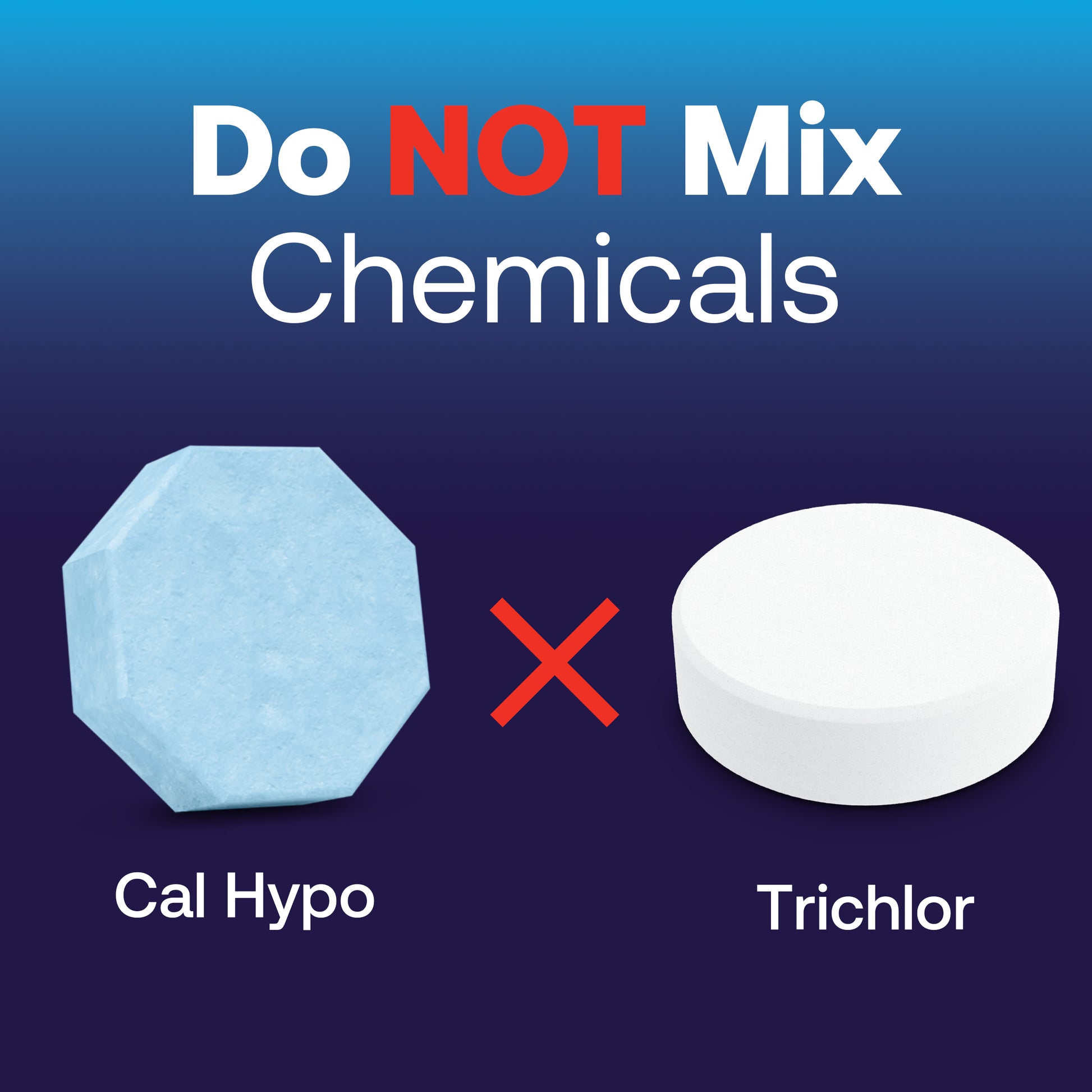
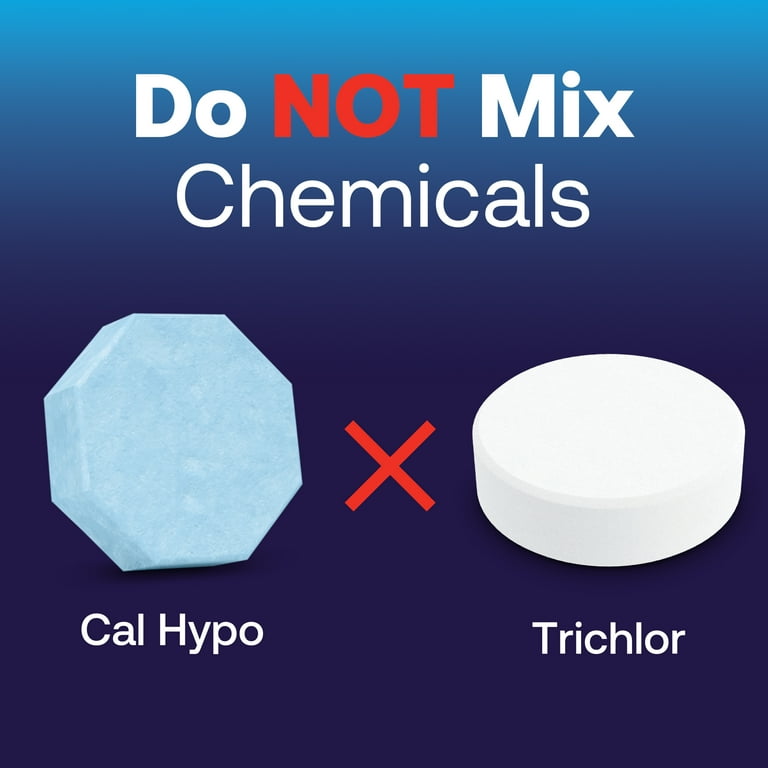
The biggest mistake some pool owners make is thinking all chlorine products are the same. In fact, mixing trichlor and calcium hypochlorite is extremely dangerous.
What Happens When You Mix Them?
These chemicals react violently when combined. The reaction is:
- Highly exothermic: Releases a lot of heat.
- Produces chlorine gas: A toxic, dangerous fume.
- Explosion risk: The mixture can ignite or explode, especially if moisture is present.
Even a small amount mixed in a bucket, feeder, or chlorinator can cause a fire or blast. There have been documented cases where pool sheds, garages, and even commercial pool rooms have suffered fires or explosions due to improper mixing.
Chemical Reaction Details
The main danger comes from the fact that trichlor is acidic, while calcium hypochlorite is basic (alkaline). When mixed, they:
- React quickly, generating heat.
- Release chlorine gas.
- Can cause rapid decomposition and combustion.
This isn’t just a theoretical risk. The U.S. Centers for Disease Control and Prevention (CDC) has reported injuries from pool chemical accidents, many involving these two products. Each year, thousands of emergency room visits result from pool chemical mishandling.
Real-world Example
Consider a pool owner who tries to save time by dumping leftover trichlor tablets and calcium hypochlorite granules into the same feeder. Within minutes, the feeder can melt, burst, or catch fire. The same can happen if you sweep up spilled chemicals together or store opened containers close to each other in a humid shed.
Why The Reaction Is So Dangerous
Not all chemical reactions are equal. This particular combination is risky because:
- Heat is produced instantly. This can melt plastic, ignite nearby materials, or cause burns.
- Chlorine gas is toxic. Inhaling it can irritate your lungs, eyes, and throat. High doses are life-threatening.
- Explosion risk is real. The pressure from gas and heat can shatter containers or spray chemicals.
Many beginners don’t realize that even a *small* amount mixed by accident can cause a fire or toxic cloud. It’s not just an overblown warning. Pool professionals treat this as a major safety rule.
Credit: hthpools.com
How To Handle Each Chemical Safely
Safe handling is the key to effective pool care. Here’s what you need to know for each chemical.
Handling Trichlor Safely
- Keep dry: Trichlor reacts with water; never add to a wet container.
- Store in original container: Don’t transfer to other containers.
- Use a dedicated feeder: Never mix with other chemicals in the feeder.
- Wear gloves and goggles: Protect your skin and eyes.
- Ventilate storage: Store in a cool, dry, ventilated area.
Handling Calcium Hypochlorite Safely
- Keep dry: Moisture causes clumping and possible reaction.
- Use separate scoop: Never share scoops between chemicals.
- Store away from acids: Including trichlor and muriatic acid.
- Don’t add to skimmer with other chemicals. Wait until the line is clear.
General Pool Chemical Safety Tips
- Add chemicals to water, not water to chemicals. This prevents splashing and reactions.
- Use separate tools and buckets. Never mix or reuse without thorough cleaning.
- Label everything clearly. Don’t rely on memory.
- Clean up spills promptly. Use dry tools, and never sweep different chemicals together.
- Keep away from children and pets.
Why Mixing In The Pool Is Not The Same As Mixing Directly
Some pool owners think that since both chemicals are used in the pool, they can be mixed in storage or feeders. This is a dangerous misunderstanding.
Dilution Makes The Difference
When you add trichlor or calcium hypochlorite *separately* to a large pool, the water dilutes them quickly. The chemicals are spread out and react with contaminants, not with each other. But if you combine concentrated forms—like tablets or granules—the reaction is fast and uncontrolled.
Staggered Use Is Safe
You can use both chemicals in the same pool, but never at the same time or place. For example:
- Use trichlor tablets for daily chlorination.
- “Shock” with calcium hypochlorite at night, when the feeder is empty and water is circulating.
- Always let one product fully dissolve and circulate before adding the other.
This approach avoids concentrated reactions and keeps your pool safe.
Credit: www.niranchemical.com
What To Do If You Accidentally Mix Them
Mistakes happen. If you realize you’ve mixed trichlor and calcium hypochlorite:
- Do not touch or move the mixture.
- Evacuate the area immediately. Don’t breathe the fumes.
- Call emergency services. Explain the chemicals involved.
- Ventilate if safe. Open doors and windows from a distance.
- Wait for professionals. Firefighters and hazmat teams have the right training.
Never try to clean up with water or scoop the mix yourself. The risk of fire or gas is high.
Storage Tips: Keeping Chemicals Separate
Safe pool chemical storage is more than just keeping things tidy. Here’s how to store your chemicals properly:
- Separate shelves: Keep trichlor and calcium hypochlorite on different shelves, far apart.
- Dry location: Moisture increases the risk of reaction.
- Original containers: Each chemical comes in a container designed to keep it stable.
- No stacking: Stacking containers can lead to spills and confusion.
- Ventilation: Good airflow reduces moisture and fume buildup.
- No sunlight: Store in a cool, shaded space.
It’s best practice to keep a written inventory and check chemicals regularly for leaks or clumps.
Credit: www.walmart.com
How Trichlor And Calcium Hypochlorite Affect Pool Chemistry
Understanding how these chemicals change your water helps you avoid surprises.
Trichlor’s Effects
- Lowers pH: Over time, trichlor makes the water more acidic.
- Adds cyanuric acid: This builds up and can reduce chlorine’s effectiveness if too high.
- Slow release: Provides steady chlorine, but can over-stabilize water.
Calcium Hypochlorite’s Effects
- Raises pH: Makes water more alkaline.
- Adds calcium: Increases water hardness, which can lead to scaling if too high.
- Quick action: Delivers a fast, strong chlorine dose.
Pool Chemistry Table
Here’s how the two compare in water:
| Property | Trichlor | Calcium Hypochlorite |
|---|---|---|
| Chlorine Content | ~90% | 65-75% |
| pH Effect | Lowers pH | Raises pH |
| Stabilizer Added | Yes (Cyanuric Acid) | No |
| Calcium Added | No | Yes |
| Form | Tablet/Stick | Granule/Tablet |
This shows why using both can help balance your water, but also why you must be careful.
Common Mistakes Beginners Make
It’s easy to make errors with pool chemicals. Here are mistakes you should avoid:
- Mixing in feeders or floaters: Never add both to the same device.
- Storing together: A small leak can cause a reaction.
- Not reading labels: Each product has specific instructions.
- Using the same scoop: Even small residues can trigger a reaction.
- Adding to the same spot in the pool: Spread out additions, and wait between doses.
- Ignoring pH and hardness: Too much trichlor or cal-hypo can unbalance your pool.
A less obvious mistake is forgetting about “invisible” mixing. For example, if you pour cal-hypo into a skimmer that still has trichlor tablets, the chemicals can mix in the pipes—out of sight, but not out of danger.
Alternatives To Mixing
If you want the benefits of both products, but without risk, consider these alternatives:
Use Liquid Chlorine
Sodium hypochlorite (liquid chlorine) is safe to use with either trichlor or cal-hypo, as long as you don’t pour it into a feeder with other chemicals. It’s a fast, effective sanitizer, and doesn’t add stabilizer or calcium.
Switch To One System
Stick with one type of chlorine product for simplicity. For example:
- Use only trichlor tablets for daily use.
- Use only cal-hypo for shocking, but never combine or alternate too quickly.
Non-chlorine Shock
Some pool owners use potassium monopersulfate (a non-chlorine shock) to avoid chemical buildup and reduce risk. This product oxidizes contaminants without adding extra chlorine, stabilizer, or calcium.
Chlorine Generators (salt Systems)
A saltwater chlorine generator makes chlorine from salt in your pool water. It reduces the need for solid chlorine products, and lowers chemical handling risks.
How To Develop A Safe Pool Maintenance Plan
A good plan keeps your water clean and your family safe. Here’s how to set one up:
- Test your water weekly. Check pH, chlorine, hardness, and stabilizer.
- Choose your main sanitizer. Decide if you want to use trichlor, cal-hypo, or another product.
- Schedule shocking. If you use cal-hypo, plan shocks when the feeder is empty.
- Store chemicals safely. Review storage every season.
- Train everyone. Make sure all family members or staff know the rules.
- Keep emergency numbers handy. Accidents can happen fast.
How Commercial Pools Manage These Chemicals
Larger pools, hotels, and water parks follow strict rules. Here’s how they handle trichlor and cal-hypo:
- Separate storage rooms: Chemicals are kept in locked, ventilated areas.
- Automated feeders: Each type of chlorine has a dedicated feeder—never shared.
- Staff training: Employees are taught emergency procedures.
- Documentation: Records of chemical use, storage, and incidents are kept.
Many commercial pools use liquid chlorine or gas for safety, avoiding solid products when possible.
Environmental And Health Considerations
Pool chemicals keep water safe, but can harm the environment if mishandled.
Environmental Risks
- Chlorine runoff: Spills or overflows can damage plants and animals.
- Chemical waste: Old or unused chemicals must be disposed of properly. Never pour down drains.
- Fumes: Poor storage can release harmful gases into the air.
Health Risks
- Skin irritation: Direct contact can cause burns.
- Respiratory problems: Inhaling dust or fumes is hazardous.
- Chronic exposure: Long-term mishandling can affect your health.
Always follow local guidelines for chemical disposal, and never flush pool chemicals into the environment.
Comparing Trichlor, Calcium Hypochlorite, And Other Chlorine Types
If you’re deciding which sanitizer to use, here’s a comparison of the most common options:
| Chlorine Type | Form | Stabilized? | pH Effect | Application | Special Risks |
|---|---|---|---|---|---|
| Trichlor | Tablet/Stick | Yes | Lowers | Slow, steady chlorination | Mixing with cal-hypo causes fire/explosion |
| Calcium Hypochlorite | Granule/Tablet | No | Raises | Shocking, fast chlorination | Mixing with trichlor causes fire/explosion |
| Sodium Hypochlorite | Liquid | No | Raises | Daily or shock, easy to dilute | Less stable, can spill easily |
| Dichlor | Granule | Yes | Neutral/slightly lowers | Shocking, fast dissolve | Builds up stabilizer |
Two Insights Most Beginners Miss
- Cross-contamination is a hidden danger. Even a tiny bit of trichlor dust in a cal-hypo bucket (or vice versa) can start a reaction. Always clean tools and surfaces, and never handle both chemicals at the same time.
- Water balance affects safety. If your pH or hardness is out of range, using these chemicals can create cloudy water, scale, or even reduce chlorine effectiveness. Don’t just add chemicals—test and adjust your water first.
Expert Guidance For Safe Pool Care
- Always read the instructions for each product, even if you’ve used it before. Formulas and warnings can change.
- Don’t try to “use up” leftovers by dumping all chemicals together. Dispose according to local hazardous waste rules.
- If you hire a pool service, ask how they handle and store chemicals. Don’t assume everyone knows the rules.
- Educate your family or staff about what to do in case of a spill or accident.
For more in-depth safety resources, the CDC’s pool chemical safety page is a valuable guide: CDC Pool Chemical Safety.
Frequently Asked Questions
What Happens If I Accidentally Mix Trichlor And Calcium Hypochlorite?
Mixing these chemicals can cause a fire, explosion, or release of toxic chlorine gas. If this happens, leave the area immediately and call emergency services. Do not try to clean up yourself.
Can I Use Trichlor And Calcium Hypochlorite In The Same Pool?
Yes, but not at the same time or in the same place. Add each chemical separately, and allow enough time for one to dissolve and circulate before adding the other.
How Should I Store Pool Chemicals Safely?
Store trichlor and calcium hypochlorite in their original containers, on separate shelves, in a dry, cool, and well-ventilated area. Keep away from children, pets, and heat sources.
Is It Safe To Add Cal-hypo To A Skimmer That Has Trichlor Tablets?
No. Adding cal-hypo to a skimmer containing trichlor can cause a reaction in the pipes or feeder. Always remove trichlor tablets and flush the line before adding any other chemical.
What Are The Signs Of A Dangerous Chemical Reaction In My Pool Equipment?
Look for heat, smoke, hissing sounds, or a strong chlorine smell near feeders or storage. If you notice any of these signs, evacuate the area and call emergency services.
Keeping your pool healthy is about more than just adding chemicals. It requires understanding, attention, and respect for the science behind clean water. By following the safety guidelines above, you can enjoy your pool with confidence, knowing you’re protecting your home and everyone who swims in it.