
Keeping your kitchen faucet head clean is more important than most people realize. A dirty faucet can spread bacteria, reduce water flow, and even change the taste of your tap water. Many cleaning guides suggest vinegar as a go-to solution.
But what if you don’t have vinegar, dislike its smell, or your faucet’s finish can’t handle acidic cleaners? You still have plenty of effective options. Learning to clean your kitchen faucet head without vinegar is simple, safe, and can make a big difference in your kitchen hygiene.
Let’s explore practical, proven ways to keep your faucet spotless using common household items and a bit of know-how.
Why Regular Faucet Head Cleaning Matters
The faucet head is where water leaves your plumbing and enters your food, drinks, and hands. Over time, mineral deposits, limescale, soap scum, and even bacteria can build up inside and outside the faucet head. This is especially true in areas with hard water. Dirty faucet heads can cause:
- Reduced water pressure and uneven flow
- Stubborn white or green spots (mineral buildup)
- Growth of germs and biofilm
- Unpleasant tastes or smells in water
A study by the National Sanitation Foundation found that kitchen faucet handles are among the top places for germs in the home. Neglecting the faucet head can make things worse. Regular cleaning, even without vinegar, can keep your kitchen safer and your faucet working properly.
Understanding Faucet Head Buildup
Before cleaning, it helps to know what you’re dealing with. Different types of buildup may need different cleaning solutions.
- Mineral Deposits (Limescale): White, chalky, or greenish buildup from hard water. Can clog holes in the aerator.
- Soap Scum: Film left from dish soap or hand soap, especially in homes with soft water.
- Bacteria and Biofilm: Slippery, pink, or black stains, often in hidden parts of the faucet.
- Rust or Metal Staining: Reddish or brown spots, sometimes from old pipes.
Knowing the type of buildup helps you choose the right cleaning method.
Essential Tools And Materials (no Vinegar Needed)
You don’t need special products to clean your faucet head. Many effective cleaners are already in your kitchen or bathroom. Here’s what you might use:
- Baking soda
- Lemon juice (milder than vinegar)
- Dish soap
- Hydrogen peroxide
- Toothbrush (old but clean)
- Soft cloth or sponge
- Rubber bands
- Plastic bag (resealable)
- Needle or safety pin
- Small bowl or cup
- Gloves (for sensitive skin)
- Mild disinfectant (optional)
Some faucet heads can be unscrewed for deep cleaning. Check your faucet’s manual before removing parts.
Cleaning Methods For Kitchen Faucet Heads Without Vinegar
Let’s look at several proven ways to clean your kitchen faucet head without a drop of vinegar. Each method suits different types of buildup and situations.
1. Baking Soda Paste
Baking soda is a gentle, natural abrasive that scrubs away grime and breaks up mineral deposits.
How To Use:
- Mix 2-3 tablespoons of baking soda with a small amount of water until you get a thick paste.
- Spread the paste over the faucet head, especially around holes and hard water spots.
- Let it sit for 10–15 minutes.
- Scrub with a toothbrush or soft sponge.
- Rinse well with warm water.
Tip: For stubborn spots, use a damp cloth with the paste and wrap it around the faucet head.
2. Lemon Juice Soak
Lemon juice is less acidic than vinegar but still helps dissolve minerals and kill bacteria. It also leaves a fresh scent.
How To Use:
- Squeeze enough lemon juice to fill a small cup.
- If your faucet head is removable, soak it in lemon juice for 30–60 minutes.
- If not removable, soak a cloth in lemon juice, wrap it around the faucet head, and secure with a rubber band.
- After soaking, scrub with a toothbrush.
- Rinse well with water.
Note: Lemon juice is safe for most finishes, but test a small area if unsure.
3. Dish Soap And Warm Water
For light buildup or regular maintenance, dish soap is often enough.
How To Use:
- Mix a few drops of dish soap in a bowl of warm water.
- Dip a sponge or cloth in the soapy water.
- Scrub the faucet head, including the inside where water comes out.
- Use a toothbrush for tight spots.
- Rinse thoroughly to remove soap.
4. Hydrogen Peroxide Disinfection
Hydrogen peroxide is a mild disinfectant that helps kill bacteria and brighten metal.
How To Use:
- Pour hydrogen peroxide into a small bowl.
- Dip a cloth or toothbrush in the liquid.
- Scrub the faucet head inside and out.
- Let it sit for 5 minutes.
- Rinse with warm water.
Insight: Hydrogen peroxide can foam when it contacts organic buildup. This means it’s working to break down germs.
5. Deep Cleaning With Baking Soda And Lemon
Combining baking soda and lemon juice creates a fizzy reaction that lifts off stubborn mineral deposits.
How To Use:
- Sprinkle baking soda over the faucet head.
- Squeeze lemon juice directly onto the baking soda.
- The mixture will fizz—let it sit for 10–15 minutes.
- Scrub with a toothbrush.
- Wipe clean and rinse.
Extra Tip: Use this combo once a month for sparkling results.
6. Using A Plastic Bag For Soaking
If you can’t remove your faucet head, soaking can still work.
How To Use:
- Fill a plastic bag with your chosen cleaner (lemon juice, hydrogen peroxide, or soapy water).
- Place the bag over the faucet head, making sure it’s fully submerged.
- Secure the bag with a rubber band.
- Let it soak for 30–60 minutes.
- Remove the bag, scrub, and rinse.
Non-obvious insight: This method works well for modern pull-down faucets that are hard to detach.
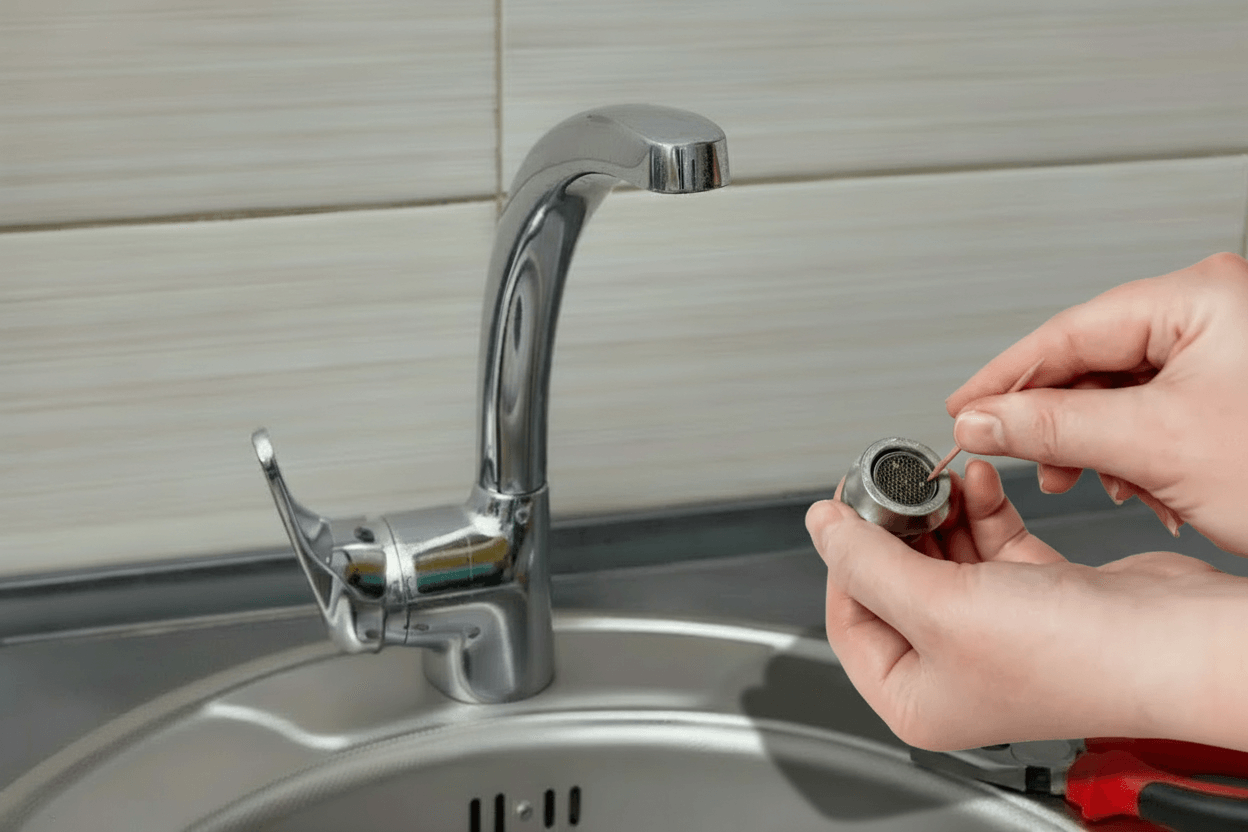
7. Toothpick Or Needle For Clogged Holes
Mineral deposits can block the small holes in your faucet’s aerator.
How To Use:
- After soaking or scrubbing, use a toothpick or needle to gently poke each hole.
- Twist carefully to break up clogs.
- Run water to flush out loosened debris.
Caution: Don’t use metal pins on delicate finishes to avoid scratches.
8. Disassembling The Faucet Head (if Possible)
For a deep clean, sometimes you need to take the faucet head apart.
How To Do It:
- Unscrew the aerator or faucet head (check your faucet type).
- Place the parts in soapy water, lemon juice, or hydrogen peroxide for 30 minutes.
- Scrub each part with a toothbrush.
- Rinse well and reassemble.
Pro Tip: Take a photo before taking apart the faucet head so you remember how to put it back.
Comparing Cleaning Methods: Effectiveness And Safety
To help you choose, here’s a comparison of the most popular non-vinegar cleaning methods.
| Method | Best For | Safe for All Finishes? | Disinfects? | Ease of Use |
|---|---|---|---|---|
| Baking Soda Paste | Mineral buildup, mild stains | Yes | No | Easy |
| Lemon Juice Soak | Mineral stains, odor | Usually | Somewhat | Moderate |
| Dish Soap & Water | Light dirt, regular use | Yes | No | Very Easy |
| Hydrogen Peroxide | Bacteria, brightening | Yes | Yes | Easy |
| Baking Soda + Lemon | Stubborn stains, hard water | Usually | Somewhat | Moderate |
How Often Should You Clean Your Faucet Head?
Many people only clean the faucet head when they notice a problem. But regular cleaning can prevent bigger issues. Here’s a simple guide:
| Usage Type | Recommended Cleaning Frequency |
|---|---|
| Daily (family kitchen) | Wipe exterior weekly, deep clean monthly |
| Light use (single or couple) | Wipe exterior every 2 weeks, deep clean every 2-3 months |
| Hard water area | Deep clean every 2 weeks |
| Filtered water | Deep clean every 2-3 months |
Non-obvious tip: Even if your water is filtered, some minerals and bacteria can still build up at the faucet head.
Credit: www.ruvati.com
Special Considerations For Different Faucet Finishes
Not all faucet heads are the same. Some have delicate finishes that can get scratched or damaged by strong acids or abrasives. Here’s what you need to know:
- Chrome and Stainless Steel: Most cleaning methods above are safe, but avoid steel wool or harsh abrasives.
- Brushed Nickel: Use only gentle cleaners like baking soda, dish soap, or diluted lemon juice.
- Bronze or Brass: Avoid acidic cleaners. Stick to mild soap and water.
- Black Matte or Colored Finishes: Be extra gentle. Avoid scrubbing pads and strong chemicals.
Always test a small area first to make sure the cleaner doesn’t damage your faucet’s finish.
Preventing Future Buildup
A little prevention can save you time and effort later. Here’s how to keep your faucet head cleaner for longer:
- Wipe Down After Use: Quickly drying the faucet head after washing dishes can prevent water spots and limescale.
- Install a Water Softener: If you live in a hard water area, a softener reduces mineral deposits.
- Use a Faucet Filter: Filters catch minerals and debris before they reach the faucet head.
- Regular Cleaning Routine: Make it a habit to wipe the faucet head weekly.
- Check for Leaks: Dripping water encourages mineral deposits and bacteria growth.
Insider tip: Sometimes, just leaving the faucet slightly open (dripping) increases buildup. Always make sure it’s tightly closed after use.
Mistakes To Avoid When Cleaning Faucet Heads
Even with simple cleaners, some common mistakes can damage your faucet or make cleaning less effective:
- Scrubbing too hard: You might scratch the finish or loosen fittings.
- Using strong acids: Cleaners like undiluted lemon juice or commercial descalers can damage some finishes.
- Forgetting to rinse: Any cleaner left on the faucet can cause spotting or corrosion.
- Mixing chemicals: Never combine hydrogen peroxide with anything acidic (like lemon juice). It can create dangerous fumes.
- Losing small parts: When disassembling, keep parts in a bowl to avoid losing washers or screens.
Step-by-step Example: Deep Cleaning A Kitchen Faucet Head Without Vinegar
Let’s walk through a practical, safe deep clean using baking soda and lemon juice.
Step 1: Gather Materials
- Baking soda
- Lemon juice
- Toothbrush
- Plastic bag and rubber band
- Cloth
- Bowl
Step 2: Prepare The Area
Clear the sink, lay down a towel to catch drips, and make sure you have good lighting.
Step 3: Apply Baking Soda
Sprinkle baking soda directly onto the faucet head, focusing on visible buildup.
Step 4: Add Lemon Juice
Squeeze lemon juice over the baking soda. Let it fizz and react for 10–15 minutes.
Step 5: Scrub
Use a toothbrush to scrub all surfaces, including inside the nozzle.
Step 6: Soak (if Needed)
If buildup is stubborn and you can’t remove the faucet head, fill a plastic bag with lemon juice and attach it to the faucet head. Let soak for 30 minutes.
Step 7: Clean Out Holes
Use a toothpick or needle to gently poke out any clogged holes.
Step 8: Rinse And Dry
Rinse the faucet head thoroughly with warm water, then dry with a soft cloth.
Extra tip: If your faucet head is removable, disassemble it first and soak all parts in the baking soda and lemon mix.
When To Replace Your Faucet Head
Sometimes, no amount of cleaning will restore water flow or appearance. Signs you need a new faucet head include:
- Cracked or corroded metal
- Severe rust that doesn’t scrub off
- Persistent leaks or drips
- Water flow remains low after cleaning and unclogging
Modern faucet heads are easy to find at hardware stores and online. Replacing them can improve water quality and save time.
Data: Hard Water And Faucet Buildup
To understand why cleaning is important, let’s look at some data.
- 85% of homes in the United States have hard water, according to the U.S. Geological Survey.
- Hard water deposits can reduce faucet flow by up to 75% if not cleaned for six months.
- The Environmental Protection Agency notes that biofilm (bacterial slime) can form inside faucet aerators within 2–3 weeks of use, especially in warm, humid kitchens.
Regular cleaning is not just about looks—it’s about health and function.

Credit: www.homeaglow.com
Alternatives To Vinegar: What Works And What Doesn’t
Some people try unusual products to clean their faucet heads. Here’s a quick guide to what’s safe and what to avoid.
| Product | Works Well? | Safe for Faucets? | Notes |
|---|---|---|---|
| Baking Soda | Yes | Yes | Best for mild to moderate buildup |
| Lemon Juice | Yes | Usually | Test on delicate finishes |
| Hydrogen Peroxide | Yes | Yes | Disinfects as well as cleans |
| Toothpaste | Sometimes | Yes | Use non-gel, plain white toothpaste only |
| Bleach | No | No | Can corrode metal and harm health |
| Commercial Limescale Removers | Yes | Check label | Some are too harsh for certain finishes |
| Cola Drinks | No | No | Sticky residue and little cleaning power |
If you want more information on safe cleaning alternatives, the Environmental Protection Agency offers trustworthy advice.
Frequently Asked Questions
How Do I Clean A Kitchen Faucet Head If I Can’t Remove It?
If your faucet head is fixed, use the plastic bag soaking method. Fill a bag with lemon juice or hydrogen peroxide, secure it over the faucet head with a rubber band, and let it soak for 30–60 minutes. After soaking, scrub with a toothbrush and rinse well.
Can I Use Bleach To Clean My Kitchen Faucet Head?
It’s best to avoid bleach. While bleach kills germs, it can corrode metal parts and damage the faucet’s finish. Safer options include baking soda, lemon juice, dish soap, and hydrogen peroxide.
How Do I Know If My Faucet Head Has Mineral Buildup?
Common signs include white, chalky, or greenish spots around the faucet head, reduced water pressure, or an uneven spray pattern. If water sprays in odd directions, mineral buildup is likely blocking the holes.
Is It Safe To Use Hydrogen Peroxide On All Faucet Finishes?
Hydrogen peroxide is generally safe for most finishes, including chrome and stainless steel. However, always test a small spot first, especially on darker or colored finishes, to ensure there’s no discoloration.
How Often Should I Deep Clean My Kitchen Faucet Head?
For most kitchens, a deep clean every 1–2 months is enough. If you live in a hard water area or notice faster buildup, clean every 2–3 weeks. Regular quick wipes will help prevent large buildups.
Keeping your kitchen faucet head clean without vinegar is easy, effective, and protects both your health and plumbing. With the right tools and a simple routine, your faucet can stay sparkling and safe for years to come.

Credit: www.youtube.com