
Connecting a Bosch dishwasher can make your daily life much easier. But doing the installation yourself can feel confusing, especially if you have never worked with kitchen appliances before. The process involves plumbing, electricity, and paying attention to small details.
If you get things wrong, you might end up with leaks, poor cleaning, or even electrical hazards. But don’t worry—this guide will walk you through every step clearly, so you can connect your Bosch dishwasher safely and correctly, even if you are a beginner.
You will learn how to prepare, what tools you need, how to connect water and power, and how to avoid the most common mistakes. With practical tips and clear explanations, this article aims to give you the confidence to do the job yourself.
At the end, you’ll also find answers to common questions people have about Bosch dishwasher installation.
Understanding Your Bosch Dishwasher
Before you start, it’s important to know what makes Bosch dishwashers unique. Bosch is known for their quiet operation, efficient water use, and smart technology features. Most models come with a flexible rack system, extra insulation, and advanced leak protection. But these features also mean installation steps can be a little different from other brands.
Bosch dishwashers are designed for built-in installation under your kitchen counter. They usually come with a power cord (for plug-in models) or wires (for hardwired models), a water inlet hose, and a drain hose. Some models also require a junction box for wiring connections. Checking your exact model’s manual is always the best way to understand any special requirements.
One common beginner mistake is not checking the model-specific instructions. For example, some Bosch dishwashers come with a built-in anti-flood device, which changes how the drain hose should be positioned. Always have your manual nearby.
Tools And Materials You Need
Having the right tools and materials before you begin will make the installation much smoother. Here’s what you’ll typically need:
- Adjustable wrench for tightening hose connections.
- Screwdriver (usually Phillips and flat-head).
- Drill and drill bits (if you need to make a hole in the cabinet for hoses).
- Level to check if the dishwasher is even.
- Pliers for hose clamps.
- Teflon tape for sealing water connections.
- Bucket and towel for spills.
- Voltage tester (if you’re working with electrical wires).
- Wire nuts (if your model requires hardwiring).
- Hose clamp for the drain hose.
- Dishwasher installation kit (may come with the appliance, or you may need to buy separately).
Don’t forget to have the user manual for your Bosch dishwasher on hand. It will have installation diagrams and any model-specific notes.
Preparing Your Kitchen Space
Measuring The Space
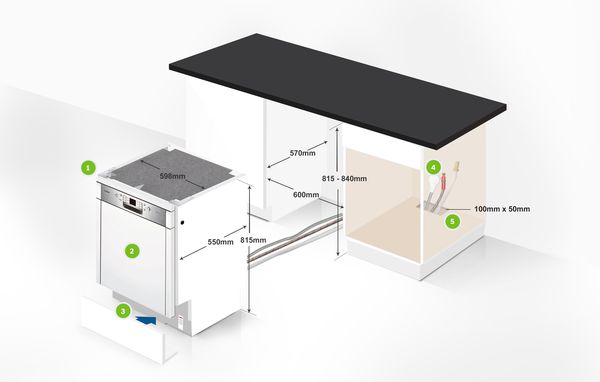
Start by measuring the area where your Bosch dishwasher will go. Standard dishwashers are 24 inches wide, but some kitchens are built for 18-inch models. Measure width, height, and depth—and don’t forget to include space for the door to open fully.
If you’re replacing an old dishwasher, check that the new unit will fit the same space. If it’s a new installation, make sure there is a 120-volt power outlet nearby, a water supply valve under the sink, and a place to connect the drain hose.
Turning Off Utilities
Before you do anything else, turn off the water supply under the sink. Also, unplug the old dishwasher or turn off the circuit breaker if your model will be hardwired. This step is crucial for safety.
Removing The Old Dishwasher
If you’re replacing a dishwasher, follow these steps:
- Disconnect power and water.
- Remove the lower front panel (kickplate).
- Disconnect the drain hose from the sink or garbage disposal.
- Loosen the screws holding the dishwasher in place.
- Carefully slide the old unit out.
Have a towel ready for any water left in the hoses.
Unpacking And Inspecting Your Bosch Dishwasher
When your Bosch dishwasher arrives, open the box carefully. Remove all packaging material and protective films. Check for any shipping damage, especially on the corners and door.
Find all the included parts: power cord, hoses, manuals, and mounting brackets. If anything is missing or broken, contact Bosch support before starting the installation.
One detail that people often miss is checking the leveling legs. These are usually tucked under the unit or in a separate bag. You’ll need them later to adjust the height.
Connecting Water Supply
The water supply is one of the most important parts of dishwasher installation. Bosch dishwashers require a hot water line (usually 120°F/49°C or higher). Most kitchens have a shutoff valve under the sink.
Steps To Connect Water Supply
- Locate the water inlet valve on the dishwasher (usually underneath).
- Wrap Teflon tape around the threads of the water supply elbow (usually a 90-degree fitting).
- Attach the elbow to the dishwasher’s water inlet.
- Connect the braided water supply line to the elbow, tightening with an adjustable wrench.
- Run the other end of the supply line to the shutoff valve under your sink.
- Use the wrench to secure the connection, but don’t overtighten.
Make sure the supply line is not kinked or twisted. This can restrict water flow and damage the hose.
Common Water Supply Mistakes
- Forgetting to use Teflon tape can cause leaks at the connection.
- Overtightening the fittings can strip threads or break the plastic inlet.
- Using old or cheap hoses increases the risk of leaks. Always use new, high-quality hoses.
Electrical Connection
Bosch dishwashers can be plug-in or hardwired. Check your model to see which method you need. If you’re not comfortable with electrical work, consider hiring a licensed electrician.
Plug-in Models
Most US Bosch dishwashers come with a power cord. Simply plug it into a grounded 120-volt outlet under the sink or behind the dishwasher. The outlet should be on a dedicated circuit.
Hardwired Models
Some Bosch dishwashers must be hardwired directly to your home’s electrical system. Here’s how:
- Turn off the power at the circuit breaker.
- Open the junction box on the dishwasher (usually behind the lower panel).
- Feed the house wires into the box.
- Connect black to black (hot), white to white (neutral), and green or bare to the ground screw.
- Use wire nuts for each connection.
- Replace the junction box cover.
Always check connections with a voltage tester before turning the power back on.
Electrical Safety Tips
- Never work with live wires.
- Use the correct wire gauge (usually 12 or 14 AWG for dishwashers).
- Make sure the dishwasher is properly grounded.
If you are unsure, it’s safer to get professional help.
Credit: www.larraurimadrid.com
Drain Hose Connection
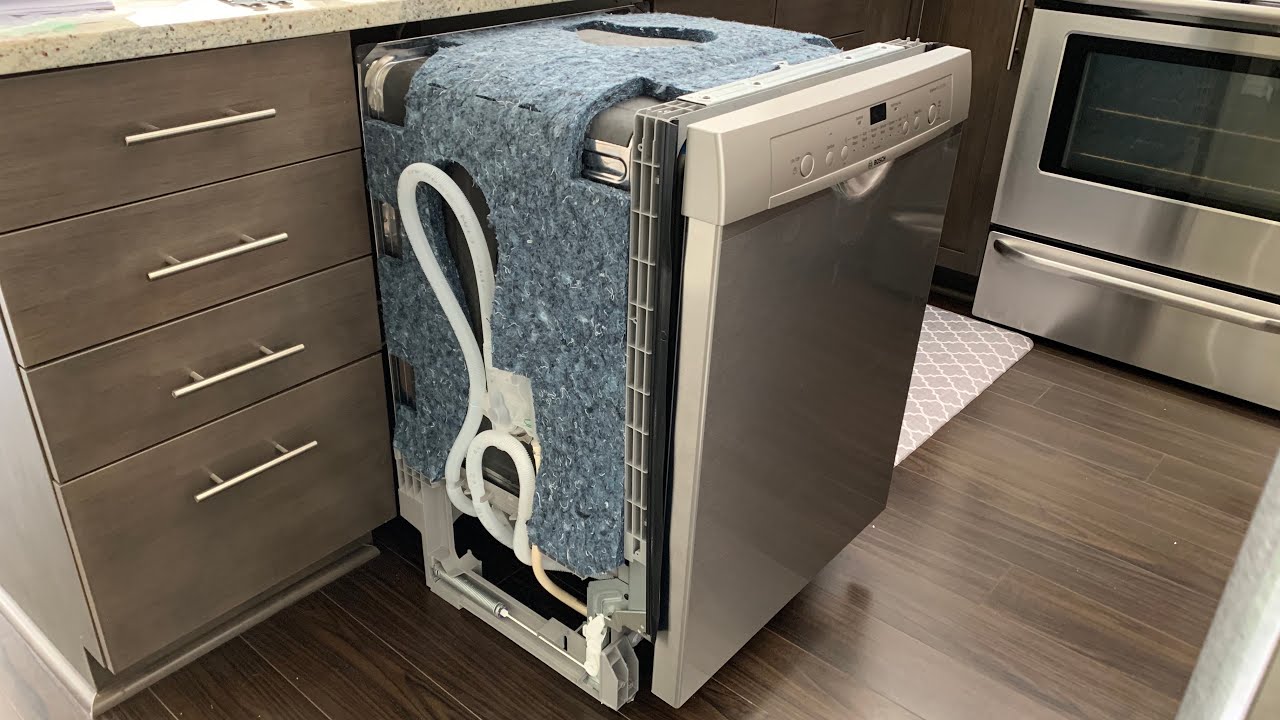
The drain hose sends dirty water from the dishwasher to your kitchen sink drain or garbage disposal. Bosch dishwashers have a special anti-siphon loop (high loop) requirement to prevent dirty water from flowing back.
Installing The Drain Hose
- Attach the drain hose to the outlet on the dishwasher’s side or back.
- Secure with the included clamp.
- Route the hose up as high as possible under the sink (the high loop). This is usually above the sink’s P-trap.
- Connect the end of the hose to the sink drain or the garbage disposal.
- For sink connection: Slide the hose over the drain inlet and secure with a clamp.
- For garbage disposal: Remove the knockout plug inside the disposal inlet before attaching the hose.
Common Drain Hose Issues
- Skipping the high loop can cause dirty water to back up into the dishwasher.
- Not securing the hose tightly leads to leaks.
- Forgetting to remove the knockout plug on the disposal means water cannot drain.
Sample Installation Comparison
Here is a comparison of connecting the drain hose to a sink drain vs. a garbage disposal:
| Method | Advantages | Disadvantages |
|---|---|---|
| Sink Drain | Easy to access, no need for disposal | May need special adapter, less common in US |
| Garbage Disposal | Simple for most US kitchens, direct connection | Must remove knockout plug, disposal must be working |
Positioning And Leveling The Dishwasher
Once all connections are made, slide the Bosch dishwasher into place under your counter. It’s important that the unit is level for the door to seal properly and for water to drain.
Leveling Steps
- Use a level on the top edge of the dishwasher door.
- Adjust the front leveling legs by turning them with a wrench.
- If needed, adjust the rear legs (some models have a screw accessible from the front).
- Check both left-right and front-back alignment.
A dishwasher that is not level can leak, not clean well, or make extra noise.
Securing The Dishwasher
Bosch dishwashers come with mounting brackets to attach the unit to your cabinet or countertop. This keeps it from tipping when you pull out the racks.
- For wood countertops: Screw directly into the underside of the counter.
- For stone or granite: Use side-mount brackets to attach to the cabinet.
Always use the included screws and follow the manual for your model.
Final Steps: Testing Your Installation
Now it’s time to check your work before running a full cycle.
Leak Test
- Turn on the water supply under the sink.
- Check all water connections for drips or leaks.
- If you see leaks, turn off the water and tighten the connections.
Power Test
- Plug in or turn on the circuit breaker.
- Press the power button on the dishwasher.
- The control panel should light up.
First Run
Most Bosch manuals recommend running the first wash cycle empty. This clears out any dust or debris from installation.
- Add a cup of water to the bottom if the dishwasher is dry.
- Run the shortest cycle.
- Watch for leaks, listen for unusual noises, and check that water drains.
If everything works, you can start using your dishwasher normally.
Practical Tips For A Smooth Installation
- Read your manual closely. Model numbers matter.
- Take photos of your connections before and after. This helps with troubleshooting.
- Label wires and hoses if you’re removing an old unit.
- Do not overtighten water or drain connections—snug is enough.
- Leave space behind the dishwasher for hoses and power cord. Don’t jam it against the wall.
- Check for obstructions under the sink before installing.
- If you have children or pets, keep them away during installation.
Troubleshooting Common Problems
Even with careful installation, you might face a few issues. Here’s how to handle the most common ones.
Dishwasher Won’t Start
- Check if the unit is plugged in or the breaker is on.
- Make sure the door is closed and latched.
- Some Bosch models require the child lock to be off.
Leaking From Underneath
- Inspect the water supply and drain hose connections.
- Make sure the leveling legs are adjusted so the door seals properly.
Dishwasher Doesn’t Drain
- Check that the drain hose is not kinked.
- Make sure the knockout plug in the garbage disposal was removed.
- Ensure the high loop is in place.
Error Codes On Display
Bosch dishwashers show error codes for problems like water inlet issues (E15, E24, etc. ). Refer to your manual for each code. Many can be solved by resetting the dishwasher or checking connections.
Dishes Not Clean
- Make sure the spray arms are not blocked.
- Use the right amount and type of detergent.
- Load dishes so water can reach all surfaces.
Comparing Bosch Dishwasher Installation With Other Brands
Bosch dishwashers are known for their quiet operation and water efficiency, but their installation can be a bit different from other brands. Let’s compare Bosch with a typical US dishwasher.
| Feature | Bosch | Typical US Brand |
|---|---|---|
| Water Connection | Requires 90-degree elbow, often smaller inlet | Straight hose, standard size |
| Electrical Connection | Plug-in or hardwired (check model) | Usually hardwired |
| Drain Hose | High loop always required | Air gap or high loop |
| Noise Level | Very quiet (40-50 dB) | Often 55 dB or higher |
Advanced Tips That Most Beginners Miss
Anti-flood Protection
Many Bosch dishwashers include AquaStop or a similar anti-flood system. This feature detects leaks and shuts off water automatically. But if you don’t connect hoses and power properly, this system can trigger and prevent operation. Always double-check your connections.
Water Hardness Adjustment
Bosch dishwashers often have a water softening system. If your water is hard, you need to add dishwasher salt and set the softener level. This can make a big difference in cleaning performance and how long your machine lasts. Use a water test strip (often included) to check your water and adjust the setting.
Removing Shipping Bolts
Some models have shipping bolts or brackets that must be removed before installation. These protect moving parts during transport. Forgetting to remove them can cause loud noises or damage.
Using An Air Gap
In some US states, codes require a dishwasher air gap instead of a high loop for the drain hose. An air gap is a small fitting mounted on the sink or counter. Check your local plumbing codes before skipping this step.
Safety Precautions
- Always turn off power and water before starting.
- Wear gloves to protect your hands from sharp edges.
- Do not leave tools or parts where children can reach them.
- If you smell gas (in homes with gas ovens), stop and call a professional immediately.

Credit: www.youtube.com
Bosch Dishwasher Maintenance After Installation
Once your dishwasher is installed, a little maintenance will keep it running smoothly:
- Clean the filter every month to prevent clogs.
- Wipe the door seal to keep it flexible and leak-proof.
- Run a cleaning cycle with dishwasher cleaner every few months.
- Check hoses for leaks or cracks once a year.
When To Call A Professional
While many people can install a Bosch dishwasher themselves, there are times when it’s safer to get help:
- If your kitchen has no power outlet or water supply nearby.
- If you need to cut cabinets or drill large holes.
- If you have old or confusing electrical wiring.
- If you encounter leaks you can’t fix.
A professional installer can usually complete the job in 1-2 hours and ensure everything meets local codes.
Real-world Example: Installing A Bosch Dishwasher In An Older Kitchen
Suppose you have an older kitchen where the previous dishwasher was a different brand. Here’s how the process might differ:
- The old water supply line might not fit the Bosch inlet. You’ll need an adapter or new line.
- The existing power connection might be hardwired, but your Bosch is plug-in. You may need to install an outlet.
- The drain hose might be too short. Bosch hoses are often longer but check before you start.
- The counter brackets may be in a different place.
This is why planning and measuring before you begin is so important.
How To Register Your Bosch Dishwasher
After installation, register your dishwasher with Bosch. This makes warranty service easier and gives you access to support.
- Go to the Bosch home appliances website.
- Enter your model and serial number (found on the door edge).
- Complete your contact details.
Registration can help if you need spare parts, repairs, or have questions later.
Credit: www.bibliotecaoscura.com
Environmental Considerations
Bosch dishwashers are designed to save water and energy. Using a dishwasher is usually more efficient than washing by hand, especially with the Eco or Auto cycle. Always run full loads to maximize efficiency.
If your old dishwasher still works, consider donating or recycling it instead of sending it to a landfill. Many cities have appliance recycling programs.
For more details about Bosch dishwashers and their features, you can visit the official website at Bosch Home Appliances.
Frequently Asked Questions
How Long Does It Take To Connect A Bosch Dishwasher?
For most people, installation takes between 1.5 to 3 hours. If you have all the tools and don’t face any surprises, it can be faster. If you’re working in an older kitchen or need to adjust plumbing or wiring, plan for extra time.
Can I Use My Old Dishwasher’s Hoses And Power Cord?
It’s best to use the new hoses and cords that come with your Bosch dishwasher. Old hoses can crack or leak, and different brands may use different fittings. Using the included parts also ensures you meet the warranty requirements.
Do I Need A Plumber Or Electrician?
Many homeowners can install a Bosch dishwasher themselves, but you should call a plumber or electrician if you are not comfortable with water or electrical work. If you need to add a new outlet, change plumbing, or deal with unusual wiring, professional help is a good investment.
What Is The High Loop, And Why Does Bosch Require It?
The high loop is a section of the drain hose that is fastened up high under the sink. Bosch requires this to prevent dirty water from the sink or disposal from flowing back into the dishwasher. It’s a simple but important step for proper operation and hygiene.
My Bosch Dishwasher Shows An Error Code After Installation. What Should I Do?
First, check your manual for the meaning of the error code. Many errors are caused by simple things: the door not fully closed, hoses not connected, or the water supply off. Reset the dishwasher by turning it off and back on. If the error continues, check all connections and call Bosch support if needed.
Connecting your Bosch dishwasher is a task you can do with patience and care. Take your time, follow the steps, and you’ll enjoy years of quiet, sparkling clean dishes. If you ever feel unsure, it’s always smart to ask for professional help—the safety of your home and family comes first.