
If you own a Damascus knife, you know it’s more than just a tool. The swirling patterns on the blade aren’t only beautiful—they’re a sign of craftsmanship and history. But even the best Damascus steel isn’t immune to rust. Many knife owners feel stressed when they see those first brown spots, worrying about permanent damage or loss of the signature pattern. The good news? You can remove rust and keep your Damascus knife looking and performing its best if you act carefully. This guide explains how rust forms, how to get it off safely, and how to prevent it in the future—without damaging that stunning pattern.
Why Damascus Knives Rust
Many people think high-quality steel can’t rust. That’s not true, especially for Damascus steel. Damascus knives are made by folding different steel types together. This process creates unique patterns but also mixes metals with different rust resistance. Even stainless Damascus knives aren’t 100% immune to corrosion. Exposure to water, acid, or even humid air can start the rusting process.
Two things make rust worse on Damascus steel:
- The folded layers create tiny grooves where moisture can hide.
- The contrast in metals can lead to galvanic corrosion—one metal corrodes faster when touching another in the presence of an electrolyte (like water).
If you see orange or brown spots, don’t panic. Most surface rust is treatable. Waiting too long, though, can cause deep pitting, which is much harder to fix.
Assessing The Rust: Surface Or Deep?
Before you start cleaning, you need to know how bad the rust is. Damascus steel can look worse than it is because of the pattern.
- Surface rust is a thin layer of orange, red, or brown. It feels rough but does not pit the metal.
- Deep rust creates pits or holes. The blade may look uneven or have black spots. This type is more serious and sometimes permanent.
To test, run your fingernail gently over the spot. If it catches or sinks in, the rust is deeper. If it slides smoothly, it’s probably surface rust.
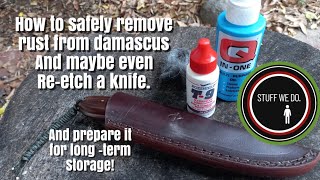
Credit: www.youtube.com
What Not To Do When Removing Rust
Many beginners make mistakes that can ruin a Damascus knife forever. Here’s what you must avoid:
- Don’t use harsh abrasives like steel wool or coarse sandpaper. These will scratch the patterns.
- Avoid strong acids (like vinegar or lemon juice left for long periods).
- Never soak your knife in bleach or other harsh chemicals.
- Don’t put the knife in a dishwasher.
- Don’t scrub with too much force.
The main danger is removing the etched pattern or scratching the blade. Damascus steel’s beauty is on the surface, so treat it gently.
Tools And Materials You’ll Need
Gather the right tools before starting. Using the correct materials protects your knife and makes rust removal easier.
Basic Items:
- Soft microfiber cloths
- Cotton swabs
- Mild dish soap
- Warm water
- Baking soda (sodium bicarbonate)
- White vinegar (for spot use only)
- Soft-bristled toothbrush
- Rust eraser (melamine foam, like a Magic Eraser)
- Metal polish (non-abrasive, such as Flitz or MAAS)
- Food-safe mineral oil or camellia oil
- Nitrile or latex gloves (optional)
Advanced/Optional Items:
- High grit sandpaper (2000–3000 grit, only for extreme cases)
- Toothpick or wooden skewer (for small crevices)
- Polishing paste made for Damascus steel
Having these ready avoids stopping mid-process and prevents accidental damage.
Step-by-step Guide: How To Get Rust Off Damascus Knife
Follow these steps in order. Don’t jump ahead or skip unless you’re sure what you’re doing. If the rust is minor, you may only need the first few steps.
1. Basic Cleaning
Start with a gentle wash to remove dirt, oils, and loose rust.
- Mix a small amount of mild dish soap in warm water.
- Wet a microfiber cloth with soapy water and gently wipe the blade.
- Use a soft toothbrush to lightly brush grooves or patterns.
- Rinse with clean water and dry fully with another microfiber cloth.
Tip: Always dry the knife completely. Even a few water drops can start new rust.
2. Baking Soda Paste For Surface Rust
Baking soda is a safe, gentle abrasive that won’t scratch Damascus steel.
- Mix baking soda with a little water to make a thick paste.
- Dab the paste onto rusty spots with a cotton swab.
- Let it sit for 10–15 minutes. Don’t let it dry out.
- Use a soft toothbrush to gently scrub the rusted areas in small circles.
- Wipe off the paste with a damp cloth.
- Dry the blade fully.
Repeat if any rust remains.
3. Spot Treatment With White Vinegar
White vinegar dissolves rust, but it can also remove the etch if left too long. Use it for stubborn spots only.
- Dip a cotton swab in vinegar.
- Dab only on the rust spot, not the whole blade.
- Wait 1–2 minutes. Watch closely.
- Gently rub with a clean cloth.
- Rinse with water and dry the knife.
Never soak the whole blade in vinegar. If any part of the pattern looks faded, stop and move to oiling.
4. Rust Eraser Or Melamine Foam
A rust eraser (like a Magic Eraser) is safe for most Damascus knives.
- Wet the eraser slightly.
- Rub gently over the rust, following the blade’s grain, not against it.
- Check your progress often.
- Wipe with a clean cloth and dry.
If you see the pattern fading, reduce pressure or stop.
5. Metal Polish For Final Shine
A non-abrasive polish can remove the last rust traces and bring back shine.
- Squeeze a small amount of polish onto a cloth.
- Rub gently in circular motions on the affected area.
- Buff with a clean section of the cloth.
- Wash off any polish residue with soapy water.
- Dry the knife completely.
Make sure the polish is food safe if you use the knife for cooking.
6. High Grit Sandpaper (for Severe Rust)
Only use this if the rust is deep and you are willing to risk some damage to the pattern.
- Cut a small piece of 2000–3000 grit sandpaper.
- Wet the sandpaper.
- Lightly rub over the rusted area, always following the pattern’s lines.
- Stop often to check progress.
- Clean and oil the blade after sanding.
This step may lighten or remove some of the dark pattern. It’s a last resort for knives with deep pits.
7. Oiling To Protect The Blade
After removing rust, always oil your Damascus knife.
- Put a few drops of mineral oil or camellia oil on a clean cloth.
- Wipe the entire blade, both sides.
- Let it sit for a few minutes, then wipe off excess.
Oiling prevents moisture from touching the steel and helps keep the pattern visible.
Comparing Rust Removal Methods
Not all methods are equally safe or effective. Here’s a quick comparison to help choose the right one for your knife.
| Method | Effectiveness | Pattern Safety | Best For |
|---|---|---|---|
| Baking soda paste | High (for surface rust) | Very safe | Light rust, beginners |
| Vinegar (spot use) | Medium-High | Safe if used carefully | Stubborn rust spots |
| Rust eraser | High | Safe with light pressure | All surface rust |
| Metal polish | Medium | Safe (non-abrasive) | Final shine, touch-ups |
| High grit sandpaper | Very high | Risky for pattern | Deep pitting, last resort |
How To Restore The Damascus Pattern After Rust
Sometimes, even with careful cleaning, the pattern looks faded or uneven after rust removal. This happens if the etching is worn away by rust or cleaning. Here’s how you can try to restore the contrast:
Light Acid Etching
Professional knife makers use acid to bring out the pattern, but this is risky at home. If you choose to try, use diluted ferric chloride or even coffee for a milder effect.
- Clean the blade thoroughly.
- Dip a cotton swab in the etching solution (follow safety instructions).
- Rub gently over the blade, focusing on faded areas.
- Rinse immediately with baking soda and water to neutralize acid.
- Oil the blade.
This method is best for advanced users. If you are unsure, consult a professional.
Polishing And Oiling
Sometimes, simply polishing the blade with a non-abrasive compound and applying oil brings back the contrast.
- Use a clean, soft cloth and polish.
- Buff gently.
- Apply oil and let it sit overnight.
This can restore some depth to the pattern without harsh chemicals.
Mistakes To Avoid When Cleaning Damascus Knives
Even experienced users make errors. Here are common mistakes:
- Scrubbing too hard: This removes the pattern and scratches the steel.
- Using harsh chemicals: Bleach, oven cleaner, and other strong chemicals can ruin the blade.
- Leaving the knife wet: Even a little moisture can start new rust.
- Ignoring rust: Small spots become deep pits if not treated quickly.
- Storing in leather sheaths: Leather holds moisture and promotes rust.
Avoiding these mistakes will save your knife from expensive repairs or permanent damage.

Credit: www.reddit.com
Preventing Rust On Damascus Knives
Prevention is the best way to keep your Damascus knife looking new. Here are proven tips:
1. Clean And Dry After Every Use
Wash with mild soap and water right after use. Dry immediately—especially the grooves and handle areas.
2. Oil Regularly
Apply a thin layer of food-safe oil after every cleaning or at least once a week if you live in a humid area.
3. Store Properly
- Store knives in a dry place.
- Avoid leather sheaths for long-term storage.
- Use a wooden block, magnetic strip, or soft blade cover.
4. Avoid Acidic Foods
If you use your Damascus knife in the kitchen, wipe the blade immediately after cutting acidic foods like tomatoes, citrus, or onions. Acids speed up rusting.
5. Use Silica Gel Packs
Placing a silica gel pack in your knife drawer or case absorbs extra moisture.
6. Regular Inspections
Check your knife every few weeks for early signs of rust, especially if you haven’t used it for a while.
Comparing Storage Options For Damascus Knives
Proper storage is key. Here’s how different storage methods compare:
| Storage Method | Rust Protection | Blade Safety | Convenience |
|---|---|---|---|
| Leather sheath | Poor | Good | High |
| Wooden block | Good | Good | High |
| Magnetic strip | Good (if dry) | Very good | Very high |
| Plastic blade cover | Very good | Good | Medium |
| Drawer (no cover) | Poor | Poor | Very high |
When To Seek Professional Help
Sometimes, home methods aren’t enough. If you see any of these, contact a professional:
- Deep pitting or holes in the blade
- Large areas of missing pattern
- Cracks or chips
- Very valuable or historical knives (to avoid risk)
A professional can re-etch the blade, fill pits, or even re-forge damaged areas. Don’t risk ruining a collector’s item with DIY methods if you’re unsure.
How To Care For Damascus Knives Long-term
Owning a Damascus knife is a responsibility. They need more care than regular stainless steel knives, but the reward is a blade that lasts a lifetime and gets more beautiful with age.
- Clean, dry, and oil after every use.
- Store safely away from moisture.
- Handle with care—avoid dropping or prying.
- Inspect regularly for early rust.
- Learn about your specific knife; some modern Damascus blades have special coatings.
Many knife enthusiasts keep a logbook of maintenance, noting cleaning, oiling, and any repairs. This habit helps track the condition and increases the knife’s value if you ever sell or gift it.
Real-life Example: Fixing Rust On A Kitchen Damascus Knife
Let’s look at an example. Maria owns a Damascus chef’s knife. One day, she notices orange spots near the edge after slicing tomatoes and forgetting to dry it.
- She cleans the blade with soapy water and a soft cloth.
- She makes a baking soda paste and applies it to the spots, waiting 10 minutes.
- Gently scrubbing with a toothbrush, she sees most rust disappear.
- A stubborn spot remains, so she dabs vinegar with a cotton swab for one minute, then wipes it clean.
- After drying the knife, she polishes with a small amount of Flitz.
- Finally, she oils the blade and stores it on a magnetic strip.
Maria’s knife looks new again, and the pattern is untouched. She learns to always dry and oil her knife after every use.
Data: Damascus Knife Rust Cases
A survey of over 2,000 knife owners (source: BladeForums) found:
- 54% had seen rust on a Damascus knife at least once.
- 70% of rust cases happened after leaving the knife wet overnight.
- 82% of owners who cleaned rust promptly saw no permanent damage.
- Only 6% used high-grit sandpaper; most preferred baking soda or rust erasers.
- 90% of owners who oiled their knives weekly never saw rust return.
These numbers show that quick action and regular oiling are the best defense.
Non-obvious Insights For Beginners
Many beginners believe that stainless Damascus knives are rustproof. In reality, “stainless” means more resistant—not rust-free. Humid climates, salty air (near the ocean), and even sweat from hands can start rust. Always wash and oil after touching the blade.
Another insight: Polishing can hide rust but not remove it. If you polish over rust, it may return quickly and be harder to spot. Always remove rust first, then polish.
Frequently Asked Questions
What If My Damascus Knife Has Black Rust Or Deep Pits?
Black rust is more serious than orange rust and often means the steel has started to pit. If the pits are deep, home cleaning probably won’t remove them fully. It’s best to contact a professional for re-etching or repair.
Can I Use Wd-40 Or Other Household Oils On My Damascus Knife?
WD-40 can remove rust, but it’s not food safe and leaves a sticky residue. Use only food-safe mineral oil or camellia oil if you use the knife with food. For display knives, you can use special metal preservatives.
How Often Should I Oil My Damascus Knife?
If you use the knife daily, oil it every few days. For display or collector knives, oil once a month. In humid climates, oil every week or after any contact with water.
Will Removing Rust Change The Look Of The Damascus Pattern?
If you clean gently with baking soda, a rust eraser, or polish, the pattern should remain. Aggressive cleaning (sandpaper, acids) can fade or erase the pattern. Go slow and check often.
Where Can I Learn More About Damascus Steel And Knife Care?
For more detailed guides, check out Wikipedia’s Damascus steel page which covers history, science, and care tips in detail.
A Damascus knife is a tool and a piece of art. With the right care, rust doesn’t have to ruin either. By acting quickly, cleaning gently, and storing properly, you can enjoy your knife for many years.

Credit: www.kbsknivesstore.com