
If you’ve ever spent hours preparing corned beef on the stove, only to find it tough and chewy, you’re not alone. Corned beef is a beloved dish around the world, enjoyed for its savory flavor and tender texture. But sometimes, even after long cooking, it stays firm and dry, disappointing both the cook and the diners. This problem can make anyone doubt their cooking skills. The good news? Tough corned beef is almost always fixable. With the right techniques, you can turn stubborn, chewy meat into a melt-in-your-mouth meal, even if you’ve already cooked it once.
This guide will help you understand why corned beef turns tough, show you how to fix it, and give you all the knowledge needed for perfect results every time. If you want to save your meal, avoid waste, and impress your family or guests, keep reading.
Why Corned Beef Turns Tough On The Stove
Corned beef comes from the brisket, a cut of meat with lots of connective tissue. This tissue needs slow, moist heat to break down and become tender. If cooked too fast, at too high a temperature, or for too short a time, those tissues stay firm, making the beef tough.
Other common reasons for tough corned beef:
- Not enough water: The meat must be mostly covered during cooking.
- High heat: Boiling instead of gentle simmering tightens proteins.
- Wrong slicing: Cutting with the grain instead of against it makes fibers harder to chew.
- Old corned beef: Sometimes, corned beef past its prime dries out more easily.
Understanding these reasons will help you avoid tough results in the future and fix problems now.
Immediate Steps: What To Do When Your Corned Beef Is Tough
It’s frustrating to check your corned beef after hours and find it tough. But don’t give up. Here’s what you should do right away:
- Do not throw it away. Most tough corned beef can be salvaged.
- Check your cooking liquid. Is there enough? If it has boiled away, add more water or broth.
- Test doneness properly. Use a fork to check if it slides in easily. If not, it needs more cooking.
- Lower the heat. If you boiled it, reduce to a gentle simmer.
- Return to the pot. Add a cup or two of water if needed, cover, and continue simmering.
In most cases, an extra 1–2 hours of gentle simmering will rescue your corned beef.
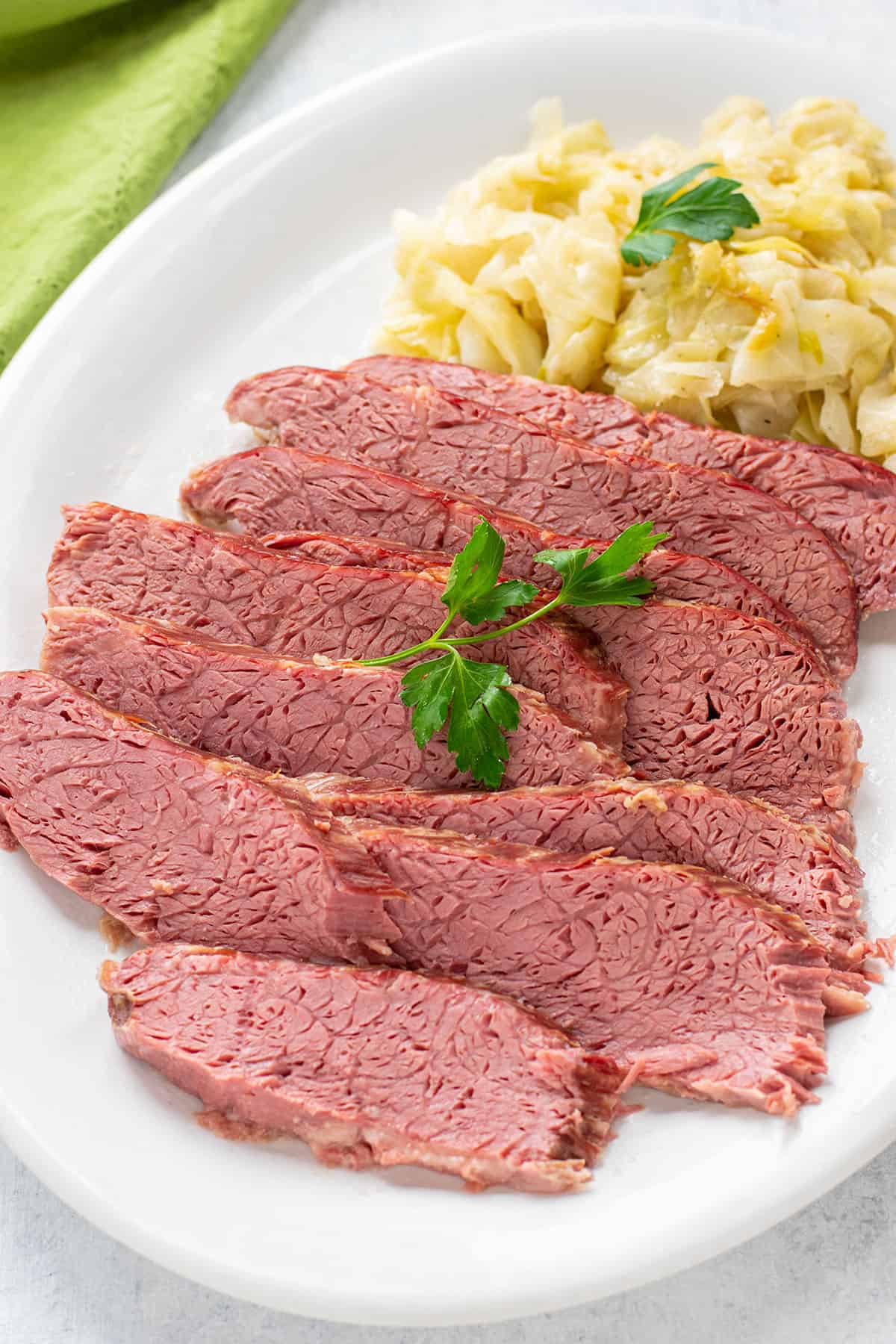
Credit: cookingwithmammac.com
The Science Of Tender Corned Beef
Why does slow cooking make such a difference? The answer is collagen. Collagen is a protein in the brisket’s connective tissue. It’s tough when raw, but when heated slowly with moisture (like simmering on the stove), it turns into gelatin, which is soft and juicy.
Here’s what happens:
- Too fast: Collagen tightens and stays tough.
- Just right: Collagen melts into gelatin, giving meat a silky, tender texture.
A common mistake is to cook corned beef at a rolling boil. This might cook the outside quickly, but the inside stays tough. The best method is long, slow simmering.
How To Fix Tough Corned Beef: Step-by-step
If your corned beef is already cooked but still tough, you can usually fix it with more time and moisture. Here’s how:
1. Assess The Situation
- Is the beef dry and stringy, or just firm?
- Did you slice it before cooking? Sliced beef is harder to rescue, but not impossible.
- Is there any liquid left in the pot?
2. Prepare To Re-cook
- Return the beef to a large pot.
- Add enough water, beef broth, or a mix to nearly cover the meat. For more flavor, add onion, garlic, bay leaves, or peppercorns.
- For every 3 pounds of beef, use about 2–3 quarts of liquid.
3. Simmer Gently
- Bring the pot to a gentle simmer, not a boil. Bubbles should barely break the surface.
- Cover with a tight lid to keep moisture in.
- Simmer for at least 60 minutes, up to 2 hours, depending on toughness.
4. Test For Tenderness
- After an hour, insert a fork. The beef is ready when the fork slides in with little resistance.
- If still tough, continue simmering and check every 30 minutes.
5. Rest Before Slicing
- Remove the beef and let it rest for 10–15 minutes. This allows juices to redistribute.
- Slice against the grain for maximum tenderness.
6. Serve With Moisture
- Spoon some of the hot cooking liquid over the slices to keep them juicy.
Example: Fixing A 4-pound Tough Corned Beef
- Place the tough beef in a pot with 3 quarts water and 1 quart beef broth.
- Add 1 sliced onion, 4 garlic cloves, 2 bay leaves.
- Bring to simmer, cover, and cook for 90 minutes.
- Check with a fork. If tender, rest and slice against the grain.
Key Mistakes To Avoid
Even experienced cooks can make mistakes with corned beef. Here are the most common:
- Boiling instead of simmering: This makes the meat tough and dry.
- Not enough liquid: The beef needs to be mostly covered.
- Rushing: Corned beef needs time. Don’t try to shorten the cooking.
- Slicing with the grain: Always slice across the lines you see in the meat.
- Skipping the rest: Cutting hot beef lets juices escape, making it drier.
A surprising fact: Some corned beef will look done on the outside but stay tough inside. Trust the fork test, not just the color.
Pro Tips For Tender Corned Beef Every Time
It’s easier to prevent toughness than to fix it. Here are advanced tips for consistent results:
- Soak before cooking: If your corned beef is very salty, soak it in cold water for 1–2 hours first. This helps prevent drying.
- Start cold: Place beef in cold liquid, then bring to a simmer. This cooks the meat evenly.
- Add acid: A splash of vinegar or a tablespoon of mustard in the liquid can help break down fibers.
- Add vegetables late: Add potatoes, carrots, and cabbage only in the last 30–40 minutes, so they don’t overcook.
- Use a heavy pot: A thick-bottomed pot keeps heat even and prevents hot spots.
Best Ingredients And Equipment For Perfect Corned Beef
To get the best results, start with good ingredients and proper tools.
Ingredients
- High-quality corned beef brisket: Look for even marbling and a good fat cap.
- Aromatics: Onion, garlic, bay leaf, peppercorns.
- Liquid: Water, beef broth, or a mix. Some people use beer for extra flavor.
- Acid: Vinegar or mustard, optional.
Equipment
- Large, heavy pot: Like a Dutch oven.
- Sharp slicing knife: For clean cuts against the grain.
- Fork or meat thermometer: For testing doneness.
Sample Cooking Liquid Mix
- 3 quarts water
- 1 quart beef broth
- 1 onion, quartered
- 4 garlic cloves, smashed
- 2 bay leaves
- 1 tablespoon black peppercorns
Cooking Times: How Long Is Enough?
Cooking time depends on the size and thickness of your corned beef. Here’s a simple guide:
| Weight | Simmer Time | Notes |
|---|---|---|
| 2 lbs (900g) | 2–2.5 hours | Check after 2 hours |
| 3 lbs (1.4kg) | 2.5–3 hours | Check after 2.5 hours |
| 4–5 lbs (1.8–2.3kg) | 3–3.5 hours | Check after 3 hours |
Always allow more time if the meat is still tough. It’s better to check often than to rush.

Credit: slimmingviolet.com
Slicing: The Final Key To Tenderness
Even perfectly cooked corned beef can become tough if sliced the wrong way. Here’s how to do it right:
- Let the beef rest for 10–15 minutes after cooking.
- Place on a cutting board. Look for the grain—the lines running through the meat.
- Use a sharp knife to cut across the grain into thin slices, about 1/4 inch thick.
This shortens the fibers, making each bite tender.
Example: Slicing Mistake
If you cut with the grain, slices will be long and stringy, making them harder to chew. Cutting across the grain creates shorter fibers, which feel tender in your mouth.
Using Corned Beef Leftovers
Sometimes, even after fixing, your corned beef may not be as soft as you hoped. Don’t waste it! Here are smart ways to use leftovers:
- Corned beef hash: Chop meat and fry with potatoes and onions.
- Sandwiches: Slice thin and serve with mustard or sauerkraut.
- Soups: Dice and add to vegetable soup for flavor.
- Tacos or wraps: Add shredded beef with slaw for a modern twist.
Cooking leftovers with moist methods (like in soup) will soften them further.
How Different Cooking Methods Compare
While this article focuses on the stove, it’s helpful to see how stove-top cooking compares to other common methods.
| Method | Texture | Effort | Notes |
|---|---|---|---|
| Stove-top simmering | Tender, juicy | Medium | Classic method |
| Oven braising | Very tender | Medium | Even heat |
| Slow cooker | Very tender, moist | Low | Set and forget |
| Pressure cooker | Tender, slightly different texture | Low | Much faster |
Each method works, but stove-top simmering gives you the most control and is easy to adjust if the beef turns tough.
Common Myths About Corned Beef
Many cooks repeat old advice that isn’t always true. Here are common myths:
- “Corned beef is always tough.” Not true. With proper cooking, it should be fork-tender.
- “Boiling makes it soft faster.” Actually, boiling makes it tougher.
- “Fat should always be removed.” Some fat adds flavor and moisture; trim only excess.
- “Corned beef should fall apart.” It should be tender, but not mushy or falling apart completely.
Avoiding these myths will improve your results.
Two Non-obvious Insights Most Beginners Miss
- The importance of the resting period: Many people slice corned beef as soon as it’s done. Resting is not just a “nice to do”—it’s essential for juiciness. During rest, juices redistribute, making the beef tender and less dry. Skipping this step leads to dry, tough slices, no matter how well you cooked it.
- The effect of altitude and water hardness: If you live at high altitude, water boils at a lower temperature, and it may take longer to tenderize the beef. Similarly, hard water (with more minerals) can make meat tougher. If you struggle with tough corned beef despite following all the right steps, consider using filtered or bottled water.
Fixing Corned Beef: Real-life Example
Suppose you cooked a 3-pound corned beef brisket for 2.5 hours, but it’s still tough. Here’s how to save it:
- Return it to the pot, add enough broth to cover.
- Bring to a gentle simmer, cover, and cook for another 45 minutes.
- Check with a fork. When tender, let it rest, then slice against the grain.
- If still not right, continue simmering in 20-minute increments.
Remember, patience is your best friend with corned beef.
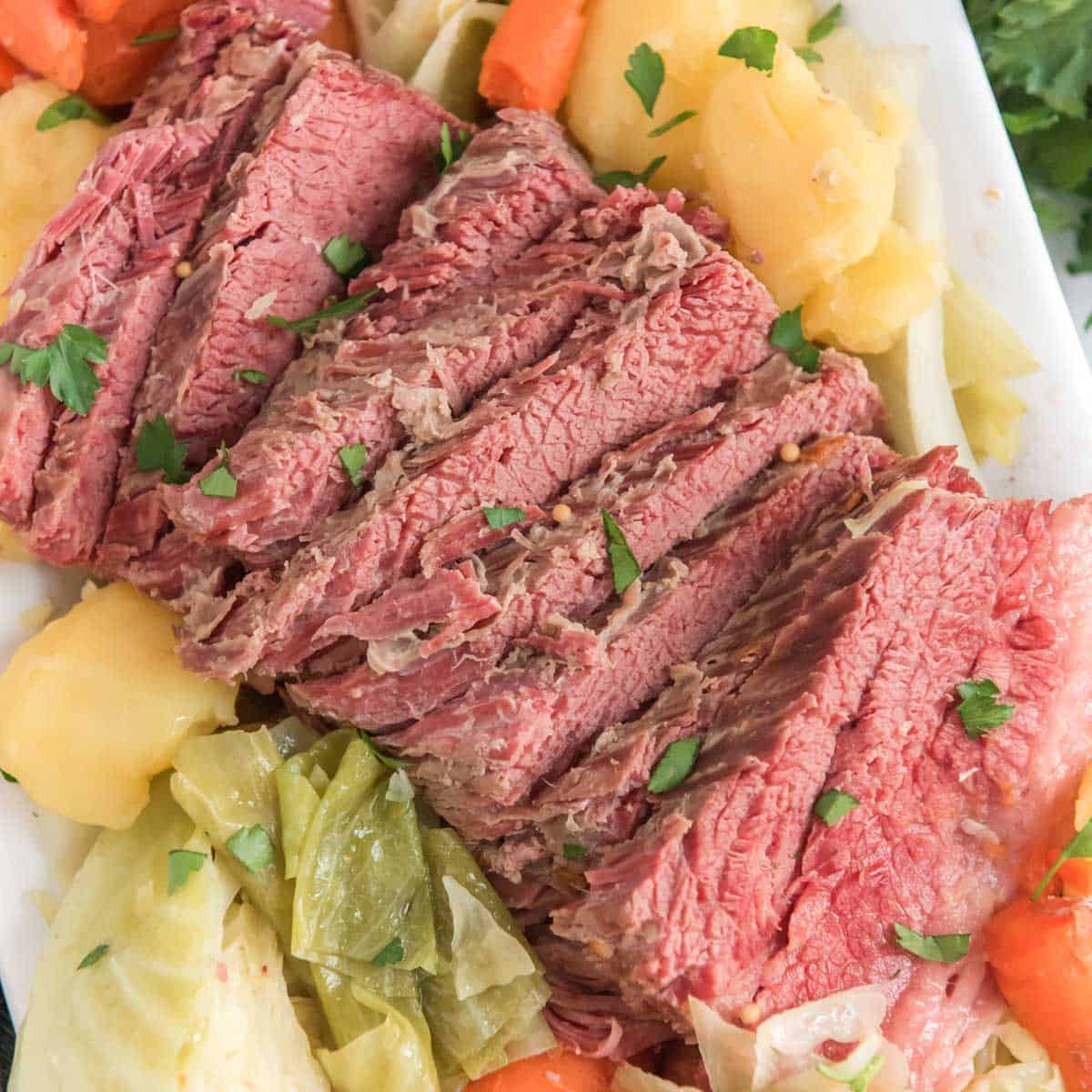
Credit: thehappierhomemaker.com
When Corned Beef Can’t Be Fixed
In rare cases, the beef may be so overcooked or dry that it can’t be fully rescued. Signs include:
- Meat is crumbly and dry, not just tough.
- Slices fall apart easily and have little moisture.
- Meat was sliced before cooking.
In these cases, use the beef for hash, soups, or recipes where moisture can be added back.
How To Store And Reheat Corned Beef Without Losing Tenderness
Proper storage helps keep leftover corned beef tender.
- Cool quickly: Slice or leave whole, wrap in foil, and refrigerate within 2 hours.
- Store with liquid: Place some cooking liquid in the container to keep it moist.
- Reheat gently: Simmer slices in a little broth or water, or cover with foil and heat in the oven at 300°F (150°C) until warm.
Never microwave thick slices—this dries them out.
Best Practices For Stove-top Corned Beef
To sum up, here are the most important practices:
- Use enough liquid and a heavy pot.
- Simmer, never boil.
- Cook long enough, check with a fork.
- Rest before slicing.
- Always slice against the grain.
If you follow these, you’ll rarely have tough corned beef again.
Where To Learn More About Corned Beef
If you want to dive deeper, you can find more about the history and science of corned beef at the Wikipedia Corned Beef page. It explains how corned beef became popular and covers different cooking traditions.
Frequently Asked Questions
Why Is My Corned Beef Tough After 3 Hours On The Stove?
Most likely, it was boiled instead of simmered or not cooked long enough. Corned beef needs gentle, moist heat for several hours. If it’s still tough, keep simmering and check every 30 minutes.
How Do I Know When Corned Beef Is Done?
It’s ready when a fork slides in and out with little resistance. The meat should feel soft but not mushy. Internal temperature should be at least 190°F (88°C) for tenderness.
Can I Fix Overcooked, Dry Corned Beef?
If it’s just a little dry, simmering in broth can help. If it’s crumbly and falls apart, use it for hash, soups, or dishes with added moisture. Completely dried-out beef is hard to fix.
Is It Better To Slice Corned Beef Hot Or Cold?
Always let it rest before slicing—10–15 minutes for hot, or slice cold for sandwiches. Resting keeps it juicy. Slicing too soon makes it lose moisture.
Should I Rinse Corned Beef Before Cooking?
Rinsing can remove excess salt, especially if you prefer a less salty flavor. Soaking for 1–2 hours in cold water is also good if your corned beef is very salty.
Turning tough corned beef into a tender, flavorful meal is possible with patience and the right techniques. With these tips, your next corned beef dinner will be a success.