
Heating up leftover lasagna in the oven can make it taste almost as good as when it was freshly baked. Many people rush this step or use the wrong method, ending up with dry edges, cold centers, or soggy layers. If you want your lasagna to be hot, flavorful, and with a perfect texture, using the oven is your best bet. This guide will show you every detail you need to know, so you never have to settle for disappointing leftovers again.
Leftover lasagna is a comfort food that should not lose its charm just because it’s reheated. The trick is knowing how to bring back its original taste and texture, not just making it hot. Even if you have never used an oven for reheating, this article will walk you through every step, so you can enjoy a meal that’s satisfying and safe.
Many home cooks don’t realize how much small details—like adding moisture or letting the dish rest—can affect the final result. Follow these tips, and you’ll never have to eat rubbery or unevenly heated lasagna again.
Why Use The Oven To Heat Up Lasagna?
There are several ways to reheat lasagna, but the oven remains the most reliable. The oven’s even heat helps maintain the dish’s texture and flavor better than a microwave or stove. Unlike microwaves, which can make lasagna rubbery or unevenly hot, ovens warm it slowly and consistently. This gentle process keeps noodles soft, cheese gooey, and sauces moist.
Microwaves heat food very quickly, but this speed often comes at the cost of texture. The edges might be boiling hot, while the center remains cold. You may also notice the cheese becoming chewy or the noodles hardening in some spots.
The oven, on the other hand, heats from the outside in and lets the entire dish come up to temperature together. This means every bite will be the same temperature and texture.
Oven reheating also allows you to crisp up the top layer again—something microwaves and steamers can’t do. If you’re serving guests or want to enjoy your meal as if it were just cooked, the oven is the clear choice.
Another advantage is flexibility. You can add extra cheese or sauce and even cover the dish with foil to keep it from drying out. The oven is also less likely to cause splattering, which can make reheating in the microwave messy.
What You’ll Need Before Reheating
Before you start, gather the right tools and ingredients. Having everything ready ensures you won’t scramble in the middle of reheating.
- Lasagna (refrigerated or frozen)
- Oven-safe dish (glass, ceramic, or metal)
- Aluminum foil
- Oven mitts
- Sharp knife or spatula
- Cooking spray or oil (optional)
- Extra sauce or cheese (optional, for best results)
- Food thermometer (recommended for safety)
If your lasagna is in a cardboard or plastic container, you’ll need to transfer it to an oven-safe pan. Always check the packaging to avoid melting or burning.
A food thermometer is not only for safety—it helps you avoid undercooking, which can leave a cold center, or overcooking, which dries out the dish. Cooking spray or oil is especially useful if your lasagna is prone to sticking, or if you want to add a slight crispness to the bottom.
Don’t overlook oven mitts, as lasagna dishes can be heavy and very hot after baking.
Understanding Different Types Of Lasagna Leftovers
Not all lasagna leftovers are the same. How you heat them depends on several factors.
Refrigerated Vs. Frozen
- Refrigerated lasagna is kept in the fridge and should be reheated within 3-5 days.
- Frozen lasagna can be stored for 2-3 months and takes more time to reheat properly.
Lasagna that’s been refrigerated usually holds its layers and moisture better than lasagna that’s been frozen and thawed. Freezing can sometimes change the texture of the noodles or sauce, making it more prone to drying out. If you’re reheating from frozen, be patient—rushing can mean a cold center and overcooked edges.
Whole Vs. Slices
- Whole lasagna (uncut) retains heat longer but takes more time to reheat.
- Individual slices heat faster and more evenly, with less risk of cold spots.
Reheating a whole lasagna is ideal if you’re serving several people. Slices are perfect for solo meals or quick lunches. If you have the choice, slicing before refrigerating makes future reheating easier and faster.
Homemade Vs. Store-bought
- Homemade lasagna often has more moisture and fewer preservatives.
- Store-bought lasagna may have drier noodles or a different cheese blend.
Homemade lasagna usually benefits from extra sauce or cheese when reheated, as the flavors are often more delicate. Store-bought versions, especially those with pre-cooked noodles, can dry out quickly, so adding a little extra moisture is key. Some store-bought lasagnas have a higher sodium content, which can impact how you season or top your leftovers.
Knowing your lasagna type helps you adjust time and temperature for the best result. For example, if your lasagna was made with fresh pasta sheets, it might reheat faster than one made with thick, dried noodles.
Step-by-step: How To Heat Up Lasagna In Oven
Now let’s get to the heart of the process. Follow these steps for reliable, delicious results every time.
1. Preheat The Oven
Set your oven to 375°F (190°C). This is hot enough to warm the lasagna through without drying it out. Preheating ensures even cooking from the start.
A properly preheated oven is essential. Putting lasagna into a cold oven means the dish starts heating slowly, which can make the top dry out before the inside is hot. If you have a convection setting, you can use it, but watch for faster browning on the top.
2. Prepare The Lasagna
If you’re reheating from the fridge, you can place the lasagna directly in the oven. For frozen lasagna, let it thaw in the refrigerator overnight if possible. If you must heat it from frozen, add extra time (details below).
Transfer the lasagna to an oven-safe dish if it’s not already in one. Spray the dish with a little oil if you’re worried about sticking.
If your lasagna has a thick cheese layer, lightly scoring the top with a knife can help the heat penetrate evenly. This is especially useful for deep lasagnas with multiple layers.
3. Add Moisture (if Needed)
Leftover lasagna can dry out during reheating. A simple trick is to add a few tablespoons of water or extra sauce around the edges. This creates steam, keeping the noodles soft.
If you love cheese, sprinkle a bit of fresh cheese on top before covering.
Don’t overdo the water—too much will make the lasagna soggy, but just enough prevents the edges from becoming hard. If the lasagna looks particularly dry, you can also drizzle a little milk or cream over the top for extra richness.
4. Cover With Foil
Cover the dish tightly with aluminum foil. This traps steam, so the lasagna heats evenly and stays moist. If you skip this step, the top may burn before the inside is hot.
Press the foil snugly around the edges but avoid letting it touch the cheese if possible. If you don’t have foil, a lid works, but don’t seal it completely airtight—some steam should be able to escape to prevent sogginess.
5. Reheat Time And Temperature
The amount of time depends on the lasagna’s size and temperature.
For Refrigerated Lasagna:
- Whole pan: 30-40 minutes
- Single slice: 15-20 minutes
For Frozen Lasagna (unthawed):
- Whole pan: 60-75 minutes
- Single slice: 25-35 minutes
Check for bubbling at the edges or use a food thermometer. The center should reach 165°F (74°C) for safety.
If you notice the top getting too brown before the inside is hot, tent the foil loosely over the dish instead of sealing it tightly. This protects the cheese while still allowing heat to circulate.
6. Uncover And Finish
Remove the foil for the last 5-10 minutes of baking. This step lets the cheese on top melt fully and brown slightly for a perfect finish.
For an extra golden top, you can move the lasagna to the top rack for the last few minutes. Some people even use the broiler for 1-2 minutes—just watch closely to avoid burning.
7. Rest Before Serving
Take the lasagna out of the oven and let it sit for 5-10 minutes. This allows the layers to settle and makes cutting easier. If you slice too soon, the filling may spill out.
During this rest, the lasagna continues to cook a little from residual heat. It also thickens slightly, making each portion neater and more appetizing.
How To Heat Up Lasagna Slices Vs. Whole Pan
Heating a single slice is different from warming a large tray. Here’s how to adjust for each situation.
Reheating A Single Slice
- Place the slice in a small oven-safe dish.
- Add a splash of water or sauce around the edges.
- Cover tightly with foil.
- Bake for 15-20 minutes at 375°F (190°C).
- Remove foil for the last 5 minutes to brown the top.
If your slice is very thick, cut it in half horizontally to help it heat more evenly. For extra flavor, add a sprinkle of herbs or a drizzle of olive oil before serving.
Reheating A Whole Pan
- Leave the lasagna uncut for the best results.
- Add a few tablespoons of water or sauce around the edges.
- Cover tightly with foil.
- Bake for 30-40 minutes at 375°F (190°C).
- Uncover for the last 10 minutes to crisp the cheese.
- Use a thermometer to check the center.
Pro tip: For large pans, cut a small slit in the center with a knife and check the temperature. If it’s not hot enough, recover and continue baking in 5-minute increments.
Remember, the larger the portion, the longer it takes for heat to reach the center. If you’re in a hurry, cut the lasagna into smaller portions before reheating—it will warm up faster and more evenly.
Oven Vs. Microwave Vs. Air Fryer: Comparison
People sometimes wonder if the oven is worth the wait. Here’s how the oven compares to other methods.
| Method | Texture | Time | Best for |
|---|---|---|---|
| Oven | Even, moist, crispy top | 15-75 min | Whole pans, perfect results |
| Microwave | Soft, sometimes rubbery | 3-8 min | Quick single slices |
| Air Fryer | Crispy edges, can dry out | 10-20 min | Small portions, crispiness |
If you value taste and texture, the oven is the clear winner. Microwaves save time, but you lose out on quality. Air fryers can crisp, but may dry out the lasagna unless watched carefully.
One detail many people miss: air fryers can be great for reheating but require you to use a small, oven-safe dish that fits in the basket. Also, you should cover the lasagna loosely with foil for the first part of the cooking, then uncover to crisp the top, similar to the oven method.
:max_bytes(150000):strip_icc()/19344_homemade-lasagna_Rita2-1x1-1-b4f53c3ba2f4475c97665908a6fd1783.jpg)
Credit: www.allrecipes.com
How To Avoid Common Reheating Mistakes
Even experienced cooks sometimes make mistakes. Here are the most frequent errors and how to avoid them.
Overcooking
Heating for too long dries out the noodles and toughens the cheese. Always check the lasagna after the minimum time and add more only if needed.
A good tip: set a timer and check at the halfway point. If the edges look dry, add a little more sauce or cover more tightly.
Uneven Heating
If you reheat a large, thick lasagna, the edges might get hot while the center stays cold. Cutting the lasagna into smaller pieces can help, or use a thermometer to check the middle.
If you don’t have a thermometer, use a butter knife—insert it into the center, let it sit for 10 seconds, then touch the blade. If it’s hot, the lasagna is likely ready.
Skipping The Foil
Baking without foil dries out the top and can burn the cheese. Always cover first, then uncover near the end for browning.
People sometimes think foil isn’t needed, but even a loose cover helps trap steam. If you’re worried about cheese sticking to the foil, spray the foil lightly with oil before covering.
Not Adding Moisture
Old lasagna needs extra moisture. Skipping this step often leads to rubbery noodles or hard edges. A few tablespoons of water or sauce make a big difference.
If you have leftover tomato sauce or béchamel, use it here. Water works too, but sauce adds more flavor.
Rushing The Resting Step
Cutting lasagna immediately after reheating causes the layers to collapse. Waiting just a few minutes helps everything hold together and improves taste.
This is especially important for lasagnas with lots of cheese or sauce, as these ingredients need time to cool slightly and solidify.
How Long Does It Take To Heat Up Lasagna In Oven?
Here’s a quick reference for typical heating times.
| Lasagna Type | Temperature | Time |
|---|---|---|
| Refrigerated, whole pan | 375°F / 190°C | 30-40 min |
| Refrigerated, slice | 375°F / 190°C | 15-20 min |
| Frozen, whole pan | 375°F / 190°C | 60-75 min |
| Frozen, slice | 375°F / 190°C | 25-35 min |
Always check the center. If it’s not hot enough, add 5 more minutes.
Remember, these times are guidelines. If your lasagna is very dense or has extra layers, it may take a bit longer. If it’s a thinner, vegetable-based lasagna, check a few minutes early.
How To Tell When Lasagna Is Properly Heated
Relying on time alone isn’t always enough. Here are some ways to know your lasagna is ready.
- Thermometer method: Insert a food thermometer into the center. It should read 165°F (74°C).
- Visual cues: Look for bubbling sauce at the edges and a melted, slightly browned cheese layer on top.
- Touch test: Insert a fork into the center and hold for 10 seconds. If the fork is hot to the touch, the lasagna is ready.
If you see steam rising when you cut into the lasagna, that’s a good sign it’s hot all the way through.
One extra tip: pay attention to the smell—hot lasagna will have a strong, inviting aroma. If you don’t smell much, it may still be cold inside.
Tips For Making Leftover Lasagna Taste Fresh
Want your reheated lasagna to taste as good as new? Try these simple upgrades.
Add Extra Sauce
A little extra sauce on top before reheating keeps the dish moist and flavorful. Tomato, béchamel, or even a drizzle of olive oil works well.
You can even add a spoonful of pesto or a splash of cream for a richer flavor. If you have leftover sauce from the original meal, use it for a flavor boost.
Sprinkle Fresh Cheese
Adding a handful of mozzarella or parmesan before the final 5 minutes in the oven gives a fresh, gooey top layer.
For a different twist, try adding grated provolone or fontina for extra meltiness, or a little cheddar for a sharper taste.
Use Fresh Herbs
Sprinkle basil, parsley, or oregano after heating for a fresh aroma and taste.
Chopped chives or arugula can also brighten up the dish. Add herbs after baking to keep their flavor bright.
Serve With Sides
Pairing lasagna with a simple salad or garlic bread helps round out the meal and makes leftovers feel special.
A green salad with lemon vinaigrette, roasted vegetables, or even a few olives on the side can make a big difference in how the meal feels.
Best Practices For Storing Lasagna Before Reheating
Proper storage keeps lasagna safe and tasty. Here’s how to store leftovers the right way.
- Cool quickly: Let lasagna cool at room temperature for no more than 2 hours after cooking.
- Wrap tightly: Use plastic wrap or aluminum foil to prevent air and moisture loss.
- Use airtight containers: These prevent odors and freezer burn.
- Label with date: Write the storage date on the container. Eat refrigerated lasagna within 3-5 days; frozen within 2-3 months.
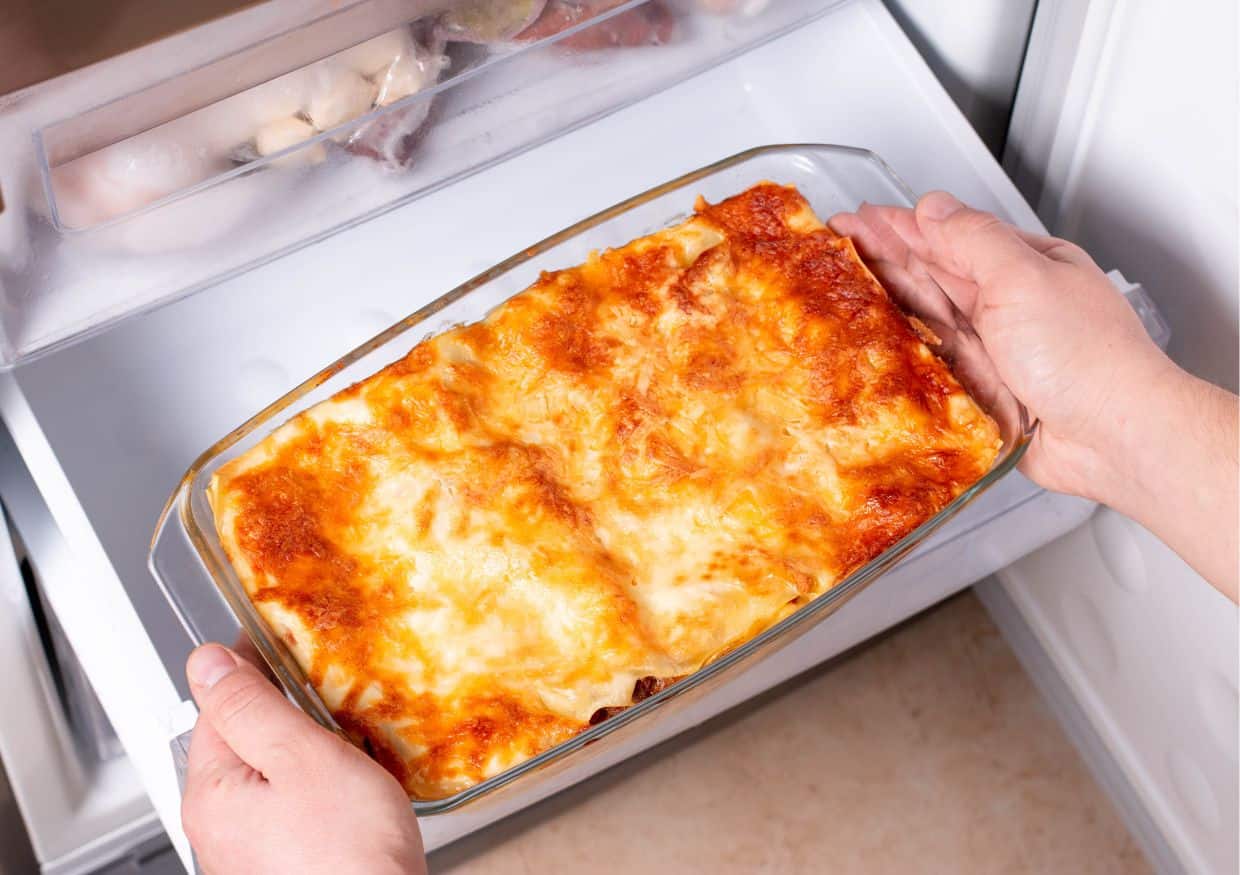
If you know you’ll reheat slices, cut and wrap them individually. This makes reheating faster and avoids repeated temperature changes.
A non-obvious tip: place a layer of parchment paper between slices before stacking. This prevents them from sticking and helps keep each piece intact when reheating.
If you have a lot of leftovers, freezing in small portions is best. This way, you avoid thawing and reheating more than you need.
Safety Tips: Avoiding Food Poisoning
Leftover lasagna is only safe if handled properly. Follow these safety rules:
- Chill quickly: Don’t leave lasagna out for more than 2 hours.
- Reheat once: Try not to reheat the same lasagna more than once; bacteria can grow with repeated cycles.
- Use a thermometer: Make sure the center reaches 165°F (74°C).
- Check for spoilage: If lasagna smells sour or has mold, throw it out.
For more on food safety, check resources like the USDA Food Safety Information.
If you freeze lasagna, try to thaw it in the refrigerator, not on the counter. This keeps the temperature safe and prevents bacteria from growing.
Credit: www.thekitchn.com
Creative Ways To Reheat Lasagna In The Oven
You can do more than just heat and eat. Try these ideas for variety:
- Lasagna muffins: Cut cold lasagna into rounds and bake in a muffin tin for mini servings. Bake at 375°F (190°C) for 20 minutes.
- Lasagna roll-ups: Roll slices, stand them up in a dish, top with sauce and cheese, and bake.
- Crispy bottom: Place lasagna directly on a lightly oiled metal pan for the last 5 minutes for a crunchy base.
- Stuffed peppers: Fill bell peppers with chopped lasagna, cover with cheese, and bake until hot.
- Lasagna soup: Cut leftover lasagna into chunks, add to hot broth with extra veggies for a comforting soup.
These twists make leftovers feel like a brand-new meal.
Or get creative by adding a fried or poached egg on top of a reheated slice for breakfast. You can also layer reheated lasagna between slices of toasted bread for an Italian-style sandwich. Leftover lasagna can be chopped and used as a filling for a savory pie, or mixed with ricotta and spinach for stuffed pasta shells.
Frequently Asked Questions
How Do I Reheat Lasagna Without Drying It Out?
To keep lasagna moist, always cover it with foil and add a little water or sauce around the edges before baking. This traps steam and prevents the noodles from drying.
If your lasagna is already dry, cover it tightly and reheat at a slightly lower temperature (350°F/175°C) for a few extra minutes.
Can I Heat Lasagna Straight From The Freezer?
Yes, you can bake frozen lasagna directly in the oven. Just add 30-40 extra minutes to the baking time and cover with foil. For best texture, thaw overnight in the fridge first.
If you’re short on time, microwave a frozen slice for 2-3 minutes to start, then finish in the oven to crisp the top.
What Temperature Should Lasagna Be When Reheated?
The safe internal temperature is 165°F (74°C). Use a food thermometer for accuracy, especially with large pans.
If you don’t have a thermometer, make sure the sauce is bubbling and the cheese is fully melted with a golden color.
Is It Safe To Reheat Lasagna More Than Once?
It’s best to reheat lasagna only once. Repeated reheating increases the risk of bacteria growth and worsens texture. Slice and reheat only what you plan to eat.
If you have leftovers after reheating, it’s safer to discard them instead of cooling and reheating again.
How Long Can I Keep Leftover Lasagna In The Fridge?
Store cooked lasagna in the fridge for up to 5 days. If you’re not sure you’ll finish it, freeze leftovers within that time for longer storage.
Check for changes in smell, color, or texture before eating. When in doubt, throw it out.
Reheating lasagna in the oven is simple when you know the right steps. With a little attention to detail, you can enjoy leftovers that taste just as good as when they were first served. Whether you’re feeding your family or treating yourself, these methods will help you get the most out of every bite.
Credit: fooddrinklife.com