
Organizing your kitchen can feel like a never-ending puzzle, especially when it comes to small tools like measuring cups. These cups are essential for both beginners and experienced cooks, but they often end up scattered in drawers, lost in cupboards, or stacked in confusing piles. If you’ve ever searched for the right cup while the pot is boiling, you know how frustrating it can be. The good news is, with a little planning and some clever ideas, you can organize your measuring cups in a way that saves time and keeps your kitchen tidy.
In this article, you’ll discover not just the basic ways to store measuring cups, but also some smart solutions you might not have thought about before. You’ll learn how to choose the best spot for them, what storage products actually work, and how to avoid the mess that comes with daily cooking.
Along the way, you’ll find practical advice, real-life examples, and a few expert tips most people miss. Whether you have a big kitchen or a small one, by the end of this guide, you’ll be ready to organize your measuring cups like a pro.
Why Measuring Cup Organization Matters
Measuring cups may look simple, but they play a big role in kitchen efficiency. When they are organized, you spend less time searching and more time cooking. This not only makes meal prep faster, but it also reduces stress and prevents mistakes.
For example, using the wrong size cup by accident can ruin a recipe, especially in baking where precise amounts matter.
A cluttered drawer or cabinet can also lead to damaged cups. Plastic can crack, numbers can fade, and metal can scratch. Good organization keeps your tools in better shape, saving you money in the long run. For families, teaching kids to put things back in their place is easier when everything has a clear spot.
A well-organized system also helps you keep track of what you have. If you can see all your measuring cups at a glance, you’re less likely to buy duplicates or lose important pieces. This is especially helpful if you have both dry and liquid measuring cups, or specialty sizes.
Types Of Measuring Cups And Their Storage Needs
Before choosing how to organize, it’s important to know the types of measuring cups you have. Each type has its own shape, size, and use, which affects storage.
Dry Measuring Cups
These are usually a set of cups (¼ cup, ⅓ cup, ½ cup, 1 cup, etc.) that nest together. They are designed to be filled and leveled. Most are made of plastic, metal, or ceramic, and have a flat top.
Liquid Measuring Cups
Liquid cups are often larger, with a handle and a spout for pouring. They are usually made of glass or plastic and have measurement marks on the side. These cups don’t nest well and take up more space.
Specialty Measuring Cups
Some kitchens have odd-size cups like ⅔ or ¾, or even adjustable cups that slide to different sizes. There are also collapsible cups, which save space but can be tricky to store if not kept together.
Comparison: Dry Vs. Liquid Measuring Cups
Here’s a quick look at how dry and liquid measuring cups differ, and what that means for storage:
| Feature | Dry Measuring Cups | Liquid Measuring Cups |
|---|---|---|
| Shape | Flat top, nestable | Spout, handle |
| Material | Metal, plastic, ceramic | Glass, plastic |
| Storage | Stack easily | Need more space |
| Common Sizes | ¼, ⅓, ½, 1 cup | 1, 2, 4 cups |
Understanding your collection helps you pick the right organizing method. For example, nesting dry cups can go in a drawer, while a large glass liquid cup might fit better on a shelf.

Credit: www.reddit.com
Assessing Your Kitchen Space
Every kitchen is different, so the best way to organize measuring cups depends on your layout. Start by looking at where you usually cook and bake. The goal is to keep measuring cups close to where you use them, so you’re not walking back and forth.
Ask yourself:
- Do you have extra drawer space?
- Is there an empty cabinet door near your prep area?
- Do you use open shelves or a pegboard?
- Can you add hooks or rails to a wall or inside a cabinet?
Measure the spaces you’re considering. Remember, some solutions need only a few inches, while others need more room. It’s also important to keep measuring cups out of reach of young children if they’re heavy or breakable.
Popular Measuring Cup Organization Methods
Let’s look at some of the most effective ways to store and organize measuring cups, along with the pros and cons of each.
1. Nesting In A Drawer
This is the classic method. Most dry measuring cups are designed to nest inside each other. Keep the set together with a ring or a small container.
Pros:
- Easy to grab all at once
- Saves space
- Good for small kitchens
Cons:
- Can get buried under other tools
- Numbers can fade if cups rub together
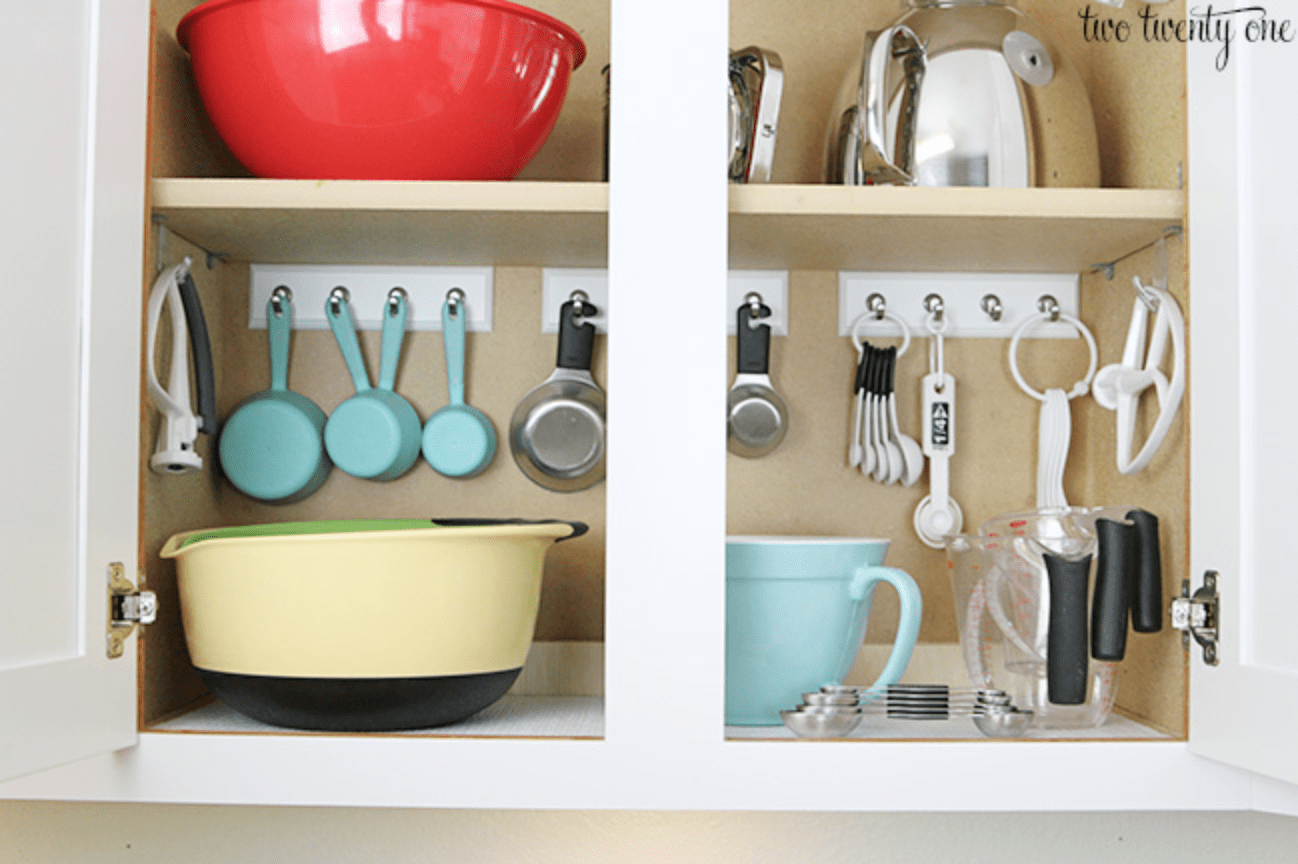
2. Hanging On Hooks
Hooks are a smart solution for both dry and liquid cups. You can install them inside a cabinet door, on a wall, or even under a shelf. Hang each cup by its handle.
Pros:
- Makes every cup easy to see
- Saves drawer and shelf space
- Looks tidy
Cons:
- Needs installation
- Handles must have holes
3. Using A Pegboard
A pegboard is a board with holes for pegs or hooks. It’s a flexible way to organize measuring cups and other tools. You can create a whole kitchen wall organizer with room for spoons, cups, and more.
Pros:
- Customizable layout
- Keeps tools visible
- Great for creative cooks
Cons:
- Takes wall space
- Can look cluttered if not planned well
4. Mounted Racks Or Rails
Some stores sell racks or rails designed for kitchen tools. You can attach these to a wall or inside a cabinet. Cups hang from hooks or sit in slots.
Pros:
- Holds cups and other tools
- Sturdy and easy to clean
Cons:
- May need drilling
- Not all racks fit all cup shapes
5. Magnetic Strips
Some measuring cups, especially metal ones, can be attached to magnetic strips. This is a creative way to use fridge sides or metal walls.
Pros:
- Very space-efficient
- Quick access
Cons:
- Only works with metal cups
- Magnets must be strong
6. Small Baskets Or Bins
If you have extra shelf or cabinet space, a small bin keeps all the measuring cups together. This works well for collapsible or odd-sized cups.
Pros:
- Easy to move
- Contains all pieces
Cons:
- Can get messy if overfilled
- Not as quick to grab one size
7. Dedicated Measuring Cup Drawer
If you cook or bake often, you might want to dedicate a whole drawer to measuring tools. Use dividers to keep each set separate.
Pros:
- Everything in one place
- Easy to see what you have
Cons:
- Uses valuable drawer space
- Needs drawer organizers
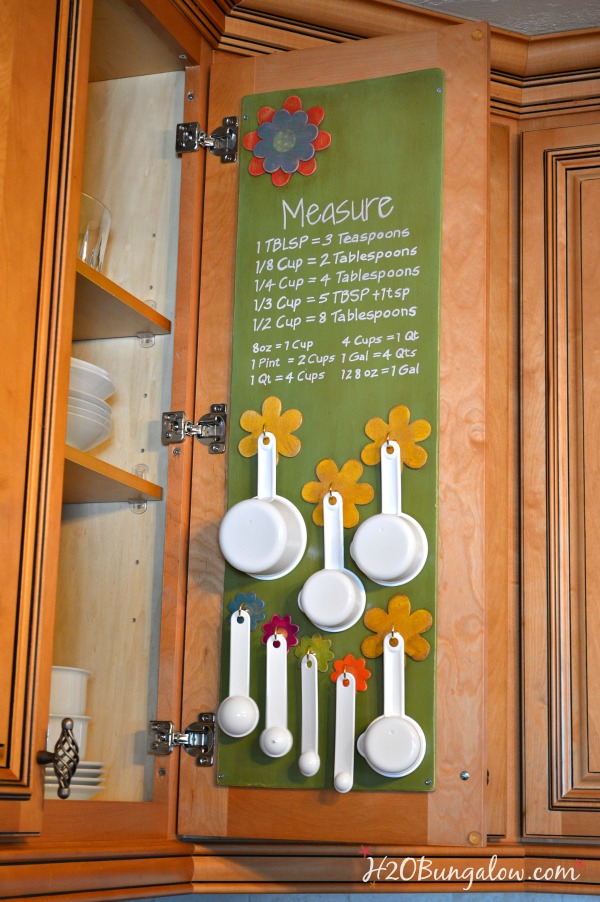
8. Inside Cabinet Doors
Mount small hooks, rails, or racks on the inside of a cabinet door. This hidden spot is perfect for keeping cups close but out of sight.
Pros:
- Saves visible space
- Keeps cups dust-free
Cons:
- Doors must close fully
- Not all cabinets are deep enough
Credit: h2obungalow.com
Step-by-step Guide: Organizing Your Measuring Cups
Now, let’s break down exactly how to organize your measuring cups, from sorting to final setup.
Step 1: Gather All Measuring Cups
Start by collecting every measuring cup in your kitchen. Check all drawers, cupboards, and even the dishwasher. Lay them out on a clean surface.
Step 2: Sort By Type And Size
Separate the cups into dry, liquid, and specialty groups. Within each group, arrange them by size. This helps you see if any are missing, broken, or duplicated.
Step 3: Purge Extras And Damaged Cups
Decide which cups you actually use. If you have three sets of dry cups but always use the same one, consider donating or recycling the extras. Throw away any cups with unreadable numbers or cracks.
Step 4: Clean All Cups
Before organizing, wash every cup. Sticky or dusty cups can attract bugs and make your storage solution less effective.
Step 5: Choose Your Storage Method
Based on your kitchen layout and how often you use measuring cups, pick one or more of the methods above. For example, hang your most-used cups on hooks, and store specialty ones in a bin.
Step 6: Install Or Arrange Storage
If you’re using hooks, rails, or racks, install them according to the product instructions. Make sure they are at a comfortable height and can hold the weight of your cups. For bins or drawers, add labels or dividers if needed.
Step 7: Place Cups In Their New Home
Arrange the cups neatly. For nesting, put the smallest size at the top. For hooks, hang in order from smallest to largest. For bins, stand cups upright or lay flat so you can see all sizes.
Step 8: Make It A Habit
Teach everyone in your home to put cups back in the right spot after washing. A system only works if it’s used every day.
Creative Storage Ideas Most People Miss
Some kitchen organization tricks are not obvious, but they can make a big difference.
Use A Curtain Rod Under A Shelf
Install a simple curtain rod under a shelf and hang measuring cups with S-hooks. This works especially well for open shelves and keeps your counter clear.
Repurpose A Spice Rack
A multi-tiered spice rack can hold nested cups or small bins for odd sizes. This is a good option if you have a narrow cabinet.
Use Adhesive Hooks
If you rent your home or don’t want to drill holes, use strong adhesive hooks inside cabinets or on tiles. Just make sure the surface is clean so the hooks stay in place.
Add Labels
Labels help everyone know where each cup belongs. Use waterproof labels or a label maker for best results.
Group By Frequency Of Use
Keep the cups you use daily in the most accessible spot, and store rarely-used sizes higher up or further back.
Comparison Of Storage Solutions
Here’s a quick side-by-side look at how different organizing methods stack up for common kitchen spaces.
| Storage Method | Best For | Space Needed | Ease of Access | Installation |
|---|---|---|---|---|
| Nesting in Drawer | Small kitchens | Low | Medium | None |
| Hanging on Hooks | Frequent cooks | Low | High | Easy |
| Pegboard | Creative layouts | Medium | High | Moderate |
| Magnetic Strip | Metal cups | Very low | High | Easy |
| Bin/Basket | Mixed sizes | Medium | Medium | None |
Mistakes To Avoid When Organizing Measuring Cups
Some organizing methods sound good but can cause problems. Here are key mistakes to watch for:
- Ignoring Accessibility: Placing cups too high or too far makes it harder to cook quickly. Keep most-used sizes at eye level or within easy reach.
- Overcrowding Drawers: Too many tools in one drawer leads to chaos. Give measuring cups their own space or container.
- Not Securing Hooks or Racks: If you hang cups on weak hooks, they can fall and break. Always check weight limits.
- Mixing Dry and Liquid Cups Together: Store dry and liquid cups separately so you don’t grab the wrong type by mistake.
- Skipping Labels: In shared kitchens, unlabeled storage leads to confusion. Labels make it clear where each cup goes.
Credit: www.thekitchn.com
Maintaining Your Measuring Cup Organization
Getting organized is just the start. Keeping your system working takes a little effort.
- Return After Use: Always put measuring cups back right after washing or drying.
- Check for Damage: Every few months, check for faded numbers or cracks. Replace cups as needed.
- Update System as Needed: If you start baking more or buy new cups, adjust your storage method. What works now might need a tweak later.
- Deep Clean Regularly: Wipe out drawers, bins, or hooks to keep them free of crumbs and dust.
Organizing Measuring Cups In Small Kitchens
Small kitchens need special tricks to stay organized. Here are some ideas:
- Use vertical space by hanging cups on the wall or inside cabinet doors.
- Choose collapsible measuring cups that flatten for storage.
- Store rarely used cups in a container at the back of a cabinet or on a high shelf.
- Combine storage methods—hang most-used cups, and bin the rest.
A smart tip is to use a magnetic strip on the side of the fridge for metal cups. This takes up almost no extra space.
Organizing Measuring Cups For Large Families Or Shared Kitchens
If you have a big family or share your kitchen, you need a system everyone can use.
- Pick a visible storage method like hooks or a pegboard so everyone sees where to put cups back.
- Use labels for each size.
- Have more than one set of measuring cups if possible, so more than one person can cook at a time.
- Store backup sets in a bin or container out of the way.
For families with children, keep lighter plastic cups in a lower drawer, and glass liquid cups higher up for safety.
Cleaning And Caring For Measuring Cups
Good organization goes hand-in-hand with good care. Here’s how to keep your measuring cups in top shape:
- Wash after each use to prevent stains and odors. Use hot, soapy water for both dry and liquid cups.
- Avoid dishwasher damage. Some plastic or marked cups can fade in the dishwasher. Check the manufacturer’s advice.
- Dry thoroughly before storing, especially if you use bins or drawers. Moisture can lead to mold.
- Store metal cups away from water to prevent rust.
If you have glass liquid measuring cups, avoid stacking them directly, as they can chip.
Choosing New Measuring Cups For Easier Organization
If you’re buying new measuring cups, look for features that make storage easier:
- Stackable sets that nest perfectly
- Handles with holes for hanging
- Clear measurement markings that won’t fade
- Magnetic sets that stick together
- Collapsible cups for tiny kitchens
Here’s a quick guide comparing common measuring cup designs:
| Feature | Best For | Storage Tip |
|---|---|---|
| Nesting plastic/metal | Everyday use | Drawer or bin |
| Glass liquid cup | Baking/cooking liquids | Shelf, not stacked |
| Magnetic set | Quick access | Fridge or strip |
| Collapsible silicone | Small kitchens | Bin or basket |
How To Organize Measuring Cups For Special Needs
Some cooks have special requirements, such as limited hand strength or vision. Here’s how to adjust your system:
- Choose cups with large, clear numbers for easy reading.
- Use color-coded cups for those who struggle with numbers.
- Opt for lightweight, easy-grip handles for those with arthritis.
- Store cups at waist height for wheelchair users or anyone who can’t bend down easily.
- Hang cups with wide, easy-to-grip hooks if fine motor skills are a concern.
For more advice on accessible kitchen tools, check out resources like ADA Kitchen Accessibility.
When To Reorganize Your Measuring Cups
Even the best system needs a refresh now and then. Consider reorganizing if:
- Your kitchen tools collection grows or shrinks
- You start baking or cooking more often
- You move to a new home
- Kids start helping in the kitchen
Regularly check your system to make sure it still fits your needs.
Frequently Asked Questions
How Do I Keep Measuring Cups Together So They Don’t Get Lost?
Use a metal or plastic ring to hold nested cups together, or choose a magnetic set that sticks together. Hanging cups on hooks also keeps sets complete and easy to find.
What’s The Best Way To Organize Measuring Cups In A Small Kitchen?
Use vertical solutions like hooks, rails, or magnetic strips. Collapsible cups and inside-cabinet storage also work well when counter and drawer space is tight.
How Can I Stop The Numbers From Wearing Off My Measuring Cups?
Hand wash cups instead of using the dishwasher, and avoid scrubbing the numbers. Look for cups with engraved or raised markings, which last much longer.
Should I Store Dry And Liquid Measuring Cups Together?
It’s better to store them separately. Dry cups nest well in a drawer or bin, while liquid cups fit best on a shelf or hook. This makes it easier to grab the right type quickly.
What If My Kitchen Is Shared By Several People?
Use visible storage, like hooks or a pegboard, and label each spot. Consider having more than one set of measuring cups to avoid confusion during busy times.
Organizing your measuring cups is a small project with a big payoff. With the right system, you’ll save time, reduce stress, and keep your kitchen running smoothly. Try a few of these ideas and see what works best for you.
A tidy kitchen is one step closer to happy, confident cooking.