
A pizza cutter might seem like a simple tool, but anyone who loves pizza knows the difference a sharp blade makes. A dull pizza cutter leaves ragged edges, squashes toppings, and turns slicing into a struggle. Many people toss their cutters when they feel dull, not realizing that sharpening is easy and extends the tool’s life.
If you want clean cuts, easy slicing, and a better pizza experience, learning how to sharpen a pizza cutter is essential.
In this guide, you’ll discover practical steps for sharpening every type of pizza cutter—from the classic wheel to the rocking blade. You’ll find advice for choosing the right sharpening method, tips for safe handling, and mistakes to avoid. Whether you’re a home cook, a pizza enthusiast, or someone who uses cutters professionally, these tips will help you keep your cutter in top shape.
Why A Sharp Pizza Cutter Matters
A sharp pizza cutter does more than make your life easier. Clean cuts mean your pizza holds together, toppings stay in place, and every slice looks as good as it tastes. A dull blade forces you to press harder, which can bend the pizza or even cause injury if you slip. Over time, a sharp cutter can also reduce wear and tear on your kitchen surfaces.
Another benefit is safety. Many people think a dull blade is safer, but the opposite is true. When you push too hard, you lose control, which increases the risk of accidents. Sharp tools, when used properly, are actually safer.
Finally, a sharp cutter saves time and effort. If you make pizza often, this difference adds up.
Types Of Pizza Cutters And Their Sharpening Needs
Not all pizza cutters are the same, and each type has its own sharpening method. Understanding your tool is the first step.
Pizza Wheel
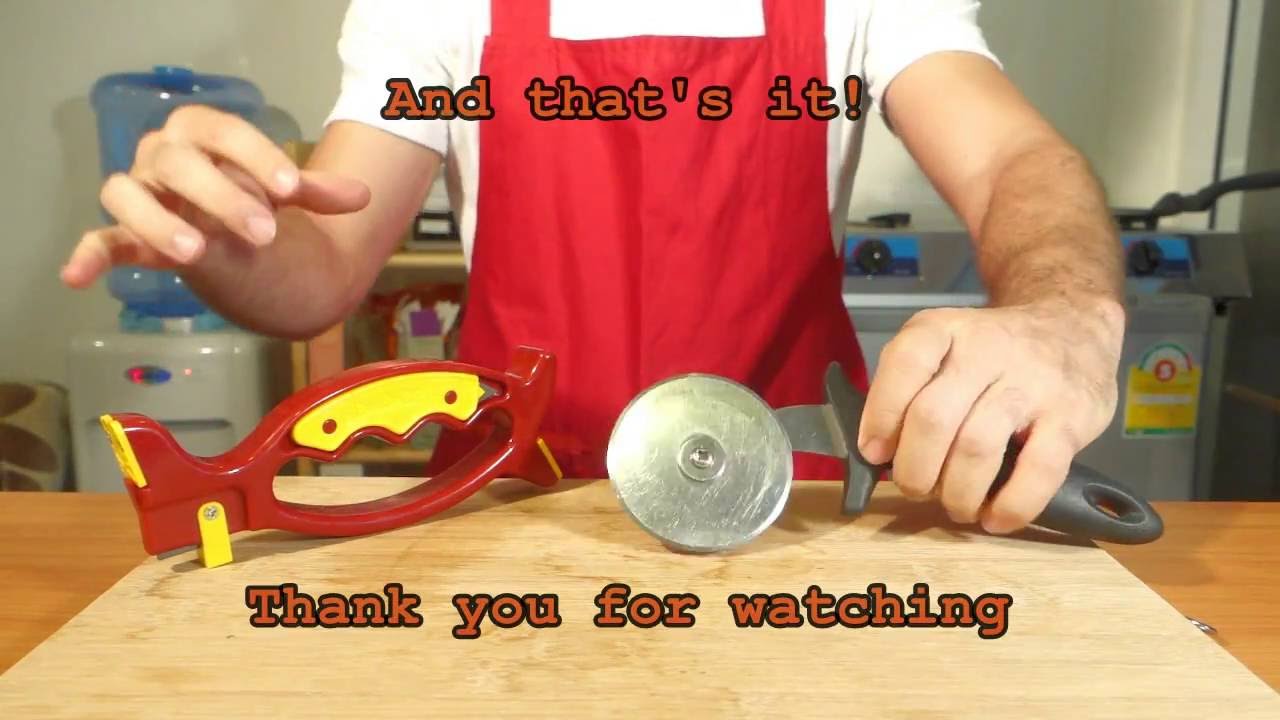
The pizza wheel is the most common type. It has a rotating circular blade and a handle. The blade edge gets dull after slicing through crusts and cheese.
Sharpening needs: Both sides of the wheel edge must be sharpened evenly. The round shape can be tricky, so the right tool and technique are important.
Rocker Blade
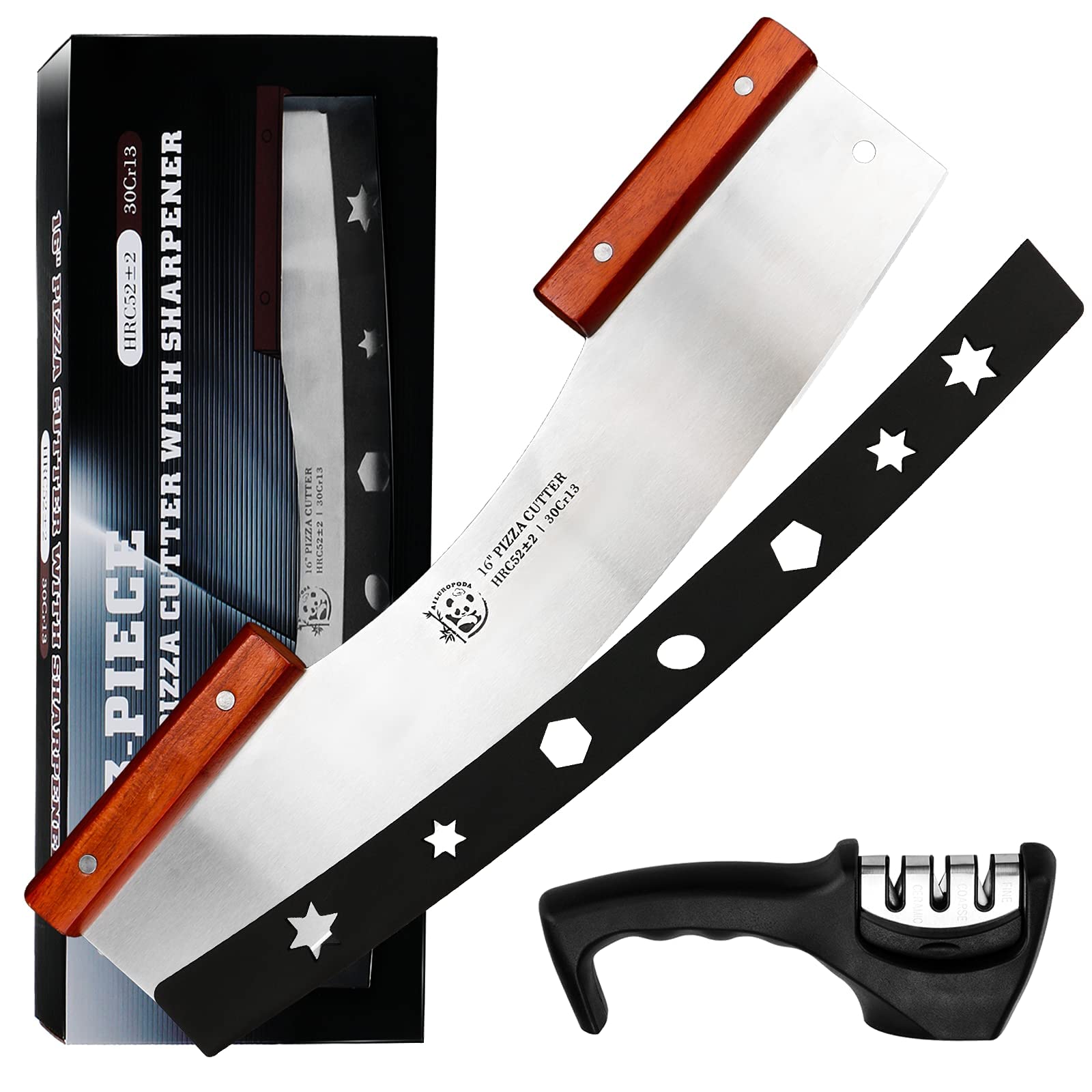
A rocker blade (also called mezzaluna) is a curved, long blade you rock back and forth. It’s used in professional kitchens and by serious home cooks.
Sharpening needs: Like a chef’s knife, the edge should be smooth and even. Both sides must be sharpened, and the curve makes it a bit more challenging.
Specialty Cutters
Some pizza cutters have special shapes, like scissors with attached spatulas or dual-wheel designs. Each has unique edges, but the basics of sharpening are similar—keep the cutting parts as sharp as possible.
How To Tell If Your Pizza Cutter Needs Sharpening
Many people use dull cutters without realizing it. Here are signs your cutter needs attention:
- Tearing the Crust: If the blade rips the dough instead of slicing cleanly, it’s probably dull.
- Squashed Toppings: If cheese or toppings drag along, not cut through, the edge is blunt.
- Increased Effort: If you press harder than usual, or the cutter slips, sharpening is needed.
- Visible Dullness: Look at the edge under good light. If it’s rounded, chipped, or shiny (instead of a fine line), it’s dull.
Tools You Need For Sharpening
Before starting, gather the right tools. Using proper equipment makes sharpening easier and safer.
For Pizza Wheels
- Sharpening rod (honing rod): A ceramic or steel rod, used for touch-ups.
- Sharpening stone: A whetstone with medium and fine grits.
- Small file: Useful for very dull or chipped edges.
- Cloth: For cleaning the blade after sharpening.
For Rocker Blades
- Sharpening stone: Essential for the long edge.
- Honing steel or ceramic rod: For quick touch-ups.
- Sharpening guide: Optional, helps hold the right angle.
Optional Tools
- Electric knife sharpener: Some have slots for small round blades.
- Protective gloves: Cut-resistant gloves protect your hands.
Pro tip: Never use sandpaper or metal grinders—they can ruin the blade and leave rough spots.
Preparing The Pizza Cutter For Sharpening
Before you sharpen, clean the cutter completely. Food particles, grease, or rust can interfere with sharpening and damage the stone or rod.
- Wash the cutter with hot, soapy water.
- Use a brush to remove stuck-on bits, especially near the blade’s center.
- Dry completely with a clean towel.
- If the cutter is rusty, remove rust with a baking soda paste or a rust eraser.
Extra insight: Many people forget to check for loose screws or handles. Tighten any loose parts before sharpening. A wobbly wheel is dangerous and makes sharpening uneven.
Step-by-step Guide: How To Sharpen A Pizza Wheel
Sharpening a pizza wheel is a bit different from sharpening a straight knife, but it’s easy with practice.
1. Remove The Wheel (if Possible)
Some pizza wheels can be taken apart. If yours allows, remove the blade for better access. If not, work carefully with the blade still attached.
2. Choose The Right Angle
Aim for a 20-degree angle when sharpening. This is sharp enough for pizza but strong enough to last.
3. Using A Sharpening Stone
- Wet the stone with water or honing oil (follow the stone’s instructions).
- Hold the wheel so the edge touches the stone at a 20-degree angle.
- Rotate the blade as you move it along the stone, sharpening a small section at a time.
- After one full rotation, flip and repeat on the other edge.
- Use the fine side of the stone for a smooth finish.
4. Using A Sharpening Rod
- Hold the rod vertically, point down on a towel.
- Hold the wheel at a 20-degree angle to the rod.
- Push the blade edge against the rod and rotate the wheel, sharpening the edge as it turns.
- Repeat 8–10 times for each side.
5. Using A Small File (for Very Dull Blades)
- Place the blade on a stable surface.
- File along the edge, following the curve, at a 20-degree angle.
- Work slowly, using light pressure.
- Finish with a honing rod or stone for smoothness.
Important: After sharpening, carefully wipe away any metal filings.
6. Reassemble And Test
Put the wheel back together if you removed it. Test the edge by slicing a piece of paper or a soft tomato—if it cuts easily, the blade is ready.
Step-by-step Guide: Sharpening A Rocker Blade (mezzaluna)
Rocker blades need a method similar to sharpening a chef’s knife.
1. Secure The Blade
Place the rocker blade on a towel or non-slip mat. This keeps it from moving as you sharpen.
2. Wet The Sharpening Stone
Soak or oil the stone if required.
3. Find The Right Angle
Hold the blade at a 15–20 degree angle to the stone. A slightly sharper angle is fine for a rocker blade.
4. Sharpen One Side At A Time
- Draw the blade along the stone, following the curve.
- Use even pressure and long strokes.
- Cover the entire length of the blade, moving from tip to tip.
- Repeat on the other side.
5. Hone The Edge
After sharpening, use a honing rod for a final touch. This straightens any tiny bends in the edge.
6. Clean And Test
Wipe the blade and test on a pizza slice. It should cut smoothly with gentle rocking.
Sharpening Specialty Pizza Cutters
Some pizza cutters don’t fit standard sharpening tools. For example, pizza scissors usually have detachable blades—sharpen these like regular kitchen scissors, using a sharpening stone or a special scissor sharpener.
Dual-wheel cutters should be taken apart if possible, then each wheel is sharpened separately.
Extra tip: Always check the manufacturer’s instructions. Some cutters have non-removable parts or special coatings that need gentle care.
Credit: www.amazon.com
How Often Should You Sharpen Your Pizza Cutter?
There’s no single answer, as it depends on how often you use the cutter and what you cut. For most home cooks:
- Every 2–3 months for regular use.
- Every 1–2 months for heavy use (weekly pizza nights).
- Touch up with a honing rod every few uses.
Professionals or anyone cutting thick or hard crusts should sharpen more often.
Hidden insight: Don’t wait until the blade is dull. Frequent light sharpening keeps the edge in better shape than waiting for it to get completely blunt.
Mistakes To Avoid When Sharpening A Pizza Cutter
Even experienced cooks make mistakes. Here are common errors and how to avoid them:
- Wrong Angle: Sharpening at too steep or too shallow an angle can either make the blade too weak or not sharp enough.
- Skipping Cleaning: Sharpening a dirty blade can scratch the stone or rod and push debris into the edge.
- Uneven Pressure: Pressing too hard on one side creates an uneven edge, which cuts poorly.
- Not Finishing with a Hone: Honing removes tiny burrs left after sharpening. Skipping this step can make the edge feel rough.
- Using the Wrong Tool: Kitchen knife sharpeners often don’t fit round wheels. Always use the right tool for your cutter.
How To Maintain A Sharp Pizza Cutter
After sharpening, proper care helps the edge last longer.
Cleaning
Always clean the cutter after each use. Hand wash, dry immediately, and avoid dishwashers if possible (detergents can dull the edge).
Storage
Store your cutter in a drawer with blade guards, or hang it safely. Avoid tossing it with other utensils, which can nick the edge.
Light Honing
Use a honing rod for quick touch-ups. This keeps the edge straight and ready to cut.
Regular Inspection
Check for loose screws, bent parts, or nicks. Fix problems early to prevent accidents or permanent damage.
Comparing Sharpening Tools For Pizza Cutters
Choosing the right sharpening tool is important. Here’s a quick comparison:
| Tool | Best For | Pros | Cons |
|---|---|---|---|
| Sharpening Stone | Wheels & Rocker Blades | Precise, long-lasting edge | Requires practice, slower |
| Sharpening Rod | Wheels & Some Rocker Blades | Quick touch-ups, easy to use | Less effective on very dull blades |
| Small File | Very dull or damaged blades | Good for fixing chips | Can leave roughness, needs finishing |
| Electric Sharpener | Some wheels (with right slot) | Fast, easy | Not for all cutter types, expensive |
Extra insight: Don’t buy expensive electric sharpeners just for pizza cutters unless you already use them for knives.
Credit: www.youtube.com
Safety Tips For Sharpening And Using Pizza Cutters
Pizza cutters can be dangerous if not handled carefully, especially when sharpening.
- Wear cut-resistant gloves if you’re new to sharpening.
- Always move the blade away from your body.
- Use a non-slip mat under sharpening stones.
- Keep fingers away from the blade, especially when cleaning or testing.
- Never sharpen or use a pizza cutter when distracted.
Common mistake: Testing sharpness with your thumb can lead to cuts. Use paper or a soft vegetable instead.
When To Replace Your Pizza Cutter
Sometimes, sharpening isn’t enough. Replace your pizza cutter if:
- The blade is heavily chipped, bent, or rusted beyond repair.
- The wheel wobbles or doesn’t rotate smoothly after tightening.
- The handle is cracked, loose, or unsafe.
Quality cutters can last years with care, but even the best need replacing someday.
Real-world Examples: Pizza Cutter Sharpening In Action
Let’s look at some practical stories and data to highlight the importance of sharpening.
Example 1: A home pizza lover noticed her slices became messier over time. After sharpening with a stone, she cut through a 12-inch pizza in seconds, with no topping drag.
Example 2: A small pizzeria compared slicing times before and after sharpening. With dull blades, staff took 18 seconds per pizza. After sharpening, the average dropped to 8 seconds—a 55% improvement.
Example 3: A restaurant used a professional rocker blade. After routine sharpening, staff reported fewer hand strains and better-looking slices, which improved customer satisfaction.
Statistic: According to a survey by the National Restaurant Association, 80% of chefs say sharp tools are critical for speed, safety, and food presentation.
Sharpening Vs. Replacing: Cost Comparison
Is it worth sharpening, or should you buy a new cutter? Here’s a simple comparison:
| Option | Average Cost | Longevity | Environmental Impact |
|---|---|---|---|
| Sharpening Tools | $10–$30 (one-time) | 5+ years (multiple tools) | Low (reusable) |
| Replacement Cutter | $8–$25 (each) | 1–2 years (average) | High (more waste) |
Non-obvious insight: Over five years, sharpening saves money and reduces waste, especially for families or restaurants.

Credit: www.cookistry.com
Sharpening Other Kitchen Tools: Is The Method The Same?
Many people wonder if pizza cutter sharpening works for other kitchen tools. The answer is yes, with adjustments. Chef’s knives, scissors, and mezzalunas can use similar stones and rods. However, always check the angle and shape—straight blades are easier, while circular blades need more care.
Pro tip: Never use pizza cutter sharpeners on serrated knives—they require special tools.
For more on sharpening kitchen tools, see this Wikipedia article.
Troubleshooting: Why Isn’t My Pizza Cutter Getting Sharp?
If sharpening doesn’t seem to work, check these possibilities:
- Wrong angle: Too steep or too shallow won’t produce a real edge.
- Too little pressure: Gentle strokes are good, but you need enough contact.
- Damaged blade: If the edge is chipped or bent, it may never get sharp.
- Skipped steps: Always finish with honing and cleaning.
If you try everything and the cutter still doesn’t work, it’s probably time for a new one.
Frequently Asked Questions
How Do I Keep My Pizza Cutter Sharp Between Sharpening Sessions?
Clean the blade after every use, dry it right away, and store it safely. Use a honing rod every few uses to keep the edge straight. Avoid cutting on hard surfaces like stone or glass.
Can I Use A Regular Knife Sharpener On A Pizza Wheel?
Most regular knife sharpeners don’t fit the wheel shape. They’re designed for straight blades. Use a sharpening stone or rod for best results.
Is It Safe To Sharpen A Pizza Cutter At Home?
Yes, with proper care. Wear cut-resistant gloves, work slowly, and always move the blade away from your body. Use a non-slip mat under sharpening stones.
How Do I Know If My Pizza Cutter Is Sharp Enough?
Try slicing a piece of paper or a soft vegetable. The blade should cut smoothly with little pressure. If it tears or drags, it needs more sharpening.
What’s The Best Way To Store A Pizza Cutter?
Store it in a drawer with a blade guard, or hang it safely. Never toss it loosely with other utensils, as this can dull or damage the edge.
Keeping your pizza cutter sharp makes every slice easier and your pizza experience better. With the right tools, safe handling, and a little practice, you’ll enjoy perfect slices every time. Whether you cook at home or in a busy kitchen, a sharp cutter is a small investment with big returns.