
Turmeric is a wonderful spice that brings flavor and color to food. But if you’ve ever cooked with it, you know how quickly it can leave bright yellow stains on your kitchen cabinets. These stains can make a beautiful kitchen look dirty and are often hard to remove.
If you have white or light-colored cabinets, turmeric stains stand out even more. Many people try to scrub them away, but sometimes the stains just get worse or spread further. The good news is that you can remove turmeric stains without damaging your cabinets if you know the right methods.
In this guide, you’ll learn practical, step-by-step ways to get rid of turmeric stains, whether they are fresh or old. You’ll also find out what to avoid, get answers to common questions, and discover some cleaning tricks that most beginners miss.
With the right approach, your kitchen cabinets can look clean and bright again—even after a turmeric accident.
Why Turmeric Stains Are So Difficult
Turmeric contains a compound called curcumin, which gives the spice its bright yellow color. Curcumin is oil-based, so it sticks to surfaces and seeps into small pores in wood, laminate, or painted cabinets. It is also resistant to water, which makes normal cleaning less effective. If you wipe a turmeric spill with a wet cloth, you may spread the stain instead of removing it.
Another reason turmeric stains are tough is that many kitchen cabinet surfaces are slightly porous. That means the color can sink in and bond with the material, especially on wood or painted finishes. Even a small amount of turmeric can create a strong yellow mark. Time also matters—the longer a stain sits, the harder it is to remove.
Act Fast: Why Timing Is Important
If you spill turmeric on your cabinets, clean it up right away. Fresh stains are much easier to remove. If you let them dry, the pigment bonds with the surface, and it may take several cleaning attempts to get rid of the mark. Many people make the mistake of waiting or not noticing the stain until the next day.
For best results, tackle the stain as soon as you see it. The faster you act, the less likely you are to cause permanent damage or discoloration.
Gather Your Cleaning Supplies
Before you start cleaning, collect the supplies you will need. Using the right products makes a big difference, and using the wrong ones can damage your cabinets. Here’s a list of useful items:
- Mild dish soap (grease-cutting, non-abrasive)
- White vinegar
- Baking soda
- Hydrogen peroxide (3% solution)
- Lemon juice
- Rubbing alcohol (isopropyl alcohol, 70%)
- Baking soda
- Soft microfiber cloths
- Non-scratch sponge
- Plastic scraper or old credit card
- Cotton swabs
- Rubber gloves
You do not need all of these for every stain, but having them ready will help you try different methods if the first one doesn’t work.
Understanding Your Cabinet Material
Before cleaning, it’s important to know what your cabinets are made of. Some cleaning methods are safe for all surfaces, while others can damage wood or paint.
Here’s a quick guide to common cabinet materials:
| Cabinet Material | Stain Risk | Safe Cleaners | What to Avoid |
|---|---|---|---|
| Painted Wood | High | Mild soap, baking soda, vinegar | Bleach, harsh abrasives |
| Laminate | Medium | Dish soap, baking soda, vinegar | Strong solvents, wire brushes |
| Solid Wood (sealed) | Medium-High | Soap, vinegar, peroxide (with care) | Excess water, strong chemicals |
| Thermofoil | Medium | Soap, vinegar, baking soda | Heat, high-strength cleaners |
| Varnished/Stained Wood | Medium | Soap, vinegar, lemon juice | Alcohol, peroxide (test first) |
If you are not sure about your cabinets, start with the gentlest method and test on a small, hidden area first.
Step-by-step Methods To Remove Turmeric Stains
There are several proven ways to remove turmeric stains from kitchen cabinets. Some are simple and use items you already have at home. Others are for tough, old stains. Try these methods in order, starting with the least aggressive.
1. Soap And Warm Water (for Fresh Stains)
If the turmeric stain is new, this basic method often works.
- Blot the stain with a dry paper towel—do not rub, as this spreads the color.
- Mix a few drops of mild dish soap in a cup of warm water.
- Dip a soft microfiber cloth in the solution, wring out, and gently dab the stain.
- Rinse the cloth often and continue until the stain fades.
- Dry the area with a clean towel.
Pro Tip: Always use a blotting motion, not a scrubbing one. Scrubbing can push the pigment deeper.
2. Baking Soda Paste (for Stubborn Yellow Marks)
If soap and water don’t work, try baking soda. Baking soda is a gentle abrasive and helps lift the stain without scratching.
- Mix 2 tablespoons of baking soda with a few drops of water to make a thick paste.
- Apply the paste to the stain using a soft cloth.
- Let it sit for 10–15 minutes. This gives the baking soda time to absorb the pigment.
- Gently rub the area with a non-scratch sponge.
- Wipe away the paste with a damp cloth, then dry.
Non-Obvious Insight: Don’t let the baking soda paste dry completely. If it does, it can be harder to remove and may leave white residue.
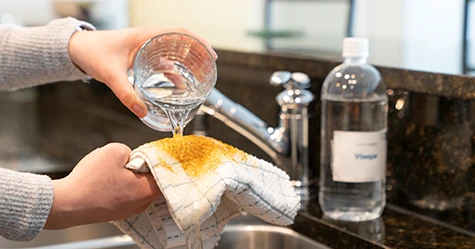
3. Vinegar Solution (for Set-in Stains)
White vinegar is a natural cleaner that helps break down turmeric’s oil-based pigment.
- Mix equal parts white vinegar and water in a spray bottle.
- Spray the solution onto the stained area.
- Let it sit for 5–10 minutes.
- Wipe with a clean, damp cloth.
- Repeat if needed.
Caution: Test vinegar on a small hidden spot first, especially for wood cabinets, as it can dull some finishes if left on too long.
4. Lemon Juice Boost
Lemon juice is acidic and helps fade yellow stains. It’s also a natural deodorizer.
- Squeeze fresh lemon juice onto a cotton swab or soft cloth.
- Dab the stain and let it sit for 5 minutes.
- Wipe clean with a damp cloth.
This method works well for small stains or touch-ups.
5. Hydrogen Peroxide (for Tough Or Old Stains)
Hydrogen peroxide is a mild bleach and can help lighten stubborn yellow marks. It should be used with care, especially on dark or colored cabinets.
- Pour a small amount of 3% hydrogen peroxide onto a cotton ball or soft cloth.
- Gently dab the stain—do not rub hard.
- Let it sit for 5–10 minutes.
- Wipe with a damp cloth and dry.
Non-Obvious Insight: Hydrogen peroxide works better in sunlight. If possible, let natural light reach the stained area during cleaning.
6. Rubbing Alcohol
Rubbing alcohol dissolves oil and can help lift turmeric stains from non-porous surfaces.
- Dampen a cloth with isopropyl alcohol (70%).
- Gently blot the stain.
- Wipe clean with water and dry.
Use this method only on surfaces that resist alcohol—avoid on shellac or lacquer finishes.
7. Commercial Cleaners
If home remedies fail, you may use a commercial kitchen cleaner labeled safe for your cabinet type. Look for products with oxidizing agents or enzyme cleaners. Always read the label and test in a hidden spot first.
Popular choices include:
- Magic Eraser (for laminate or painted cabinets, not for glossy or dark wood)
- Goo Gone (for sticky turmeric residue)
Important: Never mix different cleaners, as this can create dangerous fumes.
8. Baking Soda & Vinegar Combo
Some stains respond better to a combination of mild acid and gentle abrasive. Here’s how:
- Sprinkle baking soda over the stain.
- Spray lightly with vinegar—let it fizz.
- Wait 5 minutes.
- Wipe gently with a damp cloth.
This method lifts pigment without harsh scrubbing.
9. Preventing Turmeric Stains
The easiest way to deal with turmeric stains is to avoid them. Here are some practical tips:
- Use splash guards or cutting boards when handling turmeric.
- Clean up spills right away with a dry paper towel.
- Seal wood cabinets with a water-resistant finish if possible.
- Wear gloves when cooking with turmeric to avoid spreading stains.
- Keep a cleaning kit handy in your kitchen for quick action.
10. What Not To Do
Many people accidentally make turmeric stains worse by using the wrong methods. Avoid these common mistakes:
- Don’t use bleach on cabinets. Bleach can strip paint and damage wood.
- Don’t use steel wool or harsh abrasives. These scratch surfaces and can make stains permanent.
- Don’t use hot water on laminate, as it can warp the material.
- Don’t mix vinegar and hydrogen peroxide, as this creates peracetic acid—a strong irritant.
Comparing Cleaning Methods: Effectiveness And Safety
Choosing the right cleaning method depends on your cabinet material and how deep the stain is. Here’s a quick comparison for reference:
| Cleaning Method | Best For | Effectiveness | Surface Safety |
|---|---|---|---|
| Soap & Water | Fresh stains, any surface | Medium | Very Safe |
| Baking Soda Paste | Stubborn stains, painted/laminate | High | Safe if gentle |
| Vinegar Solution | Set-in stains, non-porous | Medium | Test first |
| Hydrogen Peroxide | Old stains, light colors | High | Test first |
| Lemon Juice | Small stains, touch-ups | Medium | Safe if wiped off |
| Rubbing Alcohol | Oil-based stains, laminate | Medium | Test first |
| Commercial Cleaners | Very tough stains | High | Depends on product |
Practical tip: Always use the mildest method first. If you need to move to stronger cleaners, do a patch test.
Removing Stains From Different Cabinet Types
Not all kitchen cabinets are the same. Let’s break down a few extra tips for each type:
Painted Cabinets
Painted cabinets are most likely to show yellow stains. Use gentle methods and avoid strong chemicals. Baking soda paste is usually safe. Avoid rubbing alcohol unless you test first.
Laminate Cabinets
Laminate is less porous, so turmeric doesn’t sink in as deeply. Soap and water, vinegar, or baking soda usually work. Avoid scraping tools that can scratch the surface.
Solid Wood Cabinets
Solid wood can absorb turmeric. Use as little water as possible. Try baking soda, lemon juice, or a weak vinegar solution. Dry the area well to prevent water damage.
High-gloss Or Lacquered Cabinets
High-gloss surfaces can be delicate. Avoid abrasives and strong solvents. Use mild soap and water, then buff gently with a soft cloth.
Handling Old Or Deep Turmeric Stains
Sometimes, a turmeric stain sits for days or weeks before you notice it. These stains are harder to remove, especially from porous wood or textured finishes. Here’s how to tackle them:
- Start with baking soda paste—apply, let sit 20 minutes, and gently rub.
- If the stain remains, try hydrogen peroxide (patch test first).
- For very deep stains, apply a commercial cleaner meant for your cabinet type.
- If stains are still visible, repeat the process or consider repainting the affected area.
Expert tip: It can take several attempts to fully remove old turmeric stains. Be patient and give each cleaner time to work.

Credit: www.reddit.com
How To Avoid Damaging Your Cabinets
While cleaning, it’s easy to focus on the stain and forget about the cabinet’s finish. But too much scrubbing or harsh chemicals can cause permanent damage. Here’s how to keep your cabinets safe:
- Always use a soft cloth or sponge.
- Never use steel wool or scouring pads.
- Do not soak wood cabinets. Water can cause swelling or warping.
- Test every cleaner on a hidden spot before applying to visible areas.
- Dry the surface after cleaning to prevent water marks or streaks.
If your cabinets are under warranty, check the manufacturer’s cleaning recommendations before using any chemicals.
Extra Tricks: Getting Rid Of Turmeric Smell
Turmeric can leave a strong, earthy smell even after the stain is gone. Here’s how to freshen up your cabinets:
- Wipe the area with a lemon juice and water mixture.
- Place an open box of baking soda inside the cabinet to absorb odors.
- Use a few drops of vanilla extract on a cotton ball as a natural deodorizer.
These small steps help keep your kitchen smelling clean.
Real-world Example: Removing A Week-old Turmeric Stain
Let’s look at an example that shows all the steps in action.
Imagine you find a yellow stain on your painted cabinet a week after cooking. Here’s what to do:
- Gently scrape off any dried turmeric with a plastic scraper (like an old credit card).
- Wipe with a damp, soapy cloth to remove surface residue.
- Make a baking soda paste and apply it, leaving it for 15 minutes.
- Wipe away. If yellow remains, dab with a cotton ball soaked in hydrogen peroxide (test first).
- Wait 10 minutes, then wipe clean and dry.
- If the smell lingers, wipe with lemon juice and let air dry.
After two rounds, the stain is barely visible. If you repeat the process one more time, the cabinet looks clean again.
When To Call A Professional
Most turmeric stains can be removed at home. However, if the stain is very deep, covers a large area, or if you have expensive custom cabinets, you might want to call a cleaning professional. They have special tools and products that can remove stains without damaging the finish.
Pro tip: If you rent your home, check with your landlord before using strong chemicals or repainting.

Credit: dphome.my
Quick Reference: Dos And Don’ts
To help you remember the best practices, here’s a simple reference:
| Do | Don’t |
|---|---|
| Blot stains immediately | Scrub hard with abrasives |
| Use mild soap and baking soda | Use bleach or strong solvents |
| Test cleaners on hidden spots | Soak wooden cabinets with water |
| Dry surfaces after cleaning | Mix chemicals together |
| Call a pro for deep stains | Ignore old stains |
Frequently Asked Questions
How Do I Remove Turmeric Stains From White Kitchen Cabinets?
For white cabinets, act quickly. Start with mild dish soap and water. If the stain remains, try a baking soda paste. For old stains, use hydrogen peroxide (test first). Always blot, not rub, to avoid spreading the stain.
Can Turmeric Stains Become Permanent?
Turmeric stains can become permanent if left for a long time or if harsh scrubbing damages the cabinet’s finish. Most stains can be removed with patience, but sometimes a faint mark remains, especially on porous wood.
Is It Safe To Use Vinegar Or Baking Soda On All Cabinet Finishes?
Vinegar and baking soda are safe for most cabinets, but always test on a hidden area first. Vinegar can dull some wood finishes if left on too long, and baking soda can scratch glossy surfaces if rubbed too hard.
What If The Stain Is Still Visible After Cleaning?
If the stain doesn’t go away after several cleaning attempts, you might need to repaint the affected area or use a touch-up marker. For deep stains on expensive cabinets, consider hiring a professional.
Are There Products That Prevent Turmeric Stains?
You can buy protective coatings or sealants for wood cabinets. These make it harder for stains to stick. Using splash guards and cleaning up spills immediately also helps prevent stains.
If you want to learn more about turmeric’s properties and why it stains so strongly, you can check this Wikipedia article on turmeric.
Turmeric stains can be tough, but with these methods and a little patience, you can keep your kitchen cabinets looking fresh and clean. Remember, the key is to act quickly and use gentle cleaning methods first. With the right tools and tips, you’ll win the battle against stubborn yellow marks.
Credit: www.mollymaid.com