
Store bought pizza dough is one of the kitchen’s best shortcuts. It helps you make delicious, homemade pizza without mixing flour or waiting for yeast to rise. But many people feel disappointed when their pizza does not turn out like the ones at their favorite restaurant. Maybe the crust is chewy, or the shape is wrong, or the dough just does not cook evenly. If you want to get the best results from store bought pizza dough, you need to know more than just how to spread sauce and cheese on top.
Getting great pizza at home is not only about throwing toppings together. The way you handle the dough, the oven temperature, and even how you store it, all play a role. Many people miss small but important details, like letting the dough come to room temperature or how to stretch it without tearing.
This article will give you everything you need to know—clear steps, expert tips, and solutions to common problems—so you can use store bought pizza dough with confidence and creativity.
Understanding Store Bought Pizza Dough
Store bought pizza dough comes in a few different forms. You can find it fresh in the refrigerated section, frozen, or as a par-baked crust. Each type has its own handling method and best uses.
Types Of Store Bought Pizza Dough
1. Fresh Refrigerated Dough
This is usually sold in a bag or plastic container. It is soft, stretchy, and needs to be kept cold until you are ready to use it.
Best for: Classic pizzas, breadsticks, calzones.
2. Frozen Dough
Sold in balls or pre-shaped rounds. You must thaw it in advance.
Best for: Deep dish, thick crust pizzas, or when you want to stock up.
3. Par-baked Crusts
These are doughs partially baked in the factory, sold as a flat base. They are ready for toppings and a short bake.
Best for: Quick meals, thin crust, or if you want a crunchy base.
What’s Inside Store Bought Dough?
Most store bought doughs use flour, water, yeast, salt, and oil. Some may add sugar for browning or dough conditioners for texture.
Check the ingredient list if you have allergies or want to avoid extra additives.
Why Use Store Bought Pizza Dough?
- Saves time: No need to measure or knead.
- Consistent results: Professional mixing and proofing.
- Versatile: Can be used for more than just pizza.
But, not all dough is equal. Some brands make doughs that are too tough, salty, or bland. Experiment with a few to find the one you like best.
Preparing Store Bought Pizza Dough
Many beginners skip the right prep, leading to sticky, tough, or uneven crusts. Preparation is key for flavor and texture.
Let The Dough Rest
Cold dough is stiff and tears easily. Remove the dough from the fridge and let it sit at room temperature for 30 to 60 minutes. Cover it with plastic wrap or a towel to prevent drying out.
For frozen dough, thaw it overnight in the fridge, then bring to room temperature for 1 hour before use.
Handling And Shaping
Dust your surface and hands with flour or a little cornmeal to prevent sticking. Do not use too much—excess flour can make the crust dry.
How to shape:
- Press the dough gently with your fingertips to flatten.
- Stretch the dough outward with your hands, rotating as you go.
- Avoid using a rolling pin if you want a bubbly, airy crust.
If the dough springs back, let it rest 5 more minutes. This relaxes the gluten and makes stretching easier.
Common Mistakes In Preparation
- Not resting long enough: Results in a tough, chewy crust.
- Overworking: Makes the dough dense and hard.
- Using too much flour: Crust becomes dry and bland.
Tools You Need For Great Pizza
Using the right tools can make a big difference in your pizza quality.
Essential Tools
- Pizza stone or baking steel: These hold and transfer heat, giving you a crispy bottom.
- Pizza peel or large spatula: For moving pizza in and out of the oven.
- Sharp knife or pizza cutter: For clean slices.
- Parchment paper: Prevents sticking and helps with transfer.
Nice-to-have Tools
- Dough scraper: Helpful for lifting and dividing dough.
- Oven thermometer: Ensures your oven is hot enough.
Comparison: Baking Surfaces
Here’s a comparison of three popular baking surfaces for pizza:
| Surface | Heat Retention | Crust Texture | Ease of Use |
|---|---|---|---|
| Pizza Stone | High | Crispy, chewy | Moderate |
| Baking Steel | Very High | Extra crisp | Moderate |
| Baking Sheet | Medium | Softer, less crisp | Easy |
For most home ovens, a pizza stone or baking steel gives the best results, but a baking sheet works if you do not have the others.
Shaping Your Pizza Dough
Getting the right shape is important for both looks and cooking.
Most store bought doughs make a 12- to 14-inch pizza, but you can divide for smaller pies.
Steps To Shape Dough
- Place dough on a lightly floured surface.
- Press with your fingers, starting from the center and moving outward.
- Gently lift and stretch the dough, letting gravity help.
- Form a small rim for the crust.
If you want a rectangle (for a sheet pan pizza), press and stretch the dough to the edges of your oiled baking sheet.
Tips For Success
- If the dough tears, pinch it closed and rest for 5 minutes.
- Do not force cold dough; it will resist stretching.
- For thin crust, stretch the dough wider and use less topping.
Common Shaping Problems
- Dough shrinks back: Not rested enough.
- Irregular shape: That’s okay! Homemade pizzas do not have to be perfect circles.
- Holes: Patch by pinching dough together.
Topping Your Pizza
The right toppings can turn a simple pizza into something special. But too much can make your pizza soggy or undercooked.
Classic Toppings
- Tomato sauce: Use a light layer. Too much makes pizza wet.
- Mozzarella cheese: Fresh or low-moisture.
- Pepperoni, sausage, or vegetables: Thinly sliced for quick cooking.
Less Is More
For most home ovens, less topping means better baking. Heavy toppings can weigh down the dough and prevent a crisp crust.
Pro Tips For Toppings
- Dry wet ingredients: Pat vegetables or canned pineapple dry.
- Precook raw meat: Ground sausage, chicken, or bacon should be cooked first.
- Add fresh herbs after baking: Basil or arugula stays bright and flavorful.
Balancing Flavors
Try combining salty, sweet, and spicy toppings, like prosciutto and arugula or pineapple and jalapeño.
Table: Popular Topping Pairings
| Base Sauce | Cheese | Meat | Veggies | Herbs/Finish |
|---|---|---|---|---|
| Tomato | Mozzarella | Pepperoni | Mushrooms | Oregano |
| Alfredo | Parmesan | Chicken | Spinach | Basil |
| Pesto | Goat Cheese | Prosciutto | Arugula | Crushed Red Pepper |
Baking Your Pizza
The oven is where your pizza comes together. Store bought dough, if handled right, can bake up crispy, light, and delicious.
Preheat Your Oven
A hot oven is critical. Preheat to the highest temperature your oven allows—usually 475°F to 500°F (245°C to 260°C). Let it heat for at least 30 minutes, especially if using a pizza stone or steel.
Move Pizza Into The Oven
- Use parchment paper under the pizza if you do not have a peel.
- Slide the pizza onto the stone, steel, or baking sheet.
Baking Time
- Thin crust: 8–12 minutes.
- Thick crust: 12–15 minutes.
Watch for golden brown edges and bubbling cheese. Ovens vary, so check 2 minutes before the shortest time.
Finishing Touches
- Let pizza cool 2–3 minutes before slicing. This helps cheese set.
- Drizzle with olive oil or sprinkle with grated parmesan for extra flavor.
Table: Baking Time By Crust Type
| Crust Type | Oven Temp (°F) | Time (minutes) |
|---|---|---|
| Thin | 500 | 8–10 |
| Medium | 475 | 10–12 |
| Thick | 450 | 12–15 |
Creative Ways To Use Store Bought Pizza Dough
Store bought pizza dough is not just for pizza. Its versatility makes it a great base for many recipes. Here are some ideas to try:
1. Calzones
Fill with cheese, sauce, and your favorite meats or vegetables. Fold, seal the edges, bake until golden.
2. Breadsticks
Roll strips of dough, brush with garlic butter, bake, and serve with marinara.
3. Stromboli
Roll out dough, layer with meats and cheese, roll up jelly-roll style, bake, and slice.
4. Focaccia
Press dough into an oiled pan, dimple with fingers, drizzle with olive oil, sprinkle with herbs, and bake.
5. Flatbread
Stretch dough thin, top with olive oil and sea salt, and bake for a crispy snack.
6. Cinnamon Rolls
Spread softened butter, cinnamon, and sugar on rolled-out dough, roll up, slice, and bake.
7. Garlic Knots
Tie small strips of dough, toss in garlic butter, and bake.
8. Pizza Muffins
Press dough into muffin tins, add sauce and cheese, and bake for mini pizzas.
9. Savory Pockets
Fill with cooked spinach, cheese, and herbs, fold over, and bake.
10. Cheese Sticks
Top dough with mozzarella, bake, and cut into strips.
The dough’s elasticity makes it suitable for both sweet and savory dishes. Always adjust baking times since smaller items bake faster.
Storing And Freezing Pizza Dough
If you have extra dough or want to prep ahead, storing it right will keep it fresh.
Storing In The Refrigerator
- Coat dough lightly with oil.
- Place in an airtight container or zip-top bag.
- Use within 3 days for best results.
Freezing For Later
- Divide dough into balls.
- Wrap tightly in plastic wrap, then place in a freezer bag.
- Label with date; use within 3 months.
To thaw: Place in the fridge overnight, then bring to room temperature before using.
Signs Dough Has Gone Bad
- Sour smell (beyond normal yeast smell)
- Gray spots or dry, cracked surface
- Sticky, runny texture
Discard if you notice any of these.
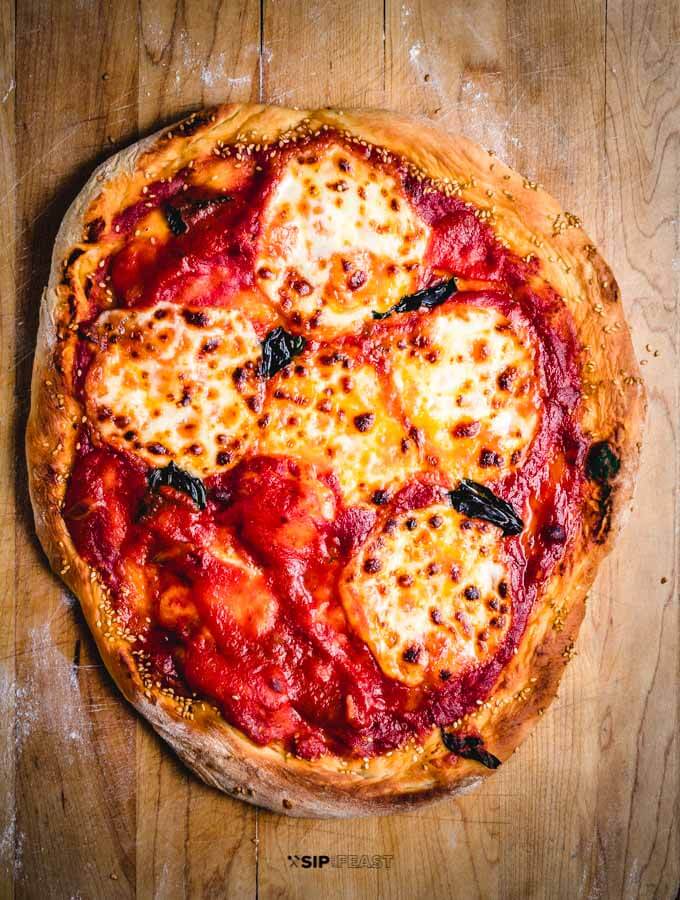
Credit: www.sipandfeast.com
Troubleshooting Common Problems
Many people struggle with issues when using store bought pizza dough. Here are solutions for the most common ones:
Dough Is Sticky
- Lightly oil your hands or use a dusting of flour.
- Let it rest longer if too cold.
Dough Tears Easily
- Not enough gluten development (rare with store bought dough).
- Too cold—let it warm up and try again.
Pizza Crust Is Soggy
- Use less sauce and toppings.
- Bake on a preheated stone or steel.
- Move pizza lower in the oven for the last few minutes.
Crust Is Too Hard
- Baked too long or oven too hot.
- Used too much flour during shaping.
- Did not let dough rise/rest before baking.
Pizza Won’t Brown
- Oven not hot enough.
- Sprinkle a bit of sugar in the sauce or brush crust with olive oil.
Uneven Cooking
- Oven not preheated long enough.
- Baking surface not hot.
- Toppings too thick in some areas.
Nutritional Facts And Health Tips
Pizza can be part of a balanced diet, but store bought dough can differ in calories, sodium, and fat.
Typical Nutrition For 1/8 Of A 12-inch Pizza (dough Only)
- Calories: 120–180
- Fat: 1–4g
- Carbs: 25–35g
- Protein: 4–6g
- Sodium: 200–350mg
Check labels to compare brands.
Healthier tips:
- Use whole wheat dough if available.
- Top with lots of vegetables and lean protein.
- Go light on cheese and use fresh tomato sauce.
- Pair with a salad for a complete meal.

Credit: kettlepizza.wordpress.com
Non-obvious Tips For Best Results
Many home cooks miss these expert strategies:
- Pre-bake (parbake) the crust: For heavy toppings or sauces, bake the dough alone for 4–5 minutes. Add toppings and finish baking. This prevents sogginess.
- Let dough ferment longer: If you have time, let refrigerated dough sit overnight. The flavor becomes more complex, similar to artisan bread.
Cleaning Up After Pizza Night
Cooking pizza at home can be messy.
To make cleanup easy:
- Use parchment under pizza for less mess on stones or pans.
- Soak cheese-covered tools in hot water before scrubbing.
- Wipe flour off counters before it gets wet—it’s easier to clean dry.
Where To Learn More
You can explore more about pizza making, dough science, and recipes at the Pizza Making Forum, a trusted source for both beginners and experts.
Frequently Asked Questions
How Do I Stop Store Bought Pizza Dough From Shrinking?
Let the dough come to room temperature for at least 30–60 minutes. If it still shrinks, let it rest another 5–10 minutes before stretching again. This relaxes the gluten so the dough stays in shape.
Can I Freeze Unused Pizza Dough?
Yes. Divide the dough into balls, wrap tightly, and freeze for up to 3 months. Thaw overnight in the fridge and bring to room temperature before using.
Why Is My Pizza Crust Not Crispy?
A soggy crust is usually caused by too much sauce or toppings, or not enough oven heat. Use a preheated pizza stone or steel, bake at the highest oven temperature, and use toppings sparingly.
Can I Use Store Bought Pizza Dough For Things Other Than Pizza?
Absolutely. Use it for calzones, breadsticks, cinnamon rolls, focaccia, or even garlic knots. Adjust baking times for smaller items.
Do I Need To Add Flour To Store Bought Pizza Dough?
Use only enough flour to keep the dough from sticking to your hands and work surface. Too much flour can make the crust dry and tough. Oil can also prevent sticking and add flavor.
Store bought pizza dough puts fresh, hot pizza within reach any night of the week. With the right preparation, tools, and techniques, you can achieve crisp, flavorful, and satisfying results—plus branch out into creative recipes beyond pizza. Whether you’re feeding a family or just yourself, you now have the confidence and know-how to make the most of this simple but powerful kitchen shortcut.

Credit: bakingsteel.com