
Using preservatives in food is a practice that touches nearly every kitchen, restaurant, and food factory around the world. These substances help food last longer, keep it safe to eat, and sometimes maintain color or flavor. But using them correctly is not as simple as just adding a powder or liquid.
You need to know which preservative to choose, how much to use, and what rules to follow for safety. Many people want to make their homemade foods last, or maybe you run a small food business and want to avoid waste.
Learning how to use preservatives in food can help you save money, reduce spoilage, and protect your customers’ health.
In this article, you’ll get a full guide to food preservatives, from natural options you can find in your kitchen to chemical additives used in industry. We’ll cover how preservatives work, the types you can use, and how to apply them safely.
You’ll also learn about the legal side of food preservatives and practical tips for using them at home or in a business. Let’s explore how to use preservatives in food with clear steps, real-life examples, and answers to common questions.
What Are Food Preservatives?
Food preservatives are substances added to food to slow down spoilage caused by bacteria, molds, fungi, or chemical changes. They can be natural, like salt or vinegar, or synthetic, like sodium benzoate. Preservatives help keep food fresh, safe, and appealing for longer.
Preservatives work in several ways:
- Killing or slowing microbes: Some stop bacteria or molds from growing.
- Reducing oxidation: Others prevent fats and oils from going rancid.
- Controlling enzymes: Some block enzymes that cause browning or softening.
Without preservatives, many foods would spoil quickly, especially in hot or humid climates. This is why they are used in everything from bread and cheese to canned vegetables and sauces.
Types Of Food Preservatives
Knowing the different types of preservatives helps you choose the right one for your needs. There are two main categories: natural and synthetic.
Natural Preservatives
Natural preservatives come from plants, animals, or minerals. They are often used in home cooking or by small businesses that want to avoid chemicals.
1. Salt
Salt is one of the oldest and most effective preservatives. It draws water out of food and microbes, making it hard for bacteria to grow. Salt is used in cured meats, pickles, and cheeses.
2. Sugar
Sugar acts as a preservative in jams, jellies, and candied fruits. It binds water in the food, making it unavailable for microbes.
3. Vinegar
Vinegar is high in acetic acid, which lowers the pH and prevents bacteria from growing. It’s a key ingredient in pickling.
4. Lemon Juice
Lemon juice contains citric acid, which also lowers pH. It’s used to keep fruits like apples and avocados from browning.
5. Smoke
Smoking meats or fish not only adds flavor but also preserves by drying out the food and adding chemicals that kill bacteria.
6. Spices
Some spices, like cloves, cinnamon, and mustard, have antimicrobial properties. They are often used in traditional recipes for preservation.
Synthetic (chemical) Preservatives
Synthetic preservatives are made in factories. They are used in commercial food production because they are predictable and effective in small amounts.
1. Sodium Benzoate
This is common in acidic foods like sodas, fruit juices, and salad dressings. It stops the growth of yeast, bacteria, and mold.
2. Potassium Sorbate
Potassium sorbate is used in cheeses, wines, and baked goods. It prevents mold and yeast without changing taste.
3. Sodium Nitrite And Nitrate
Used in cured meats like bacon and sausages, they prevent botulism (a deadly bacteria) and give meat a pink color.
4. Sulfites
Sulfites are found in dried fruits, wine, and some juices. They stop bacteria and prevent browning.
5. Propionates
Calcium and sodium propionate are used in bread to prevent mold.
6. Bha And Bht
Butylated hydroxyanisole (BHA) and butylated hydroxytoluene (BHT) keep fats and oils from spoiling in snacks and cereals.
7. Sorbic Acid
Sorbic acid is used in cheese, baked goods, and beverages to stop the growth of mold and yeast.
Below is a comparison of common preservatives, their uses, and safety levels:
| Preservative | Common Foods | Safe Daily Intake* (mg/kg body weight) | Main Benefit |
|---|---|---|---|
| Sodium Benzoate | Soft drinks, sauces | 5 | Stops yeast & mold |
| Potassium Sorbate | Cheese, wine, baked goods | 25 | Prevents mold |
| Sodium Nitrite | Cured meats | 0.07 | Prevents botulism |
| Sulfites | Dried fruits, wine | 0.7 | Prevents browning |
| BHA/BHT | Snacks, cereals | 0.5 | Stops rancidity |
*Values from international food safety guidelines.
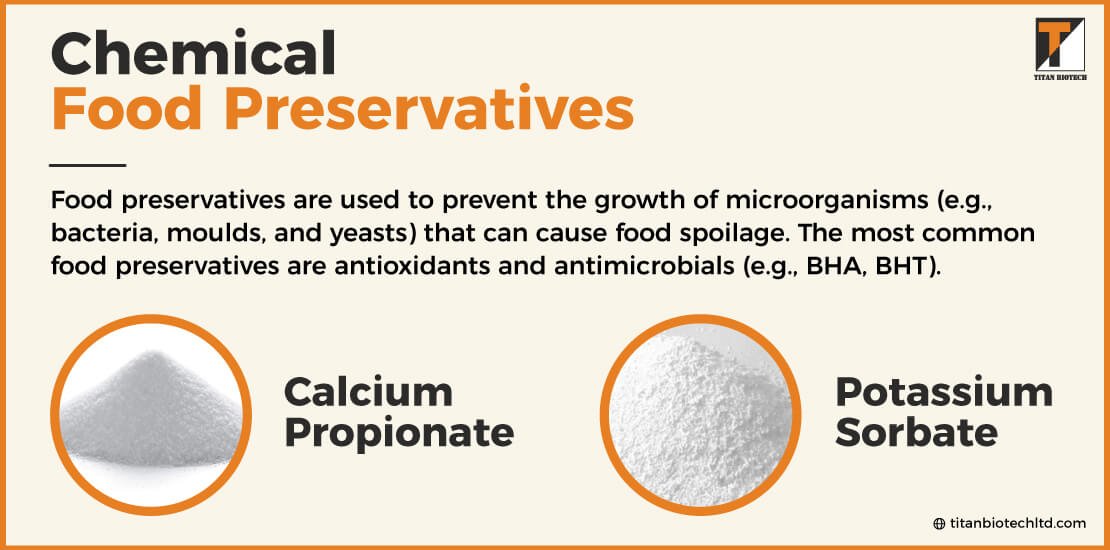
Credit: titanbiotechltd.com
How Preservatives Work In Food
Understanding how preservatives work helps you use them more effectively and safely. Here are the main methods:
- Lowering water activity: Salt and sugar draw out water, making it hard for microbes to survive.
- Changing pH: Acids like vinegar and citric acid make the environment too acidic for most bacteria.
- Blocking oxygen: Some preservatives prevent oxidation, which stops fats from turning bad.
- Directly killing microbes: Chemicals like sodium benzoate can kill or stop bacteria, molds, and yeasts.
For example, when you make jam, the high sugar content keeps it safe for months. When you cure ham with salt, you reduce water activity and add flavor.
Choosing The Right Preservative
Selecting the right preservative depends on your food, how long you want it to last, and who will eat it. Here’s what to consider:
- Food type: Is it a fruit, meat, bread, or dairy?
- Shelf life goal: Do you need days, weeks, or months?
- Taste impact: Will the preservative change flavor or color?
- Health and allergy concerns: Some people are allergic to sulfites.
- Legal limits: Each country has rules on how much you can use.
Let’s compare some foods and ideal preservatives:
| Food | Common Preservative | Typical Amount Used | Why It’s Used |
|---|---|---|---|
| Bread | Calcium propionate | 0.2% of flour | Prevents mold |
| Pickles | Vinegar (acetic acid) | 5-10% solution | Keeps bacteria away |
| Jam | Sugar | 60% by weight | Stops spoilage |
| Soft drinks | Sodium benzoate | 0.1% | Prevents yeast & mold |
| Cured meat | Sodium nitrite | 120 ppm | Prevents botulism |

Credit: healthonics.healthcare
How To Use Preservatives In Home Cooking
Many people want to preserve food at home, either to save money, enjoy seasonal fruits all year, or reduce waste. Here’s how you can safely use both natural and chemical preservatives at home.
Using Natural Preservatives
Salt
- How to use: Sprinkle salt over fish, meat, or vegetables. For pickles or sauerkraut, dissolve salt in water to make a brine.
- How much: Use about 2-5% salt by weight for vegetables. For meats, it can be higher (up to 10%).
- Tips: Make sure all surfaces are covered. Store salted foods in cool, dry places.
Sugar
- How to use: Mix sugar with fruit to make jam or jelly. Boil until thick.
- How much: Use at least 60% sugar in jam for good preservation.
- Tips: Use clean jars and boil them before filling to avoid contamination.
Vinegar
- How to use: Cover vegetables or fruits with vinegar to pickle them.
- How much: Use vinegar with at least 5% acetic acid for safety.
- Tips: Add spices for flavor and extra antimicrobial power.
Lemon Juice
- How to use: Squeeze over cut fruits to prevent browning. Add to jams for a tangy taste.
- How much: A few drops on fruit slices, or 1-2 tablespoons per jar of jam.
- Tips: Use fresh lemon juice for best effect.
Smoke
- How to use: Smoke meats or fish in a smoker or over wood chips.
- Tips: Combine smoking with salting for double protection.
Using Chemical Preservatives
Some home cooks use chemical preservatives for foods like juices, sauces, or jams. These are available in specialty stores.
- Sodium benzoate: Add at 0.1% by weight to acidic foods like jams or drinks.
- Potassium sorbate: Use up to 0.2% in wine, cheese, or syrups.
- Sodium metabisulfite: Often used in dried fruits or wine at safe levels (refer to packaging).
Important: Always measure preservatives carefully. Too much can be harmful, and too little may not work. Use a good kitchen scale, and mix preservatives well into the food.
Practical Example: Making Preserved Lemon Pickles
- Cut lemons into quarters, remove seeds.
- Sprinkle with salt (about 1 tablespoon per lemon).
- Pack tightly in a clean jar, cover with extra lemon juice.
- Add a few cloves or peppercorns for extra flavor and protection.
- Seal the jar and leave at room temperature for 1 week, then refrigerate.
- The lemons will stay safe for months thanks to salt and acid.
How To Use Preservatives In Food Businesses
If you run a bakery, restaurant, or small food business, using preservatives can help you offer safer products and reduce waste. But you must follow rules and best practices.
Steps For Safe Use
- Check laws and regulations: Every country has rules about which preservatives you can use and how much. For example, the FDA and the European Food Safety Authority have strict lists and limits.
- Choose food-grade preservatives: Only use products sold for food, not industrial chemicals.
- Use accurate scales: Precision matters. Many preservatives are safe only in small amounts.
- Mix evenly: Ensure the preservative is spread throughout the food.
- Label products: List all preservatives on packaging. This is required by law in most countries.
- Monitor shelf life: Test your products to see how long they stay fresh with the preservative.
Common Mistakes
- Guessing amounts: Never estimate; always measure.
- Using non-food-grade chemicals: Industrial products may have unsafe contaminants.
- Ignoring allergies: Some people react badly to sulfites or benzoates.
- Poor mixing: If the preservative isn’t spread evenly, some parts of the food may spoil.
Example: Preserving Bread In A Bakery
A small bakery wants to prevent mold in its bread for up to 7 days. They can use calcium propionate at 0. 2% of the flour weight. For 10 kg of flour, that’s 20 grams of preservative mixed into the dough.
The bread is then baked, cooled, and packaged.
Legal And Health Aspects Of Food Preservatives
Food safety laws control which preservatives you can use and in what amounts. These rules protect consumers from harmful effects. For example, the maximum allowed amount of sodium nitrite in bacon is 120 parts per million (ppm).
Safety And Health Concerns
Most preservatives are safe at approved levels, but some people may have allergies or sensitivities. For example:
- Sulfites can cause asthma attacks in sensitive people.
- Nitrites can form harmful compounds if used in excess or heated too much.
- BHA/BHT are sometimes debated for safety, but most studies show they are safe in small amounts.
To avoid problems:
- Always follow recommended doses.
- Clearly label all food ingredients.
- Keep up with new research and regulations.
Natural Vs. Chemical Preservatives: Which Is Better?
Many people prefer natural preservatives because they seem safer and more “real.” Others trust chemical preservatives for their strong effect and predictable results.
Pros And Cons
- Natural preservatives:
- Pros: Familiar, often add flavor, fewer allergy issues.
- Cons: Sometimes less effective, may change taste or texture, not always enough for long shelf life.
- Chemical preservatives:
- Pros: Powerful, small doses, don’t usually change flavor or color.
- Cons: Some health concerns, need precise measurement, not always allowed in “natural” foods.
The best choice depends on your needs, your customers, and local laws.
How To Store And Handle Preserved Foods
Preservatives help, but storage is still important. Here’s how to keep preserved foods safe:
- Keep cool: Lower temperatures slow spoilage, even for preserved foods.
- Seal containers: Air-tight jars, cans, or bags keep out moisture and microbes.
- Stay clean: Use clean hands, tools, and surfaces.
- Check for spoilage: If you see mold, bad smells, or color changes, throw the food away.
Even preserved foods can go bad if handled poorly. For example, jam with mold on top should be discarded, not just scraped off.
Alternatives To Chemical Preservatives
If you want to avoid chemicals, there are other ways to keep food safe:
- Refrigeration: Slows bacteria, but doesn’t stop all spoilage.
- Freezing: Stops most microbes and enzyme action.
- Canning: Seals food in jars or cans after heating, killing bacteria.
- Drying: Removes water, making it hard for microbes to grow.
- Fermentation: Uses good bacteria to outcompete harmful ones.
- Vacuum sealing: Removes air, slows oxidation and bacteria.
These methods can be used alone or with mild preservatives for longer shelf life.
Real-world Examples Of Preservative Use
To make it more practical, here are some real-life examples:
- Yogurt: Often preserved by fermentation, but sometimes also uses potassium sorbate.
- Dried apricots: Use sulfites to keep color and prevent mold.
- Canned vegetables: Heat kills microbes, but sometimes a little citric acid is added for extra safety.
- Soft drinks: Use sodium benzoate to prevent spoilage during long transport and storage.
How To Test Food For Preservative Effectiveness
If you want to know if your preservative is working, here are simple tests:
- Visual inspection: Look for mold, cloudiness, or bubbling.
- Smell test: Spoiled food often smells sour or “off.”
- PH test: Low pH means acid is present; use test strips.
- Microbial testing: For businesses, send samples to a lab for bacteria counts.
A common mistake is trusting only looks—some spoilage can be invisible at first.
Two Insights Beginners Often Miss
- Preservatives don’t fix dirty food: If your food starts with a lot of bacteria (dirty hands, old ingredients), preservatives won’t save it. Always start with clean, fresh food.
- Preservatives slow, not stop, spoilage: Even with preservatives, food will eventually go bad. Always check expiration dates and storage conditions.
Balancing Preservation And Food Quality
Sometimes, adding more preservative can extend shelf life but ruin taste or texture. For example, too much vinegar makes pickles sour, and too much sodium benzoate in soda creates a bitter aftertaste. The key is finding the lowest effective dose that keeps food safe without ruining it.
The Future Of Food Preservation
Scientists are always looking for safer, more effective ways to keep food fresh. New methods include:
- Natural extracts: From rosemary, green tea, or grape seeds, which may be safer and more eco-friendly.
- Edible coatings: Thin, safe layers on fruits or cheese that block air and microbes.
- High-pressure processing: Kills bacteria without heat or chemicals.
You can read more about new research and regulations on FDA Food Additives Overview.
Frequently Asked Questions
What Is The Safest Preservative For Home Use?
Salt and vinegar are among the safest and easiest to use at home. Both have been used for centuries and are found in most kitchens. They are less likely to cause allergies and are effective if used in the right amounts.
Can I Use More Preservative To Make Food Last Longer?
No, using more than the recommended amount can be dangerous. Extra preservative will not always make food safer and may cause health problems or ruin the taste. Always follow guidelines and recipes.
Are Natural Preservatives Always Better Than Chemical Ones?
Not always. Natural preservatives are familiar and often safer, but sometimes they are not strong enough for long-term storage. Chemical preservatives are more powerful but must be used carefully. The best choice depends on the food, your needs, and local rules.
How Do I Know If A Food Contains Preservatives?
Check the ingredient list on the package. Preservatives are usually listed by name (like sodium benzoate or potassium sorbate) or by their E-number (like E202). In restaurants or homemade foods, ask the cook or maker.
What Are The Signs That Preserved Food Has Gone Bad?
Look for mold, slime, sour or strange smells, and changes in color or texture. If you see bubbles in canned food or the lid is swollen, throw it away. Eating spoiled preserved food can be dangerous, so when in doubt, throw it out.
—
Learning how to use preservatives in food is both a science and an art. With the right knowledge, you can keep food fresh, safe, and delicious for longer—whether you’re making jam at home or running a bakery. Always stay informed, measure carefully, and follow safety rules.
In the world of food preservation, a little care goes a long way.

Credit: www.sciencedirect.com