
Connecting Schedule 40 PVC pipe to SDR 35 pipe is a common challenge for many homeowners, contractors, and DIY enthusiasts who work with drainage and sewer systems. These two types of pipes are widely used in residential and commercial plumbing, but they differ in wall thickness, outside diameter, and pressure rating. If you need to connect them, you might feel confused about the best method or fitting to use. This detailed guide will walk you through everything you need to know about joining Schedule 40 to SDR 35, including methods, tools, tips, and common pitfalls. Even if you’re new to plumbing, this article will help you make strong, leak-free connections.
Understanding Schedule 40 And Sdr 35
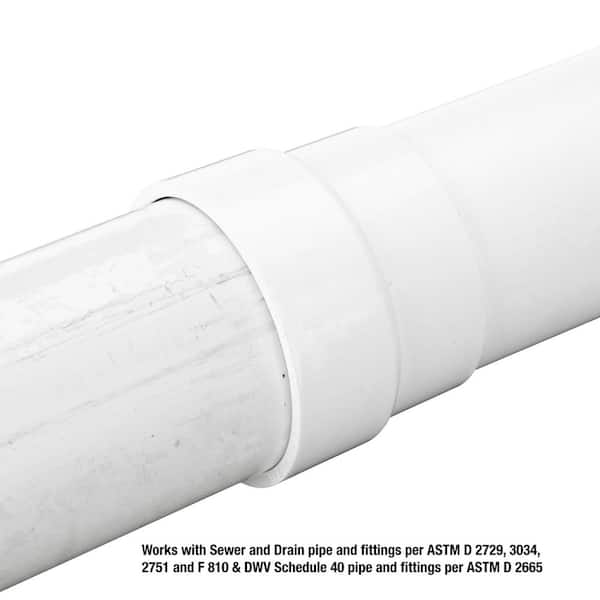
Before you start connecting, it’s important to understand what makes Schedule 40 and SDR 35 different.
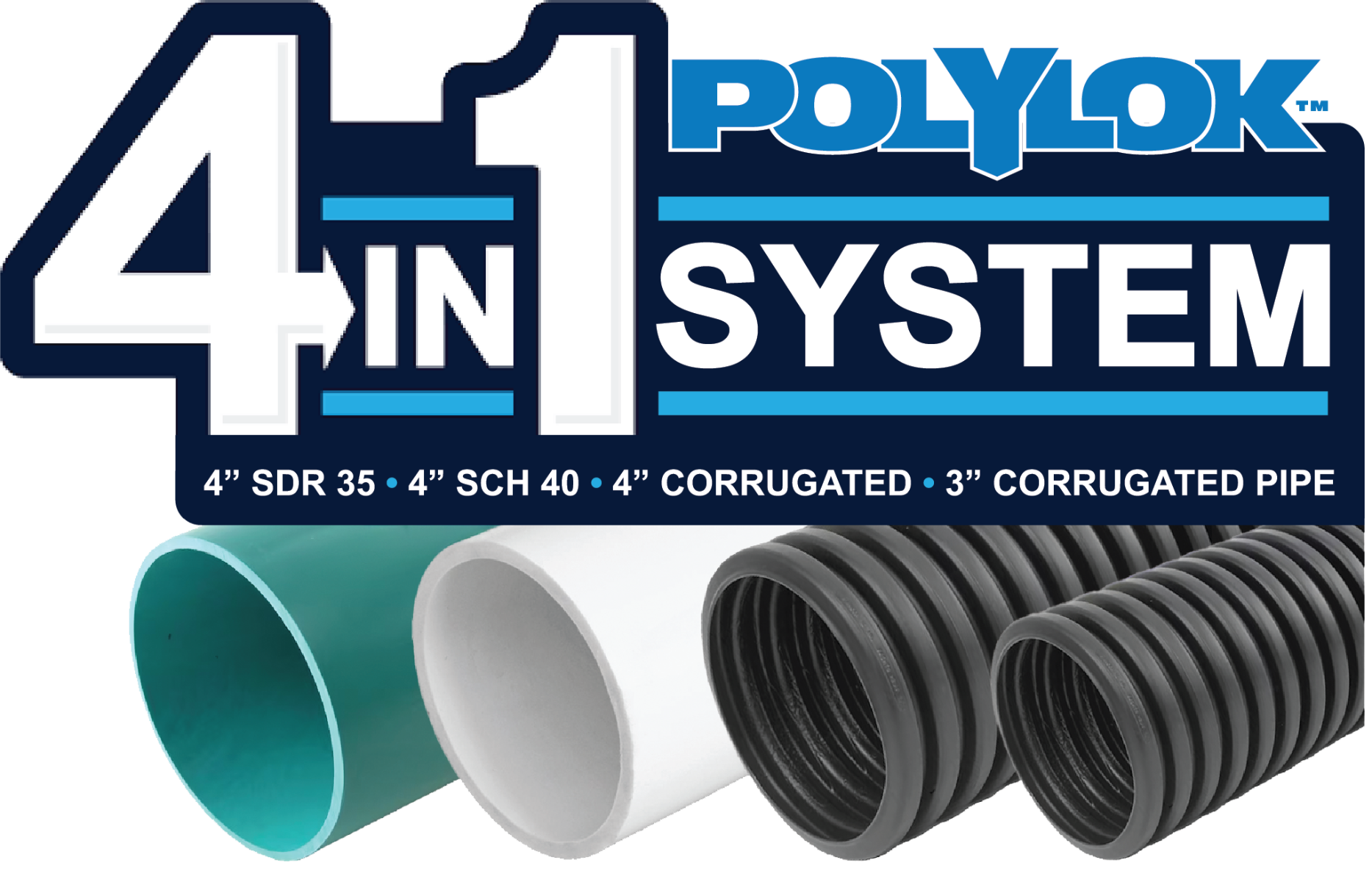
Schedule 40 is a standard for PVC pipe with thick walls, used for both pressure and non-pressure applications. It’s popular in water supply lines and sometimes in drain-waste-vent (DWV) systems. SDR 35, on the other hand, is a type of sewer and drain pipe with thinner walls, designed mainly for gravity-flow systems like stormwater or sewer.
The biggest difference is wall thickness. For example, a 4-inch Schedule 40 pipe has a thicker wall (about 0. 237 inches) than a 4-inch SDR 35 pipe (about 0. 120 inches). This means the outside diameters are close, but not always identical.
These differences can make direct connections difficult without the right adapters or couplings.
Why You Might Need To Connect Schedule 40 To Sdr 35
There are several reasons you might need to join these two pipe types:
- Upgrading or repairing a drainage system
- Adding new branches to an existing sewer line
- Connecting home plumbing to municipal sewer lines
- Replacing old pipe sections with newer materials
Each situation requires a secure, watertight connection to prevent leaks and ensure proper flow.

Credit: frenchdrainman.com
Key Challenges When Connecting
Many beginners make mistakes because they do not understand the fit and sizing differences between Schedule 40 and SDR 35. Here are the main challenges:
- Different wall thickness: This affects how pipes fit into fittings.
- Mismatched diameters: Even if labeled the same size, their diameters can differ slightly.
- Pressure rating: Schedule 40 handles higher pressure; SDR 35 is for non-pressurized systems.
- Code compliance: Some local codes have rules about mixing pipe types.
- Material compatibility: Both are PVC, but their physical properties differ.
Knowing these challenges helps you avoid leaks and failed inspections.
40 Ways To Connect Schedule 40 To Sdr 35
Let’s explore 40 methods, fittings, and solutions for connecting these pipes. Each method has its use, benefits, and limitations. Choose the one that fits your project.
1. Rubber Coupling With Stainless Steel Clamps
This is one of the simplest ways. The rubber coupling stretches to fit both pipes. Stainless steel clamps tighten around the pipe, making a watertight seal.
- Quick to install
- Good for underground and above-ground connections
2. Pvc Transition Coupling
A PVC transition coupling is designed for connecting pipes with different outside diameters. It uses flexible rubber gaskets inside a hard PVC body.
- Provides a strong, leak-proof joint
- Often meets plumbing code requirements
3. Flexible Fernco Coupling
Fernco couplings are a brand of rubber connectors that come in many sizes. They work well for connecting different pipe materials and sizes.
- Easy for DIYers
- Absorbs slight pipe movement
4. Mission Rubber Adapter
Mission Rubber makes special adapters for joining Schedule 40 to SDR 35. They are labeled for both types.
- Color-coded for easy identification
- Reliable for buried pipes
5. Solid Pvc Bushing Reducer
A bushing reducer fits inside a larger pipe or fitting to reduce its size for a smaller pipe.
- Needs solvent cementing for a solid bond
- Good for permanent installations
6. Mechanical Sleeve Coupling
This type of sleeve coupling uses bolts and gaskets to clamp around the pipes.
- Suitable for repairs where gluing is not possible
- Can be reused
7. Double-bell Adapter
A double-bell adapter has sockets on both ends, each sized for different pipes.
- Great for straight, in-line connections
- Offers good structural support
8. Sdr 35 Gasketed Fitting With Insert Adapter
Some SDR 35 fittings have a gasketed socket. You use an insert adapter to fit the Schedule 40 pipe into it.
- Fast installation
- Seals without glue
9. Solvent Weld Adapter
This fitting allows you to glue (solvent weld) a Schedule 40 pipe on one end, and push an SDR 35 pipe into a gasketed end.
- Permanent, strong bond
- Good for indoor and outdoor pipes
10. No-hub Coupling
A no-hub coupling is a rubber sleeve with a metal shield and clamps. It connects pipes of similar outside diameters, even if wall thickness differs.
- Used by professionals
- Easy to remove for future repairs
11. Street Adapter Fitting
A street adapter has one male end and one female end, each sized for a different pipe type.
- Minimizes connection length
- Fits in tight spaces
12. Compression Adapter
A compression adapter uses a nut and rubber gasket to create a tight seal as you tighten the nut.
- No glue required
- Useful for temporary or test setups
13. Push-fit Coupling
Push-fit couplings allow you to insert the pipe and lock it in place with internal teeth or rings.
- Quick and tool-free
- Not always code-approved
14. Transition Gasket
Some transition gaskets are sized to let you push a Schedule 40 pipe into an SDR 35 fitting.
- Simple installation
- Seals with pipe lubricant
15. Custom-made Adapter
You can sometimes create a custom adapter by using short sections of both pipes and a rubber sleeve.
- Only for experienced DIYers
- Test for leaks before backfilling
16. Hub X Spigot Adapter
A hub x spigot adapter connects a hub (socket) end to a spigot (plain) end, often across different pipe standards.
- Common in professional plumbing
- Provides good alignment
17. Slip Coupling
A slip coupling slides completely over one pipe, then slips back to cover the joint.
- Good for repairs where cutting is hard
- Needs solvent welding
18. Street Elbow Adapter
A street elbow with different ends can make angled connections between Schedule 40 and SDR 35.
- For tight corners
- Must check for proper fit
19. Flexible Pvc Coupling
Flexible PVC couplings are strong and allow slight movement, ideal for areas with ground shift.
- Reduces stress on joints
- Available in many sizes
20. Bell Reducer Fitting
A bell reducer has a larger socket on one end for SDR 35, and a smaller for Schedule 40.
- Maintains full pipe flow
- Used where space allows
21. Gasketed Sdr 35 Bell With Schedule 40 Insert
Some SDR 35 fittings come with a special insert to fit Schedule 40 pipe snugly.
- Quick to install
- Leak-resistant
22. Solvent Weld Sdr 35 To Schedule 40 Adapter
This fitting allows gluing on both ends, but each end is sized for a different pipe type.
- Permanent
- For high-strength needs
23. Mechanical Transition Coupling
A mechanical transition coupling uses a compressible rubber sleeve and a metal band for pipes of similar ODs.
- Great for underground work
- Handles small size differences
24. Concentric Reducer
A concentric reducer transitions from one outside diameter to another, keeping flow centered.
- Used in gravity flow lines
- Needs careful alignment
25. Eccentric Reducer
An eccentric reducer shifts the centerline, useful when pipes must stay at the same level.
- Prevents air pockets in drains
- Common in commercial setups
26. Universal Pipe Adapter
Universal adapters have stepped ends for cutting to fit various sizes, including Schedule 40 and SDR 35.
- Versatile, but requires careful measurement
- Good for repairs
27. Saddle Adapter
A saddle adapter clamps over the side of a pipe, allowing you to tap into an existing SDR 35 line with Schedule 40.
- For branch connections
- Must seal tightly
28. Expansion Joint
An expansion joint absorbs movement, connecting two pipe types where shifting ground is expected.
- Prevents cracks and leaks
- Not for constant pressure
29. Flanged Adapter
Flanged adapters bolt together with a gasket between them, often used in industrial setups.
- For heavy-duty systems
- Needs precise alignment
30. Threaded Adapter
A threaded adapter allows you to screw Schedule 40 to SDR 35 using threaded fittings.
- Rare, but useful in mechanical rooms
- Requires thread sealant
31. Fusion Welded Adapter
A fusion weld melts the ends of both pipes together, usually done with special equipment.
- Permanent and strong
- Not common for DIY
32. Heat-shrink Coupling
Heat-shrink couplings shrink to seal around pipes when heated.
- Fast and waterproof
- Not widely available
33. Chemical Weld Adapter
Some adhesives can bond dissimilar plastics with a chemical weld.
- Use only approved products
- Follow safety guidelines
34. Compression Sleeve
A compression sleeve uses a metal or plastic ring to seal the joint as you tighten a nut.
- Easy to install
- Good for above-ground repairs
35. Split Repair Coupling
A split repair coupling can be clamped around a damaged section, joining Schedule 40 and SDR 35 ends.
- For emergencies
- Must check for long-term sealing
36. Multi-size Pipe Gasket
These multi-size gaskets can seal two pipes of slightly different sizes inside a standard fitting.
- Useful in old homes with varying pipes
- Always lubricate for proper seal
37. Offset Coupling
An offset coupling is used if the pipes are not perfectly aligned.
- Helps avoid cutting and re-routing
- Needs careful support
38. Swivel Adapter
A swivel adapter allows for some rotation between the pipes, useful when alignment is difficult.
- For complex layouts
- Not for high-pressure lines
39. Internal Expansion Fitting
Internal expansion fittings are inserted inside the pipe ends and then expanded for a tight fit.
- Specialized tool needed
- Permanent joint
40. Custom-fabricated Transition
In rare cases, a plumber may custom-fabricate a transition using short pipe sections and multiple fittings.
- For unique or old systems
- Must test for leaks
Important Factors When Choosing A Method
Not every method above will work for every situation. Here’s what you should consider when picking the best connection:
- Pipe location: Is the joint above or below ground?
- Pressure: Is this a gravity drain or will it see pressure?
- Code requirements: Check your local building codes for approved connections.
- Longevity: Some methods are better for temporary repairs, others for permanent installations.
- Tools and skill: Are you comfortable with solvent welding, or do you need a tool-free method?
- Space: Some adapters are bulky and need room to install.
- Future access: Flexible couplings are easier to remove for repairs.
Non-obvious tip: Always test-fit your pipes and fittings dry before applying glue or tightening clamps. This can save you from messy mistakes.
Tools And Materials Needed
Most connections will require a few basic tools:
- Tape measure
- Pipe cutter or saw
- Deburring tool or sandpaper
- Rubber couplings or adapters
- Solvent cement (if gluing)
- Primer for PVC pipes
- Screwdriver or wrench for clamps
- Pipe lubricant (if using gaskets)
- Safety gloves and eye protection
Choose your materials based on the method you select. For example, solvent weld methods require primer and glue, while mechanical couplings may need only a screwdriver.
Step-by-step Example: Using A Flexible Rubber Coupling
Let’s walk through a common method—using a flexible rubber coupling.
- Cut both pipes to ensure clean, square ends.
- Deburr the cut edges to prevent gasket damage.
- Slide the coupling over one pipe end.
- Align the pipes so they meet inside the coupling.
- Center the coupling over the joint.
- Tighten the clamps evenly using a screwdriver or nut driver. Do not overtighten.
- Check for leaks by running water or filling the pipe.
- Backfill carefully if underground, using sand or fine soil around the joint.
Pro tip: If your pipes are slightly out of round, heat them gently with a hair dryer to make fitting easier.
Table: Common Connection Types And Their Features
Here’s a quick comparison of popular connection types:
| Method | Tool Needed | Permanence | Skill Level | Suitable For |
|---|---|---|---|---|
| Rubber Coupling | Screwdriver | Removable | Beginner | Above/Below Ground |
| Solvent Weld Adapter | Primer & Cement | Permanent | Intermediate | Indoor/Outdoor |
| Mechanical Sleeve | Wrench | Removable | Intermediate | Repairs |
| Push-Fit Coupling | None | Removable | Beginner | Temporary/Test |
Credit: www.polylok.com
Table: Size Differences Between Schedule 40 And Sdr 35
Understanding the actual dimensions helps you select the right adapter.
| Nominal Size | Schedule 40 OD (inches) | SDR 35 OD (inches) | Wall Thickness Difference |
|---|---|---|---|
| 4″ | 4.500 | 4.215 | 0.285″ |
| 6″ | 6.625 | 6.275 | 0.350″ |
| 8″ | 8.625 | 8.160 | 0.465″ |
These small differences are why you need a special coupling or adapter.
Table: Approved Connection Methods By Plumbing Code
It’s helpful to check which methods your local code allows. Here’s a summary based on common codes:
| Method | Generally Approved? | Notes |
|---|---|---|
| Flexible Rubber Coupling | Yes | Must be labeled for underground use |
| Solvent Weld Adapter | Yes | Follow manufacturer’s instructions |
| Push-Fit Coupling | No | Usually for temporary use only |
| Custom-Fabricated Transitions | No | Must be approved by inspector |
Always check with your local building department before starting work.
Common Mistakes To Avoid
When connecting Schedule 40 to SDR 35, it’s easy to make errors. Watch out for these:
- Using the wrong adapter: Not all couplings fit both sizes.
- Skipping deburring: Sharp edges can damage gaskets or prevent full insertion.
- Forgetting primer or glue: If solvent welding, always use PVC primer first.
- Overtightening clamps: This can damage the pipe or fitting.
- Ignoring code requirements: Unapproved joints can fail inspections.
- Using indoor-only couplings underground: Only use couplings rated for burial if outside.
- Not supporting the joint: Pipes need proper support to avoid stress on the connection.
- Not testing for leaks: Always run water through before closing walls or backfilling.
Insider tip: Some plumbers mark the joint with a pencil before assembling, to check if pipes shift during tightening.
Real-world Example
Imagine you’re replacing a section of old clay sewer pipe with SDR 35, but your home’s drain exits in Schedule 40. You measure the OD of both pipes and find they don’t match. Using a Mission Rubber transition coupling sized specifically for 4″ Schedule 40 to 4″ SDR 35, you make a snug, code-approved connection. You tighten the clamps, test for leaks, and bury the joint. The system passes inspection because you used the right fitting.
Maintenance And Longevity
A well-made connection between Schedule 40 and SDR 35 should last as long as the pipes themselves—usually 50 years or more. Regular inspection is wise, especially if pipes are buried or exposed to shifting soil.
- Check for leaks after heavy rain or freeze/thaw cycles.
- Retighten clamps if the joint is accessible.
- Replace worn couplings if rubber shows cracks.
When To Call A Professional
If your connection will be under a slab, in a wall, or in a critical system, consider hiring a licensed plumber. They will have access to specialized adapters, and can ensure everything is up to code. Some transitions, like fusion welding or custom-fabricated adapters, should only be done by experts.
Where To Buy Fittings
Most hardware stores and plumbing supply shops carry the most common adapters, such as Fernco, Mission Rubber, and solvent weld adapters. For rare sizes or unique situations, you may need to order online or from a specialty supplier.
For more information about pipe standards and joining methods, visit the official ASTM D3034 standard.
Frequently Asked Questions
What Is The Main Difference Between Schedule 40 And Sdr 35 Pipes?
The main difference is wall thickness. Schedule 40 is much thicker and used for higher pressure, while SDR 35 is thinner and used mainly for drainage and sewer lines. This difference affects the outside diameter, making direct connections difficult without adapters.
Can I Glue Schedule 40 Directly To Sdr 35?
No, you cannot glue them directly. Their outside diameters do not match, so you need a special adapter or coupling that fits both sizes. Attempting to glue them without an adapter will cause leaks.
Are Flexible Rubber Couplings Allowed By Code?
In most cases, yes, as long as the coupling is labeled for the correct pipe types and is approved for underground or above-ground use. Always check your local code, as some areas require specific brands or types.
How Do I Know Which Adapter To Use?
Measure the outside diameter of both pipes and check the packaging of the adapter or coupling. Most transition couplings are labeled for “4” Schedule 40 to 4” SDR 35,” for example. Ask for help at the plumbing counter if unsure.
What Should I Do If My Connection Leaks?
First, retighten clamps if using a mechanical coupling. If the leak persists, disassemble and check for debris, damage, or misalignment. For glued joints, you may need to cut out the joint and try again with a new fitting.
Connecting Schedule 40 to SDR 35 is a task that can be mastered with the right tools, materials, and knowledge. Take time to plan, measure carefully, and choose the right adapter for your project. With the right approach, your connection will be strong, reliable, and up to code for many years to come.
Credit: www.homedepot.com