
When you install an above ground pool, it brings fun, relaxation, and value to your home. But for many homeowners, dealing with their Homeowners Association (HOA) can be a challenge. HOAs have rules to keep neighborhoods looking nice, but these can limit how you use your backyard. If your HOA restricts or bans above ground pools, you may wonder: “How can I enjoy my pool without getting into trouble?”
This guide gives clear, practical ways to hide an above ground pool from an HOA. You’ll learn smart landscaping tricks, privacy solutions, and negotiation strategies. You’ll also get real-world tips and insights that most beginners miss. By the end, you’ll know how to keep your pool out of sight—and out of mind—while staying as compliant as possible.
Why Do Hoas Dislike Above Ground Pools?
Before you try to hide your pool, it helps to understand why HOAs often have strict rules.
- Aesthetics: Many HOAs believe above ground pools look unattractive and can lower the neighborhood’s visual appeal.
- Safety: Unfenced pools are a safety risk, especially for kids or pets.
- Uniformity: HOAs want homes and yards to look similar to maintain property values.
- Maintenance Concerns: A poorly maintained pool can become an eyesore or health hazard.
Understanding these concerns lets you address them directly. You can focus on solutions that improve appearance, safety, and privacy.
Know Your Hoa Rules
Every HOA is different. Some ban above ground pools completely; others allow them with restrictions.
- Check your HOA covenants and bylaws. Look for rules about pools, fences, landscaping, and structures.
- Ask for clarification in writing. Never rely on verbal answers.
- Find out about penalties. Some HOAs fine homeowners, while others may take legal action.
If your HOA is strict, hiding your pool may be the only way to keep it. But if rules allow some flexibility, you can use smart upgrades and camouflage.

Credit: www.walmart.com
Strategic Pool Placement
The easiest way to hide your pool is to install it in a spot that’s hard to see.
Choose A Low-visibility Area
- Back corners: Place the pool as far from streets and neighbors as possible.
- Natural dips: Use existing slopes or depressions to lower the pool’s profile.
- Behind structures: Hide the pool behind a garage, shed, or house wing.
Consider Sight Lines
Walk around your yard and look from all angles—especially from the street and neighbors’ windows. Mark spots that are least visible.
Setbacks And Easements
Check for utility lines, property lines, and HOA setback rules. You may need to keep the pool a certain distance from fences or buildings.
Landscaping To Conceal Your Pool
Landscaping is the most effective—and HOA-friendly—way to hide an above ground pool.
Use Tall Plants And Trees
- Fast-growing trees like arborvitae, Leyland cypress, or bamboo create a living privacy screen in 1-3 years.
- Ornamental grasses (e.g., pampas, miscanthus) grow quickly and need little care.
- Tall shrubs such as privet or boxwood provide dense coverage.
Pro tip: Plant in staggered rows for thicker coverage.
Build Raised Garden Beds
A raised flower or vegetable bed around your pool helps blend it into the landscape. Use natural stone, brick, or wooden timbers.
Add Vines And Trellises
Install trellises or lattice panels near the pool and plant fast-growing vines like clematis, honeysuckle, or trumpet vine.
Layer Your Landscaping
Combine tall plants, shrubs, and ground cover. This adds depth and covers the pool from different angles.
Real Example
A homeowner in Georgia planted a double row of arborvitae and added a row of sunflowers in front. Within one summer, the pool was almost invisible from the street.
Fencing Solutions
Fences are a popular way to hide pools, but many HOAs have strict fencing rules. Still, you may have options.
Check Fence Restrictions
- Height limits: Most HOAs limit fences to 4-6 feet.
- Materials: Wood, vinyl, and wrought iron are often allowed; chain link is usually banned.
- Colors: Neutral colors are preferred.
Fence Types For Maximum Coverage
- Shadowbox fence: Attractive on both sides, offers good coverage.
- Board-on-board fence: Overlapping panels block sight lines completely.
- Solid vinyl fence: Durable and maintenance-free.
Creative Fence Ideas
- Decorative panels: Place lattice or decorative metal panels close to the pool.
- Movable screens: Use folding privacy screens when using the pool, then store them away.
Combine Fencing With Landscaping
A fence alone may not hide a tall pool. Add plants in front of the fence for extra coverage.
Pool Skirting And Decks
Pool skirting and decks can help blend your pool into the yard and reduce its visibility.
Install Pool Skirting
Skirting covers the pool’s sides and makes it look more like a built-in feature.
- Materials: Lattice, wood, stone veneer, or composite panels.
- Colors: Match your house or fence for a natural look.
Build A Partial Deck
A deck hides the pool’s sides and gives you a place to relax.
- Low-profile decks make the pool look less bulky.
- Wraparound decks can blend the pool into your yard.
Skirting Vs. Decks
Here’s a comparison to help you choose:
| Feature | Pool Skirting | Partial Deck |
|---|---|---|
| Cost | Lower | Higher |
| Installation | Simple | Complex |
| Maintenance | Minimal | Moderate |
| Visibility Reduction | Moderate | High |
Non-obvious insight: Skirting can also protect the pool liner from UV rays and debris, helping it last longer.
Camouflage With Decorative Elements
Small touches can make a big difference. Use them to draw attention away from the pool.
Add Garden Art And Features
- Birdbaths
- Fountains
- Benches or pergolas
- Outdoor lighting
These features shift focus from the pool to attractive landscaping.
Paint Or Wrap The Pool
- Earth-tone paint helps the pool blend with surroundings.
- Stone or wood wraps give a natural look.
Pro tip: Use outdoor-safe vinyl wraps for easy changes and minimal damage.
Install Privacy Screens
Decorative privacy screens come in many materials—bamboo, metal, fabric. Place them on the most visible sides of the pool.
Using Temporary Covers And Enclosures
If you only use the pool during hot months, a temporary cover or enclosure is a smart option.
Pop-up Tents And Canopies
- Easy to install and remove
- Block view from above and sides
- Available in neutral colors
Choose a canopy that fits the pool’s size and matches your yard.
Portable Greenhouses
Some people use greenhouse frames with clear or frosted panels. This provides privacy and extends the swimming season.
Pool Domes
A pool dome is an inflatable or frame-supported cover. It hides the pool and keeps it clean.
Caution: Some HOAs consider domes as temporary structures and may require approval.
Rethink Pool Choice And Design
If you haven’t bought a pool yet, pick one that’s easier to hide.
Low-profile Pools
- Smaller diameter and shorter walls are less visible.
- Semi-inground pools sit partly below ground, so they’re easier to conceal with plants or decks.
Natural Pool Designs
Use natural stone, wood, or neutral colors. Avoid bright blue or flashy designs.
Pool Placement Comparison
Here’s a table comparing pool types for visibility:
| Pool Type | Visibility Level | Ease of Hiding |
|---|---|---|
| Standard Above Ground | High | Moderate |
| Semi-Inground | Low | Easy |
| Inflatable/Portable | Low (when stored) | Very Easy |
Practical tip: Inflatable or temporary pools can be emptied and stored if you get advance notice of an HOA inspection.
Work With Your Hoa, Not Against Them
Trying to hide a pool completely can be stressful. Sometimes, working with your HOA is more effective.
Apply For A Variance
If you have a special situation—like a large lot or unique landscape—ask for a variance. Show plans for fencing, landscaping, and safety.
Present A Detailed Plan
- Visual aids: Bring drawings or photos of your planned changes.
- Safety features: Promise to add child-proof gates or alarms.
- Maintenance schedule: Show you’ll keep the pool clean and attractive.
Negotiate Compromises
Some HOAs allow above ground pools if they’re well hidden or have extra screening.
Get Support From Neighbors
If your closest neighbors support your plan, they can write letters or attend HOA meetings.
Non-obvious insight: Many HOAs are more flexible if the pool can’t be seen from common areas or main roads.
Legal And Practical Risks
Trying to hide a pool from your HOA has risks. Consider these before you start.
Fines And Penalties
- Fines: Some HOAs fine homeowners daily until the violation is fixed.
- Legal action: In rare cases, HOAs can sue for removal and attorney fees.
- Lien: Unpaid fines can become a lien on your home.
Insurance Issues
A hidden or unapproved pool may not be covered by your homeowners insurance.
- Liability risk: If someone gets hurt, you may be fully responsible.
- Damage claims: Water leaks or collapse may not be covered.
Resale And Disclosure
If you sell your home, you must disclose unapproved changes. This can scare off buyers or lower your sale price.
Real-world Examples: What Works And What Doesn’t
Success Story: Camouflaged With Landscaping
In North Carolina, one homeowner installed a small, semi-inground pool in a back corner, surrounded by double rows of arborvitae and a 6-foot privacy fence. The pool was invisible from the street and neighbors’ yards. The HOA never complained.
Failure: Obvious Blue Pool, No Cover
Another homeowner put a bright blue pool in the middle of an open yard with no fence or plants. The HOA sent a violation notice within two weeks and fined them $50 per day.
Mixed Results: Temporary Pool Strategy
A family in Texas used an inflatable pool only during the summer and took it down for inspections. This worked for two years, but when a neighbor reported them, the HOA threatened legal action.
Lesson: Combining multiple methods works best. Relying on just one (like a fence or plants) is rarely enough.
Budgeting And Planning Your Hiding Strategy
Hiding a pool can cost anywhere from $100 to $5,000 depending on your approach.
Low-cost Ideas
- Tall grasses and shrubs: $100–$400 for plants and mulch.
- DIY skirting: $100–$300 with lattice or pallets.
- Temporary screens: $50–$200 per panel.
Mid-range
- Privacy fence: $2,000–$4,000 for a 6-foot wood or vinyl fence.
- Wraparound deck: $2,500–$8,000 depending on materials and size.
High-end
- Professional landscaping: $5,000+ for custom plantings, rocks, and features.
- Custom pool wraps: $1,000–$3,000 for stone or faux-wood panels.
Practical advice: Start with the cheapest option and add more if needed. Keep all receipts and take before/after photos in case you need to show the HOA your efforts.
Common Mistakes To Avoid
- Ignoring HOA rules: Never assume you won’t be caught.
- Choosing the most visible spot: Always walk your property and check sight lines.
- Using only one method: Combine plants, fences, skirting, and covers for best results.
- Neglecting maintenance: Overgrown plants or dirty pools draw attention.
- Not talking to neighbors: A single complaint can lead to enforcement.
Non-obvious insight: Some HOAs use drones or satellite images to check for violations. Don’t rely on fences alone.

Credit: littlepoolco.com
Step-by-step Action Plan
If you want to hide your above ground pool from an HOA, follow these steps:
- Read your HOA rules carefully. Know the risks and penalties.
- Choose the least visible spot. Place the pool where it’s hardest to see.
- Install a privacy fence if allowed, or use movable screens.
- Plant fast-growing trees and shrubs in strategic spots.
- Add skirting or a deck to blend the pool into your yard.
- Use decorative elements to draw attention away from the pool.
- Maintain your landscaping and pool. Keep everything neat.
- Store temporary pools when not in use or during inspections.
- Document your efforts. Take photos and keep records.
- Stay friendly with neighbors and your HOA. Sometimes, goodwill is your best defense.
Frequently Asked Questions
Can An Hoa Really Ban Above Ground Pools?
Yes, an HOA can ban or restrict above ground pools if their bylaws say so. Always check your HOA documents before buying or installing a pool. Some HOAs allow pools with certain conditions, while others prohibit them completely.
What Is The Best Plant To Hide An Above Ground Pool Quickly?
Arborvitae is a popular choice because it grows fast, stays green year-round, and forms a dense privacy wall. Bamboo is another option, but make sure to choose a clumping variety to avoid spreading.
Do I Need Hoa Approval For A Privacy Fence?
Most HOAs require written approval for any new fence. There are usually rules about height, color, and materials. Always submit a formal request with plans and wait for approval before building.
Will Insurance Cover A Pool That The Hoa Doesn’t Approve?
Usually not. If your pool violates HOA rules or local codes, your homeowner’s insurance may not cover injuries, damage, or liability. Check with your insurance company before installing a pool.
Can I Get In Legal Trouble For Hiding A Pool From My Hoa?
Yes. Besides fines, your HOA can take you to court, force you to remove the pool, and put a lien on your home for unpaid penalties. It’s best to follow the rules or negotiate a solution if possible.
For more information on how HOAs work and pool regulations, visit the Wikipedia page on Homeowners Associations.
Hiding an above ground pool from your HOA takes planning, creativity, and ongoing effort. Combine landscaping, fencing, skirting, and smart placement for the best results. Always check your HOA rules and work with your neighbors—not against them. With the right approach, you can enjoy your pool in peace while keeping your HOA happy.
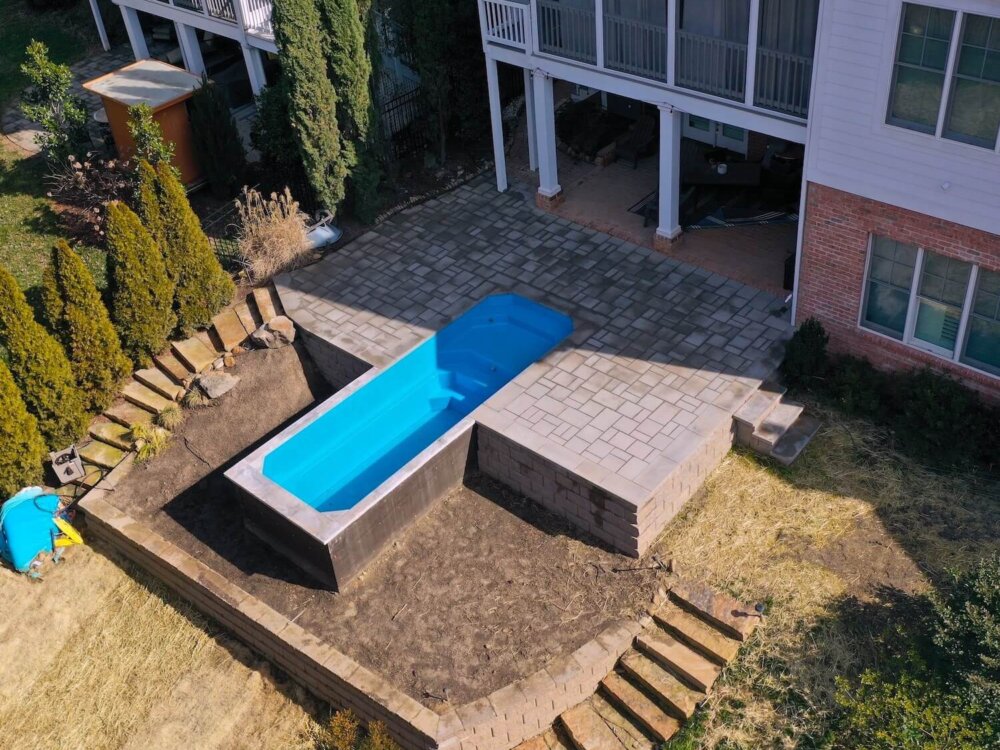
Credit: littlepoolco.com