
Above Ground Pool Wall Bulging: Causes, Solutions, And Prevention
The sight of a bulging wall in your above ground pool can be alarming. You might wonder if your pool is about to burst or if you made a costly mistake during installation. But you’re not alone—above ground pool wall bulging is a common issue faced by many pool owners. While it often looks dramatic, not every bulge spells disaster. Some can be fixed easily, while others need urgent attention to avoid a serious accident.
This article dives deep into why pool walls bulge, what you should do immediately, how to fix and prevent the problem, and which mistakes to avoid. You’ll get practical advice, real examples, and insights that most beginners miss. By the end, you’ll feel confident handling and preventing wall bulges in your above ground pool.
What Is Above Ground Pool Wall Bulging?
A pool wall bulge is when part of the pool’s metal or resin wall bends outward, away from its normal round or oval shape. The bulge can be small and barely noticeable, or it can look like the wall is about to give way. Most bulges appear in the middle or bottom sections of the pool. Sometimes, the liner pushes out with the bulge, making the spot feel soft to the touch.
Bulging is not normal. The walls of your pool are built to handle water pressure only if they stay in their designed shape. A bulge means the wall is under stress and could fail if not fixed. Even a small bulge can grow quickly, so it’s important to act as soon as you notice the problem.
Why Does An Above Ground Pool Wall Bulge?
There are several reasons why a pool wall might bulge. Some are due to installation mistakes, while others develop over time. Understanding the root cause is the first step to finding the right solution.
1. Poor Ground Preparation
If the ground underneath the pool is not level or compacted, it can settle unevenly after the pool is filled. Areas with soft dirt or air pockets can sink, causing the wall to lose support and bulge outward. Even a small dip in the ground can put a lot of pressure on one section of the wall.
2. Water Pressure Imbalance
Above ground pools are designed for even water pressure. If the pool is out of round, has a dent, or the wall is not straight, the pressure can concentrate in one area, pushing the wall out. Overfilling the pool beyond the recommended water level can also increase pressure and cause bulging.
3. Liner Failure Or Wrinkles
A pool liner that is too loose, wrinkled, or has slipped out of place can create pockets where water collects behind the liner. This trapped water pushes the wall outward, causing a bulge. Sometimes, a liner tear allows water to seep between the liner and wall, making the bulge soft and spongy.
4. Rust And Corrosion
Metal pool walls are vulnerable to rust, especially in humid or salty environments. Rust weakens the wall and can cause it to bend outward under the weight of the water. If you see brown or orange stains near the bulge, rust is likely a major factor.
5. Frost Heave And Freeze-thaw Cycles
In cold climates, water in the ground freezes and expands, pushing upward on the pool base. When the ground thaws, it can leave gaps or uneven support. The wall may bulge where the ground has shifted or settled.
6. Physical Impact
A strong hit—like a falling tree branch, rock, or even a lawnmower—can dent the wall. Once the structure is bent, water pressure can turn a dent into a bulge over time.
7. Poor Assembly Or Weak Structure
If the pool wall was not installed correctly, or if the top rails and uprights are loose or missing, the wall can bow outward. Missing bolts, weak connectors, or damaged parts reduce the wall’s strength.
8. Hydrostatic Pressure
Sometimes, water from heavy rain or high groundwater pushes up from underneath the pool. This hydrostatic pressure can lift the liner or base, causing the wall to bulge.
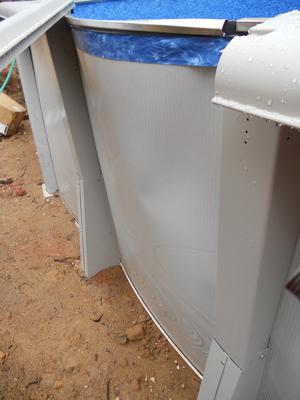
Credit: www.shadebuilder.com
How Serious Is A Pool Wall Bulge?
Not all bulges mean your pool will collapse tomorrow, but you should never ignore one. The risk depends on:
- Size of the bulge: Larger, growing bulges are more dangerous.
- Location: Bulges near the bottom are riskier than small bumps near the top.
- Wall material: Rusted or cracked areas are weaker.
- Water level: The fuller the pool, the more pressure on the bulge.
If the bulge feels soft, leaks water, or you hear creaking, drain the pool immediately. A sudden wall failure can release thousands of gallons of water, causing property damage or injury.
What Should You Do First When You Notice A Bulge?
- Stop swimming immediately. Do not let anyone in or near the pool.
- Inspect the area. Look for rust, cracks, leaks, or loose parts. Take photos for records.
- Check water level. If the bulge is large, lower the water to just below the bulge to reduce pressure.
- Do not try to push the bulge back in. This can make the problem worse or cause sudden failure.
- Call a pool professional if you are unsure how to proceed.
Non-obvious tip: If you have a warranty, do not attempt major repairs before contacting the manufacturer, as this can void your coverage.
Common Signs And Symptoms
How can you tell if your pool wall is bulging or just has a minor dent? Watch for these clear signs:
- Wall is visibly bowed or pushed out in one area.
- The liner appears stretched, wrinkled, or has a soft spot.
- Water collects in a puddle under the bulge.
- You hear popping, creaking, or clicking sounds from the wall.
- The top rail above the bulge is bent or raised.
- Fasteners (screws/bolts) near the bulge are loose or missing.
A good practice is to walk around your pool every week and check for these signs, especially after storms, heavy rainfall, or freezing weather.
How To Fix Above Ground Pool Wall Bulging
Solving a wall bulge depends on the cause. Some fixes are simple DIY tasks; others need a pro. Here are the main repair options, step by step.
1. Address Minor Bulges (no Structural Damage)
If the bulge is small, the wall is not rusted, and the liner is intact, you may be able to fix it yourself.
- Lower the water level below the bulge.
- Remove the top rail and stabilizer plates in the affected area.
- Inspect the wall and liner for tears or rust.
- Gently press the wall back into shape. Use a rubber mallet if needed.
- Repack the ground or add sand behind the wall for support.
- Reassemble the top rail and refill the pool slowly, checking for new bulges.
2. Fixing Liner-related Bulges
If the bulge is caused by a wrinkled or loose liner:
- Lower the water to just below the liner fold.
- Remove the top rails and gently pull the liner tight.
- Use warm water or a hair dryer (not too hot) to help stretch the liner.
- Re-secure the liner and rails before refilling.
3. Repairing Rusted Or Damaged Walls
If rust is present, you’ll need to act fast:
- Drain the pool completely.
- Disassemble the top rails and remove the liner (if possible).
- Sand away rust and patch small holes with a pool wall repair kit.
- For large rusted areas, consider replacing the wall section or the entire wall.
- Add a wall foam or protective barrier before replacing the liner.
Non-obvious tip: Always replace the liner after major wall repairs. A stretched or old liner can fail if reused.
4. Ground Repair
For bulges caused by ground settling or frost heave:
- Drain the pool and remove the affected wall section.
- Level and compact the ground using a hand tamper.
- Add a crushed stone or sand base for extra stability.
- Reinstall the wall and liner carefully.
5. When To Call A Professional
If the bulge is large, the wall is badly rusted, or you’re not confident in the repair, hire a pool installer. Attempting a major fix without proper tools and knowledge can make things worse.
Prevention: How To Avoid Pool Wall Bulging
Prevention is easier and cheaper than repair. Here’s how to keep your pool walls strong and bulge-free.
Ground Preparation
- Always install pools on level, firm ground. Remove roots, rocks, and debris.
- Compact the soil with a tamper. Add a layer of crushed stone or sand for drainage and stability.
- Avoid installing pools on fill dirt or areas that recently had excavation.
Correct Water Level
- Never overfill your pool. Keep water at the recommended level (usually 2 inches below the top rail).
- After heavy rains, drain any extra water.
Regular Maintenance
- Inspect walls, rails, and liner every month for signs of stress, rust, or leaks.
- Check bolts and connectors for tightness.
- Remove debris and keep the area around the pool clear.
Rust Protection
- Apply a rust inhibitor or paint to metal walls, especially if you live in a humid or salty area.
- If using a saltwater system, rinse the outside of the wall often.
Proper Winterization
- In cold climates, lower the water below the skimmer for winter.
- Use a pool cover and winter pillow to distribute ice pressure.
- Inspect the pool after freeze-thaw cycles in spring.
Liner Care
- Use a liner pad or wall foam during installation.
- Avoid sharp objects in or near the pool.
- Replace old or stretched liners before they fail.
Avoiding Impact Damage
- Place the pool away from trees, fences, and play areas.
- Be careful with lawn equipment and tools near the pool.
Real-world Examples
Let’s look at a few real-life scenarios:
Example 1:
A family in Ohio noticed a bulge forming after a heavy rainstorm. Inspection showed that the ground had settled unevenly, causing the wall to push out. They drained the pool, re-leveled the ground, and fixed the wall. The bulge did not return.
Example 2:
A pool owner in Florida ignored a small rust spot for two years. Eventually, the rusted area gave way, leading to a large bulge and a small leak. The repair required a full wall panel replacement and a new liner.
Example 3:
After a winter freeze in New York, a pool wall developed a bulge near the base. The ground had shifted, creating uneven support. The owner added more sand and compacted it after draining the pool, which solved the issue.

Credit: www.troublefreepool.com
Comparing Pool Wall Materials
The type of material used in your pool wall can affect how likely it is to bulge. Here’s a quick comparison:
| Material | Strength | Rust Resistance | Bulge Risk |
|---|---|---|---|
| Galvanized Steel | High | Medium | Medium |
| Resin | Medium | High | Low |
| Aluminum | Medium | High | Medium |
Galvanized steel is strong but can rust over time if not protected. Resin walls resist rust but can crack or warp if not supported well. Aluminum offers a balance but can dent more easily.
Cost Of Repair Vs. Replacement
How much should you budget for repairs if you spot a bulging wall? Costs vary widely based on the damage.
| Repair Type | DIY Cost (USD) | Professional Cost (USD) |
|---|---|---|
| Minor Bulge Fix | $50 – $150 | $200 – $400 |
| Liner Replacement | $200 – $500 | $800 – $1,500 |
| Wall Section Repair | $100 – $400 | $500 – $1,200 |
| Full Wall Replacement | $800 – $1,500 | $1,800 – $3,500 |
Non-obvious insight: Sometimes, a wall bulge is a sign that your pool is nearing the end of its lifespan (usually 10-20 years). If your pool is old, consider investing in a new one instead of paying for repeated repairs.
Key Mistakes To Avoid
Many pool owners make mistakes that increase the risk of wall bulges. Here’s what not to do:
- Skipping ground leveling: Even a small slope can cause big problems later.
- Ignoring small rust spots: They grow and weaken the wall fast.
- Overfilling the pool: More water means higher pressure.
- Using the wrong liner size: Too small or too big leads to stretching and wrinkles.
- Delaying repairs: Waiting too long can turn a small fix into a big expense.
- Forgetting winter prep: Freeze damage is common and preventable.
- Installing on fill dirt: This ground type settles unevenly over time.
When Is Pool Wall Bulging Beyond Repair?
Some wall bulges cannot be fixed safely. Replace the wall or entire pool if:
- The bulge is larger than 6 inches deep or several feet long.
- The wall is cracked, torn, or has holes.
- Rust has eaten through the metal.
- The structure is bent out of shape and won’t go back.
- The pool is older than 15 years and has repeated wall issues.
A collapsing pool wall can cause serious injury or flooding. When in doubt, invest in safety.
Future-proofing: Choosing A Bulge-resistant Pool
If you’re buying a new pool or replacing an old one, look for features that reduce the risk of bulging:
- Resin or aluminum walls for rust resistance.
- Heavy-gauge steel for strength.
- Multiple uprights and top rails for better support.
- Thicker liners (at least 20 mil) for less stretching.
- Warranty covering wall integrity and rust.
Ask your dealer about installation practices and what they do to prevent wall bulges.
Maintenance Schedule For Bulge Prevention
Following a schedule makes prevention easy. Here’s an example:
- Monthly: Inspect walls, rails, and liner; check for rust or leaks.
- Spring: Check ground level and stability; tighten connectors.
- After storms: Look for new bulges or shifts.
- Before winter: Lower water, install cover and pillow.
- After freeze: Inspect for frost heave or bulges.
How To Spot Trouble Early: Non-obvious Signs
Most beginners only look for big bulges. But you can catch problems earlier by watching for:
- White chalky spots (early rust under the paint)
- Small wet areas or “weep marks” on the outside wall
- Slight changes in the roundness of the pool
- Hard-to-open or misaligned top rails (from shifting walls)
These subtle clues can save you hundreds or thousands in repairs if you catch them early.
Myths About Pool Wall Bulging
Many pool owners hear myths that lead to mistakes:
- “A small bulge is nothing to worry about.”
Even small bulges can grow quickly.
- “Pushing the bulge back fixes it.”
Without solving the cause, it will come back.
- “Resin walls never bulge.”
Resin is rust-free but can still deform if the ground settles.
- “You can ignore bulges in winter.”
Cold weather can make bulges worse due to ice expansion.
What The Experts Say
Pool professionals agree: most bulges are preventable with good installation and maintenance. According to the Association of Pool & Spa Professionals, poor ground prep and rust are the leading causes of wall failure in above ground pools. They recommend annual inspections and not overfilling pools to keep walls safe.
For more on pool safety and maintenance, see this in-depth guide from the Centers for Disease Control and Prevention.
Frequently Asked Questions
Why Is My Above Ground Pool Wall Bulging After Heavy Rain?
Heavy rain can cause the ground under your pool to become soft and settle unevenly. This removes support for the wall, letting water pressure push it outward. Always check for bulges after major storms and add sand or stone under any weak spots.
Can I Fix A Pool Wall Bulge Myself?
You can fix minor bulges if there’s no rust or tear. Lower the water, inspect the wall, and gently push it back into shape. For large, rusted, or leaking bulges, call a professional to avoid further damage.
Is A Bulging Pool Wall Dangerous?
Yes, a bulging wall is a sign of stress and could fail, flooding your yard and causing injury. Stop using the pool, lower the water, and inspect the area right away.
How Can I Prevent Pool Wall Bulging In Winter?
Lower the water level, use a winter cover and pillow, and check the pool after freeze-thaw cycles. Make sure the ground is level and compact before winter begins.
Does Insurance Cover Above Ground Pool Wall Failure?
Home insurance sometimes covers damage from sudden wall failure, but not from poor maintenance or rust. Check your policy and keep records of inspections and repairs.
Above ground pool wall bulging is not just a cosmetic issue—it’s a warning sign that something is wrong. By understanding the causes, acting fast, and following the prevention steps in this guide, you can keep your pool safe, strong, and enjoyable for years to come.
Regular checks and smart maintenance will help you spot trouble early and avoid costly repairs. If you’re ever in doubt, don’t hesitate to call a professional for help. Your family’s safety and your investment are worth it.

Credit: www.troublefreepool.com