
A crystal-clear swimming pool is not just about clean water and chemicals. The way your pool water moves is just as important. One small but powerful device can make a huge difference: the pool return eyeball. This simple fitting controls the direction and power of water flowing back into your pool, helping you keep the water clean, balanced, and comfortable to swim in.
Many pool owners do not realize that adjusting the pool return eyeball can solve common problems like cold spots, cloudy water, and even algae growth. If you have always left your pool return aimed wherever it was installed, you are missing out on better water quality and efficiency. Learning how to adjust the pool return eyeball is not complicated, but it does require some know-how and careful steps.
In this guide, you will learn everything you need to know. You will discover why proper adjustment matters, how to do it safely, and what mistakes to avoid. Whether you are a new pool owner or have managed a pool for years, these insights will help you get better results with less effort.
What Is A Pool Return Eyeball?
The pool return eyeball is a small, round fitting located on the inside wall of your pool, usually a few inches below the water’s surface. It is part of your pool’s circulation system. When water leaves the filter and returns to the pool, it passes through this fitting.
The “eyeball” name comes from its shape. Inside the outer ring, there is a ball-shaped piece (the eyeball) with a hole through the middle. You can move this ball to change the direction of the water flow. The size of the hole can also affect how fast the water moves.
Most pools have one to four return jets, and each will have its own eyeball fitting. The number and placement depend on your pool’s size and design.
Key parts of a pool return eyeball:
- The threaded ring (holds the eyeball in place)
- The eyeball (the moveable inner ball)
- The return jet opening (where water exits)
Understanding how this small part works can help you control much more than you might think.
Why Adjusting The Pool Return Eyeball Matters
Many pool owners think the filter and pump do all the work. But water circulation is the secret to a healthy pool. If water does not move properly, you will see:
- Dead spots (areas with poor movement)
- Uneven temperature
- More debris and algae
- Problems with chemical distribution
The pool return eyeball lets you control where the clean, filtered water goes. By adjusting it, you can:
- Push debris towards the skimmer for easier cleaning.
- Improve chemical mixing and avoid “hot spots” or “cold spots.”
- Increase surface movement to keep bugs and leaves from settling.
- Prevent algae by avoiding still water in corners.
Non-obvious insight: Many pool problems—like cloudy water or algae in one corner—are caused by poor return jet direction, not just weak chemicals or bad filtration.
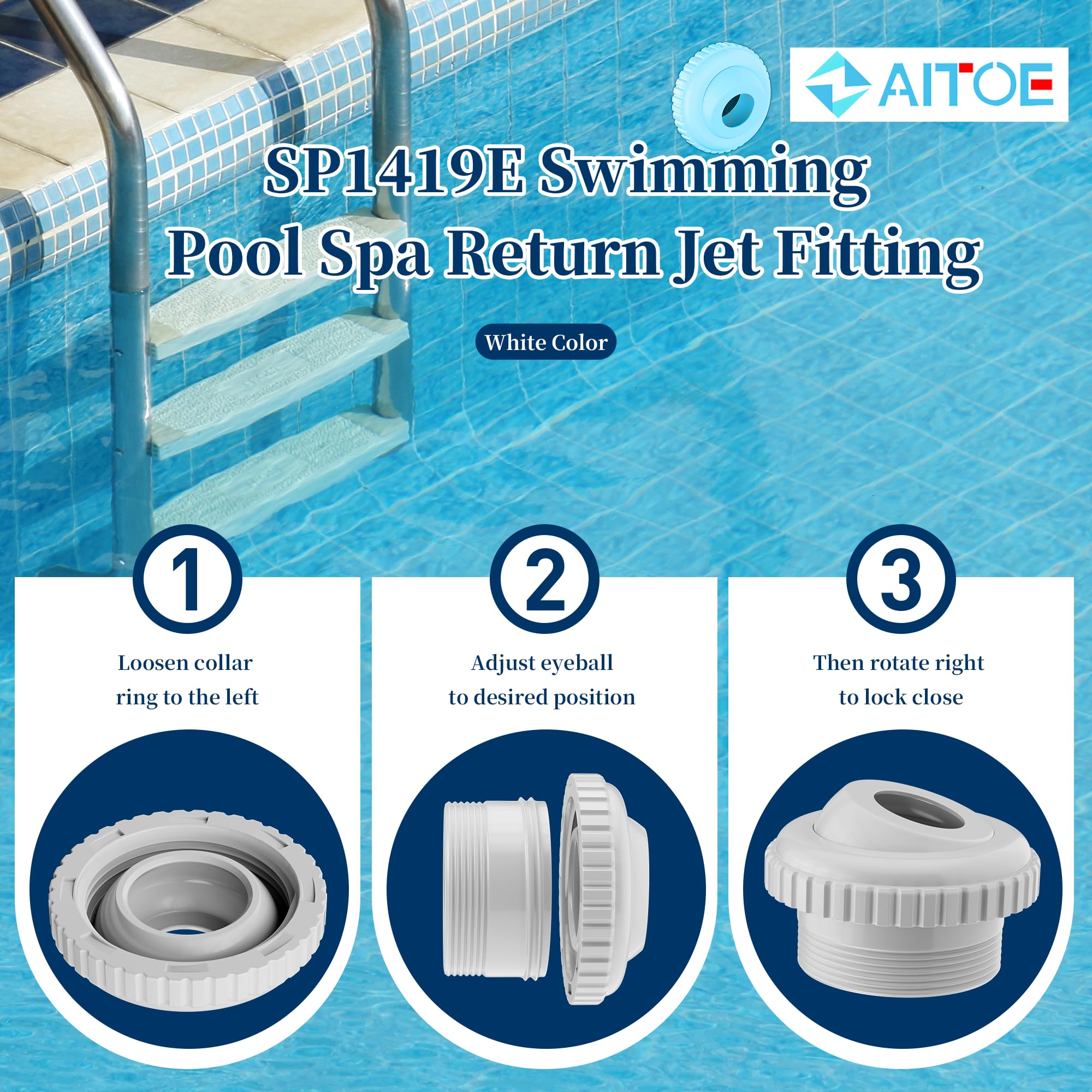
Credit: www.amazon.com.au
How Pool Circulation Works
To adjust your pool return eyeball correctly, you need to understand how the whole system works together.
Water circulation steps:
- Pool water is pulled through the skimmer and main drain by the pump.
- The water passes through the filter (and sometimes a heater or chlorinator).
- Clean water returns through the return jets (with the eyeball fittings).
If the return jets are not aimed well, water might miss parts of the pool. This creates dead zones where dirt and algae can grow.
Pro tip: Good circulation is like stirring a pot of soup. If you only stir one side, the other side stays cold and unmixed.
Safety And Preparation Before Adjusting
Before you try to adjust your pool return eyeball, take a few safety steps:
- Turn off the pool pump. Moving the eyeball with the pump running can be hard and might damage the fitting.
- Wear swim goggles. Some eyeballs are below the waterline. Protect your eyes when working underwater.
- Check for sharp edges. Some older fittings may have rough edges—be careful with your fingers.
- Know your pool system. If you are not sure how your system works, check your pool manual or ask a professional.
Extra tip: Take a photo of your current eyeball position. If you do not like the new flow, you can go back to your old setting.
Tools And Materials Needed
Most adjustments can be made by hand, but sometimes you might need a few tools:
- Swim goggles (for underwater work)
- Rubber gloves (for grip and protection)
- Plastic wrench (some eyeball fittings require it)
- Replacement eyeball (if your old one is cracked or stuck)
- Soft cloth (for cleaning before adjustment)
Check your fitting type first. Most are designed for hand adjustment, but some older or specialty fittings need a tool.
Step-by-step Guide: How To Adjust Pool Return Eyeball
Adjusting the pool return eyeball is simple if you follow these steps.
1. Turn Off The Pool Pump
Always switch off the pump before you start. This reduces water pressure and makes it easier to move the eyeball. You can find the pump switch near your pool equipment.
2. Locate The Return Jet
Find the return jet with the eyeball fitting. Most pools have one to four, usually placed along the pool walls. The return jets are round and usually a few inches below the water line.
3. Check The Eyeball Position
Look at the angle of the eyeball. Notice where the water is currently flowing. If the water is aimed straight out, you will see a strong jet. If it points up or down, surface movement changes.
Non-obvious insight: Some eyeballs have numbers or lines to help you remember positions. If yours does, take note.
4. Loosen The Locking Ring (if Needed)
Some eyeballs are held in place by a threaded ring. If the eyeball is tight, gently turn the outer ring counterclockwise to loosen. Do not remove the ring, just loosen it enough to move the eyeball.
Caution: Do not force the ring. If it sticks, use a plastic wrench or call a pool professional.
5. Adjust The Eyeball Direction
Move the eyeball by hand. Aim the jet in the direction you want. Common directions:
- Slightly downward: For better surface movement and to push debris toward the skimmer.
- Across the pool: To create a circular flow around the pool.
- Upward: To increase surface agitation and mix chemicals faster.
Pro tip: Do not aim the jet straight at the skimmer. Aim slightly past it to keep water moving.
6. Tighten The Locking Ring
Once the eyeball is in the right position, tighten the ring clockwise. Make sure it is snug but do not overtighten. A loose ring can cause leaks or make the eyeball move out of place.
7. Turn The Pump Back On
Turn the pump on and watch how the water moves. Look for strong flow, surface movement, and how debris moves toward the skimmer.
8. Fine-tune As Needed
You may need to adjust more than once. Make small changes and watch the results. If you have multiple return jets, adjust each one for best coverage.
Example: For a rectangular pool with two returns, aim both slightly downward and toward the opposite end. This makes water move in a circle.
Best Practices For Adjusting Pool Return Eyeball
Getting the best circulation takes a little practice. Here are tips used by pool experts:
Aim For A Circular Flow
Most pools work best when water moves in a circle. This helps push debris and chemicals all the way around before returning to the skimmer. If you have two or more returns, aim them to help the water “swirl” around the pool.
Use Different Angles For Different Problems
- Cloudy water: Aim one jet upward to increase surface movement and help mix chemicals.
- Debris collection: Aim jets toward the main skimmer to push leaves and bugs there.
- Hot and cold spots: Use a downward angle to mix water layers.
Adjust For Pool Shape
Every pool is a little different. Round pools may need all jets aimed in one direction. L-shaped or freeform pools may need special angles.
Example: In an oval pool, aim jets to create a gentle “oval” movement, not a harsh straight line.
Consider Water Features
If you have waterfalls, fountains, or spas, these also move water. Adjust your eyeball jets to work with, not against, these features.
Regular Checkups
Eyeball fittings can move over time, especially if people bump them while swimming. Check and adjust every month or after a big pool party.
Common Mistakes When Adjusting Pool Return Eyeball
Avoid these errors for better results:
- Aiming jets straight up: This can cause water to splash out of the pool and waste chemicals.
- Aiming all jets at the skimmer: This can create dead spots on the far side of the pool.
- Not checking after adjustment: Always watch how the water moves after you change the angle.
- Forgetting about pool shape: One angle does not work for all pools.
- Leaving the ring loose: This can cause leaks or let the eyeball move out of place.
Expert tip: Most pool owners only need to adjust their eyeball jets once per season unless they notice a problem.
When To Replace A Pool Return Eyeball
Sometimes, adjustment is not enough. If your eyeball fitting is old or damaged, replace it. Signs you need a new one:
- Cracks or broken parts
- Eyeball will not move or is stuck
- Leaks around the fitting
- Missing or lost parts
Replacement is easy. Buy the right size (usually 1. 5 or 2 inches), unscrew the old one, and screw in the new one. Always use pool-safe fittings.
Data point: Most pool return eyeballs last 5–10 years with normal use.
Choosing The Right Size And Type
Not all eyeball fittings are the same. Size and hole diameter matter for good performance.
| Eyeball Size | Common Use | Flow Rate | Best For |
|---|---|---|---|
| 3/8 inch | Small pools/spas | Low | Gentle circulation |
| 1/2 inch | Standard pools | Medium | General use |
| 3/4 inch | Large pools | High | Strong jets |
If your pool feels weak or the jets are too strong, try a different size. Most stores sell replacement eyeballs in different diameters.
Advanced Tips For Perfect Circulation
Getting perfect pool water is part science, part art. Try these advanced adjustments:
Alternate Eyeball Angles
If you notice the same spot always has debris, change the jet angle every week. This prevents “dead zones” and keeps all parts of the pool clean.
Use Multiple Return Jets
If your pool has more than one return, use them together. For example, aim one slightly down and one across the pool to create a swirling effect.
Adjust Seasonally
In spring and fall, water mixes differently because of temperature changes. Adjust your eyeball angles to keep water moving as the weather changes.
Use Dye To Test Circulation
Add a few drops of food coloring near the return jet with the pump on. Watch how the color moves. This shows you where the water is going and helps spot dead zones.
Non-obvious insight: Some pool owners use leaf or ping-pong balls to see how surface water moves after adjustment.
Troubleshooting Poor Pool Circulation
If you adjust your pool return eyeball but still have problems, check these issues:
- Dirty filter: A clogged filter reduces water flow. Clean or backwash your filter.
- Weak pump: If your pump is old or undersized, water may not move well.
- Clogged pipes: Debris in pipes can block flow. Use a plumbing snake or call a pro.
- Air leaks: Bubbles in the return jet mean air is getting into the system. Check for leaks at the pump and filter.
If you try all steps and still have bad circulation, ask a pool technician for help.
Pool Return Eyeball Vs. Directional Return Jet
Not all return fittings are the same. Some pools use a fixed jet, while others have an adjustable eyeball.
| Feature | Eyeball Return | Directional Jet |
|---|---|---|
| Adjustable | Yes | No (fixed) |
| Easy to clean | Yes | Varies |
| Custom water flow | Yes | No |
| Replacement cost | Low | Medium |
Most modern pools use eyeball returns because they are easy to adjust and replace.
How Often Should You Adjust Pool Return Eyeball?
You do not need to adjust the eyeball every week, but check it at least:
- At pool opening (spring)
- After adding chemicals
- After large storms or heavy use
- If you see cloudy water or algae
Regular checks keep your water moving and healthy.
Case Study: Real-life Pool Adjustment Example
Let’s look at a real example. Sarah owns a rectangular pool with three return jets. She noticed that the far end of the pool always had leaves and algae, even though her filter was clean.
After reading about pool return eyeball adjustments, she tried these steps:
- She aimed the two side jets slightly downward and toward the pool’s deep end.
- The third jet, near the shallow end, was aimed across the pool to create a circular flow.
- She ran the pump and watched how leaves moved. Most began drifting toward the skimmer.
- Within a week, she noticed less debris and clearer water.
Result: By adjusting the eyeball jets, Sarah cut her cleaning time in half and used fewer chemicals.
Pool Return Eyeball Maintenance Tips
Keep your return fittings in top shape with these steps:
- Clean regularly: Wipe away algae or calcium buildup every month.
- Check for leaks: Inspect for drips or wet spots around the fitting.
- Lubricate threads: Use silicone pool lube (not petroleum) if the ring is hard to turn.
- Store spares: Keep an extra eyeball on hand for quick replacement.
Most eyeball fittings are made from durable plastic, but sun and chlorine can wear them down over years.

Credit: www.amazon.com
Environmental Impact Of Good Circulation
Proper pool return eyeball adjustment does more than keep your pool clear. It also helps the environment:
- Saves energy: Good circulation means shorter filter run times.
- Reduces chemical use: Better mixing means fewer chemicals needed.
- Prevents waste: Stops water loss from splashing and overflows.
A well-adjusted pool uses less power and fewer resources.
When To Call A Professional
Most eyeball adjustments are easy. But call a pool pro if:
- The fitting is stuck or broken
- You see leaks after adjustment
- The jet does not fit your pool
- You are not comfortable working underwater
A pool technician can also show you the best angles for your pool shape and size.
Additional Resources
If you want to learn more about pool care and water circulation, visit this helpful SwimmingPool.com Circulation Guide.
Frequently Asked Questions
How Many Pool Return Eyeballs Does My Pool Need?
Most home pools use one to four return eyeballs. The exact number depends on your pool’s size and shape. Larger pools or pools with complex shapes may need more returns for good circulation.
Can I Adjust The Pool Return Eyeball While The Pump Is Running?
It’s best to turn off the pump before adjusting. This makes it easier and safer. High-pressure water can make the eyeball hard to move and may cause injury.
What Is The Best Direction To Aim The Pool Return Eyeball?
Aim for a slight downward angle and toward the far end of the pool. This creates a circular flow, helps mix chemicals, and pushes debris toward the skimmer.
How Do I Know If My Pool Return Eyeball Is Working Correctly?
Check for strong water movement, even temperature, and no “dead spots” with floating debris. You should see water swirling gently around the pool.
What Should I Do If The Eyeball Fitting Is Stuck Or Broken?
Do not force it. Turn off the pump, try a plastic wrench, and use silicone lubricant if needed. If it is still stuck or cracked, replace the fitting or call a pool professional.
A properly adjusted pool return eyeball can make your pool easier to care for and more enjoyable to swim in. With the right steps, you can fix common problems and keep your water sparkling all season long.

Credit: www.youtube.com