
If you own an above ground pool or are considering buying a used one, you may face a common challenge: how to identify the manufacturer. This detail is more important than many pool owners realize. Knowing the above ground pool manufacturer can help you find the right replacement parts, order compatible liners, get accurate warranty information, or even determine the real value of your pool. But manufacturers’ labels fade, paperwork gets lost, and many pools look almost identical. So, how do you confidently find out who made your above ground pool?
Let’s walk through practical methods to identify the manufacturer, even if your pool is several years old or missing its original documentation. With some time, patience, and attention to detail, you can track down this essential information and keep your pool in top shape for years to come.
Why Identifying The Manufacturer Matters
Some pool owners may wonder: “Why go through the trouble?” The answer is simple—not all above ground pools are created equal. Each manufacturer uses specific parts, wall designs, frame shapes, and liner sizes. Buying the wrong parts can lead to leaks, unsafe structures, or wasted money.
Manufacturers also have different warranty policies. If you ever need to file a claim, you’ll need proof of the brand and model. And when it’s time to sell or upgrade, buyers will ask for this information to ensure compatibility and quality.
Many beginners overlook how much small design differences affect things like:
- Replacement liner fit: A one-inch difference can ruin an installation.
- Top rail shapes and sizes: Each brand has unique profiles.
- Wall material and patterns: Some walls are steel; others are aluminum or resin.
Without the right manufacturer details, even professional pool installers can struggle.
First Steps: Check For Obvious Clues
Start your search with the most visible and simple options. Sometimes the answer is right in front of you.
- Inspect the Pool Wall: Walk around the outside of your pool. Many manufacturers print their name, model, or a serial number on the outer wall. Focus on areas near the skimmer and return jet—these are common label locations.
- Look for a Manufacturer’s Plate or Sticker: Check the frame uprights, top rails, or base plates. Some companies attach a small metal or plastic plate, often riveted or glued on. Over time, these can fade, so look closely under dirt or old adhesive.
- Check the Pump and Filter System: If your pool came as a kit, the filter or pump may have a brand label. While this does not always match the pool itself, it’s a clue—especially for brands that bundle their equipment.
- Search for Model Numbers: Sometimes you’ll find a code or model number, but no name. Write down any numbers or letter combinations you see, even if you don’t know what they mean yet.
Many pools lose their labels due to sun exposure, pool chemicals, or weather damage. If you find nothing, don’t worry—there are still many ways to trace the manufacturer.
Credit: www.poolfits.com
Digging Deeper: Comparing Pool Features
If direct labels are missing, your next step is to compare the physical features of your pool. Each manufacturer has unique design choices that act like a fingerprint.
Key Features To Examine
- Top rail shape: Some are flat, some are rounded, others are multi-sided.
- Upright design: Look at the vertical posts. Are they wide, narrow, curved, or have decorative grooves?
- Wall pattern: Is it plain, stone-look, or features a repeated design?
- Footplates/base plates: The part that touches the ground. Is it steel, resin, or another material? What is the shape?
- Connector hardware: Check how the top rails connect—bolts, snap-in, or slide-on styles.
Take clear photos of each part. You’ll use these to compare against online resources or when asking for help.
Common Above Ground Pool Brands And Their Features
Below is a table to help you spot differences between the most popular pool brands.
| Brand | Top Rail | Upright Design | Wall Material | Typical Patterns |
|---|---|---|---|---|
| Intex | Wide, rounded, resin | Simple, minimal | Resin or steel | Solid, blue, or gray |
| Bestway | Flat, steel or resin | Boxy, plain | Steel frame, PVC wall | Gray, stone print |
| Wilbar (including Sharkline, Seaspray, etc.) | Wide, often multi-sided | Decorative grooves | Steel or resin | Stone or tile print |
| Heritage | Narrow, steel | Simple, ribbed | Steel | Solid white or blue |
| Cornelius | Rounded, resin or steel | Decorative, curved | Steel | Unique graphics |
This table covers some main differences, but there are many other brands in the market. Look for details that match your own pool.
Use Online Resources And Pool Communities
Sometimes, you need outside help. The internet has made it much easier to identify pools by photos and part shapes.
Posting Photos For Identification
Join pool owner forums or social media groups, such as:
- Trouble Free Pool
- Backyard Pools Facebook Groups
- Pool and Spa Forums
Post clear photos of your pool’s top rails, uprights, wall pattern, and any unique features. Be sure to include the size and shape (round, oval, rectangle). Describe anything you know about the pool’s history, such as when it was installed or where it was purchased.
Many experienced pool owners and installers can spot a brand in seconds. If you get multiple opinions, look for agreement among answers.
Manufacturer Websites And Catalogs
Some brands keep archives of their old catalogs or pool models on their official websites. Look for “discontinued models” or “replacement parts” sections. These often have drawings or photos you can use for comparison.
One high-authority resource is the Wikipedia entry on above ground pools, which outlines the main manufacturers and history of designs.
Parts Retailers And Pool Stores
Online pool part stores sometimes have “identify your pool” guides. These include photos of top rails, connectors, and walls for many brands. If you’re stuck, send your photos to a pool parts dealer—many offer this service for free.
Comparing Pool Parts For Brand Clues
If your pool is a few years old or has been repaired, you may find a mix of parts from different brands. It’s not uncommon for a replacement top rail or upright to come from another manufacturer.
To sort things out, compare the following:
- Top Cap Design: The cap that covers the top of the upright is often unique to each brand.
- Bolt and Screw Patterns: How many bolts hold the top rail? Are they flathead or Phillips? The spacing can help narrow down the brand.
- Liner Track Shape: The groove where the liner fits can be J-hook, beaded, or overlap style. Each brand tends to favor one system.
Below is a sample of how liner types differ:
| Brand | Liner Type | Attachment Style |
|---|---|---|
| Intex | Overlap | Clipped over wall |
| Wilbar | Beaded/J-hook | Snaps into track |
| Bestway | Overlap | Clipped or tied |
| Cornelius | Beaded | Slides into groove |
If you need a liner, this information is critical. Using the wrong liner style will lead to leaks or wrinkles.
Tracing The Pool’s History
If you bought your pool from a previous owner, ask them for any paperwork or receipts. Even if they don’t have the manual, a store receipt may list the brand or model.
If you purchased the pool from a local retailer, check if they keep sales records. Many stores can look up old sales by your name or address.
Sometimes, installers leave a sticker or card in the skimmer or pump basket with their company name. They may remember what brand was installed.
Pro tip: If your pool came with a winter cover or ladder, check those items for brand names. Sometimes, these accessories are sold only with certain pool kits.
Serial Numbers And Manufacturer Codes
Some manufacturers use serial numbers or codes. These are usually found:
- On the inside of the pool wall, near the skimmer opening
- On the frame upright, facing inside the pool
- Under the top rail, stamped or on a sticker
Write down any numbers you find. Contact the main manufacturers or visit their websites. Many have lookup tools or customer service contacts that can confirm the brand from a serial number.
Using Owner’s Manuals And Product Guides
If you still have the original owner’s manual, it’s the best resource. Even if the front page is missing, flip through the instructions—most manuals mention the brand and model at least once.
If you have only a product guide or parts list, compare the diagrams to your pool. Part shapes, hardware lists, and assembly steps differ slightly by brand.
Some manuals are available online as PDFs. Search for your pool’s size and “owner’s manual” or “installation instructions. ” Compare the assembly diagrams with your pool’s parts.

Credit: us.amazon.com
Measuring Your Pool For Compatibility
If you can’t find the manufacturer after all these steps, you can still measure your pool for compatibility with new parts. Here’s how:
- Measure the Diameter or Length/Width: For round pools, measure from inside wall to inside wall through the center. For oval pools, measure the longest and widest points.
- Count the Number of Uprights: Count how many vertical posts surround your pool. This number is often unique to a brand and size.
- Measure Top Rail Width and Length: Remove a top rail and measure its width and length. Some brands use very specific sizes.
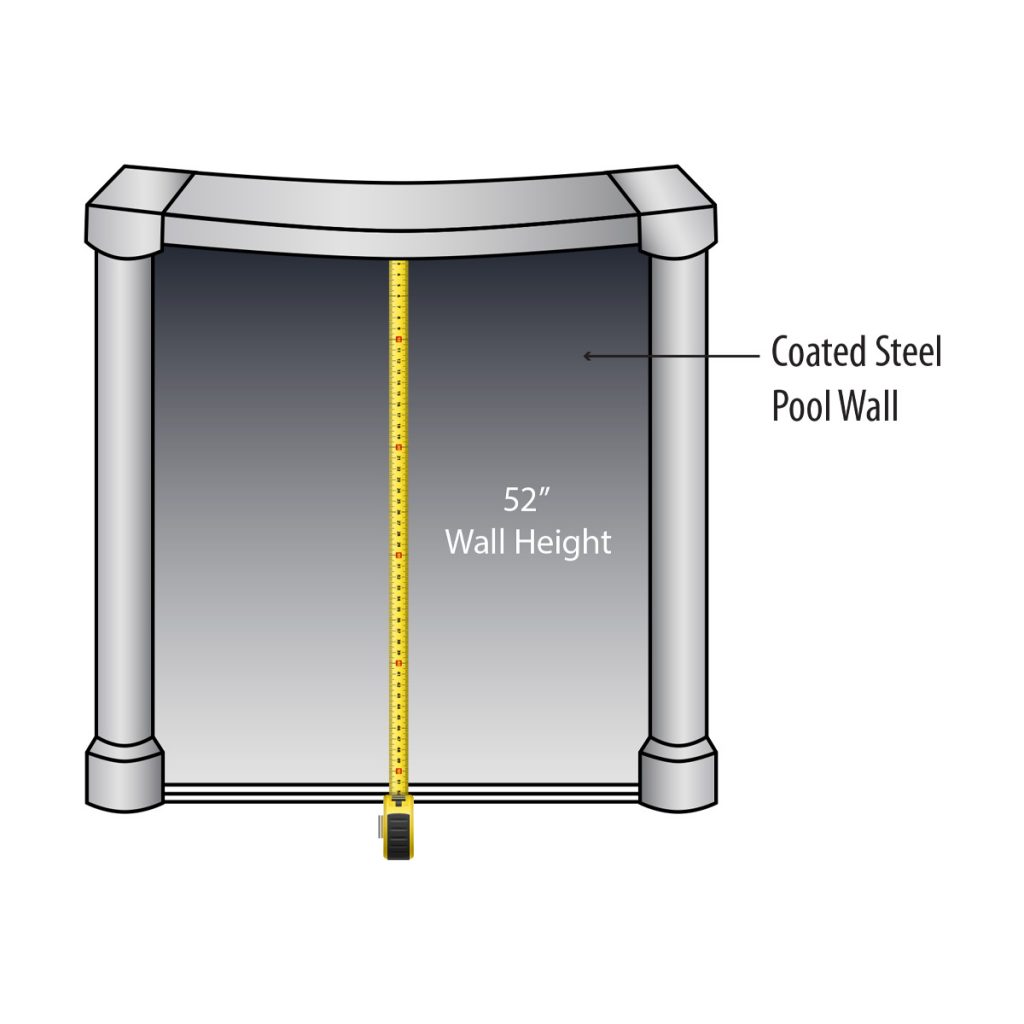
- Check the Height: Measure the wall height from the bottom rail to the top edge. Standard heights are 48”, 52”, and 54”.
You can use this information to search for compatible parts. Many pool part websites allow you to search by size and number of uprights, which often narrows down possible manufacturers.
When To Call A Professional
Sometimes, the process is too confusing or your pool is a rare model. In these cases, a local pool service company can help. They have experience with most brands and can often identify a pool in minutes.
Ask for a written estimate for any parts or repairs. This can help you confirm the brand and avoid ordering the wrong items.
Note: Professional identification usually costs a small fee, but it’s worth it to avoid expensive mistakes.
Common Mistakes To Avoid
Many pool owners make the same errors when trying to identify their above ground pool manufacturer:
- Assuming all parts are original: Previous owners often replace parts with whatever fits.
- Relying only on the pump or filter brand: These are frequently swapped out and do not always match the pool.
- Ordering parts by size only: Two 24’ round pools from different brands may require different top rails or liners.
- Ignoring small details: Tiny differences in cap shape or bolt pattern can reveal the brand.
- Giving up too soon: Sometimes it takes several steps to get a positive identification.
Real-world Example: Solving A Mystery Pool
Let’s imagine you buy a used above ground pool. It’s 24 feet round, 52 inches high, and has a faded wall. There’s no paperwork. You find “Wilbar Group” stamped under one top rail, but the pump says “Hayward. ” The liner is beaded, and there are 16 uprights.
After comparing photos online, you see that Wilbar makes several brands, including Sharkline, Vogue, and Atlantic. You send photos to an online pool parts dealer, and they confirm it’s a Sharkline Matrix from 2012.
With this info, you order a new liner and top caps, saving yourself hours of guesswork and hundreds of dollars.
Credit: diy.inyopools.com
Data: Above Ground Pool Market Share
Understanding the market can also help you narrow down your search. Here is a breakdown of above ground pool market share (approximate, North America):
| Brand | Market Share (%) |
|---|---|
| Intex | 38 |
| Bestway | 24 |
| Wilbar Group Brands | 20 |
| Cornelius | 7 |
| Other Brands | 11 |
If your pool looks like an Intex or Bestway, you’re likely in the majority. But if it’s all-steel or has a fancy wall pattern, it may be Wilbar, Cornelius, or another specialty brand.
Final Tips For Successful Identification
- Document everything: Take clear photos and measurements for your records.
- Ask for help: Pool forums and local stores are valuable resources.
- Be patient: Sometimes you need to try several methods before finding the answer.
- Keep all paperwork: Once you identify the manufacturer, save manuals and receipts for future use.
Identifying your above ground pool manufacturer may seem like a puzzle, but it’s a solvable one. With careful observation, smart use of resources, and a bit of persistence, you’ll get the information you need to keep your pool running smoothly.
Frequently Asked Questions
What If My Above Ground Pool Has No Visible Brand Or Labels?
Even if all labels are missing, you can still identify your pool by comparing physical features, measuring the size and number of parts, and sharing photos with experienced pool owners online. Look for unique shapes in top rails, uprights, and wall patterns.
Can I Use Parts From A Different Brand If I Can’t Find My Pool’s Manufacturer?
It’s possible, but risky. Many parts look similar but have small differences in size or fit. Only use parts from other brands if you can confirm compatibility—otherwise, leaks or structural problems can happen.
How Do I Find The Right Liner If I Don’t Know The Manufacturer?
Measure your pool’s exact dimensions (diameter, height, wall type) and count the number of uprights. Use this data to match with liner suppliers. Pay close attention to the liner type (overlap, beaded, J-hook) and check retailer guides for compatibility.
Is It Important To Identify The Exact Year Or Model, Or Just The Manufacturer?
Knowing the manufacturer is most important, but some brands change their designs over the years. If you can find the model or production year, you’ll have a much easier time finding matching parts, especially for older pools.
Who Can Help Me If I’m Still Stuck?
Local pool stores, service companies, and online pool forums are your best sources of help. Bring photos, measurements, and any numbers you find. Many professionals can identify a pool in person or from detailed images.
With the right approach, even a mystery pool can reveal its secrets—giving you the confidence to maintain, repair, or upgrade your above ground pool for years of enjoyment.