
Many homeowners love having a pool, but sometimes, the water feels a bit too deep for comfort or safety. You might want a shallower pool for children, older family members, or easier maintenance. Changing the depth of a pool may sound impossible, but there are creative and practical ways to make a pool more shallow without rebuilding it from scratch.
This guide explores all the main options, how they work, and what to consider before you start. By the end, you’ll understand everything you need to know about inserts to make your pool more shallow, how to choose the right method, and what mistakes to avoid.
Why Make Your Pool More Shallow?
Pools with a deep end can be fun, but they aren’t always practical for every user. Many people want to adjust the depth for these reasons:
- Safety for children: Shallow water reduces the risk of accidents.
- Easier games: Activities like volleyball are better in shallower water.
- Lower costs: Shallow pools use less water, chemicals, and energy.
- Simple maintenance: Cleaning is easier when you can stand in the water.
- Accessibility: Older adults or people with mobility challenges feel safer.
Before you decide to make your pool more shallow, think carefully about your main reasons. This will help you choose the best method for your needs.
Main Methods To Make A Pool More Shallow
There are several ways to make your pool less deep. Each has its own pros, cons, and costs. Let’s look at the main options:
- Installing a pool insert or false floor
- Building a new raised floor (permanent)
- Adding a removable platform
- Using portable shallow pads
- Partial pool fill with steps or benches
- Professional pool renovation (permanent shallowing)
- Combination solutions
Let’s explore each of these in detail.
Pool Inserts And False Floors
What Are Pool Inserts?
A pool insert (sometimes called a false floor) is a structure installed inside your pool to raise the bottom. This creates a new, more shallow swimming area above the original floor. The insert can be temporary or permanent, and is usually custom-built to fit your pool’s shape and size.
How Do Pool Inserts Work?
Most pool inserts are made from strong materials like:
- Fiberglass
- PVC panels
- Stainless steel frames
- Composite plastics
These materials are chosen for their durability in water, resistance to pool chemicals, and ability to support weight. The insert sits on the existing pool floor and may be anchored with weights, suction, or brackets. The top surface is usually non-slip for safety.
Types Of Pool Inserts
There are two main types:
- Permanent inserts: Fixed in place, designed to last many years.
- Removable inserts: Can be taken out for deep-water use.
Many families prefer removable inserts because they offer flexibility. However, permanent options can look more “built-in” and require less maintenance.
Advantages Of Pool Inserts
- Quick installation: Often installed in 1-3 days.
- No major construction: No need to demolish the old pool floor.
- Customizable: Can cover the whole pool or just part of it.
- Reversible: Removable inserts allow you to switch between shallow and deep.
Disadvantages
- Cost: Quality inserts can be expensive ($5,000–$20,000 or more).
- May reduce pool depth permanently: Permanent inserts are not reversible.
- Possible water circulation issues: If not installed correctly, water may not circulate under the insert, leading to algae or bacteria.
Example
A family with a 6-foot deep pool installs a removable fiberglass insert to create a 3. 5-foot shallow area for their young children. When the kids grow up, they remove the insert and use the full depth again.
Building A New Raised Floor
What Is A Raised Pool Floor?
A raised floor is a permanent structure built inside your pool to make it more shallow. This is more involved than a simple insert and usually done by professionals.
How It’s Built
- The pool is drained.
- The existing floor is cleaned and prepared.
- Builders pour new concrete or install a frame, raising the floor to the desired depth.
- The new floor is coated with waterproof plaster, tiles, or liner.
This process can take a week or more, depending on pool size and design.
Pros And Cons
Pros:
- Very strong: Becomes part of the pool itself.
- Custom shapes: Can add steps, benches, or unique designs.
- Long-lasting: Lasts as long as the pool.
Cons:
- Expensive: Often $15,000–$40,000.
- Permanent: Cannot be reversed without major construction.
- Pool downtime: The pool can’t be used during work.
When To Choose This Option
A raised floor is best if you want a permanent, safe, and beautiful shallow pool that looks brand new. It’s a good choice if you plan to keep the pool for many years and don’t need the deep end anymore.
Credit: fortbirthday.com
Removable Platforms
How Do Removable Platforms Work?
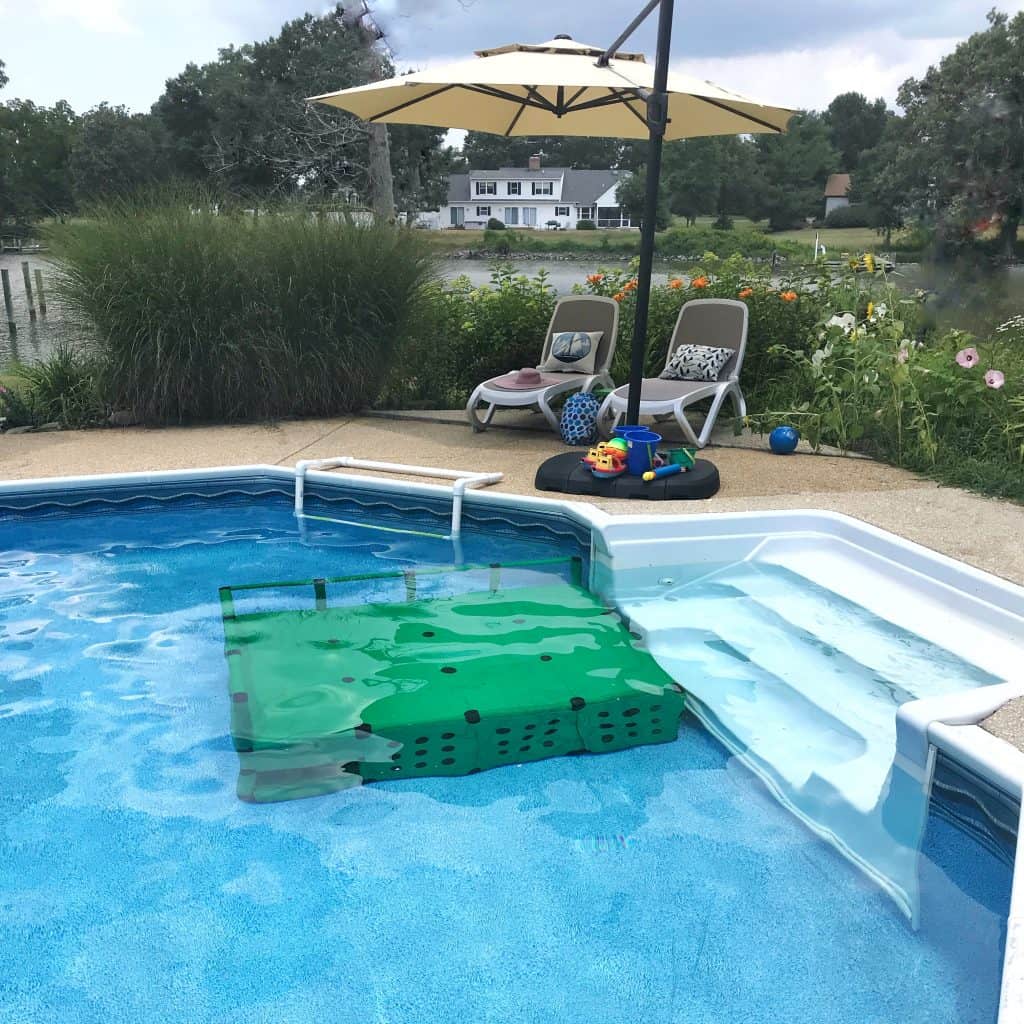
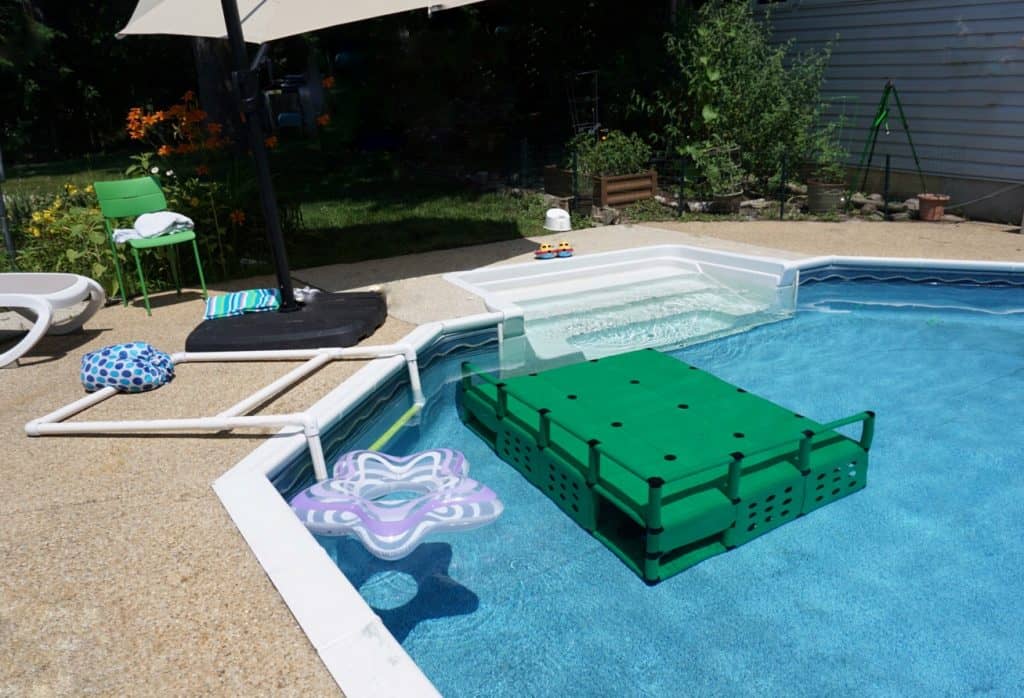
A removable platform is a lightweight, portable structure you can set up in your pool to create a shallow area. These platforms are often made from:
- Modular plastic panels
- Aluminum frames
- Soft foam with waterproof covers
They snap together or float on supports, making them easy to add or remove.
Key Benefits
- Flexible: Use them only when needed (like for parties or kids).
- Affordable: Usually $500–$3,000, much less than permanent changes.
- No pool damage: Don’t affect the original floor.
Drawbacks
- Not as sturdy: May feel less solid than built-in options.
- Limited size: Often cover only part of the pool.
- Can shift: If not installed well, platforms may move.
Real-world Use
A daycare center uses a removable platform in their pool during summer camp weeks, then stores it during off-season.
Portable Shallow Pads
What Are Shallow Pads?
Shallow pads are inflatable or foam mats placed on the pool floor to create a shallower section. They are usually designed for temporary use, such as:
- Toddler play
- Exercise classes
- Senior water therapy
How They Work
Shallow pads are lightweight and float or rest on the pool bottom. They’re easy to install: just place them, secure with anchors (if needed), and use. Most are made from thick vinyl or closed-cell foam.
Advantages
- Very easy to use
- Low cost: $100–$1,000 depending on size
- No installation required
Disadvantages
- Short-term solution: Not for full-time use
- Not as stable: Can move or tip with rough play
- Durability: May wear out after one or two seasons
Common Mistakes
Many people try to use cheap pool floats as shallow pads, but these aren’t designed to support walking or standing. Always use products made for pool flooring.
Partial Pool Fill: Steps And Benches
What Does Partial Fill Mean?
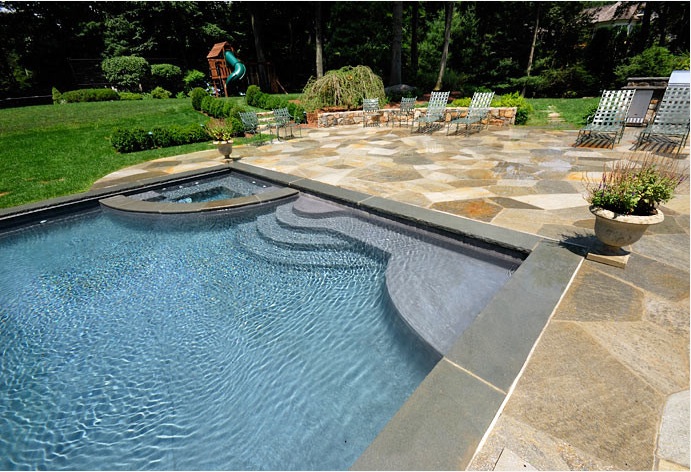
Instead of raising the entire pool floor, you can add built-in features like steps, benches, or ledges. This creates a shallow area without changing the whole pool.
How It Works
- Steps: Large, wide steps can double as a shallow play area.
- Benches: Long benches offer seating and a shallow spot.
- Sun shelves: Flat ledges just below water level, great for kids or lounging.
These features are usually built from concrete and finished with tile or liner.
Benefits
- Adds features: More places to sit, play, or relax.
- Keeps deep end: You still have a deep section for diving or laps.
- Looks attractive: Can improve pool design.
Downsides
- Only a small area is shallow
- May reduce swimming space
- Permanent changes
Example
A homeowner adds a 10-foot sun shelf and two benches to their pool. Now, kids play safely in the shallow area, and adults can still swim in the deep end.
Professional Pool Renovation (permanent Shallowing)
What Is Pool Renovation?
A professional pool renovation is a big project where contractors change the depth of your pool by altering its structure. This usually means:
- Breaking up and removing old concrete
- Pouring a new floor at the desired depth
- Waterproofing and finishing
Who Should Consider This?
Choose this if you want your pool to look and feel brand new, or if you need to repair leaks and cracks anyway. It’s the most expensive and disruptive option.
Pros
- Complete control: Set any depth you want.
- Update pool shape or size
- Add modern features: Steps, lights, jets, etc.
Cons
- High cost: $25,000–$60,000 or more
- Weeks of work
- Not reversible
Key Insight
Many people think this is the only way to make a pool shallow. In reality, temporary inserts or partial features are often enough for most families.
Credit: fortbirthday.com
Combination Solutions
You don’t have to pick just one method. Many pool owners combine options for the best result. For example:
- A shallow pad for young kids, plus a bench for adults
- A removable insert for playtime, but keep the deep end for swimming
- Steps and sun shelf, but leave the middle of the pool unchanged
Mixing solutions can give you flexibility without the high cost of full renovation.
Comparing The Main Methods
To help you see the differences, here’s a side-by-side comparison:
| Method | Cost Range | Permanent? | Installation Time | Best For |
|---|---|---|---|---|
| Pool Insert / False Floor | $5,000–$20,000 | Removable or Permanent | 1–3 days | Families, flexible use |
| Raised Floor | $15,000–$40,000 | Permanently Shallow | 1–2 weeks | Long-term, safety, style |
| Removable Platform | $500–$3,000 | Temporary | Hours | Parties, kids, events |
| Shallow Pads | $100–$1,000 | Temporary | Minutes | Toddlers, short-term |
| Partial Fill / Benches | $3,000–$10,000 | Permanently Adds Shallow Area | 2–5 days | Mixed-use pools |
| Full Renovation | $25,000–$60,000 | Permanently Shallow | 2–6 weeks | Major repairs, new look |
Factors To Consider Before You Start
Making a pool more shallow is a big decision. Here are the most important things to think about:
Safety
Any insert or platform must be strong enough to support people walking, jumping, or playing. Always check weight ratings and safety certifications.
Pool Type
The options for concrete, vinyl liner, and fiberglass pools are different. Not all inserts or renovations work with every pool type. Ask a pool professional before starting.
Budget
Set a clear budget. Some solutions are affordable, but others require major investment. Remember to add costs for installation, permits, and future maintenance.
Appearance
Some inserts look almost invisible, while others stand out. If appearance is important, look for custom solutions that match your pool’s style.
Water Circulation
Poor water movement under inserts or platforms can cause algae or bacteria growth. Good inserts have built-in vents or pumps to keep water moving.
Local Codes And Insurance
Changing your pool may affect local safety codes or home insurance. Check with your city or insurance company before making big changes.
Common Mistakes To Avoid
Many pool owners make the same errors when trying to make their pool more shallow. Here are the top things to watch out for:
- DIY inserts without safety testing: Homemade platforms may fail or break, causing injury.
- Ignoring water circulation: Stagnant water under inserts creates health risks.
- Choosing cheap materials: Low-quality inserts fade, crack, or break quickly.
- Not checking pool structure: Some pools can’t support heavy inserts or new floors.
- Skipping professional advice: A pool contractor can help avoid expensive mistakes.
Credit: www.shorelinepools.com
Real-life Case Studies
Case Study 1: Family With Young Children
A family with a 7-foot deep pool worried about their toddlers’ safety. They installed a removable fiberglass insert, creating a flat, 3. 5-foot shallow area. The kids could play safely, and when they grew up, the family removed the insert for lap swimming.
Case Study 2: Senior Wellness Center
A senior center needed a shallow pool for water aerobics. They hired a contractor to build a permanent raised floor, making the pool just 4 feet deep. The new floor included wide steps and a bench, making entry and exit easy.
Case Study 3: Small Backyard Pool
A homeowner wanted a sun shelf for relaxation but didn’t want to lose the deep end. They added a partial fill ledge along one side, creating a 10-inch deep area for kids and sunbathing while keeping the rest of the pool unchanged.
Frequently Asked Questions
How Much Does It Cost To Make A Pool More Shallow?
The price depends on the method. Temporary shallow pads or platforms cost as little as $100–$3,000. Pool inserts or partial fills are usually $5,000–$20,000. Full renovations can cost $25,000 or more. Always get detailed quotes from professionals before starting.
Can I Install A Pool Insert Myself?
Some shallow pads or simple platforms are DIY-friendly. However, for large inserts, raised floors, or anything permanent, professional installation is safest. This ensures the insert is strong, stable, and meets safety standards.
Will Making My Pool Shallow Affect Resale Value?
It depends. Families with young children often prefer shallow pools, while swimmers may want deeper water. Removable inserts let you offer both options. Permanent changes may increase or decrease value depending on local market trends.
Do I Need A Permit To Change My Pool Depth?
Usually, yes. Most cities require a permit for any structural change to a pool, including inserts or new floors. Always check your local building department before starting.
Where Can I Find More Information About Pool Safety And Renovations?
A good place to start is the CDC Swimming Pool Safety page. They provide guidance on safe pool design, maintenance, and water quality.
Final Thoughts
Making your pool more shallow is a practical way to improve safety, lower costs, and make swimming fun for everyone. Whether you choose a pool insert, raised floor, removable platform, or shallow pad, there’s a solution for almost every pool and budget.
Always think about safety, durability, and appearance. If you plan carefully and get expert advice, you can enjoy a beautiful, safe, and easy-to-use pool for years to come.