
Setting up an above-ground pool in your backyard can turn hot days into mini-vacations. Intex pools are a popular choice because they are affordable, easy to assemble, and come in many sizes. But sometimes, owners notice a problem: the pool legs are not straight. This may look small at first, but it can lead to bigger issues—like an unstable pool, leaks, or even collapse. If you’re facing this, you’re not alone. Many new pool owners find the legs tilting, bowing, or sinking, especially after filling the pool with water.
This problem is more than just a cosmetic issue. Uneven or bent legs can put stress on your pool frame and liner. Over time, this can shorten the pool’s life or even cause safety risks for swimmers. Fixing crooked pool legs is not just about looks—it’s about keeping your family safe and protecting your investment. In this guide, you’ll learn why Intex pool legs are not straight, what causes it, how to fix it, and how to prevent it from happening again. Whether you’re a first-time pool owner or have had several summers of experience, you’ll find clear solutions and expert tips here.
Why Intex Pool Legs Need To Be Straight
A straight pool leg is not just about making your pool look neat. It plays a key role in the whole pool’s strength and safety. Each leg supports a section of the heavy water-filled frame. If one leg is tilted, all the weight is not shared evenly. This can cause the following problems:
- Frame Stress: Bent legs mean the pool frame twists under the heavy load. Over time, this can bend or break the frame.
- Uneven Water Level: If legs are not straight, the pool will tilt, causing water to spill over one side.
- Liner Damage: When the frame is not even, the liner can stretch and tear.
- Safety Risks: Unstable legs can cause the pool to collapse, which is dangerous for swimmers.
Many people do not realize that even a small tilt in a pool leg can lead to big problems. That’s why it’s important to check your pool legs at setup and throughout the swimming season.
Common Reasons Intex Pool Legs Are Not Straight
If you see your Intex pool legs leaning or bowing, it’s important to find out why before you try to fix it. Here are the most common causes:
1. Uneven Ground
The ground under your pool must be completely level. Even a small slope can cause some legs to stand taller and others to sink. Once you fill the pool, the heavy weight makes the problem worse. Soft or loose soil can also let the legs sink unevenly.
2. Poor Leg Support
Each Intex pool leg should rest on a hard, flat surface. If you put the legs directly on grass or dirt, some will sink more than others. Without support, the legs can tilt or twist.
3. Incorrect Frame Assembly
If the pool frame is not put together exactly as the instructions say, the legs may not align straight. Missing pins, loose joints, or wrong connections can make the frame weak.
4. Water Weight Shifts
If your pool is not level, water will press harder on one side. This pushes some legs outwards, making them bow or tip.
5. Ground Erosion
After heavy rain, water can wash away the soil under some pool legs. This is common if your yard is not well-drained. Erosion can happen slowly, so you may not notice until a leg starts leaning.
6. Liner Stretch Or Shrinkage
Over time, the vinyl liner can stretch, especially if the pool is overfilled or used a lot. As the liner changes, it can pull on the frame and legs, making them shift.
7. Repeated Pool Movements
If people push against the sides when swimming or cleaning, the legs can move out of place—especially if the ground is soft.
These causes can happen alone or together. That’s why checking your setup is key before and after every swimming season.
Signs Your Intex Pool Legs Are Not Straight
It’s not always easy to see when pool legs are starting to lean. Here are some signs to watch for:
- One or more legs look tilted compared to others.
- The top of the frame is higher on one side.
- The water level is uneven or spills over one edge.
- You notice the legs sinking into the ground.
- The liner looks stretched or wrinkled near the base.
- You hear creaking or popping sounds from the frame.
Catching these signs early can help you fix small problems before they become bigger and more expensive.
Dangers Of Ignoring Crooked Pool Legs
Many pool owners ignore leaning legs, thinking it’s just a small flaw. But the dangers are real:
- Sudden Collapse: If a leg gives out, the whole pool can tip or collapse. This can cause injuries and major water damage to your yard or home.
- Frame Breakage: Bent or overloaded legs can snap, ruining the frame and making repairs hard or impossible.
- Liner Tears: As the frame twists, the liner can rip, causing leaks that are expensive to fix.
- Shorter Pool Life: The extra stress on the pool parts will wear them out faster, so you may need a new pool sooner.
- Safety Hazards: Unstable pools are dangerous for children and pets. Even small movements can cause accidents.
For these reasons, it’s important to fix crooked pool legs as soon as you notice them.
How To Check If Your Intex Pool Legs Are Straight
Before you fix anything, you need to see how bad the problem is. Here’s a simple way to check your pool legs:
- Visual Inspection: Walk around your pool and look at each leg from the side. Are all legs vertical, or do some tilt?
- Use a Level: Place a carpenter’s level against each leg. The bubble should be centered. If it’s off, the leg is not straight.
- Check Frame Height: Measure the distance from the ground to the top rail at each leg. Differences mean the legs are not even.
- Look for Sinking: Are some legs deeper in the ground or on different surfaces? Sinking legs often cause tilting.
- Monitor Over Time: Mark the leg positions with tape or a marker. Check once a week to see if they move.
If you find problems, take photos and notes. This will help you track changes and show where repairs are needed.
Tools And Materials Needed For Fixing Pool Legs
You do not need many special tools to fix Intex pool legs, but having the right items makes the job safer and easier:
- Carpenter’s level (2–4 feet long)
- Tape measure
- Shovel or spade
- Hard pavers or patio stones (at least 1-inch thick)
- Sand or crushed stone (for leveling)
- Rubber mallet
- Heavy-duty gloves
- Wooden boards (optional, for extra support)
- Garden hose (for checking level with water)
- Spirit level app (for smartphones, optional)
Many pool owners use concrete pavers under each leg for better support. These are easy to find at hardware stores and last for years.
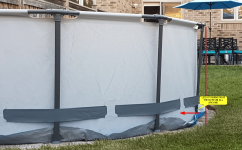
Credit: www.troublefreepool.com
Step-by-step Guide: Fixing Intex Pool Legs That Are Not Straight
Fixing crooked legs can take time and effort, but it’s worth it for a safe pool. Follow these steps for the best results:
1. Drain The Pool (if Needed)
If the legs are only a little off, you may be able to fix them without draining all the water. But for big tilts or sunken legs, it’s safer to drain at least half the water or all of it.
Use a submersible pump or a hose.
Tip: Never try to lift a full pool—the water is extremely heavy and can cause injury or damage.
2. Remove The Problem Leg
Once the pool is drained, gently lift the frame near the crooked leg. You may need a helper. Pull the leg out of the ground if it’s stuck.
3. Level The Ground Under Each Leg
Check the ground under the leg. If it’s soft, uneven, or sloping, dig out the area and fill it with sand or crushed stone. Pack it down firmly. Place a concrete paver or patio stone at the spot where the leg will sit. Make sure the paver is level in all directions.
4. Reposition The Leg
Put the leg back on the paver. Use a level to check that it stands straight. Adjust the paver or ground until the leg is perfectly vertical.
5. Repeat For All Legs
Check every leg, even those that look straight. It’s best to fix all legs at the same time so the pool is safe and balanced.
6. Fill The Pool Slowly
As you refill the pool, check the legs every few inches of water. Make sure they do not start to tilt or sink again. Adjust as needed before the pool is full.
7. Final Checks
When the pool is full, walk around and do a final check with your level. The frame should be even, and all legs should be straight and firm.
Non-obvious insight: Some owners use a garden hose filled with water as a long-level tool. Place one end at one leg and the other at another leg. The water in the hose will always find the same level, helping you spot uneven spots over long distances.
Comparing Leg Support Options
Choosing the right base for your pool legs is important for long-term stability. Here’s a simple comparison:
| Support Type | Cost | Durability | Ease of Install | Best For |
|---|---|---|---|---|
| Grass/Dirt Only | Free | Poor | Easy | Temporary setups |
| Concrete Paver | Low | Excellent | Moderate | Permanent or long-term pools |
| Pressure-Treated Wood | Low | Good | Moderate | Sloped yards |
| Plastic Pad | Medium | Good | Easy | Fast setups |
Concrete pavers are the most popular because they last a long time and give strong support.
Preventing Crooked Pool Legs: Best Practices
The best way to avoid problems is to set up your pool correctly from the start. Here are proven tips:
1. Prepare The Ground Carefully
Clear all grass, rocks, and roots from the pool area. Use a long board and a level to check for dips or bumps. Fill low spots and tamp down the soil. The ground should be as flat as possible.
2. Use A Base Layer
Spread a 1-2 inch layer of sand or crushed stone under the pool area. This helps with drainage and makes small adjustments easier.
3. Place Pavers Under Each Leg
Set a solid paver under each pool leg. Check that each one is level with the others. This small step can prevent 90% of future leg problems.
4. Assemble The Frame Properly
Follow the Intex instructions closely. Make sure all pins and joints are secure. A common mistake is missing a small frame part, which can throw off the alignment.
5. Fill The Pool Slowly
Add water a few inches at a time. Check the legs and frame at each step. If a leg starts to tilt, stop and fix it before adding more water.
6. Control Water Runoff
Make sure rainwater does not flow under your pool. Add gravel or small trenches around the pool area to guide water away.
7. Recheck After Storms
Heavy rain can wash away soil under the legs. Inspect after every storm and adjust as needed.
Non-obvious insight: Some owners use a large sheet of geotextile fabric under the pool base and legs. This fabric helps stop weeds and can prevent soil erosion under the legs.
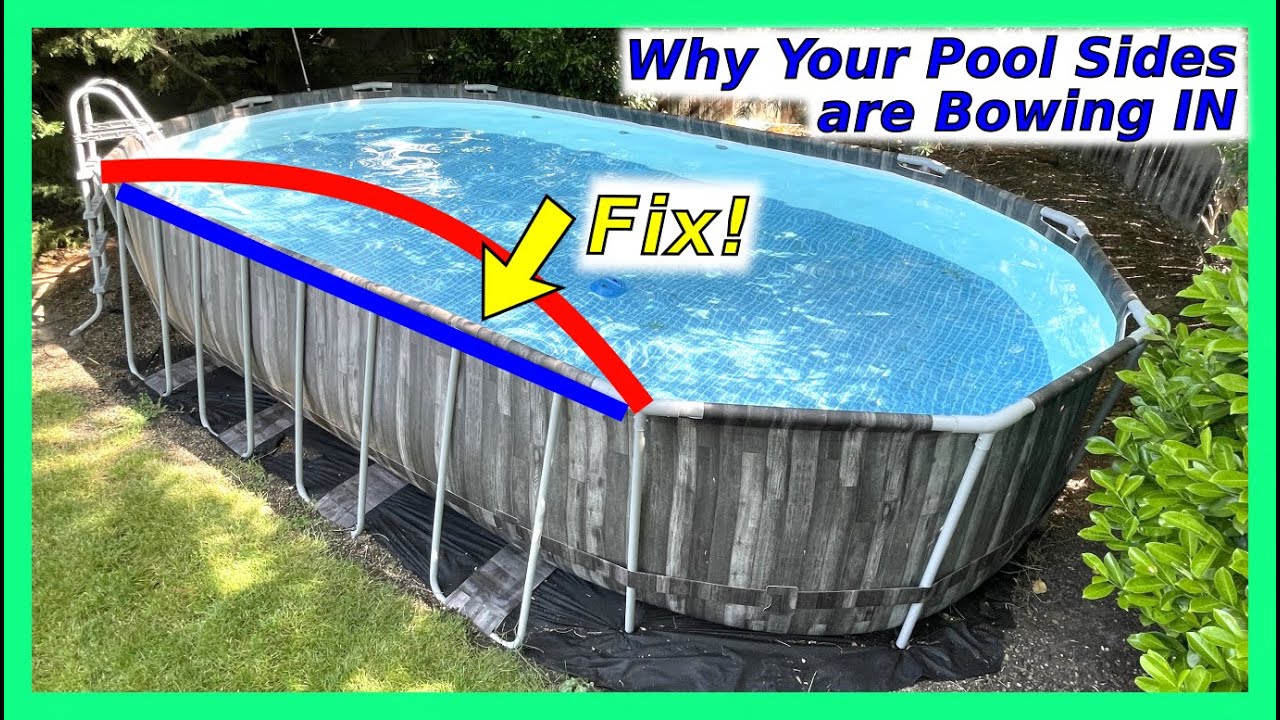
How To Fix Bowed Or Bent Intex Pool Legs
Sometimes, legs may not just tilt but also bow outward. This is a special problem, often caused by too much water pressure or weak frame connections. Here’s how to handle it:
- Drain Some Water: Lower the water level to reduce pressure on the legs.
- Check Frame Joints: Make sure all pins and connectors are locked in place.
- Re-center the Leg: Push or tap the leg back toward vertical. Use a mallet if needed, but do not hit too hard.
- Add Stronger Support: Place a larger paver or a thick board under the leg to spread the load.
- Check for Damage: If a leg is bent or cracked, replace it before using the pool again.
Important: Never use a pool with a bent or broken leg. The risk of collapse is too high.
Real-world Example: Fixing A Leaning Intex Pool
Consider a family who set up a 15-foot Intex pool on their lawn. After filling, they noticed three legs on one side sank into the ground, making the pool tilt and the water higher on one edge. They drained the pool halfway, lifted the frame, and added 12-inch square concrete pavers under each leg.
After re-leveling and refilling the pool, all legs stood straight, and the pool was stable for the rest of the summer.
This example shows the value of using strong, flat supports—even if the ground looks level at first.
What To Do If Your Pool Collapses
If your Intex pool collapses because of crooked legs, follow these steps:
- Clear the Area: Make sure no one is hurt and keep children and pets away.
- Drain Remaining Water: Use a pump to remove water safely.
- Inspect All Parts: Check the frame, liner, and legs for damage.
- Replace Broken Parts: Order new legs or frame pieces if needed.
- Level and Reinforce Ground: Fix the ground and add pavers before setting up again.
- Contact Intex Support: If your pool is under warranty, ask for help or replacement parts.
Do not reuse a damaged pool without fixing the root problem.
Cost Of Fixing Intex Pool Legs
The price can vary depending on how many legs need support and what materials you use. Here’s a simple cost estimate:
| Item | Quantity | Average Cost | Total |
|---|---|---|---|
| Concrete paver (12″x12″) | 10 | $3 each | $30 |
| Level | 1 | $10 | $10 |
| Sand or gravel (bags) | 4 | $5 each | $20 |
| Replacement leg/frame part | 1 | $25 | $25 |
Most people spend between $40 and $100 fixing crooked legs, far less than replacing a damaged pool.
Mistakes To Avoid When Fixing Pool Legs
Many pool owners make the same errors, which can make the problem worse:
- Skipping Ground Prep: Never set up a pool on uneven or soft ground, even for a weekend.
- Using Thin Pavers: Thin or small pavers can crack under the weight. Use at least 1-inch thick stones.
- Not Checking All Legs: Fixing just one crooked leg is not enough. All legs must be checked and leveled.
- Filling Pool Too Fast: Adding water quickly can hide problems until it’s too late.
- Ignoring Small Tilts: Even a 1-inch tilt can cause big trouble over time.

Credit: www.reddit.com
When To Call A Professional
For most Intex pools, owners can fix crooked legs themselves. But if you have:
- A large pool (over 18 feet)
- Very sloped or unstable ground
- Repeated leg problems
- Damaged frame parts
…it’s smart to call a pool professional or landscaper. They have tools and experience to solve tough problems and make sure your pool is safe.
Recommended Maintenance For Pool Leg Stability
A little care goes a long way. Here’s how to keep your pool legs straight all summer:
- Check leg positions every week.
- Inspect after heavy rain or storms.
- Keep grass trimmed around the legs.
- Add more support if you see sinking or tilting.
- Store the pool indoors during winter to avoid ground changes and rust.
Credit: www.youtube.com
Intex Pool Leg Issues: Statistics And Trends
Intex pools are used by millions worldwide. According to online pool forums and product reviews, about 15–20% of new owners report leg problems in the first season. Most issues are due to improper ground prep or missing leg support. After using pavers and leveling, over 90% of owners say their pools stay straight all summer.
Expert Advice: How To Get Help
If you’re not sure what to do, Intex offers setup guides and support. You can find detailed instructions and troubleshooting tips on their official website and manuals. For more help, you can also check out resources like the Trouble Free Pool Forum, which has advice from experienced pool owners.
Frequently Asked Questions
What Happens If My Intex Pool Legs Are Not Straight?
If the legs are not straight, your pool can become unstable. This can cause the frame to twist, the liner to tear, or even the pool to collapse. It’s important to fix this problem as soon as you notice it.
Can I Fix Crooked Pool Legs Without Draining The Pool?
For small tilts, you may be able to lift and adjust the legs with the pool partly full. But for big problems or sunken legs, you should drain at least half the water to reduce the weight before making repairs.
What Should I Put Under My Intex Pool Legs?
The best choice is a thick concrete paver under each leg. This spreads the weight and stops the legs from sinking. Some people use pressure-treated wood or plastic pads, but pavers last longer.
How Often Should I Check My Pool Legs?
Check your pool legs at least once a week, especially after storms or heavy use. Early checks can catch small shifts before they become big problems.
Do I Need A Professional To Fix My Pool Legs?
Most people can fix crooked legs themselves with simple tools. But if you have a very large pool, very uneven ground, or repeated problems, it’s smart to call a professional for help.
—
Keeping your Intex pool safe and strong starts with straight, well-supported legs. With the right setup, regular checks, and a few smart fixes, you can enjoy worry-free swimming all summer long.