
When you plan a swimming pool, the sparkling water and relaxing swims are probably on your mind. But one detail often overlooked is the pool light junction box location. This small box plays a huge role in your pool’s safety, lighting, and long-term maintenance. Choosing the wrong spot for the junction box can create electrical risks, increase repair costs, and even cause pool lights to fail. Many pool owners and even some installers do not fully understand the rules and practical reasons behind proper placement. If you want your pool to be bright, safe, and problem-free, it’s important to learn where and how to locate your pool light junction box.
This guide explains everything in clear, simple language. Whether you’re building a new pool, updating lights, or just want to check your current setup, you’ll learn the rules, best practices, and solutions for common problems. We’ll also cover special cases, mistakes to avoid, and how to work with inspectors or electricians.
By the end, you’ll know exactly what to do—and what not to do—when it comes to your pool light junction box location.
What Is A Pool Light Junction Box?
A pool light junction box is a special electrical box. It connects the wires from your pool lights to the wires that go back to your power supply. Most pool lights are low voltage (12V or 24V) and use a transformer, but some older pools use 120V lights. The junction box is where these wires safely meet and are sealed from water.
The box is usually made of plastic or metal. It has waterproof seals and special connectors. Its main job is to keep water out and prevent electrical shocks. Inside, you will find wire nuts, ground wires, and sometimes GFCI (ground-fault circuit interrupter) protection.
The box might also have a bonding lug—a metal connector that grounds the pool’s metal parts to prevent shocks.
Why Junction Box Location Matters
Where you put the junction box is not just a technical detail. It affects:
- Electrical safety: Bad placement can lead to water entering the box, risking shocks or pool light failure.
- Code compliance: Local and national codes (like the NEC) have strict rules about distance and height.
- Maintenance: Good access makes repairs easier and safer. Buried or hidden boxes are hard to reach.
- Longevity: Keeping the box dry and away from water splash increases its life and lowers repair costs.
Many homeowners don’t realize the box must be easily accessible, above possible flood level, and never under a deck or inside the pool area itself. Overlooking these points can lead to expensive mistakes.
Basic Code Requirements For Pool Light Junction Box Location
In the United States and many other countries, pool electrical safety follows the National Electrical Code (NEC). The NEC provides strict rules for where you must place the pool light junction box. Here are the most important points:
- Minimum Distance from Pool Edge: The box must be at least 4 feet (1.2 meters) from the edge of the pool, but not more than 8 feet (2.4 meters) away. This keeps it far from splashes but close enough for practical wiring.
- Height Above Water Level: The box must be at least 8 inches (20 cm) above the maximum water level of the pool. This prevents water from entering during rain or high water.
- Accessible Location: The box must be readily accessible for inspection and maintenance. It cannot be buried, under decks, or hidden behind walls.
- Waterproof and Gasketed: The box must have waterproof seals and be designed for wet locations.
- Bonding and Grounding: It must have a bonding lug connected to the pool’s bonding grid. This prevents stray electrical currents.
It’s important to check your local codes as they may be stricter than the NEC. Some areas require the box to be even farther from the pool or in a special enclosure.
Ideal Locations For A Pool Light Junction Box
Finding the best place for your junction box means balancing safety, code, and convenience. Here are the most recommended spots:
1. Adjacent To The Pool Equipment Pad
Many pools have a central equipment area for the pump, filter, and heater. Placing the junction box here keeps everything together, away from swimmers, and easy to inspect.
Pros:
- Easy access for electricians
- Away from water splash
- Good for multiple lights
Cons:
- May require longer wiring runs
- Must still be within 8 feet of pool edge
2. On A Wall Or Post Beside The Pool
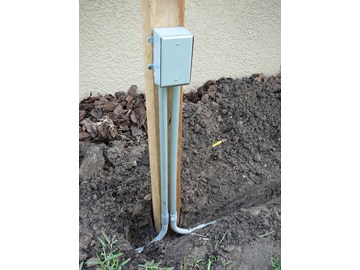
If the equipment pad is too far, a weatherproof post or wall near the pool (but at least 4 feet from the water) works well.
Pros:
- Easy access for repairs
- Visible for inspections
Cons:
- May be less attractive if not hidden by landscaping
3. In A Landscape Bed
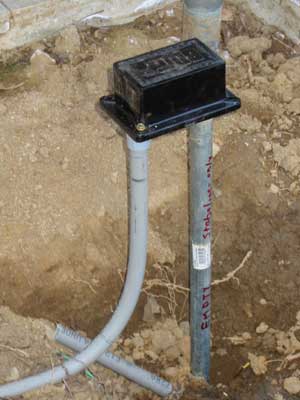
Some pools use landscape beds (flower beds, shrub areas) near the pool for the junction box. These are easy to access but must not be buried under soil or mulch.
Pros:
- Can be hidden with plants, yet still accessible
- Keeps box cool and dry
Cons:
- Risk of covering or flooding from heavy rain
4. In A Dedicated Electrical Enclosure
Some new pools use a special waterproof enclosure mounted above ground, sometimes locked for safety.
Pros:
- Maximum protection from weather and tampering
- Good for pools with children or public pools
Cons:
- Higher installation cost
Locations To Avoid
Choosing the wrong spot can create serious safety risks. Here are places you should never put a pool light junction box:
- Under the pool deck: Hard to access and may trap moisture.
- Inside a planter or buried under soil: Makes the box impossible to find and can cause corrosion.
- Inside a pool equipment pit or underground vault: Prone to flooding, very dangerous.
- Less than 4 feet from the pool edge: Too close to water, not code-compliant.
- Inside a building or garage: Violates code, as wires must run outside to the pool.
Common Installation Mistakes (and How To Avoid Them)
Even experienced installers sometimes make errors with junction box location. Here are mistakes to watch for:
- Burying the Box: Some think it’s safer underground, but this leads to water infiltration and is against code.
- Mounting Too Low: If the box is less than 8 inches above water level, rain or splashes can flood it.
- No Access Path: Placing the box behind thick bushes or fences makes inspections nearly impossible.
- Skipping the Bonding Wire: Forgetting the bonding lug is a serious safety risk and a common inspection failure.
- Ignoring Local Codes: Rules vary by city and state. Always check with your building department.
A good practice is to take a photo of the box location before filling trenches or planting landscaping. This helps future repairs.
How To Select The Right Spot: A Step-by-step Guide
Here’s a practical way to choose the best junction box location for your pool:
- Locate Your Pool Lights: Mark where the light cords exit the pool shell.
- Measure Distance: Use a tape measure to find a spot 4–8 feet from the pool edge.
- Check Elevation: Make sure the spot is at least 8 inches above the pool’s highest water level.
- Check for Obstructions: Avoid areas blocked by plants, fences, or hardscape.
- Plan Conduit Runs: Make sure you can run a PVC or flexible conduit from the pool light to the box without sharp bends.
- Test Accessibility: Walk to the spot. If you can’t reach it easily, choose another location.
- Check Local Codes: Call your building inspector or check online. Some cities require special permits or inspections.
Pro tip: If you live in a flood-prone area, mount the box even higher than the minimum. Use a pedestal or wall.
Pool Light Junction Box Types And Their Impact On Location
Not all junction boxes are the same. The type you use can affect where you put it.
1. Standard Wet-niche Junction Boxes
These are the most common. They are made of heavy plastic or metal, have a gasketed lid, and accept conduit from both the pool and the power supply.
Location Tips:
- Follow standard rules (4–8 feet from pool, 8 inches above water).
- Mount on a solid surface.
2. Deck Boxes
Some pools use smaller “deck boxes” for low voltage lights. These are less common and must also be above ground.
Location Tips:
- Should not be mounted flush with the deck surface.
- Must be accessible and waterproof.
3. Above-ground Enclosures
Some pools use a weatherproof cabinet or enclosure for all pool electrical gear.
Location Tips:
- Can be farther from the pool if allowed by code.
- Must be easy to unlock and open.
Here’s a comparison of common junction box types:
| Type | Material | Typical Location | Best For |
|---|---|---|---|
| Standard Wet-Niche | Plastic/Metal | On wall, post, or pad | Most in-ground pools |
| Deck Box | Plastic | Near deck, above grade | Low-voltage lights |
| Enclosure Cabinet | Metal | Pad or wall, locked | Public pools, high safety |
Credit: www.inyopools.com
Step-by-step: Installing A Pool Light Junction Box In The Right Location
If you’re working with a contractor or doing it yourself (with permits), here’s a walk-through of the process:
1. Gather Materials
You’ll need:
- Approved pool light junction box (UL listed, wet-location rated)
- PVC or flexible conduit
- Wire nuts, waterproof connectors
- Mounting screws or brackets
- Bonding wire and lug
- GFCI breaker (for 120V lights)
- Conduit glue and tools
2. Find The Location
Mark a spot 4–8 feet from pool edge, 8 inches above water, with a clear path to the pool and power source.
3. Install Conduit
Dig a trench (if needed) and run conduit from the pool light niche to the junction box. Use sweeping bends, not sharp angles.
4. Mount The Box
Attach the box to a solid surface (post, wall, equipment pad). Make sure the lid faces up and is easy to open.
5. Pull Wires
Pull the pool light cord through the conduit into the box. Connect supply wires per manufacturer and code.
6. Bond And Seal
Connect the bonding wire from the pool’s grid to the box’s lug. Seal all connections with waterproof connectors.
7. Inspect
Have a licensed electrician or inspector check the installation before powering up.
8. Finish
Replace soil or landscaping, but never cover the box.
Non-obvious tip: Leave extra wire inside the box (a “service loop”). This makes future repairs easier and prevents stress on connections.
Advanced Considerations: Special Pool Types And Unusual Layouts
Some pools don’t fit the standard backyard model. Here’s how to handle special cases:
Raised Pools Or Infinity Edges
If your pool is raised or has an infinity edge, you may need to place the junction box on a lower platform or a nearby wall. The key is to keep the box above water level and within the required distance.
Multiple Pool Lights
For pools with more than one light, you can use one large box (if allowed by code) or several small boxes. Just make sure each box follows the distance and height rules.
Pools With Spas Or Water Features
Lights in attached spas or fountains usually need their own junction boxes. These must be located with the same rules: 4–8 feet away, above water, and accessible.
Public Or Commercial Pools
These pools have stricter codes. Boxes may need to be in locked enclosures, farther from the pool, and labeled.
Weather, Flood, And Environmental Factors
Your local climate affects the best junction box location:
- Heavy rain or flooding: Mount the box as high as practical, even above 12 inches if needed.
- Intense sun: Use UV-resistant boxes and mount in shade if possible.
- Snow/ice: Keep the box out of snow drifts, and never under overhanging roofs.
- Pest control: Insects and rodents like warm boxes. Seal all entry points and check for nests yearly.
How Inspectors Evaluate Your Pool Light Junction Box Location
A final sign-off from your city or county inspector is needed before you use your pool lights. Here’s what inspectors look for:
- Distance from pool: Measured from pool edge to box.
- Height above water: Checked with a tape measure.
- Accessibility: Inspector must be able to open the box easily.
- Bonding: Ground wire and lug must be connected.
- Waterproofing: Box and conduit seals must be intact.
- Labeling: Some areas require the box to be labeled as “pool light junction box.”
Failing an inspection means you must move the box or redo the wiring. Always call your building department before you start.

Credit: www.reddit.com
Repair And Maintenance Tips For Pool Light Junction Boxes
Once installed, your junction box needs little care, but some maintenance keeps it safe and trouble-free.
- Inspect yearly: Open the box and check for water, corrosion, or loose wires.
- Clean out debris: Remove leaves, insects, or spider webs.
- Check seals: Make sure gaskets and seals are soft and not cracked.
- Test ground and bonding: Use a multimeter to check continuity.
- Replace damaged parts: Broken lids or corroded connectors should be replaced right away.
Pro insight: Many pool light failures trace back to water in the junction box. A dry box can add years to your light’s life.
Cost Factors For Junction Box Installation
How much does it cost to install or move a pool light junction box? Here are typical price ranges:
| Cost Element | Typical Range | Notes |
|---|---|---|
| Junction Box | $25 – $80 | UL listed, waterproof |
| Conduit & Fittings | $20 – $50 | PVC or flex, per light |
| Labor (Electrician) | $150 – $400 | Varies by region |
| Inspection/Permit | $50 – $150 | Required in most areas |
| Landscaping Repair | $0 – $100 | If digging is needed |
If you need to relocate a box due to code problems, costs can double due to extra labor and repairs.
Credit: www.troublefreepool.com
Upgrades And Smart Solutions
Today’s pool owners want more than just basic lighting. Here’s how modern technology affects junction box location:
- Smart pool lights: Some Wi-Fi or color-changing lights need special controllers. These must be kept dry and accessible, often in a separate box.
- Remote transformers: If you use a remote transformer, the junction box can be smaller and placed closer to the pool.
- Solar-powered lights: These may not need a standard junction box, but check your local code.
Whenever you upgrade, always inspect your junction box and wiring.
Diy Or Hire A Pro? Making The Right Choice
Is this a DIY project? For most homeowners, it’s best to use a licensed electrician. Here’s why:
- Pool wiring is dangerous if done incorrectly.
- Failing an inspection can delay your project.
- Insurance may not cover accidents from DIY wiring.
You can dig trenches or prepare the area, but let a pro handle the wiring and box installation.
Non-obvious Insights For Pool Owners
Many pool owners and even some installers miss these key points:
- Accessibility beats appearance: It’s better to have a visible box than one hidden and hard to reach.
- Water always wins: Even “waterproof” boxes can fail if placed too low or buried. Always plan for extreme weather.
- Document your installation: Take clear photos and keep permits. This helps with future repairs and home sales.
Frequently Asked Questions
What Happens If My Pool Light Junction Box Is Too Close To The Water?
Placing the box less than 4 feet from the pool edge is unsafe and against code. Water can easily splash into the box, increasing the risk of electrical shock or light failure. You may also fail inspection and have to relocate the box.
Can I Put The Pool Light Junction Box Under The Pool Deck?
No, this is not allowed. Under-deck locations are hard to access, may fill with water, and do not meet code requirements for accessibility and height above water level.
Do I Need A Permit To Install Or Move A Pool Light Junction Box?
In most areas, yes. Pool lighting is considered a high-risk electrical installation, and a permit ensures your work is inspected and safe. Always check with your local building department.
How Do I Know If My Junction Box Is Grounded Properly?
A proper ground involves a bonding lug connected to the pool’s bonding grid and a ground wire back to the main panel. A licensed electrician can test this with a multimeter. Incorrect grounding is a leading cause of inspection failure.
Where Can I Find Official Code Requirements For My Area?
You can find the latest code requirements in the National Electrical Code (NEC) or by contacting your local building department. For more details, visit the National Fire Protection Association.
Final Thoughts
The pool light junction box location is a key detail that affects safety, function, and the lifetime cost of your pool. By following code rules, thinking about weather and access, and avoiding common mistakes, you can enjoy bright, reliable pool lighting for years to come. If you’re ever unsure, ask a professional or your local inspector for help. Smart planning now prevents big headaches later—letting you focus on swimming, not repairs.